fbpx

April 26, 2017

With Israel’s survival up in the air, pilot Sam Lewis went above and beyond

Risking life and his U.S. citizenship, a Jewish pilot from Los Angeles took to the skies in 1948 to help Israel win its war for independence. As one of several airmen who flew desperately needed aircraft packed with war material to Israel, Sam Lewis helped turn the tide of battle.

Lewis was part of Machal, the thousands of volunteers from around the world who fought with Israel. Those from America broke U.S. law, which eventually led to a trial in federal court in downtown L.A. Even so, Lewis’ contribution to Israel’s fight for independence, celebrated this year on May 2, won him wide acclaim, including special requests from two of Israel’s most prominent prime ministers.

“When [David] Ben-Gurion or Golda Meir would fly anyplace, said Lewis’ daughter Sandra Brown, “they would always want my father to be the pilot.”

Lewis’ involvement in a major war operation to send planes to Israel began at the Burbank Airport. With a proclamation by President Harry S. Truman on March 28, 1948, prohibiting the export of even civilian aircraft, soon to go into effect, Lewis and other pilots flew five two-engine C-46 Commandos to Mexico City, the first stop on a perilous trip that would end in warn-torn partitioned Palestine.

A week later, on the second leg of the journey, from Mexico City to Panama, Lewis’ fully loaded plane barely cleared the field on takeoff. Another plane was not so lucky and crashed, killing its pilot, Bill Gerson, and mechanic, Glen King.

Once in Panama, Lewis helped to better train the pilots. The aircraft flew on to Zatec airport in Czechoslovakia, a nation that sold guns and ammunition to Israel.

During the war, Lewis also flew a large four-engine craft called a Constellation from Zatec into Israel many times with loads of cargo, including one flight that was loaded with Czech machine guns, which arrived just in time to help win a battle. On one of the return landings to Zatec, the hydraulic system gave out — a wheel wouldn’t lock — but Lewis managed to land the plane on its belly.

Lewis also flew bombing runs, his daughter said. The planes did not have bomb bays, so each “had young guys called ‘bomb chuckers’ who would line up the bombs and throw them out the door.”

The 1966 film “Cast a Giant Shadow” had one famous bomb scene wrong, Brown added, the one where an American pilot, played by Frank Sinatra, throws a full seltzer bottle out of the plane as a kind of bomb. According to her father, she said, empty bottles, which made a louder exploding sound, were used. Asked to serve as an informal consultant on the movie, Lewis pointed out the difference, she said, but “they had already shot the scene and did not want to redo it.”

Sam Lewis was born Samuel Rifkin in New York in 1912 and first came to Los Angeles in 1924 on a trip accompanying his uncle, Rabbi Gershon Epstein, and his wife. Sam liked the greenery of L.A. so much that he wanted to stay, and when his parents came out to retrieve him, they decided to stay, too, according to Brown. The family settled in Boyle Heights, and Sam attended Roosevelt High School. After graduation, he married his next-door neighbor and high school sweetheart, Jenny Koph (later, Jean) when he was only 19 and worked at his father’s furrier business.

Though good with his hands, “he hated it,” Brown said. Instead, “he loved anything to do with flying” and was drawn to the small neighborhood airfields that dotted the L.A. landscape at the time. After taking only four flying lessons, he soloed. He got a job as a flight instructor, and to make some extra cash, he took up people on weekends for 5 cents a ride.

“Clover Field [in Santa Monica] was my playground,” Brown recalled.

When Sam finally was able to make enough as a flight instructor, he quit the furrier business.

“My father belonged to a Jewish flying club,” Brown said, and a 1939 photo of the group at Mines Field (now Los Angeles International Airport) shows the group with Sam identified as a “flight instructor.”

In the years before World War II, Sam had signed up to be an instructor for the U.S. Army Air Corps, working out of what today is Ontario Airport. Wanting to fly larger aircraft, he joined the Royal Canadian Air Force, learning to fly Hudson bombers, eventually flying them in 1941 to England to aid in the war effort.

Now experienced with larger aircraft, he worked as a pilot for Western Airlines, but he believed his not being promoted to captain was due to anti-Semitism. Moving to TWA, he ran into similar problems and was asked by management to change his last name to something less identifiable, which he did, to Lewis, after his father’s first name. During World War II, when TWA became part of the U.S. Air Transport Command, Lewis gained more experience flying multi-engine planes, including C-46s and Constellations loaded with troops and cargo.

After the war, Al Schwimmer, a flight engineer for TWA who dreamed of starting an airline, reached out to Lewis and another L.A.-based pilot, Leo Gardner

Unknown to them at first was that in the final days before the partition of Palestine in 1947, Schwimmer was working with Shlomo Rabinovitch, a former British army major with contacts with the soon-to-be inner circle of the new State of Israel, including Ben-Gurion, according to “The Pledge,” a book by Leonard Slater about the clandestine mission to send aircraft to Israel.

The fragile new nation needed airplanes for battle and transport, and Schwimmer was part of an operation called Yakum Purkan, from the Aramaic prayer Yakum purkam min shemaya (salvation would be forthcoming from heaven).

Though initially not a Zionist, Lewis jumped in — even having a group of young prospective pilots from Israel meet at his apartment.

In 1948, after 10 C-46s and three Constellations had been purchased as war surplus, many of the planes were brought to Burbank Airport. With the U.S. Neutrality Act prohibiting the exportation of military aircraft without a license, FBI agents watched as several hundred workers stripped the airplanes of any military gear. Their cover story was that the planes were part a new Panamanian airline, Lineas Aereas de Panama, Sociedad Anonima, flying out of Tokeman Airport in Panama.

After the war, Lewis and others involved in the operation were put on trial for violating the Neutrality Act. Schwimmer and Gardner were found guilty and fined $10,000 each, but neither served time in prison. Schwimmer, who died in 2011, was pardoned by President Bill Clinton in January 2001. Lewis got off, as one of the jurors supposedly reasoned he was involved only as a pilot.

Soon after, Lewis was hired as one of El Al airline’s first pilots, and he moved to Israel in 1950 with his wife and youngest daughter, Elaine. After retiring from the airline following a distinguished 30-year career, he continued to fly, working for the Schwimmer-run Israel Aerospace Industries.

In 1980, he moved back to L.A. He died the following year.

“He was as straight as an arrow and not one to promote himself,” Brown said.

As we celebrate Israel Independence  Day, we can be thankful Sam Lewis let his flying do his talking for him.

Have an idea for a Los Angeles Jewish history story? Contact Edmon J. Rodman at edmojace@gmail.com.

With Israel’s survival up in the air, pilot Sam Lewis went above and beyond Read More »

’40s protester sees Trump-era parallels

In November 1943, June Sale, a UCLA student, was part of a demonstration at Los Angeles Polytechnic High School against Gerald L.K. Smith, the most prominent anti-Semite of the time.

Listening to the speeches inside the auditorium, she recalled recently, “I became nauseated and teary. I decided to leave.  As I got to the foyer of the auditorium, a police officer arrested me, told me I was disturbing the meeting and walked me to the police paddy wagon.”

I learned of her long-ago bust in one of the emails she sends to friends, often writing of her anger over where President Donald Trump is taking the country. I was intrigued by the story of her arrest, and by the picture she included of herself talking to her lawyer before going on trial, which appeared in the now-defunct Los Angeles Daily News (the one that folded in 1954, not the current Woodland Hills-based newspaper). I wanted to know more. So my wife, Nancy, and I talked with her early in April over lunch at her home above Sunset Boulevard. We have been friends since we met June and her late husband, Sam, on Barbara Isenberg’s London theater tour several years ago.

As she told the story of her life, I saw that it reflected an almost forgotten era of Jewish Los Angeles, when anti-Semitism was rampant and a beleaguered Jewish community pondered how to fight it. “It was just something that happened to me over and over again,” she recalled of the anti-Semitism of her high school days in Pasadena.

June was born at White Memorial Hospital in Boyle Heights in 1924. Boyle Heights was then home to immigrants of many ethnicities and a hotbed of Jewish progressive politics.  Her parents, Ben and Bertha Solnit, were immigrants from a town on the Russian-Polish border. Ben learned the shoe business from the bottom up and grew prosperous. When their son was ill with bronchitis, his pediatrician advised them to move to a hotter, drier place. They chose Sierra Madre, near Pasadena, a center for right-wing politics and one of several communities riddled with anti Semitism.

Although Jews were among the founders of Los Angeles in the 19th century, Midwesterners who made the growing city a white Protestant conservative place soon outnumbered them. Restrictive covenants kept Jews — and African-Americans, Asians and Latinos — from some neighborhoods. Clubs would not admit Jews nor would fancy downtown law firms hire them.

In high school, June said, “all my friends who were not Jewish joined sororities and they were told not to talk to me.”   When she was elected president of a student YWCA group in junior high school, a vice principal said she could not accept the job because the group recited Christian prayers and Jews could not join them.

The Solnits wouldn’t take it. “I’m a better citizen then you’ll ever be,” Bertha Solnit told another school vice principal when he refused to permit June to use transfer credits to graduate and lectured Bertha on what he considered the citizenship obligations of immigrants. 

Their determination to fight anti-Semitism, as well as their liberal political views, put the Solnits firmly in the ranks of pro-labor, progressive Jews — usually immigrants or children of immigrants. They were at odds with more politically conservative Jews who wanted to get along with the city’s Republican powers and didn’t approve of the liberal activists’ confrontational tactics with anti-Semites.

June accompanied her father to meetings of the Joint Anti-Fascist Refugee Committee, which was helping anti-Franco forces in the Spanish Civil War and campaigning to rescue Jews and other victims of Hitler. President Harry S. Truman’s Justice Department later blacklisted the committee, an action overturned by the Supreme Court.

“The grown-ups were passionate, worried and concerned,” June wrote of the meetings. “The discussions were often difficult for me to comprehend, but I do remember the point of the gatherings was to find ways to bring refugees from Spain and Europe to safety. [President Franklin] Roosevelt had turned away Jews trying to escape the Holocaust and refugees from Spain were not welcome here.”

Liberal outrage was intense when Gerald L.K. Smith spoke at Poly High in 1943. Sam and June had married and he was overseas with the Army Air Corps. June, still at UCLA, had been on a union picket line during a strike against the studios. Impressed with her demeanor, one of the strike captains, a man named Irving, asked her to join a labor-sponsored demonstration against Smith.

After her arrest, she said, “I was greeted in the paddy wagon by other ‘disturbers’ and we were whisked off to jail. The women were placed in cells with prostitutes who had been arrested. Irving had observed my arrest and soon came to my rescue. He was able to pay my bail and I was released early in the morning. Believing I would be the first person out of the dungeon, I took everyone’s phone number on a piece of toilet paper (the guard loaned us a pencil) so I could call a contact and tell what had happened.”

All of the charges were dismissed. “The police were required to identify us and they couldn’t,” she wrote in an email. “Strangely enough, we all looked quite different from the time we were arrested.”

She concluded her email about her arrest by saying, “You may ask why I bring this moment in my history up at this time. Well, I think we are headed for rough and difficult times as we face the Trump years. America First was a theme of the thirties, anti-Semitism is on the rise, the rich are getting richer, the middle class is disappearing and the poor are getting poorer. We must organize against this growing threat of ‘America First.’ ”

June graduated from UCLA. She and Sam raised a family and generously supported progressive causes, no matter how unpopular. She became a preschool teacher, started Los Angeles’ first Head Start program and was in charge of child care services at UCLA for 10 years. Then for 18 years, she was a court-appointed special advocate, going from court to court, home to home, looking after the welfare of some of the 35,000 children in the Los Angeles County foster care program.

“When you get old, gray and sleepless, you may find, as I do, that your memories of days gone by keep you company,” she wrote.

Her memories keep us company, too. The issues have changed. The immigrants are no longer Jewish refugees, but Latinos and those fleeing war-torn Muslim-majority nations. Episodes of anti-Semitism are increasing. But the challenges remain the same as they were when June Sale joined the picket line at Poly High.


BILL BOYARSKY is a columnist for the Jewish Journal, Truthdig and L.A. Observed, and the author of “Inventing L.A.: The Chandlers and Their Times” (Angel City Press).

’40s protester sees Trump-era parallels Read More »

Survivor Av Perlmutter: ‘Angel’ watched over him

“Where’s Adolf Perlmutter?” one of the German soldiers shouted, bursting into Suzanne Cohen’s house in Amsterdam in March 1943, rushing past a 15-year-old boy living there who was known as Avraham or Av.

Upstairs they found one of the Cohens’ sons, in his early 20s, and ordered, “You come with us.” On their way out, they grabbed Av, realizing he was the one they were looking for — his official name was Adolf — and led both young men into a police van. They headed to the Jewish Theatre, which had been converted to a detention center from where Jews were deported to camps.

“The moment I came in, I was thinking how to get out,” Av recalled. He noticed that pairs of German soldiers at the exits changed shifts regularly. At one door in particular, they actually abandoned their post to fetch their replacements. He mentioned this to the Cohen son, who deemed it too dangerous to try escaping. “They’ll shoot us,” he told Av.

Av was undeterred. In the middle of the night, when the exit was left unguarded, he calmly walked out and ran.

Avraham Abba Perlmutter, who was given the name Adolf by the Austrian government, was born on Aug. 28, 1927, in Vienna, to Chaim and Malka Perlmutter. His sister, Thea, was three years older.

Chaim owned a textile store, providing the family with a middle-class, very observant life. Every morning, Av prayed with his father in the small shul located on their apartment building’s first floor.

Av was a self-described “wild child.” At 6, he was asked not to return for a second year in Jewish school because of his misbehavior. He attended public school and played soccer with neighborhood boys.

Av’s life changed on March 12, 1938, with the annexation of Austria by Nazi Germany. Two days later, Av followed the crowds to one of Vienna’s main streets, where he witnessed Hitler riding by in an open car.

Av’s non-Jewish friends began beating him, and he no longer attended school. The following fall he enrolled in a Jewish middle school.

On the night of Nov. 9, 1938, Kristallnacht began. The Perlmutter family’s store was plundered.

Two months later, Av’s parents arranged for him and Thea to leave for the Netherlands on a Kindertransport — a rescue operation for children — to join Av’s aunt and uncle, Anni and Aby Bachrach. “It was like an adventure,” Av said.

They arrived in Wijk aan Zee, a village on the North Sea coast, where they spent two months at a Catholic campsite run by nuns before being transferred to a series of refugee camps. Then, in December 1939, after a bout with diphtheria, Av was released to Sientje and Joop Van Straten, relatives by marriage, who lived in The Hague, 40 miles south.

Thea, meanwhile, was transferred to a Youth Aliyah camp east of Amsterdam in Loosdrecht, with a plan to join her parents in Palestine, where they had immigrated illegally in June 1939.

Germany invaded the Netherlands on May 10, 1940. And while Av continued attending school, playing soccer and celebrating his bar mitzvah, anti-Jewish measures were enacted gradually.

On Oct. 7, 1942, after non-Dutch Jews were ordered to move from coastal areas, Av was sent to Amsterdam, where he was placed with Suzanne Cohen and her adult sons, within 2 miles of where Anne Frank and her family were already hiding. His relatives in The Hague were all murdered later in Auschwitz and Sobibor.

After Av escaped from the Jewish Theatre in March 1943, he ran back to the Cohens’ house, where he hid in the backyard.

The next morning, Ellie Waterman, a member of an underground organization founded by Dutch Christian Joop Westerweel, coincidentally showed up. “It was a pure miracle,” Av said. Thea had asked the group to find a hiding place for him.

“I was very Orthodox Jewish and I strongly believed that an angel of God was guarding me,” Av said.

Waterman told Av to meet him at the train station. After a series of stops and train changes, Av exited at what he believes was Zutphen, a city in the east-central Netherlands, where Waterman led him to the house of an elderly couple.

After dinner, as German soldiers approached, Av hid in a bedroom closet. As one of the soldiers approached, Av began hiccuping out of fear and nearly choked, smothering the noise. The German opened the closet door and slammed it, cursing. “Fortunately for me, he didn’t look very much,” Av said.

The couple then hid him in a backyard coal bin. But after the Germans returned a second time, Av left, not wanting to endanger the couple.

Despite the late hour, Av knocked on a nearby door. “I’m Jewish. Can you hide me?” he asked the young man who opened it. The man, who had a wife and small child, concealed him behind some boxes in the basement.

“I was very Orthodox Jewish and I strongly believed that an angel of God was guarding me”

“These Christians who were hiding Jews were extremely courageous, because if they were caught hiding a Jew, they were treated like a Jew,” Av said.

The next morning, Waterman found Av and arranged for Dutch Christians in several cities to hide him. Then, sometime during the summer, Av was placed in a boarding house in Rotterdam, where two boys were staying, as well as a teacher, who taught Av English and French.

One day in September 1943, the boys heard the familiar pounding of German boots and quickly hid in a prearranged spot. After the Germans left, they split up, believing they would be safer.

Av wandered for about 20 minutes before a German soldier stopped him, asking for identification and summoning a police van. He placed Av in the partitioned back, guarded by two Dutch police officers. Thinking the policemen might be anti-Nazi, Av slid toward the rear doors of the van as the police officers talked. Av partially opened one door and when the van slowed, he jumped out.

After running several blocks, he stopped a man on the street who took him home and contacted Joop Westerweel. An aide to Westerweel arranged for Av’s last placement.

Av traveled to Venlo, in the southeastern Netherlands, where a pastor, Henricus Vullinghs, met him at the train station and transported him on the back of his bicycle 5 miles north to the home in Grubbenvorst, a town within 3 miles of the German border where Peter and Gertrude Beijers lived with three of their six adult children.

Forty-two of the village’s 240 families, all Catholic, were hiding Jews. Pastor Vullinghs told his parishioners that they were assured a place in heaven if they saved a Jew.

As Av grew close to the Beijers family — he called the parents Mom and Pap — he began helping on the farm, becoming expert in growing asparagus.

After the Allies invaded Normandy in June 1944, they advanced toward Germany and by September were approaching Grubbenvorst.

When several German soldiers moved into the Beijers’ house, Av hid in the stable. Pap then built him a more secure hiding place, a concealed hole in the hill behind the barn. Av lay on his back all day, with red ants for companions, venturing out only in the evenings.

On Nov. 22, 1944, the Allies liberated the village of Sevenum, about 5 miles west of Grubbenvorst, launching a heavy barrage eastward toward the Germans’ defense line.

That night as Av joined the Beijers in their neighbors’ basement, the Germans forced everyone out, planning to evacuate all town residents across the Maas River to Germany.

Afraid of entering Germany, Av remained in Grubbenvorst, hiding once again in the stable. With British artillery shells exploding ever closer, he left, reaching the street just as a shell landed on the stable, demolishing it. Again, Av said, “I knew at the time that the angel of God was with me.”

As the pounding continued, Av crawled along toward the British line, feeling for mines. Suddenly someone shouted, “Halt,” as Nazi soldiers jumped out from the roadside. “Where are you going?” one demanded. Av pointed to a nearby house. Just then the British began firing, and Av pushed himself free and ran, despite the mines and the bullets flying past him.

He reached a farmhouse where he found the entire Beijers family. The bridge over the river had been destroyed, thwarting the Germans’ evacuation plans.

Two days later, Av persuaded one of Beijers’ sons to accompany him to Sevenum, now in Allied hands. They arrived on Nov. 26, 1944, which Av considers his liberation date. “I felt fantastic,” he said.

Wanting to help the British army, Av worked as an interpreter for a month as soldiers directed the locals in rebuilding the bridge. At Av’s request, one soldier sent a letter to his parents in Palestine. In January, the Jewish Brigade came for Av, to reunite him with his parents. Av said goodbye to the Beijers.

Years later, he submitted their names and that of Pastor Vullinghs to Yad Vashem, which recognized them in 1994 as “Righteous Among the Nations.” The Perlmutter and Beijers families have remained very close.

Av arrived in Haifa on July 16, 1945. Soon after his father picked him up, his aunt told him that his mother had died of an adverse penicillin reaction the previous January, two weeks before his letter arrived.

Weeks later, Av was living in Tel Aviv with his father and assisting in his small jam factory when they learned that Thea, who had been captured and sent to Auschwitz, had survived.

In 1947, Av joined the Haganah, the Jewish underground, but was badly injured in a motorcycle-truck collision. He was discharged as a wounded war veteran on Nov. 8, 1949, and made his way to the United States.

He entered the Georgia Institute of Technology in Atlanta in 1951 to study aeronautical engineering, graduating in June 1954. After earning  a master’s degree at Princeton in 1956, he accepted a job at Kellett Aircraft Corp. in Philadelphia.

A year later, Av met Ruth Gitberg at a synagogue social. They married on Aug. 31, 1958, and had four children. He later earned a doctorate in mechanical engineering from the University of Pennsylvania.

Av and two colleagues at Kellett formed their own company, Dynasciences, in 1961. When Dynasciences merged with Whitaker Corp. in 1969, Av moved his family to Los Angeles and worked in engineering and other ventures until he retired in 2015.

Av is now 89 and the grandfather of five. He wrote an autobiography, “Determined,” which was published in 2014, and a Dutch version, in collaboration with the Beijers family, will be released this spring.

For 20 years, Av has been speaking about his experiences — at museums, schools and synagogues.

“I always like to tell my story in hopes that it helps others, especially children.” he said. “I tell them that regardless of difficulties, don’t give up.”

Survivor Av Perlmutter: ‘Angel’ watched over him Read More »

Israel: Land of many birthdays

Israel is a land of many faces, with more than 100 nationalities coexisting and arguing with one another on a patch of land slightly larger than Vermont.

As this multicultural Jewish miracle celebrates its birthday next week, it’s worth noting that Israel also is a land of many birthdays.

The best known, of course, is Yom HaAtzmaut, Israel Independence Day, which commemorates that famous day — May 14, 1948 — when David Ben-Gurion declared the State of Israel. This came on the heels of the United Nations resolution of November 1947 to partition the land for a Jewish sovereign state.

This is drama of the highest order: Here is an international body helping an ancient and persecuted people realize a 2,000-year-old dream to return home.

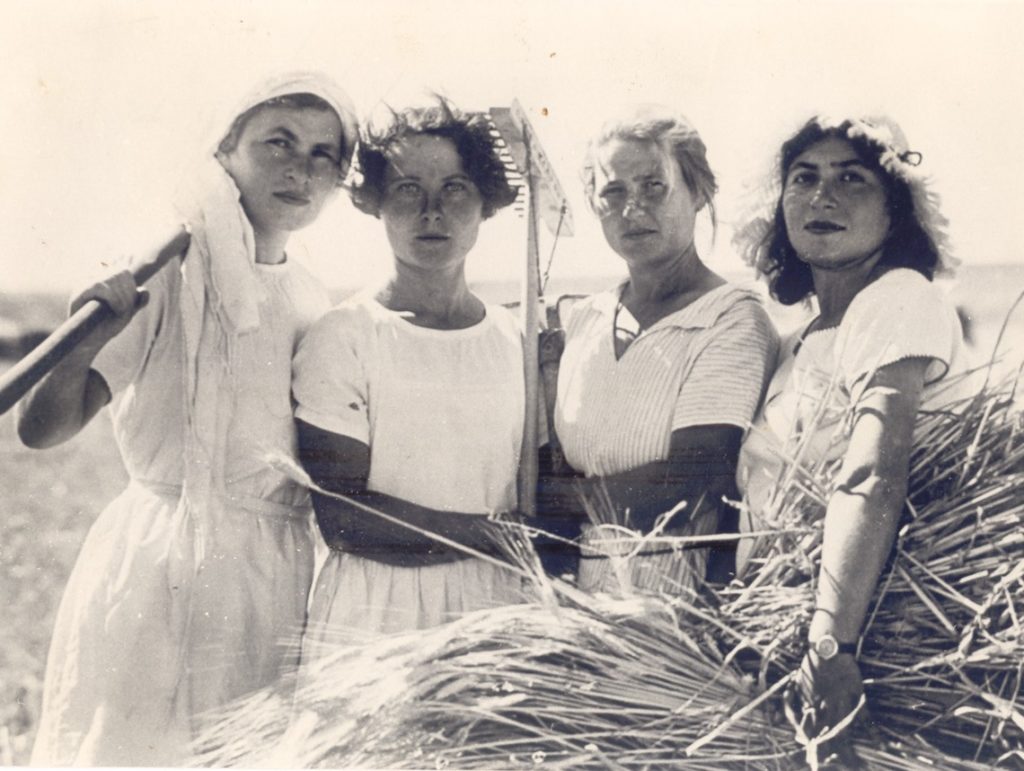
We have a natural tendency to look at the climactic year of 1948 as Israel’s real beginning, and in many ways, it is. But let’s remember that Jews began building modern Israel as far back as 1882, when they started returning home as part of the First Aliyah. Here was an early birth of Startup Nation that also is worth commemorating.

In fact, there were four more such waves of Jewish immigration — in 1904, 1919, 1924 and 1929. By the eve of World War II, according to the Jewish Agency (JA) website, the Jewish population of the area was 475,000, or about 40 percent of the total population. The JA site is full of interesting facts on these early pioneers, who came to be known as the Yishuv.

They plowed the land, built farming communities and infrastructure, revived the Hebrew language, started universities, and initiated democratic and civil institutions that would come to define the Jewish state.

Their journey was messy and full of setbacks. They were in conflict with Arabs, with British authorities and with other Jews. But each wave managed to contribute in its own way.

The Jews of the First Aliyah came in the wake of pogroms in Russia and Romania, and they built farming villages and urban settlements, most notably in Jaffa.

The Jews of the Second Aliyah built the foundation for the first all-Jewish city — Tel Aviv. They also introduced Hebrew into different spheres of life and began a new Hebrew press and literature.

These challenges didn’t start in 1948. They go back to the earliest days of the First Aliyah in 1882, when Jewish pioneers blazed the trail for an epic homecoming.

Many of these early newcomers were imbued with socialist ideals. The Jews of the Third Aliyah, for example, founded the Histradut, the labor organization that has had a lasting impact on Israeli society.

The road to America still was open during the Third Aliyah, but many Jews chose the land of Israel out of Zionist convictions. It’s no coincidence that this wave came not long after the Balfour Declaration of 1917, which first established the Jewish right to a homeland.

The Fourth Aliyah saw a new social composition of immigrants, with the arrival, mostly from Poland, of middle-class Jews who were shopkeepers and artisans. Some invested their small capital in workshops and factories, small hotels, restaurants and shops, but much of their investment was in construction. New villages, based on citrus orchards, were founded.

The Fifth Aliyah, which began in 1929, accelerated after Hitler came to power in Germany in 1933. More than 164,000 Jews arrived between 1933 and 1936. This wave represented the first large influx from Western and Central Europe. Among other things, these Jews built the first modern port in Haifa and expanded the Jewish neighborhoods of Jerusalem.

In addition to these waves of immigration, an active underground movement between 1934 and 1948 brought some 115,000 Jews in defiance of British restrictions. During the second world war, however, immigration from Europe became extremely difficult, so the Mossad ran clandestine immigration from overland routes, primarily from the Middle East.

Two of my uncles were smuggled out of Casablanca in 1948 to fight in Israel’s War of Independence. They were part of the first batch of Jews from Arab and Muslim lands who came in huge numbers during the first decades of Israel’s independence and now account for about half of the country’s Jewish population.

In sum, the story of the modern Jewish state is endlessly complex and fascinating. It has been marked by violent convulsions and vexing challenges. But these challenges didn’t start in 1948. They go back to the earliest days of the First Aliyah in 1882, when Jewish pioneers blazed the trail for an epic homecoming.

So, as we commemorate the great 1948 milestone, let’s not forget those earlier decades when Israel was still just a dream, when our modern-day ancestors returned to their ancient homeland and planted the seeds for the complicated miracle we celebrate today.


David Suissa is president of TRIBE Media Corp./Jewish Journal and can be reached at davids@jewishjournal.com.

Israel: Land of many birthdays Read More »

Trump visit to Israel at end of May in ‘advanced talks’

President Donald Trump likely will make his first visit to Israel at the end of next month.

Israeli and Trump administration officials are currently in “advanced talks” about a visit on May 21, before Trump’s scheduled European tour or at the end of the month at the conclusion of that visit, Israel’s Channel 2 reported Wednesday.

The visit will come shortly after Trump meets with Palestinian Authority President Mahmoud Abbas on May 3 in Washington, D.C. Trump hosted Israeli Prime Minister Benjamin Netanyahu at the White House in February.

Trump is seeking “a conflict-ending settlement between the Palestinians and Israel,” the president’s spokesman, Sean Spicer, said last week in confirming Abbas’ visit.

Trump visit to Israel at end of May in ‘advanced talks’ Read More »

Who Heckled Ivanka Trump at the Berlin W20?

I had an interesting, even disturbing experience covering the W20 Summit in Berlin for The Jerusalem Post, focusing on the “Inspiring Women” panel headlined by “First Daughter” Ivanka Trump.

She made this otherwise academic summit into a paparazzi affair, and it seemed like the press was eager for that click-bait story (like when President Trump apparently refused to shake Chancellor Merkel’s hand last month in Washington). They got their headline when Ivanka mentioned her father’s family advocacy to the “crowd’s” heckles.

“Ivanka Trump Booed….”

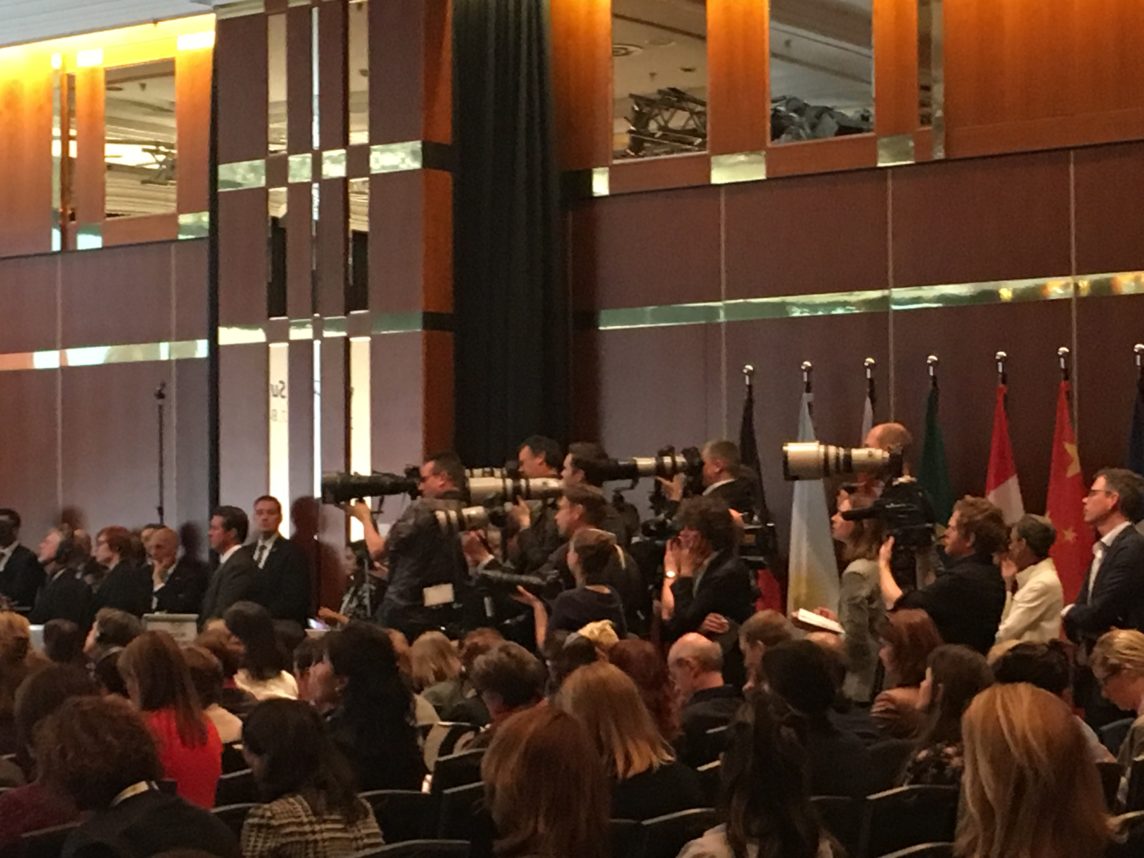
Sitting in the back, I didn’t hear “boos.” I certainly heard hissing, a few groans, which weren’t so loud, but audible. The women conference participants sat up front. The headline-hungry media clustered to the side. I heard the hissing from the newly packed media section, not the female participants up front, who overall kept the event classy.

IMG_7640
Did the media heckle Ivanka Trump for headlines?

But with the “hissing” and maybe a boo or two, the media got their sensational headline. “Ivanka Trump Booed!” One outlet started it, perhaps CNN or Reuters, and then the headline went viral, and the story became not the challenges facing women, but the supposed humiliation of “booed” Ivanka.

I’m sorry that people in my profession may have stooped this low. I’m skeptical of tagging “fake news” to stories, but I think I saw it in action. I think members of the media did the heckling. I will always seek to be objective in news coverage. It’s almost impossible for any journalist to be fully clean of bias in reporting, but we must strive for accuracy. We are not tabloids or activists, unless stated.

We are journalists with an important function. Ivanka handled herself, as a guest to Germany, with poise and eloquence, and I think she emerged as a role model promoting female camaraderie. I wish I could say the same for some of my colleagues.


Who Heckled Ivanka Trump at the Berlin W20? Read More »

The Path to Peace exchange, part 2: ‘Absent an agreement, Israel risks a deterioration of stability in the West Bank’

George J. Mitchell served as a Democratic senator from Maine from 1980 to 1995 and Senate majority leader from 1989 to 1995. He was the primary architect of the 1998 Good Friday Agreement for peace in Northern Ireland, chairman of The Walt Disney Company, US Special Envoy for Middle East Peace, and the author of the Mitchell Report on the use of performance-enhancing drugs in baseball, as well as the books The Negotiator and A Path to Peace. He was awarded the Presidential Medal of Freedom in 1999.

Alon Sachar has worked to advance Middle East peace under two US administrations. He served as an adviser to the US Ambassador to Israel, Daniel B. Shapiro in Tel Aviv from 2011-2012, and to President Obama’s Special Envoys for Middle East Peace, George J. Mitchell and David Hale, from 2009 to 2011. In those capacities, Alon participated in negotiations with Israelis, Palestinians, and Arab states. From 2006 to 2009, he served in the State Department’s Bureau of Near Eastern Affairs, focusing on the US bilateral relationships with Israel and the Palestinians as well as Arab-Israeli relations.

This exchange focuses on Senator Mitchell and Mr. Sachar’s new book A Path to Peace: A Brief History of Israeli-Palestinian Negotiations and a Way Forward in the Middle East (Simon & Schuster). Part 1 can be found right here.

***

Dear Senator Mitchell and Mr. Sachar,

In the book there are several descriptions of Senator Mitchell’s arduous attempts at convincing both President Abbas and PM Netanyahu to engage in substantive peace negotiations. Several personal meetings with the two are recounted, and a clear picture of deep entrenchment and unwillingness to compromise arises – Netanyahu would not talk borders until his very rigid security demands are accepted; Abbas did not accept Netanyahu’s security demands and demanded a halt of settlement construction as a precondition to talks. In the last of their four meetings, Netanyahu’s security demands (Israeli presence in the West Bank “for decades”) were rejected, and that was that.

I would like to ask about Netanyahu’s security demands. In a curious passage in the book, you write the following:

Netanyahu continued to insist on being fully satisfied by the United States on security issues before he would discuss territory, with us or with the Palestinians. Yet after Obama appointed U.S. military and civilian officials to begin those security discussions, Israel delayed meetings between the IDF and our officials for eight months. Through the summer and fall meeting after meeting was scheduled, then canceled. Finally, when one cancelation came at the last minute, I telephoned Defense Minister Barak, reminded him that these meetings were to be held at the request of Israel, and bluntly demanded that the Israelis end the delay in getting them started. He agreed, but the excuses and delays continued.

My question: What do you believe is behind the stalling described in the passage above? Why has Netanyahu never taken the available security suggestions brought forward by the US and by other peace negotiators seriously? What message does your book have for Israelis who are afraid of hell breaking loose if the IDF leaves the West Bank and the Jordan border?

Yours,

Shmuel

***

Dear Shmuel,

There are many possible reasons for the delay in our security discussions. There were internal disagreements within Israel’s government over who would lead the discussions. There was considerable opposition within Israel’s ruling coalition to the two-state solution. There was the lack of trust between Netanyahu and Abbas.

The United States is committed to helping Israel protect itself and to preserving Israel’s qualitative military edge in the region. In addition to large aid packages to Israel, we have very close and ongoing relations at all levels of government, including working groups within our intelligence and defense agencies and at the State Department.

The reality is that the security concessions that Israel seeks in a peace agreement with the Palestinians must come from the Palestinians. The United States can present its ideas; we can work with Israel to try to minimize the risks inherent in any withdrawal; we will, of course, urge Palestinians to make reasonable concessions, and we can leverage our relations with the other Arabs, with Europeans, and with others to do the same. Ultimately, though, and by its very definition, a peace accord requires Palestinian consent. In that context, terms on security cannot be imposed on them any more than terms on territory or Jerusalem can be imposed on Israel. Israelis and Palestinians will live with the consequences of their decisions. We cannot realistically impose those decisions on them; even if we could, they then would be unlikely to stand the test of time.

The second part of your question touches on the dilemma facing Israel. No course of action is without risk. Many Israelis believe that the risk is too great that a Palestinian state will fail and that the West Bank will be taken over by Hamas or more radical groups – “hell breaking loose,” as you write. But there also are many Israelis who believe, as we do, that the risk of instability is much greater in the absence of a peace agreement. As we mentioned in our response to an earlier question, support among Palestinians for the current PA-Israel cooperation on security is low and declining. Palestinians increasingly view the PA as serving Israel’s territorial and security interests more than the Palestinian desire for self-determination and independence. We believe that the current arrangement cannot endure.

Israel’s security environment today is complex. During most of Israel’s early history, the principal threat was from a land invasion by the armies of neighboring states. The threat now comes from Iran’s quest for regional hegemony, from terrorist organizations operating in neighboring territories, and from the uncertain situation in the West Bank. Any one of those threats should be enough to keep Israel’s security establishment awake at night; the combination of all three is daunting.

As the United States has learned in its own counterterrorism efforts, the most effective way to counter non-state actors, the proliferation of contraband, and the flow of funds to extremists is through broad and close intelligence and security coordination with partners. Many Arab governments, particularly in the Gulf, oppose Iran and fear non-state actors as much as the Israelis do. As a result, the cooperative relations between Israel and some of the Arab states are as close as they have ever been. But the working relationship between states pursuing common strategic and defense goals must go beyond just senior levels. Those are, of course, important. But the bulk of the relationship must be maintained at the working levels, by professionals at intelligence, defense, and financial agencies. Those relationships take time to develop, and they are unlikely to mature and normalize in the absence of an Israeli-Palestinian agreement.

Absent an agreement, Israel risks a deterioration of stability in the West Bank and an end to effective cooperation with the PA on security. It also misses an opportunity to shape favorable regional coalitions and to establish deeper and more comprehensive regional cooperation to combat Iran, non-state actors, and other mutual threats; agreements and relationships that may be able to withstand, or even help mitigate, the consequences of the Middle East’s unpredictability.

Ultimately, Israelis will have to decide whether their Government’s current views on the West Bank and Jordan Valley are more important than the normalization of relations with the Arab and Muslim world and close security coordination with the Palestinians. Palestinians also have difficult and wrenching decisions to make.

There is no perfect, risk-free, entirely just solution. There is likely to be partition and violence in the future.  What the parties must ask themselves is how to shape that partition to better position them to deal with regional and domestic threats; what approach will be less difficult and less costly, especially in human lives. An agreement will be very difficult to achieve and will have its own problems. But an agreement – phased, coordinated, internationally and regionally backed – offers both Israelis and Palestinians less pain and expense than they otherwise will endure.

The Path to Peace exchange, part 2: ‘Absent an agreement, Israel risks a deterioration of stability in the West Bank’ Read More »