Sari Bashi, a prominent Israeli human rights lawyer, was on the phone last week with a Palestinian utility official in the Gaza Strip who had worked closely with Israelis for years and had just learned that his house in Gaza was no longer standing.
“He asked me, ‘Why are they doing this? Israeli soldiers did not used to be like this. Red lines are being crossed,’” Bashi recounted.
Bashi’s organization, Gisha, which works to protect the freedom of movement of Gaza Palestinians, is one of several major Israeli human rights organizations that banded together during Israel’s military operation in Gaza to highlight the plight of Palestinian civilians caught in the fighting.
Careful to avoid taking political positions on the Israeli military operation itself, the organizations said that as Israeli groups they felt a special duty to point out the Jewish state’s moral and legal obligations during the conflict — even if those observations would not be well received by an Israeli public overwhelmingly supportive of the war effort.
“Our credo is that there is the same international law that Israel and any other nation in world is bound to respect. We hold our own government accountable,” Bashi said in an interview. “I would like to think that we make these demands of Israel from a place of empathy — empathy for the Palestinian civilians whose rights are being violated and empathy for the ordinary people in Israel who need to be reminded of their core values, especially human rights.”
During the 22-day war, the organizations brought two cases to the Israeli Supreme Court dealing with issues of suspected violations of international humanitarian law. One demanded that the Israeli army stop attacking medical teams in Gaza and permit the wounded to be evacuated to hospitals. The second demanded that Israel’s Defense Ministry supply fuel and electricity to run Gaza’s hospitals and sewage and water systems, all of which were on the verge of collapse during the fighting.
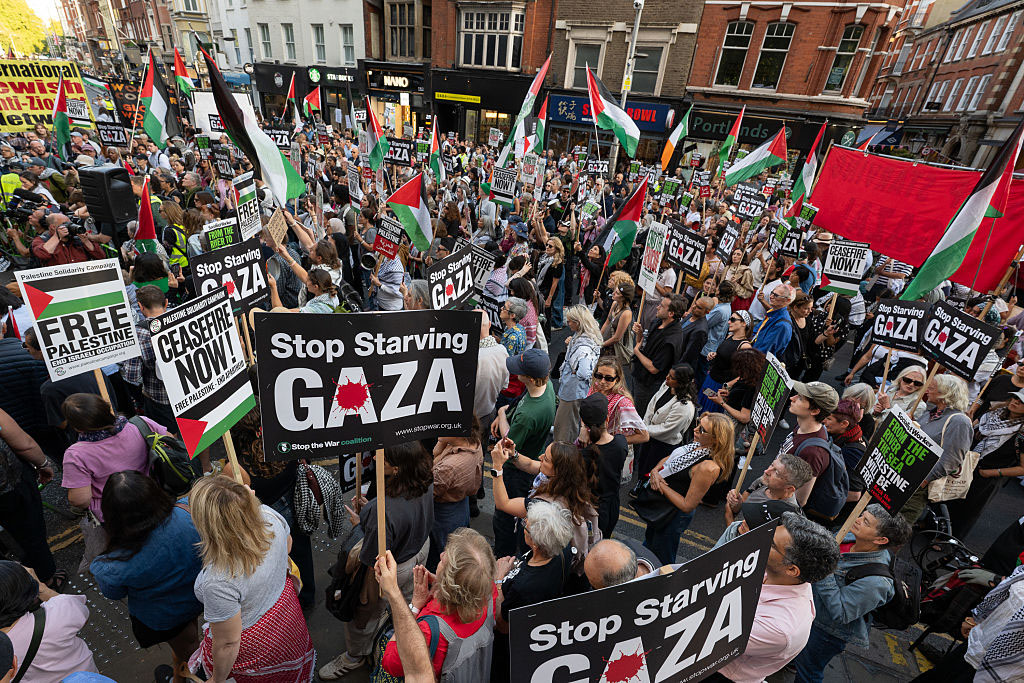
During the war, Israelis largely dismissed protests of Israeli actions by international human rights organizations, the United Nations, the Red Cross and masses of demonstrators around the globe. In Israel, the protests were seen as evidence that the world does not understand Israel’s security needs or the caution the Israel Defense Forces says it practices to limit civilian casualties in urban warfare.
It was precisely the claim of caution that Israeli human rights groups decided to challenge publicly.
“Civilians are not cannon fodder, neither in Gaza nor in Sderot” read an ad published on Israeli news Web sites by B’Tselem, an Israeli human rights group.
Sarit Michaeli, a spokeswoman for B’Tselem, said the group’s main message was for both sides to try to limit harm to civilians.
“The message was directed to both sides of the conflict, but as an Israeli organization, the impact on the Palestinian side is questionable, to say the least,” Michaeli said. “We owe a moral responsibility to our own country to maintain standards even during times of great strife.”
Responding to charges of callousness by the IDF, Israeli Foreign Minister Tzipi Livni said Monday, “The Israeli Defense Forces, according to its principles, and justifiably so, tries to prevent harm to civilians.”
She told Israel Radio, “Just as in all countries in the world there is a difference between murder and negligent death or an accident, this is the difference between the IDF and terrorism. The terrorists look for children in kindergartens and schools and for civilians. The IDF looks for terrorists, and it could be that sometimes in the war against terror civilians are harmed.”
Dr. Zvi Bentwich, who serves on the board of Physicians for Human Rights-Israel, said his group tried to steer clear of politics and focus on a medical and human rights agenda. The group raised about $1 million for medical equipment and medicine to donate to Gaza and tried to advocate for more efficient evacuation of wounded Palestinians.
Once it became clear that the medical system in Gaza was overwhelmed, Physicians for Human Rights-Israel lobbied for casualties to be taken to hospitals outside Gaza.
Advocating for the needs of Gazans often feels like lonely work, Bentwich said.
“I think that overall, our voice was the voice of a small minority,” he said. “Because of the overwhelming skewing of public opinion, there was a lack of concern about what was happening on the other side.”
Israeli human rights groups have challenged Israel’s official justification for the fighting as a purely defensive measure against Hamas for its rocket fire on southern Israel. They accused Israel of imposing a form of collective punishment on Gaza’s population by imposing an embargo on Gaza for the last year and a half, since Hamas wrested control of the strip from the more moderate Palestinian Fatah faction in June 2007.
In an open letter sent amid the fighting last week to Israel’s attorney general and top political and military leadership, the groups asked the authorities to take several steps to ease the plight of the civilians caught up in the warfare. Among other things, they asked that Israel open a route for civilians to escape the battle zone and help facilitate the immediate medical care of the injured.
The groups also established a blog — http:// http://gazaeng.blogspot.com/ — to update readers on incidents connected to the fighting in Gaza and its aftermath.
While human rights groups were active on the legal and media front, peace groups staged candlelight vigils for those killed in Gaza and launched drives to collect emergency supplies for civilians, ranging from powdered milk to baby clothes and dry foods.
One organizer of a collection drive noted that contributors included mothers of soldiers fighting in Gaza.
“This is not about a political agenda,” one mother said.
Meanwhile, Israelis generally were focused on the home front and the safety of the soldiers fighting in Gaza.
With Israel enforcing a ban on Israeli and foreign journalists from entering Gaza, the Israeli media offered relatively little coverage of Palestinian civilian casualties for most of the war.