Five days after the release of the Pew Research Center’s “Portrait of Jewish Americans,” a report revealing that Jewish engagement is on the decline, speakers at The Jewish Federation of Greater Los Angeles’ Oct. 6 Synagogue Leadership Conference all appeared to be asking one question: Should we panic?
“I share your worries about the results of the Pew research study, but I don’t think we should panic,” Harvey Cox, a leading theologian who until his retirement in 2009 was a professor at Harvard Divinity School, told a room full of rabbis, lay leaders, communal officials, philanthropists and others. The group had assembled at Federation headquarters for an event titled “Staying Relevant in a World That Won’t Stop Changing.”
Cox, author of “The Future of Faith,” delivered the program’s keynote address. He also participated in the day’s closing panel, alongside Rabbis Naomi Levy and Yosef Kanefsky, and others.
Sunday’s event was planned prior to the release of the study, but it came at an opportune time, given that the study paints a bleak picture of what Judaism looks like right now. “The percentage of U.S. adults who say they are Jewish when asked about their religion has declined by about half since the late 1950s” and 32 percent of Jewish Millennials “describe themselves as having no religion,” is among the findings in the report.
Cox, who is not Jewish but is married to a Jewish woman and has raised his child as Jewish, said there is, nevertheless, a lot to find encouraging in today’s world, despite the findings of the report.
He said he often meets young people at Harvard who are interested in God and spirituality.
Kanefsky, however, leader of the Modern Orthodox B’nai David-Judea Congregation, challenged Cox’s optimism, noting that he is worried not about fewer people being interested in spirituality but in the decline in levels of observance.
“If the question were: How do we make sure that young Jews remain people interested in God, people interested in spirituality? Then, absolutely, don’t panic. Because interest in God, interest in spirituality, is on the upswing. But if the question is: How do we want to ensure the continuity of Judaism? Panic,” Kanefsky said.
Kanefsky spoke during a panel that followed Cox’s keynote lecture, which addressed pluralization, American-Jewish attitudes toward Israel and other topics over the course of an hour.
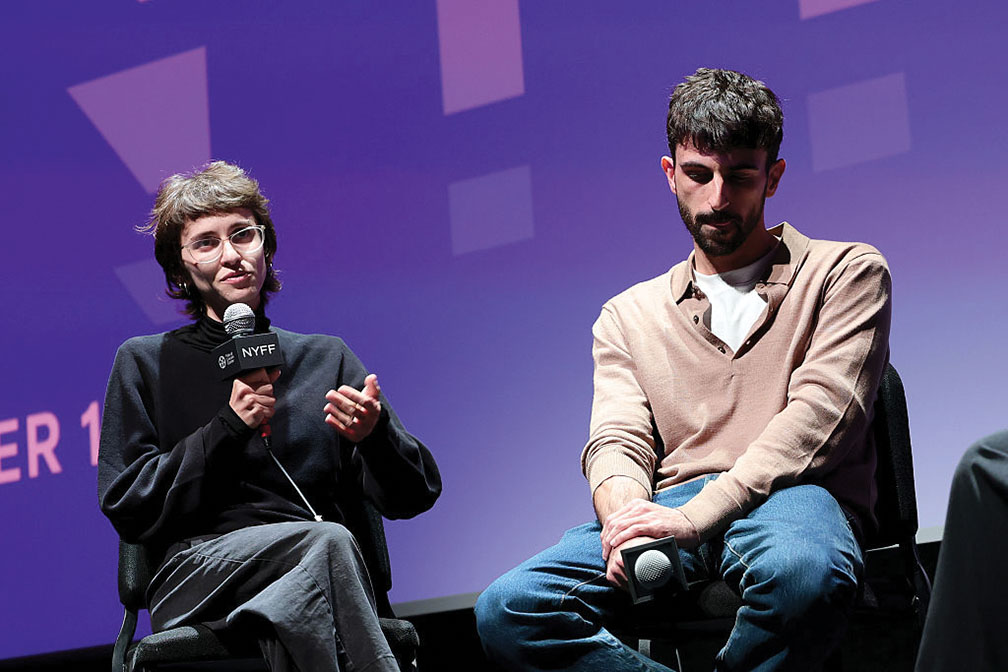
Marc Rohatiner, who has served as a lay leader with multiple organizations, joined the conversation with Kanefsky and Levy, spiritual leader of Nashuva, a spiritual community that also engages through social service. Valley Beth Shalom’s Rabbi Ed Feinstein served as moderator.
Levy was decidedly more upbeat in her reaction to the Pew’s findings.
“The Pew study doesn’t scare me; it excites me. It means even more people for me to address,” said Levy, whose services are often an entry point for previously unengaged Jews.
But, Cox pointed out, the problem isn’t that people are less interested in being religious — on the contrary, young people want to be religious but are distrusting of the religious institutions. But it is key, he said, to rethink the approach of using institutions as a way to reach people.
In the future, maybe synagogues should exist, but then again, maybe not, Cox said, arguing that Jewish leaders must be open to anything when it comes to considering how the religion will proceed.
“How do we retool our religious institutions so we can help people in suspicious mode, in searching mode, so that they can feel they’re not doing it alone? I don’t know. But I know religious institutions are not built for eternity,” he said. “They come and go.”
Kanefsky, however, said that to dismantle the institutions means there is no religion.
“If you don’t have the scaffolding, it ain’t Judaism,” Kanefsky said.
No direct solutions were agreed upon by the panel. “The challenge is what changes and what doesn’t change,” Feinstein said.
It’s a challenge that affects synagogues as well as the Federation.
“We think challenges faced by synagogues are challenges being faced by us,” said Andrew Cushnir, executive vice president and chief program officer at the Federation, who participated briefly in the panel at the request of Feinstein.
The event was part of the Federation’s mission to work with synagogues to address the needs of the community, Cushnir said. Beryl Geber, Federation senior vice president, organized the conference.
Other sessions — “Relational Judaism,” “The Impact of New Media on Organizational Loyalties” and “Models of Membership” — made up the remainder of the conference on Sunday, drawing more than 70 attendees.