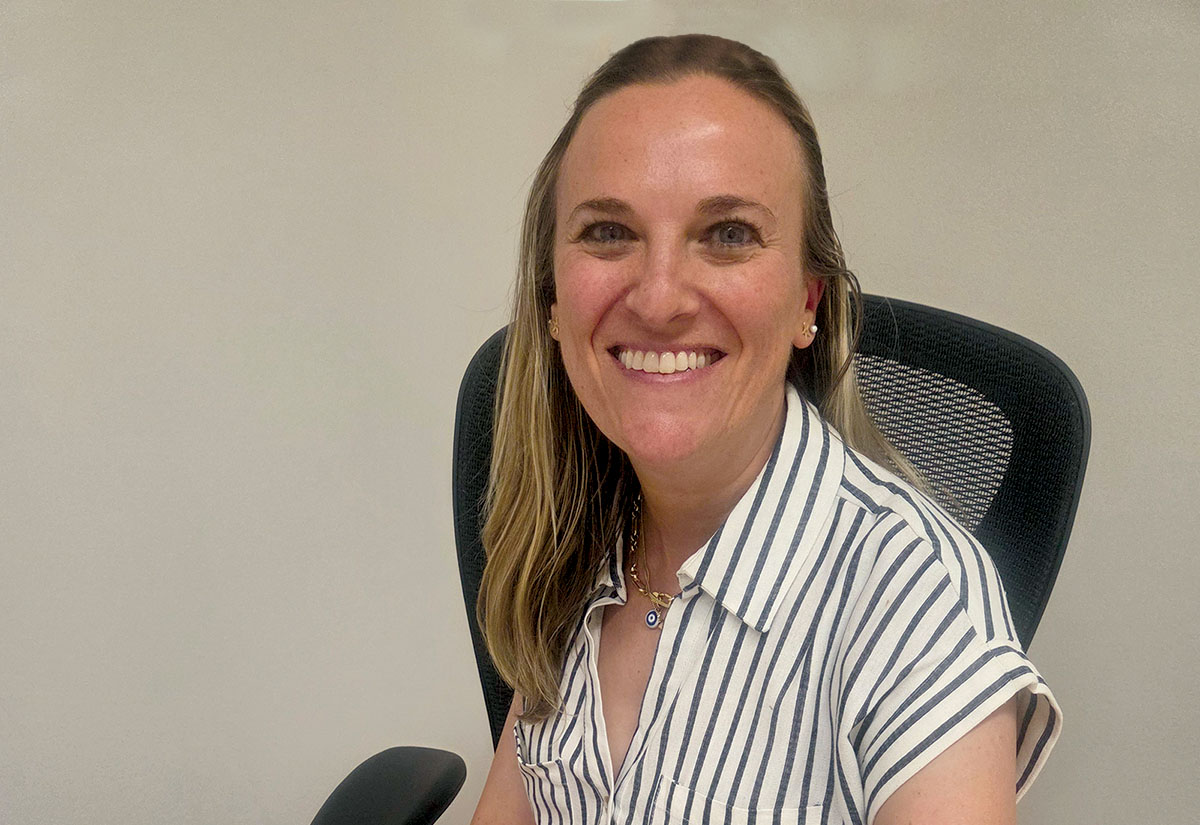
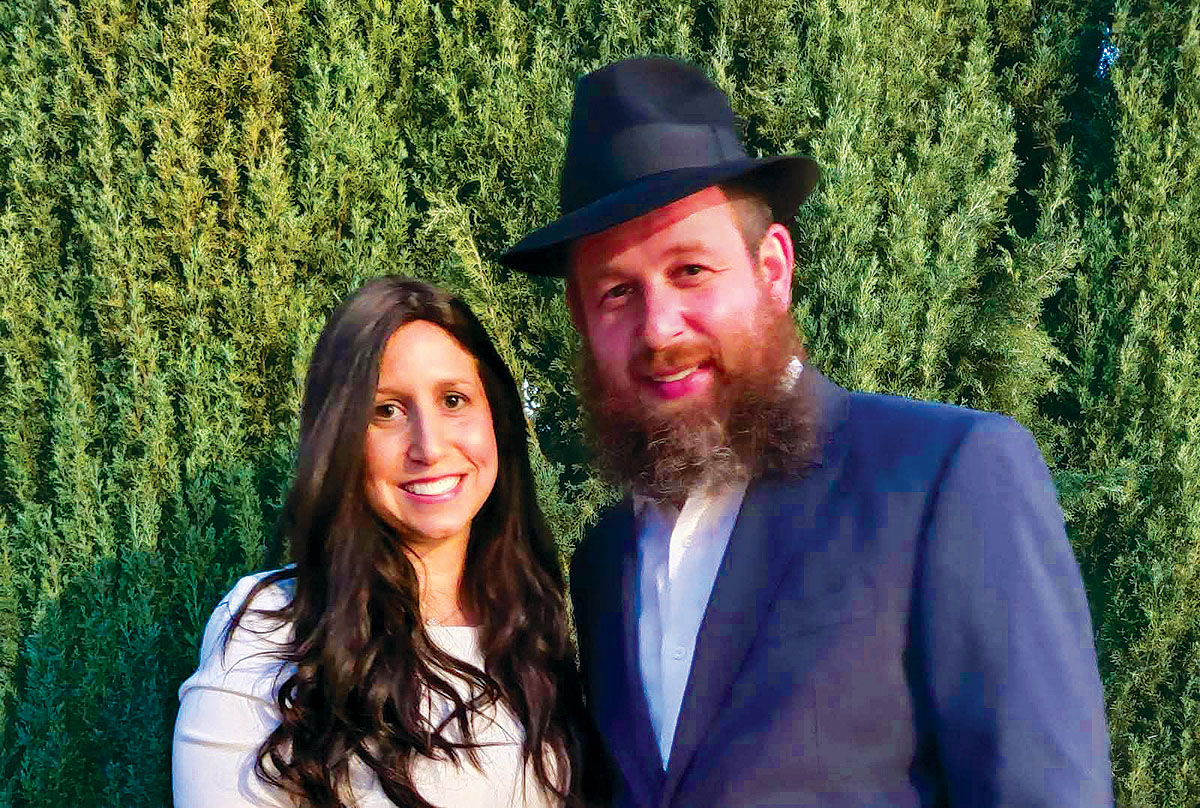
Rabbi Yanky Kahn has traveled to
Israel probably more times in the last two years than most American Jews do in a lifetime. In 2023, could he have foreseen the Gaza War stretching into two years?
“No,” he said. “Now what really affects me are the stories you hear of all the people still fighting in Israel. Over the holidays, so many families, so many husbands are fighting. Meanwhile, the wives and kids are home alone.
“That is where the pain is. All the widows, all the orphans.”
Rabbi Kahn’s rebbetzin, Hindy, mother of their four children, has joined him on four of the eight relief missions. “Hindy was in touch with [victims’ families] throughout the holidays. Some women asked Hindy when we are coming back.”
At his father-in-law’s shul, Chabad of the Valley, where he serves, Rabbi Kahn engineered a successful campaign for the High Holy Days. “We put money directly into (dozens of) widows’ bank accounts,” he said. “No strings attached. Not anything. We have bank details, and we put money straight into their accounts. Besides the financial help, there is the feeling of community help, letting these families know we are here for them. Sometimes people feel forgotten.”
Rabbi Kahn went on to relate the story of one widow he helped. Her husband committed suicide. Besides financially helping her, she was youngish. She had a very young child with special needs.
When you enter the living room of the Kahns’ Encino home, you have to be careful where you step. The floors were bulging with gifts for Valley families and others with needs.
“I can show you a suitcase in this house,” Rabbi Kahn said, “that we have prepared for the young widow I just mentioned. It will be delivered by my nephew who is returning to Israel. Toys for the kids, and clothes for the kids. Just to bring the family a little light.
“No one in their wildest dreams thought that the war would go on this long. I remember how we all sprang into action as soon as Oct. 7 happened. But no one thought we would be sitting here planning our ninth trip.”
After noting that “we have taken upon ourselves quite a bit to help these orphans and widows,” Rabbi Kahn recalled a story about the first Chabad Rebbe. He was jailed for helping Eretz Israel by sending money there “because he lived in Russia, and Israel was empowered by the Turkish. He was arrested for helping the enemy. Our job is to help our local community and to help Israel. There is no one better to help the orphans and widows.” He illustrates this with a story: “About 200 years ago, Sir Moses Montefiore was asked by the Queen of England, ‘How much are you worth?’ He built the bricks on top of the Western Wall. He built the windmill. He said ‘Give me a few days to do my accounting.’
“He came back and answered ‘Five million pounds.’ The queen said ‘You are worth much more than that.’ He replied, “That’s what I have given to orphans and widows. That no one can take away from me. Everything else can be taken away from me. My ship could sink, my house could burn down, the stock market could go up or down. But that is what I have given away.”
Rabbi Kahn was reminded of an Israeli family. “The husband passed away, and we tried to help them. They said, ‘Thank God, we are financially okay.’ But just before the High Holy Days, I get a call from a cousin. He said the family ‘did not realize how difficult it was going to be, but if you can help us now, it would be appreciated.’ So we did.”
The rabbi recalled that a few months ago, Chabad of the Valley donated a food truck that brings “so much joy and light to about 10,000 people so far. When it goes out, it serves close to 400 people at a time, and it has been out many times. It is fascinating.”
Rabbi Kahn pondered the question about a familiar scenario: why has there has been so much reporting about Gaza victims, but scant mentions of wounded or killed Israelis. The answer, he said, is simple. “Antisemitism. We are hated. And the hatred has accelerated. On Rosh Hashanah, Chabad of the Valley had 60 to 70 volunteers going to rehabs, for seniors, hospitals, old-age homes, homes of people who can’t go out. We had an army out there.” The rabbi said that he was walking on Weddington Avenue going to a rehab to visit a young boy and “someone screamed out to me, ‘Free Palestine!’ This is Rosh Hashanah in Encino, California.”
Rabbi Kahn has seen signs the Jewish people have woken up to antisemitism. “My grandparents are Holocaust survivors,” he recalled. “So are Hindy’s grandparents. Her grandfather’s family was wiped out. My grandfather’s family was, too.”
To avoid a recurrence of these tragedies, it is up to us, said the rabbi. “Very scary times we are living in,” he noted. “We just have to increase in love, increase in kindness and don’t be intimidated. Don’t take off your tzitzit. Be proud. Be happy.”
The widely traveled rabbi admitted that “I am just shocked that wherever you go in the world, you feel antisemitism. No matter if it’s Spain, if it’s Italy.”
Across the room, Rebbetzin Hindy suggested contemporary Jews are more united than she can recall. The rabbi agreed because “we have realized we only have each other.
“We should listen to what the Lubavitcher Rebbe said: ‘There’s no such thing as security for land. The only way to true security is by strong borders, and we protect them.’”
Fast Takes with Rabbi Yanky Kahn
Jewish Journal: Has the war affected your children?
Rabbi Kahn: Definitely. I just heard a story that my son Menachem Mendel, 11, has collected money for Israel and my brother went on a mission from Australia to Israel. They wanted a food truck. The soldier to whom Menachem Mendel gave the money said he keeps it in his pocket as a remembrance of kindness, of how people in California – especially Menachem Mendel Kahn – care.
JJ: Have you two, as a couple, changed much since the war began?
RK: We work everything together. We have been together on four of my eight trips.
JJ: What is your favorite book?
RK: Joseph Telushkin’s “Rebbe: The Life and Teachings of Menachem M. Schneerson, the Most Influential Rabbi in Modern History.”