fbpx

Sharing cultures through music

Elementary schoolchildren, Jews and non-Jews, many of them Latinos, danced the Mexican Hat Dance in the aisles of the main sanctuary at Valley Beth Shalom (VBS) in Encino. Accompanied by the Los Angeles Jewish Symphony (LAJS), Argentine-born cantor Marcelo Gindlin sang a rousing rendition of the classic song while hundreds of happy 10-year-olds waved and clapped as part of a one-hour program presented by LAJS showing the links between Latino and Sephardic music. In attendance were nearly 1,000 fourth- and fifth-graders from Jewish day schools and their counterparts from largely Latino schools in the San Fernando Valley, as well as about 100 “senior guests,” residents of Jewish homes for the elderly.
[additional-authors]
December 1, 2010

Elementary schoolchildren, Jews and non-Jews, many of them Latinos, danced the Mexican Hat Dance in the aisles of the main sanctuary at Valley Beth Shalom (VBS) in Encino. Accompanied by the Los Angeles Jewish Symphony (LAJS), Argentine-born cantor Marcelo Gindlin sang a rousing rendition of the classic song while hundreds of happy 10-year-olds waved and clapped as part of a one-hour program presented by LAJS showing the links between Latino and Sephardic music. In attendance were nearly 1,000 fourth- and fifth-graders from Jewish day schools and their counterparts from largely Latino schools in the San Fernando Valley, as well as about 100 “senior guests,” residents of Jewish homes for the elderly.

Gindlin sang an operatic version of “Granada,” which he said he heard his father sing “at every party.” He told the students that Granada is a city in Spain, the country whose history connects, in a profound way, Latinos with Sephardic Jews, both groups tracing much of their music and culture, as well as their language, to Spain.

The Nov. 29 concert was the culmination of a series of classroom workshops conducted by LAJS musicians, who went to schools to help the students understand what they were going to see and hear.

Beth Elliott, who plays viola with LAJS, went to Kittridge Elementary School in Van Nuys a number of times prior to the concert. “I showed them how Latino and Sephardic traditions are similar,” Elliott said. “For many of these kids, it’s their first time inside a Jewish temple, their first time seeing a concert.”

Noreen Green, LAJS conductor, said the musicians served as ambassadors: “It’s as if the Jewish and Latino communities live in two different worlds,” she said. “Some of the Latino kids have never met a Jewish person, much less been inside a synagogue. … It’s important to reach out to our neighbors. And what better way of doing it than by music?”


Did you enjoy this article?
You'll love our roundtable.

Editor's Picks

Latest Articles

Lessons in Gratitude

The deepest expression of gratitude isn’t simply saying thank you for what we’ve received. It’s allowing what we’ve received to shape who we are, who we become, and how we treat others throughout our lives.

A Thanksgiving to Remember

The first holiday my family celebrated in Los Angeles was Thanksgiving. Although it was many decades ago, I can picture that day like it was yesterday and my heart bursts with gratitude for how meaningful and special that day was.

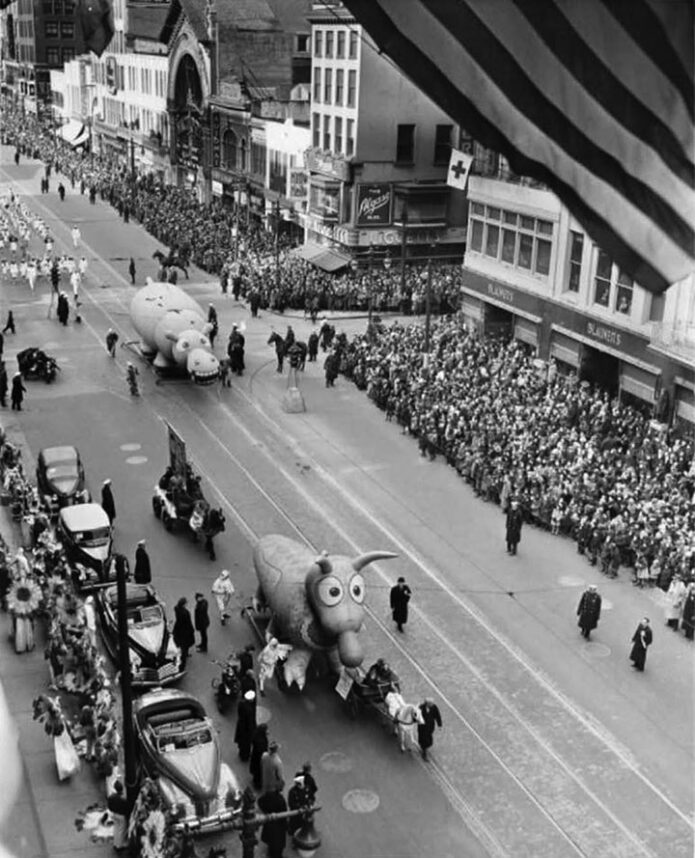
The Thanksgiving Parade and a Jewish Pennsylvanian

The Gimbel family had benefitted greatly from America, and for that they were grateful. A Jewish family, thankful for the freedom to pursue the American Dream, gifted the country, among its many contributions, its quintessential Thanksgiving public celebration.

From a Global People to a People of Israel

Today, 46% of world Jewry lives in Israel. In 2070, according to the forecast, 62% will live there. The U.S. share of world Jewry will drop from 39% to 26%, which numerically means 1.2 million fewer people.

More news and opinions than at a Shabbat dinner, right in your inbox.