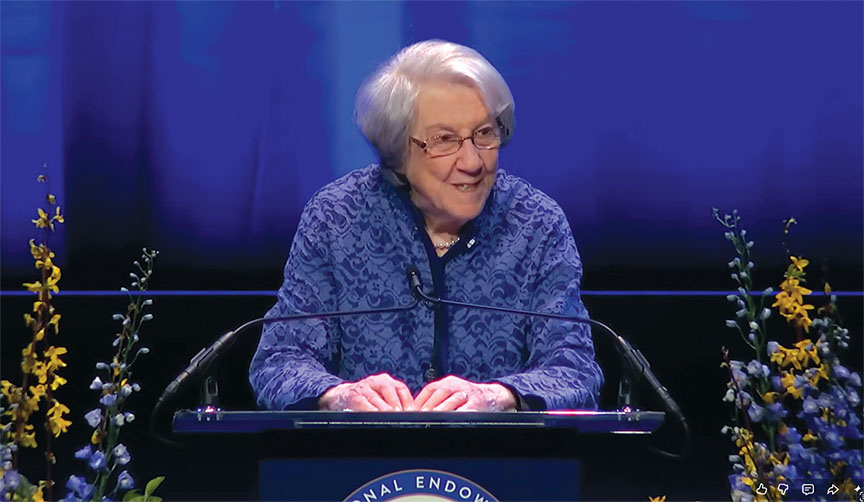
“I don’t need an introduction, I need a conclusion,” Rabbi Harold M. Schulweis said on Sunday, June 7, as he stepped up to a microphone on the Pierce College campus in Woodland Hills to address the well over 2,000 people gathered for Jewish World Watch’s third annual Walk for Darfur.
Though Schulweis was responding to being described as “the man who needs no introduction,” the Jewish World Watch founder and longtime rabbi at Encino’s Valley Beth Shalom was making clear his desire to see an end to the need for such an occasion – hoping for the day when genocide in the Sudan will end.
Jewish World Watch was established in 2004 in response to Schulweis’ High Holy Days’ call-to-action sermon and has quickly grown to become a coalition of more than 60 synagogues of all denominations. Together these congregations have raised their voices against genocide, focused first on the ongoing crisis in the Sudan, where 400,000 civilians have been killed and 2.5 million displaced.
To date, JWW has raised more than $3-million for education, advocacy and relief programs, including a speakers bureau, divestment advocacy and a few more tangible efforts, such as backpacks filled with supplies for refugee children and the highly effective, low-cost solar cookers that enable refugee women in Chad to avoid risking rape from marauding gangs when they leave their camps to collect firewood.
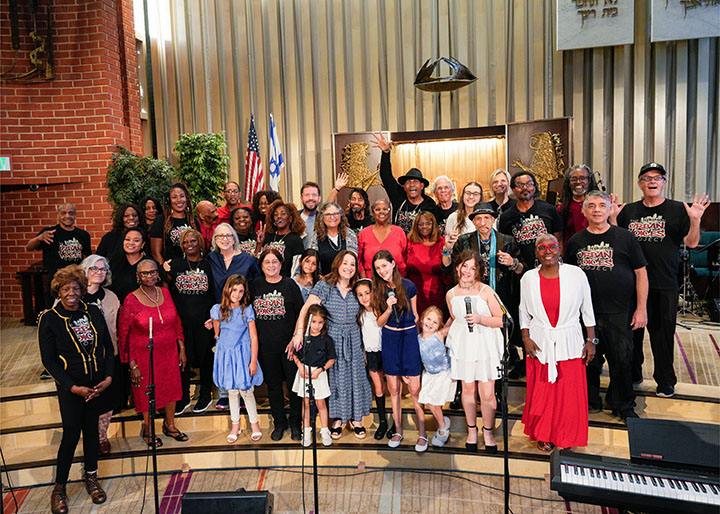
As the sun in a cloudless sky heated up the San Fernando Valley, Sunday morning’s program proved to have many highs: Special guest Faisal Abdelmoula, one of a group of Darfuri refugees who came from their new homes in Arizona, spoke to the crowd: “The people of Darfur don’t know you by your faces, but they know you by your prayers,” he said, before leading a chant of “Stop Genocide Now.” Later, a drum circle roused the crowd with a mix of African instruments, and the Tischtones band from Beth Shir Sholom sang songs in Hebrew.
There were also surprises: The crowd was larger than expected – organizers say there may have been as many as 3,000 present, with 2,000 officially signed up before the walk. The money raised was significant—$125,000 to support JWW’s refugee relief programs. Participants ranged in age from just a few months to a significant cadre of over-70ers, all of whom walked the three-miles around the suburban neighborhood, stopping traffic and bearing signs of “Stop Genocide Now,” and “Never Again,” words that hold special meaning for all Jews.
The event was led by Janice Kamenir-Reznik, president of JWW, along with Tzivia Schwartz Getzug, the organization’s executive director, Allison Katz, chair of the Walk Committee and Abby Leibman, Walk Coordinator, and included appearances from Los Angeles City Conptroller-elect Wendy Gruel, City Councilman Dennis Zine and City Councilwoman Jan Perry.
Throughout the event, the Darfurians stood by as both participants and observers, wearing the event’s yellow T-shirts emblazoned with a map of their region. Among them was a small child, a toddler, who playfully ran between his mother and father, laughing as he escaped their grasp – a symbol of a hopeful future that extends beyond violence, without the tragedies of the past and representative of a new, normal world filled only with song, joy and community.
Photos by Barbara Grover, Jewish World Watch
 ” target=”_blank”>