When Georgia Freedman-Harvey’s son was born with a rare genetic disorder, she and her husband discovered "the invisibility factor" for Jewish children with special needs.
"When the sign says ‘Everyone Welcome,’ it doesn’t really mean everyone," said the Orange County mother of two. Determined to give her son as normal a childhood as possible, she fought to have him participate in activities from Mommy and Me groups to public school classrooms to Jewish camps. "We need to get the non-disabled community more educated so that they will want to include children like mine," she says.
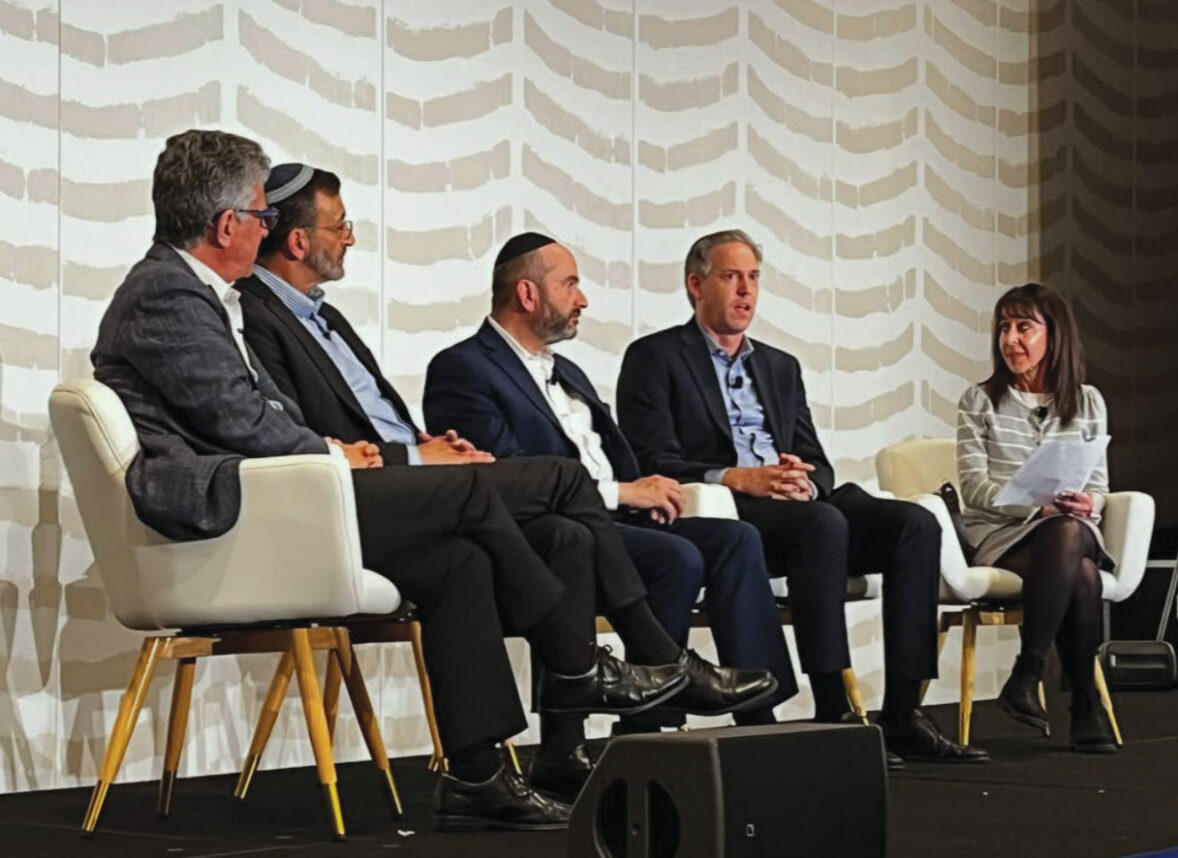
Freedman-Harvey recounted her experiences at a conference on Judaism’s response to disability held Sept. 13 at Hebrew Union College-Jewish Institute of Religion (HUC-JIR) in cooperation with the USC School of Social Work. The gathering brought together rabbis and attorneys, social workers and students, disabled individuals and their families to share insights and spur further efforts to integrate the disabled into everyday life.
"Disability is something that inhibits free and full participation as an individual in communal life," explained Wilda Spalding, a conference speaker who has headed multiple delegations to the United Nations’ Commission on Human Rights. Beyond those using wheelchairs, the disabled include people who are hearing or vision impaired, have mental disabilities or have any number of chronic diseases.
Presenters dealt with a range of cultural, legal and institutional issues. Dr. Liora Findler of Bar-Ilan University’s School of Social Work, reported on her studies looking at grandparents in families with disabled children. David I Schulman, supervising attorney of the Los Angeles City Attorney’s AIDS/HIV Discrimination Unit, warned that the courts are slowly eroding the hard-fought legal rights of people with disabilities. Though unable to fly out because of airport closures, Sara Rubinow Simon provided a description of efforts made by the Jewish agencies in Washington, D.C., to integrate children with special needs into the Jewish community.
"This may have been the first Jewish consultation on services to the disabled in a number of years in our community," noted Steven Windmueller, Director of the Irwin Daniels School of Jewish Communal Service, HUC-JIR. The program was co-sponsored by a number of entities — not all of them Jewish — including the City of Los Angeles Department on Disability. Other Jewish organizations participating included USC’s Casden Institute for the Study of the Jewish Role in American Life, The Kalsman Institute on Judaism and Health of HUC-JIR and Jewish Family Service of Los Angeles, a beneficiary agency of The Jewish Federation.
"We can only hope that this gathering might have served as a catalyst for further discussion and for needed intervention," Windmueller said. "Whatever else it did achieve, it reminded us, especially in this season of renewal, that we have an opportunity and an obligation to reach out to all within our community."
For a list of programs for the disabled offered by Jewish Family Service of Los Angeles, call (323) 883-0342.