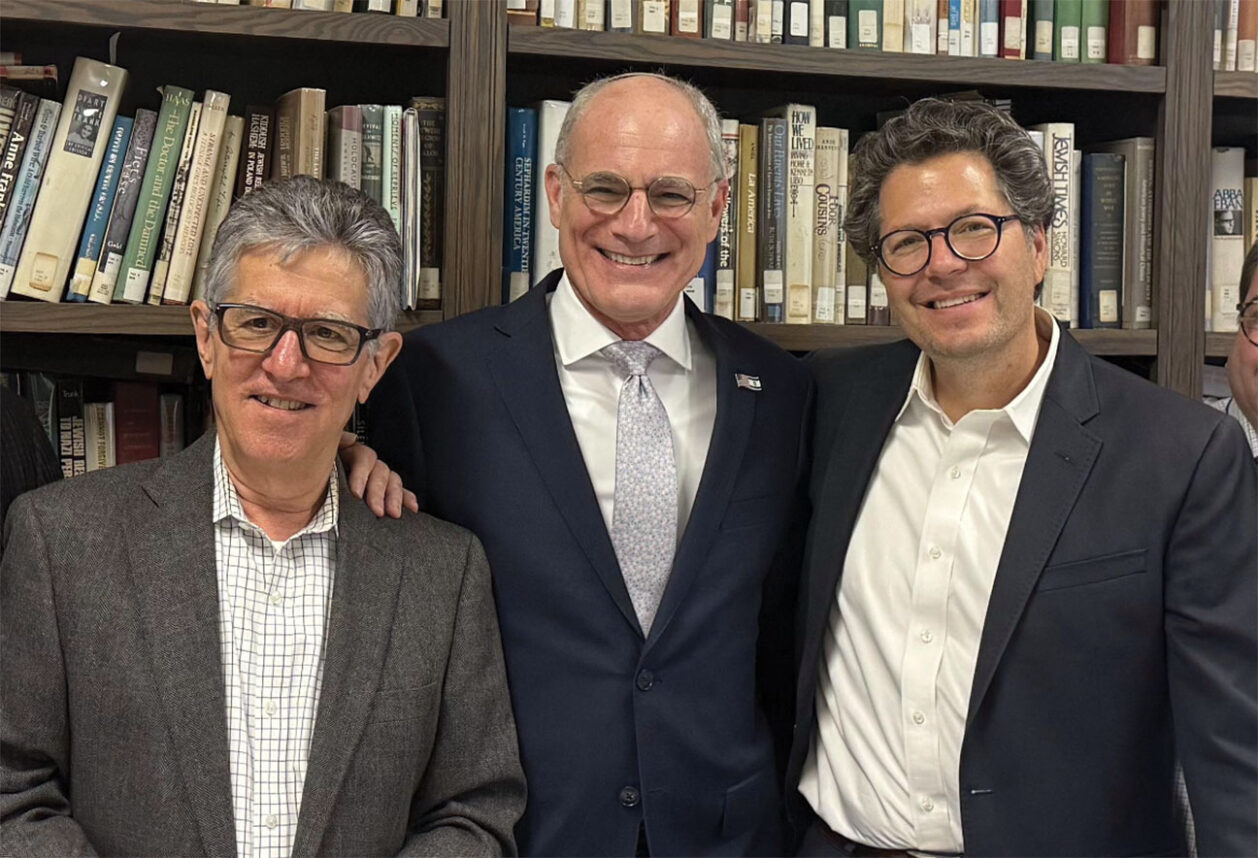
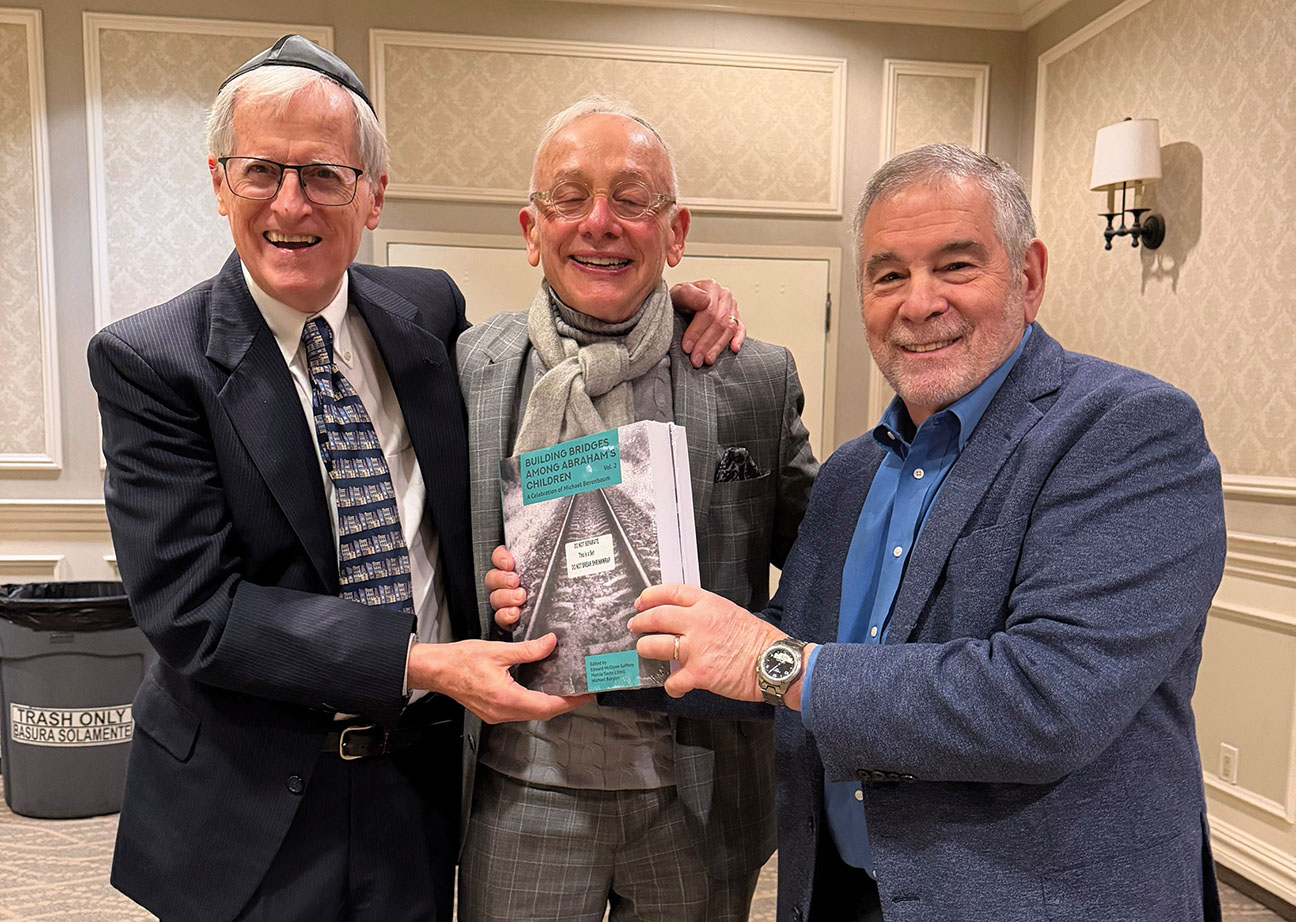
On a recent evening in Pico-Robertson, leading scholars, educators, and community leaders honored Dr. Michael Berenbaum with a new Festschrift—a collection of essays recognizing his extraordinary contributions to Holocaust remembrance, Jewish thought and moral education.
Published by Academic Studies Press, “Building Bridges Among Abraham’s Children” is presented as two large volumes and gathers reflections and analyses from more than 130 esteemed contributors, including Jewish and Muslim academics, across the fields of history, theology and museum studies. Together, their writings explore how Berenbaum’s work as a scholar, museum creator and teacher has reshaped biblical and postbiblical narratives, rabbinic thought and action, Jewish commitment to education, interreligious relations and Holocaust remembrance.
Over the course of his career, Berenbaum has served as project director overseeing the creation of the U.S. Holocaust Memorial Museum — he was appointed under then-U.S. President Jimmy Carter to a commission that created the museum — director of the Sigi Ziering Institute and professor of Jewish studies at American Jewish University (AJU) and as an advisor to numerous educational and cultural initiatives worldwide. His writing and leadership have made him one of the foremost voices on the Holocaust, ethics and the moral imagination.
A Festschrift — a celebration of the intellectual achievements of a senior scholar in the form of essays by colleagues, students and mentees — marks a momentous moment of recognition, said those at a Dec. 7 event at Temple Beth Am that launched the book.
“Building Bridges Among Abraham’s Children,” co-edited by Edward Gaffney, a professor emeritus of international law and genocide studies at Valparaiso University School of Law, includes contributions from Berenbaum’s colleagues, students, and collaborators, including Jane Eisner, former editor-in-chief of the Forward; American diplomat Stuart Eizenstat, a close friend of Berenbaum’s; historian Jonathan Sarna; and theologian Yitz Greenberg. Former AJU President Jeffrey Herbst wrote the foreword.
Asked what he thought of being honored, Berenbaum, in his characteristic funny way, said, “Well, it’s better to be praised while you’re alive than when you’re dead.”
Those who gave remarks included Berenbaum’s wife, Melissa Patack Berenbaum; author and Ahavat Torah Rabbi Ilana Berenbaum Grinblat, who is Berenbaum’s daughter; and David Myers, a professor of Jewish history at UCLA.
“There is not a living scholar of the Holocaust of any renown who is not in this collection,” Myers said. “It’s really a remarkable recognition of the diaspora of friends of Michael Berenbaum.”
For of all Berenbaum’s achievements — and there have been many — his daughter, Rabbi Grinblat, said one stood out from the others: “He may be proudest of bringing kosher hot dogs to Dodger Stadium.
“From my father,” she added, “I learned not to let deep immersion in the tragedies and evil of life to keep you from enjoying the little things in life.”
The event, held at Berenbaum’s synagogue, concluded with remarks from the man of the hour.
“Hopefully I’m ready for some more work,” Berenbaum said. “But the most important thing is what a wonderful occasion to hear such wonderful things about me and not to give me equal time to refute them.”
Berenbaum, born in 1945, initially received the book five years ago on his 75th birthday. At Beth Am, Berenbaum described the massive collection of writings as the one of the “world’s great doorstops … And if you open it, you should learn a little bit about the life that I’ve been privileged to have.”