When Hurricane Helene struck Asheville, North Carolina, in September 2024, the historic River Arts District was devastated. The French Broad River overflowed, destroying nearly 80% of the studios, galleries and businesses that make Asheville a thriving center for artists.
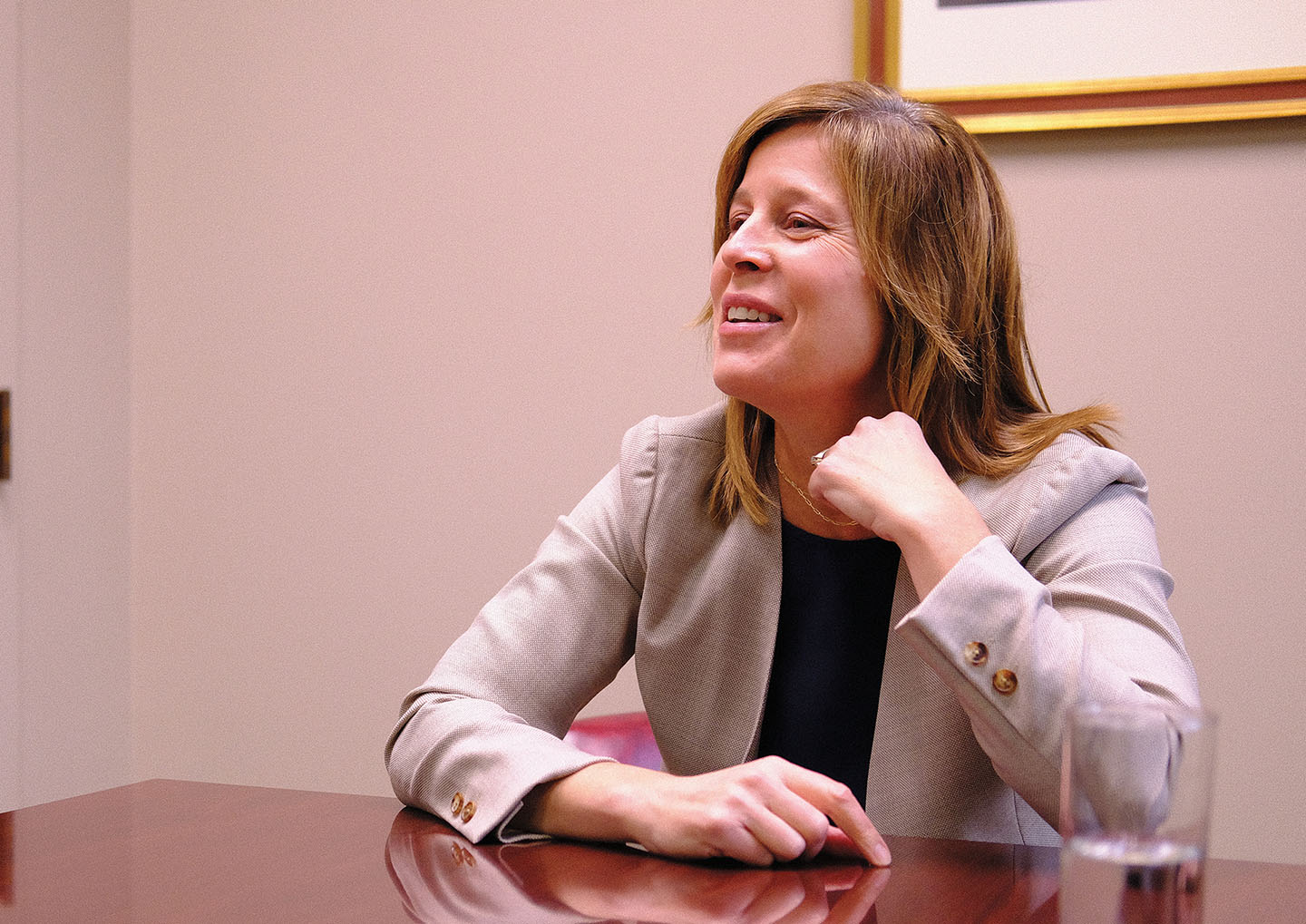
More than 300 artists lost their life’s work overnight. Mud and debris covered streets where once vibrant creativity flourished. In the days that followed, with power out, water scarce and national media descending, one calm and steady voice emerged: Mayor Esther Manheimer.
From the outside, it looked like leadership under pressure. For Manheimer, this was simply an extension of the values she has lived her entire life, values deeply rooted in her Jewish upbringing.
Roots of Responsibility
Esther Manheimer’s story begins far from Asheville, shaped by the intertwining threads of two very different family heritages. Her father descended from Detroit’s vibrant Jewish community. Her grandfather was one of eight siblings who built family businesses together while her extended family wove itself into the fabric of Detroit’s Jewish communal life.
“I grew up immersed in Jewish culture,” Esther reflects, recalling Passover seders, synagogue life and running errands with her aunt to collect trays of gefilte fish stored in car trunks during Michigan winters.
Her mother’s family, by contrast, were early pioneers of the American West, rooted in non-Jewish traditions. Yet it was her mother who ultimately chose to raise Esther and her siblings Jewish, converting later in life and building a home where Shabbat candles were lit, Hebrew school was non-negotiable and summers at Camp Solomon Schechter outside Olympia, Washington, became formative experiences.
“My parents never sat us down to give lectures on values,” Esther says. “They simply lived them.”
Judaism teaches aseh lecha rav, to make for yourself a teacher, and Esther absorbed her first lessons not from rabbis but by observing how her father, a teacher and grant writer, poured himself into projects that uplifted others.
She recalls how, as a child, her father wrote a grant to help elderly adults record their life stories. “He taught me that meaningful work matters,” she says. “And that stuck.”
The Call to Lead
Manheimer’s journey toward public service began long before she ever imagined herself holding elected office. In college, she led the pro-Israel student organization at the University of Colorado at Boulder, organizing events during the Gulf War and advocating for Israel at a time when few students dared step forward.
“I never thought I was qualified to be an elected official,” she says. “I thought you had to be a genius. But what I learned is that leadership is more about being present, listening and building trust.”
This blend of humility and quiet confidence reflects the teaching from Pirkei Avot, Ethics of the Fathers, which teaches that in a place where there are no leaders, strive to be a leader. Esther did just that, steadily stepping forward, first as an attorney for the North Carolina legislature, then as a city council member and ultimately as Asheville’s mayor.
In many ways, Asheville itself mirrors Esther’s own story. Once a sleepy Southern town, Asheville has blossomed into a thriving haven for artists, musicians and free spirits. On any given weekend, the town square is filled with locals dancing to live music, children running through fountains and artisans selling handmade wares.
It is one of the few places I have visited where no one is staring at their phone. People are talking, laughing and connecting. This sense of authentic community is precisely what Esther has worked to preserve and protect.
Crisis as Catalyst
Then came Hurricane Helene.
What followed was a masterclass in Jewish leadership, what the Talmud calls hanhagat hamidot, the governance of character.
With power down and communications crippled, Manheimer walked to the local radio station to broadcast updates to residents. From a single government building with working Wi-Fi, she became a national face of the crisis, navigating interviews across media outlets from Fox News to MSNBC.
Each day, she would rise in total darkness, boil small amounts of salvaged water and wash her hair with a bucket before stepping in front of national cameras. “That became my daily ritual before every interview,” she said. “Washing my hair in a bucket with whatever clean water we could find.”
What made this moment even more politically charged was its timing. The flood hit just weeks before the 2024 presidential election. North Carolina was a battleground state. Both parties quickly saw an opportunity to use the disaster as political leverage. “Everyone wanted to help,” Esther recalls, “but they also wanted to claim credit.”
Her diplomatic approach reflects a core Jewish teaching, derech eretz kadma laTorah, decency precedes Torah. The ability to preserve dignity, avoid public embarrassment and maintain relationships even under pressure is one of the highest forms of leadership in Jewish tradition.
Even as the political world swirled around her, with governors, senators and eventually President Biden visiting Asheville, Manheimer stayed focused on the people. Walmart executives called to donate truckloads of supplies. Elon Musk offered to drill emergency wells for local schools. She took every call, said yes to every offer and worked tirelessly to marshal resources.
Her efforts paid off. Asheville secured $225 million in federal Community Development Block Grant Disaster Recovery funds, nearly equivalent to the city’s entire annual budget. An additional $1.4 billion was allocated across the state. FEMA approved extensive rebuilding funds, and under her leadership, nearly all public infrastructure was restored within months.
Tourists are returning and the communities in the damaged areas are enthusiastic to rebuild.
Leadership Anchored in Values
Throughout our conversation, what strikes me most is Esther’s profound humility.
“I bristle at the idea that I did anything,” she says, echoing the words of Pirkei Avot that teach it is not your duty to finish the work, but neither are you free to desist from it.
Even in moments of controversy, Manheimer’s Jewish values guided her. When the North Carolina Democratic Party initially declined to recognize the state’s Jewish caucus, she chose not to publicly shame the party but quietly emailed the leadership.
“There is a Torah teaching that if you embarrass someone publicly, it is as if you have shed their blood,” I told her during our interview. “You lived that value beautifully.”
“I just felt that respectful dialogue would be more effective,” she answered simply.
That respect for others has earned her deep loyalty within Asheville’s Jewish community. “They are my family,” she says. “I know that even when we disagree, they will always support me.”
Building Back Better
As Asheville moves from recovery to renewal, Manheimer’s leadership now extends statewide. Appointed by North Carolina’s newly elected (and first Jewish) Democratic governor, Josh Stein, she co-chairs the bipartisan Western North Carolina Recovery Committee. The scope of her work now stretches far beyond Asheville’s borders, overseeing federal recovery efforts across multiple counties.
The work ahead remains enormous but also unprecedented in its opportunity.
“We have been given an amount of funding we could never have imagined,” she says. “Now we get to build back better, not just roads and bridges, but affordable housing, parks, businesses and the arts community.”
This is gam zu l’tova in action, the Jewish belief that even from tragedy, good can emerge.
A Mother. A Mayor. A Mensch.
In the middle of our interview, Esther’s phone buzzes. Her husband called to say their teenage son had been in a minor car accident. Calmly, she excuses herself, confirms everyone is safe, and returns without missing a beat.
It is a quiet reminder that even as she carries the weight of public leadership, she remains, first and foremost, a mother, modeling for her sons the very values that have shaped her life.
Jewish leadership, at its core, is not about titles or power. It is about service, humility, responsibility and courage.
Esther’s rabbi, Batsheva Meiri, put it this way: “We love Esther. Like her biblical namesake, she shows up with courage in moments that matter most. Whether leading our city through crisis or standing with her Jewish community, Esther Manheimer brings strength, humility, and heart. She is a blessing to Asheville and to all of us who know her.”
That love is shared across the community. This August, Jewish Family Services of Western North Carolina will honor Mayor Manheimer as the very first recipient of its new Gibbor Community Heroes Award.
“She felt like the perfect person to start with,” said Michael Barnett, executive director of JFS, Western N.C. “Her strength and compassion during Asheville’s hardest moments reminded us what real leadership looks like. In Jewish tradition, we’re taught to honor those who show up in times of crisis, even when it’s hard or unpopular. This award isn’t just about recognition, it’s about inspiring others to lead with courage and remembering to thank the ones who do.”
As I left Asheville, I could not help but feel that Mayor Esther Manheimer embodies precisely what it means to live Jewish, leading not by proclamation, but by quiet, unwavering example.
Audrey Jacobs is a Jewish communal leader, strategic advisor, and TEDx curator, and the mother of three grown sons.