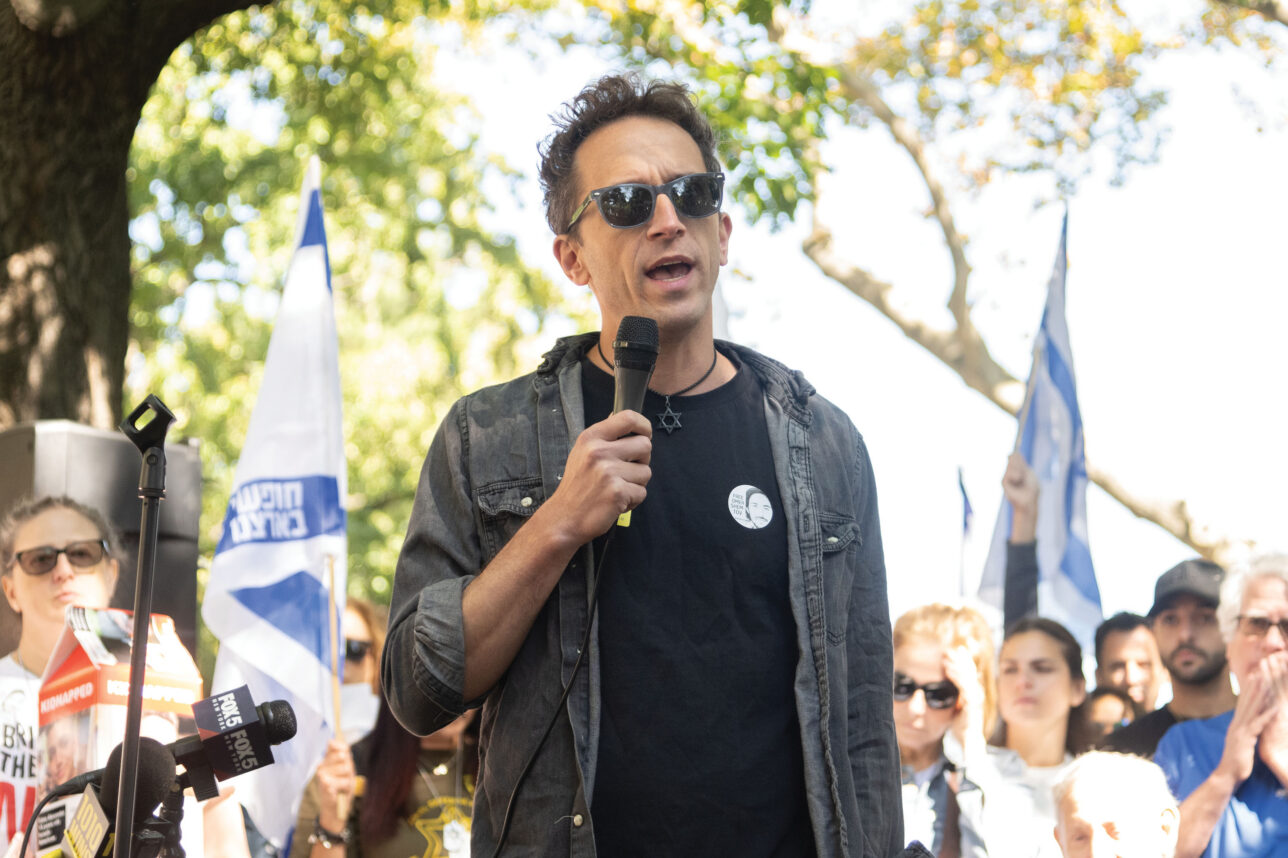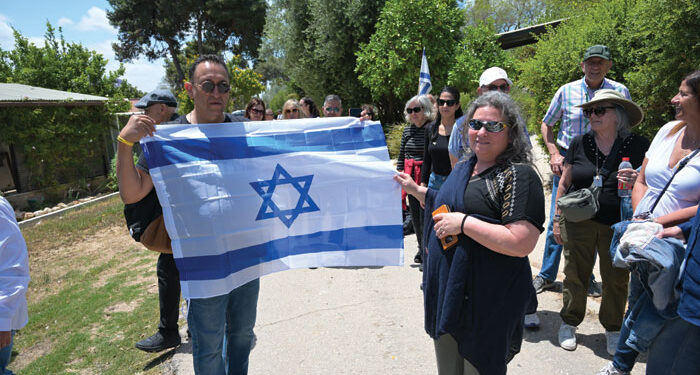
The Sephardic Educational Center, (SEC) through the wisdom of its director, Rabbi Daniel Bouskila, decided that even though the SEC’s Rica Emquies Israel Relief Fund has raised and distributed close to $300,000 throughout Israel since Oct. 8, it would be just as meaningful to make a trip to “give Israel a big hug” during Yom Hazikaron (Memorial Day) and Yom Ha’atzmaut (Independence Day).
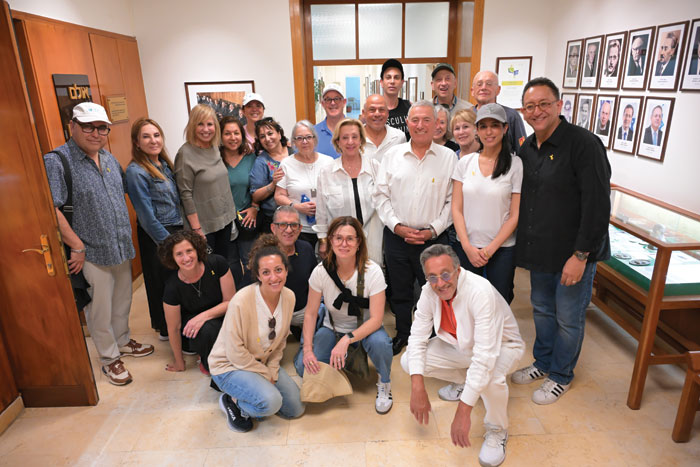
Over 25 participants from Los Angeles recently had that experience, and as President of the SEC, I have never been prouder of the statement we made and the heartfelt response we received from everyday Israelis.
When they asked “why did you come now?” we told them, “We came to support,” and they gave us a huge “Kol Hakavod.”
Some of our friends in the U.S. told us “it’s too dangerous,” “aren’t you scared?,” “what if you get stuck?” etc. We took that risk but frankly, as most people know, there is no place you feel safer than in the streets of Israel. I was a bit surprised that my wife Rachel (AKA Sephardic Spice Girl) immediately agreed to join us. We had our daughter’s graduation from Chapman on the weekend of May 17 and our son and daughter-in-law were about to give birth to our first grandchild! But there was something pulling us to Israel that was greater than us and our lives in L.A. We felt a calling to be in Israel with Israelis to share what was sure to be the most painful Memorial Day in recent history; to cry with them and to hug them.
Upon arriving at Ben Gurion airport, we were immediately met by what have come to be the iconic posters of each face of the hostages held in Gaza set out along the long descending walkway to passport control. Yellow ribbons on signs, messages of hope and unity and resolve to bring them home were everywhere. Buildings, billboards, bus stops and storefronts displayed large Israeli flags, “Bring them home NOW” and “United we will win.” The feeling of commitment to this cause permeates every aspect of life with the focus on preventing another October 7 and rescuing the hostages.
We stayed in Tel Aviv for two days before starting our program in Jerusalem. The usually busy Sheraton hotel was mostly filled with evacuee families from the north fleeing the constant barrage of missiles being fired on their communities by Hezbollah. A hotel manager told me he expected them to remain there through 2025. Outside our window, the typically crowded beaches were mostly empty. But resilient Israelis still filled cafes and restaurants and we were thankful for that.
Our mission began Friday afternoon as the group checked in to the SEC’s Sephardic House Hotel in the Jewish Quarter of the Jerusalem’s Old City and met in the Spanish Courtyard to greet our special guests for Shabbat: the families of the murdered hostage Yair Yaakov (59), his partner, Merav Tal, who was released by Hamas, and his two rescued children, along with their extended families. It was a little respite for them to spend Shabbat near the Kotel, though Merav was actually too scared to leave our campus, still recovering from the trauma of being held hostage for two months. Yaniv Yaakov, Yair’s brother, and his wife Lorit sat with us and told us of their personal trauma that began at 6:30 a.m. on Oct. 7.
We sat in silent pain listening to Yaniv and Lorit’s recounting what the family has been through from the early moments of Oct. 7, the emotional scars on the rescued nephews, and the broken hearts over his brother’s murder.
Yaniv has been interviewed by numerous media sites starting with Rachel Maddow of MSNBC and Jake Tapper of CNN and knows he has a duty to keep telling the story of his brother’s “abduction” and murder, as well as the abduction of his two nephews and their mother. He explained that he doesn’t refer to them as “kidnapped” because that word indicates a more benign purpose. A parent “kidnaps” a child in the custody of someone else; a thug “kidnaps” someone to quickly extract a ransom, etc. An “abduction,” he explained, is more sinister. We sat in silent pain listening to Yaniv and Lorit’s recounting what the family has been through from the early moments of Oct. 7, the emotional scars on the rescued nephews, and the broken hearts over his brother’s murder.
Sunday was the eve of Yom Hazikaron, a truly difficult one this year. We visited the military cemetery at Mt. Herzl where rows of fresh graves from the past 6 months required an expansion of the cemetery. Soldiers and families stood before their loved ones in tears. Emotions were raw. Sunday afternoon, we were given the unique preview of the Oct. 7 exhibit at the new Museum of Tolerance, with video testimonies of countless witnesses of that day and its aftermath. During an early dinner nearby, we heard from Ilan Bouskila, a 24-year-old IDF reserve soldier who has already completed two lengthy tours in Gaza and has been called for a third one next week, causing him to suspend his law studies after starting and stopping his coursework so many times this year. He shared some of his experiences, the emotional toll it has taken on him and his young bride, also serving in her reserve unit. It was illuminating to hear from a young person how this war has disrupted the lives of so many, and of course from his parents, Rabbi Daniel and Peni Bouskila who have endured the sleepless nights each time Ilan is called to serve.
We then attended the packed Yom Hazikaron commemoration in the Museum’s auditorium, sponsored by The Jerusalem Post and IDF Widows and Orphans Assoc. Parents, siblings and children of some of the murdered victims spoke, led the Kaddish prayer and an IDF Rabbinical choir sang moving songs culminating with “Yerushalayim shel Zahav” and “Hatikva.” There was not a dry eye in the house. It was an emotional day but a more difficult one lie ahead.
On Yom Hazikaron, we travelled to the south of Israel to some of the sites of the Oct. 7 attacks, thanks to the arrangements made by our friend, Shlomi Amsalem, official photographer for the Foreign Ministry. We started our day at Kibbutz Kfar Aza, where Shachar and Ayelet Shnurman, residents and brave survivors of the attacks, met us and told us of all that had happened to them and their neighbors. They walked us through the horrors of that day starting at 6:29 a.m. Their neighbors and friends were tortured and killed, burned and abducted; their memories are like open wounds. Bullet holes in the doors and on the buildings, destroyed interiors, burned out remains and photos of each couple or family that was murdered or abducted in front of their homes. The quiet was broken only by the chirping of birds as we walked silently in what felt like a heinous crime scene. It didn’t matter that seven months had passed, it felt like these atrocities just happened.
From there we traveled nearby to the “Car Cemetery” where over 1,500 cars from the Nova Festival, Kibbutzim and roadside attacks were brought. Forensic experts had removed over 250 bags of human ashes from these cars where the barbarians burned their victims alive, shot multiple machine gun rounds through the doors and windows and finished off others with RPG grenades. You see cars stacked up and cars spread out over what looked like at least three football fields, all either burned or shot up. A monument has already been set up with the word “Yizkor” (Remember) and basins to light memorial candles.
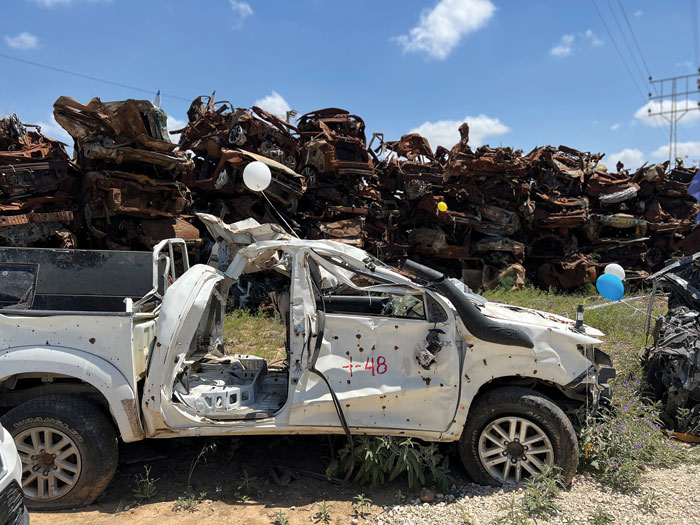
Again, we walked silently and listened to the well-informed guide who was very emotional after having just led a family to the car of their murdered child. The depth of this evil barbarism was in front of us; it was so shocking we couldn’t even cry. Then rage would overtake some of us when we heard that there are people in the world who claim this all was AI generated or a fake.
Our next stop was the site of the Nova Festival massacre in Re’im. As we drove down the road to the entrance of the memorial, I recalled seeing the horrible footage of what this road looked like after the attacks, strewn with shot up cars as far as one could see. I imagined the scene of young people running for their lives, it was like a nightmare before my eyes. As we entered the area, we saw a field of trees that was planted on Tu b’Shevat for each victim and then came to another field with the photo of each victim or abductee planted on a tall stick, a small personal memorial created by families around each. I looked out on a field of young, beautiful, smiling faces knowing the tragedy that befell them.

A group of young people gathered around one of the photos singing somber songs in memory of their friend. “So sad.” That’s all we could say. I quietly walked among all the photos, stopping at each one for a brief meditation. Nearby, a young Israeli couple, he with a machine gun slung over his shoulder, wept quietly in front of a photo of their friend. The silence of those of us paying our respects was only broken by the loud sounds of artillery tank fire nearby, reminding us that a war was still raging. Heartbreaking.
Our last stop at a site of the attacks was at the town of Ofakim where we heard of the indiscriminate attacks on homes by the terrorists and the now famous story of Rachel Edry who managed to keep the terrorists that infiltrated her home occupied by giving them cookies and talking to them about their mothers.
We ended our day and started Yom Ha’atzmaut, a much more subdued observance this year, at the converted spa at Einat Bar, where thousands of IDF soldiers have gone for healing at their therapeutic pools with trained therapists. We sat on a gorgeous veranda overlooking the desert and enjoyed our traditional Israeli “al ha’esh” barbecue as we watched a beautifully peaceful sunset knowing only too well that just a few miles away, our brave IDF soldiers were battling in Gaza. We sang songs of peace and danced together celebrating Israel at 76 having the most difficult year of their young life.
Rabbi Bouskila decided that there could be no other place to start our Yom Ha’atzmaut visit than Hostage Square, where families of hostages have set up art installations, personal dedications, and tents where some are conducting hunger strikes eating only a piece of pita each day which is what the hostages who were released reportedly got.
Tuesday was Yom Ha’atzmaut and I prayed at a very quiet Kotel with Rabbi Bouskila where we chanted Hallel in thanks for the miracle that is Israel. It was sad to see just two other minyanim on what would normally be a packed plaza. We then left for Tel Aviv with the group. Rabbi Bouskila decided that there could be no other place to start our Yom Ha’atzmaut visit than Hostage Square, where families of hostages have set up art installations, personal dedications, and tents where some are conducting hunger strikes eating only a piece of pita each day which is what the hostages who were released reportedly got. Later that evening we were hosted by the Bouskila family in their new home in Herzliya where we met with a high ranking IDF spokesman who shared the great challenges of getting out information to media outlets and insuring they report accurate news. We could appreciate the frustration of the job and he promised to share information with SEC so we can help disseminate and inform as many as we can through our social media platforms.
I have visited Israel as a one-year abroad student at Hebrew U, as a counselor for six summers at the SEC and as board member and president of SEC over the past 44 years. I can say that I never felt such an emotional trip as this one. I realized that Israelis are strengthened when they see foreign tourists returning just to show they are not alone in this war and we are with them in this most challenging period. Now my eyes will bear witness to the world of what I saw so that again, sadly, we will NEVER FORGET.
So make your reservations, go visit Israel and “give them a hug.”
Neil Sheff is President of the Sephardic Educational Center and a practicing immigration attorney.