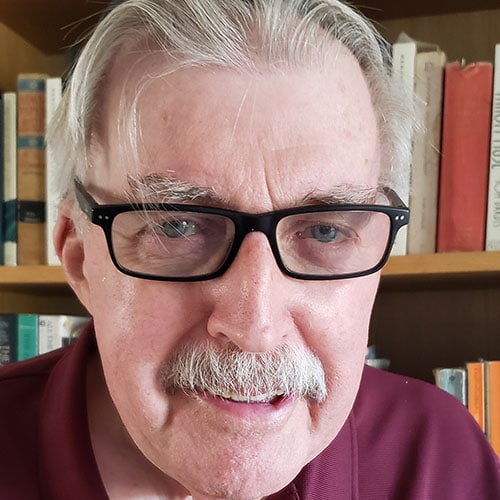
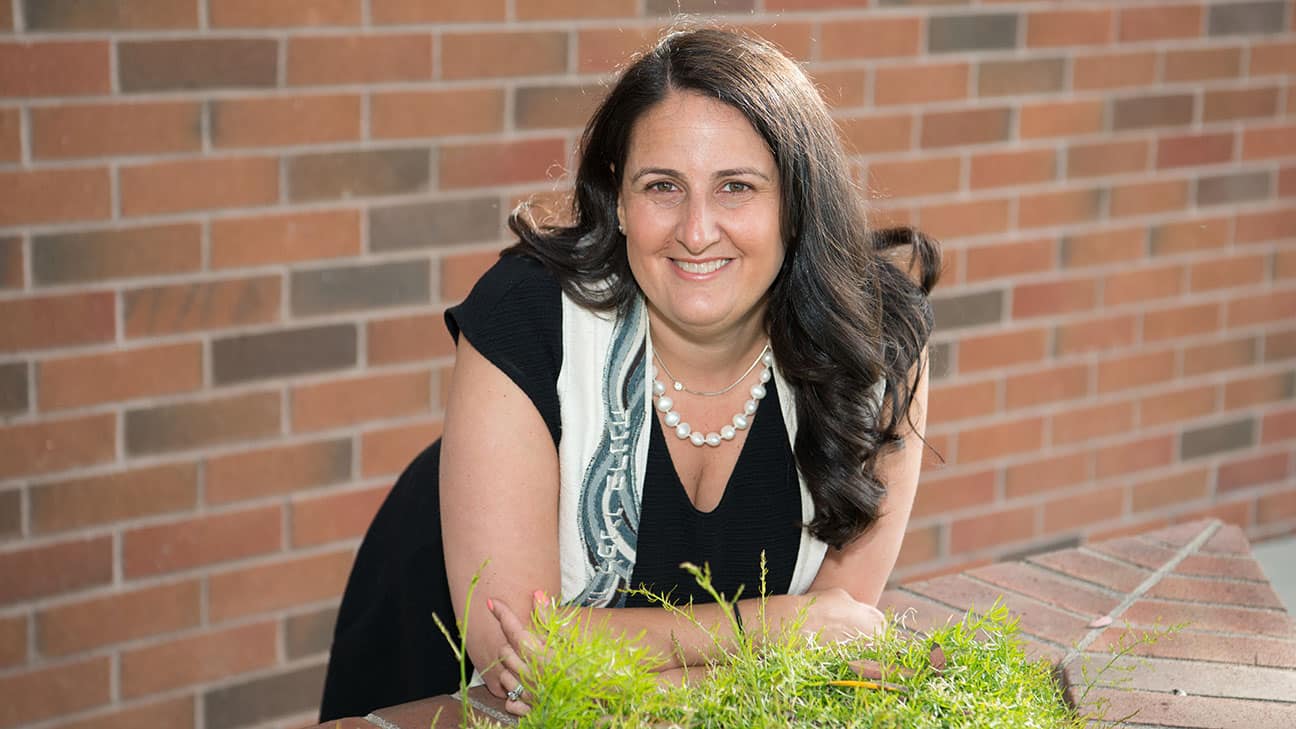
For Sari Laufer of Stephen Wise Temple, being a rabbi and a feminist came as naturally to her as breathing. Growing up on the Upper East Side of Manhattan as an only child of two staunchly feminist parents, her path was set early. “I don’t have a choice,” said Rabbi Laufer, “because everything I do, because of who I am, this is the way I walk in the world.”
That extends to the bima. “When I read Torah, I read it as a feminist,” she said. “When I teach Torah, I teach it as a feminist.”
What does it mean to be a feminist teaching Torah? It means, she says, telling the stories of those who aren’t seen.
What does it mean to be a feminist teaching Torah?
It means, she says, telling the stories of those who aren’t seen. “One thing I am called to do, always, probably because of having learned from feminists and having feminist theology, is that I feel very called to try to lift up voices that may not immediately be obvious in our texts.” Those voices do not exclusively belong to women. “Plenty of men’s voices in the Torah are not heard,” the rabbi said. “The beauty and challenge of reading our text is — depending on your theology — even if you see a multiplicity of voices in the text, in the priestly voice, only certain people are included in that conversation.”
Making sure that everyone was heard was something she learned at home. “I picked up from my parents, from the way they were talking/acting,” she said. Her mother was a nurse/nurse educator, and she was a model for her daughter, showing that a woman can do anything she wants. “My (late) dad often was the primary parent,” Laufer said. She speaks of him with a strong burst of pride. “It takes a strong feminist to say ‘I will be the one at home’ since that traditionally has been the woman’s job,” Laufer said.
“Now, as a working parent, I reflect on what it meant to have a working mom.” Her husband, Ben Cutter — the son of a rabbi and an assistant director at USC Hillel — also grew up as an only child. Are they raising their 9-year-old daughter, Orli, and 6-year-old son, Jacob, the way they were raised? “I don’t know if there is anyone completely able to set aside the way they were raised,” she said.
Laufer wants to raise her children with a genuine curiosity about the world around them. That is a challenge. “I grew up in New York where it comes very naturally,” she said. “You interact with the world much more than I think you do in Los Angeles.” The three of them often go hiking, a habit started during the pandemic.
A graduate of Northwestern University, she was ordained by Hebrew Union College in Los Angeles in 2006, then returned to New York, where she spent a decade at Congregation Rodeph Sholom on New York’s Upper West Side before joining Stephen Wise in 2017.
In her teaching she talks about big “T,” Torah. “I have dedicated my life to it,” said the rabbi. “But I also think about little ‘T,’ Torah, like what is the truth and wisdom that is out in the world?”
One way of fusing the two “T”s is taking the children to marches, where she sometimes has to answer questions that are hard to explain to a 6-year-old. She lives with her husband and children in the San Fernando Valley, and they are all familiar with the sign-carrying activist seen at the intersection of Sepulveda and Ventura ever since the George Floyd murder in 2020. “I have taken my kids to make blessings, signs to keep in our car, just so they see a world beyond their small world,” Rabbi Laufer said.
It’s important to the rabbi that her children see her working. “Sometimes they feel I am picking work over them, but I don’t think I really do.” On a recent Sunday morning, Orli and Jacob did not want her to leave for the hour that she would be gone. “But I am happy that they see there is work that I love,” the rabbi said.
“Many years from now when they sit in a rabbi’s office and talk about a eulogy for me, I hope they say nice things. I hope it is the same story from both.”
Fast Takes with Rabbi Sari Laufer
Jewish Journal: What is your favorite Jewish food?
Rabbi Laufer: I am going to cheat and give two: Writ large, my favorite food is fried potatoes. After six years at Stephen Wise, I have become a Persian food aficionado. Fesenjoon (chicken,walnut and pomegranate stew).
JJ: What book is at the top of your nightstand?
Rabbi Laufer: “The Lives We Actually Have,” by Kate Bowler, a book of blessings for the lives we actually have.
JJ: Your favorite music?
Rabbi Laufer: My music shuffle is a fascinating mix of Israeli pop, lots of show tunes, Indigo Girls, Grateful Dead and 1990s hip-hop.