In his very first comment on the very first passage of the Torah, Rashi asks: why start here?
Why begin with the creation of heaven and earth? Why not begin instead with Exodus 12:2, which reads: “This month shall be for you the first of months.”
After all, “This month shall be for you” is regarded as the Torah’s first commandment. “In the beginning,” on the other hand, is just a story.
Rashi answers the question: If ever a dispute arises regarding the ownership of the land of Israel, the creation story will serve as a reminder that God is the sole landlord.
In other words, Genesis 1:1 is not actually a story. Like Exodus 12:2, it serves a legal function. It is a property deed for the land of Israel, and indeed the entire universe, made out in God’s name.
Rashi is attempting to solve one of the key mysteries at the center of the Torah: what is the relationship between its narratives and its laws? His answer is that there are no narratives. Not truly. Every word in the Torah, if understood correctly, has legal content.
In other cases, the exact opposite approach has been taken, and legal material has been read as narrative.
In Deuteronomy we find the shocking law of the rebellious son — who is to be put to death by the townspeople for disobeying his parents. According to the Zohar, however, the law’s purpose is not actually legal, but rather narrative. The rebellious son’s sorry fate is an allegory for the people of Israel’s history of exile — but the law is not to be enforced.
As the legal theorist Robert Cover wrote in his famous essay “Nomos and Narrative”: “No set of legal institutions or prescriptions exists apart from the narratives that locate it and give it meaning. For every constitution there is an epic, for each decalogue a scripture.”
Take, for example, the commandment found in Exodus 23:9: “You shall not oppress a stranger, for you know the feelings of the stranger, having yourselves been strangers in the land of Egypt.”
Here, the law (nomos) is explicitly an outgrowth of the narrative of the exodus, which provides the commandment with context and moral force. But what about the instances in which the narrative subverts the law?
For instance, Deuteronomy prohibits a man from favoring the firstborn son of a favored wife over the older firstborn son of a “hated” wife. This law would seem to prohibit the very actions taken by Abraham, who favored Isaac over Ishmael. It would also seem to prohibit the actions of Jacob, who favored Joseph over Reuben.
Deuteronomy also states that “no Moabite shall be admitted into the congregation of the LORD,” (23:4). In the book of Ruth, however, Ruth the Moabite is not only welcomed into the Jewish people, but is recorded as the great-grandmother of King David, and therefore the progenitor of the future messiah.
What the Torah forbids in one passage, is represented elsewhere as the very foundation of the Jewish people’s existence and eventual redemption.
If the narrative subverts the law, does this indicate a lack of integrity in the text as a whole?
There’s a difficulty here. If the narrative subverts the law, does this indicate a lack of integrity in the text as a whole?
A pious approach to this difficulty would be to seek a new way of understanding the story or the law in order to preserve the integrity of both. Thus the Talmud modifies the simple meaning of the prohibition on marrying Moabites, limiting it to male Moabites. This way, the difficulty disappears.
An impious approach would be to take these cases as sanction for antinomianism — a rebellion against the law itself.
The tension between nomos and narrative, however, cannot be so easily dispensed — not through clever reinterpretations nor revolutionary revisionism.
The relationship between law and narrative is complex — but it is not a relationship of dominance — one does not bend to the other. The creation of the universe cannot be reduced to a deed of ownership. The entrance of redemption into the world in the form of Ruth’s descendant will not be forced to follow petty laws of pedigree. Jacob’s overwhelming love of Joseph, forged in the fire of his grief over Rachel, will not bend to the conventions of succession.
The narratives of the Torah have altogether too much vitality to be reduced to legal parables or anodyne morality plays. Likewise, the commanding voice of the Torah — that which addresses the reader with a moral imperative that cannot be reasoned away — will not be reduced to allegory.
Rather than a challenge to the integrity of either, these moments signal the power of both.
Cover writes, “the nomos is but the process of human action stretched between vision and reality.” Nowhere do we see this so vividly as in these remarkable instances where narrative subverts law. Rather than a challenge to the integrity of either, these moments signal the power of both: the divine call of the law rings out, clear and unbending; while the human story, wild and alive, remains undomesticated to the finish.
Matthew Schultz is the author of the essay collection “What Came Before” (2020).
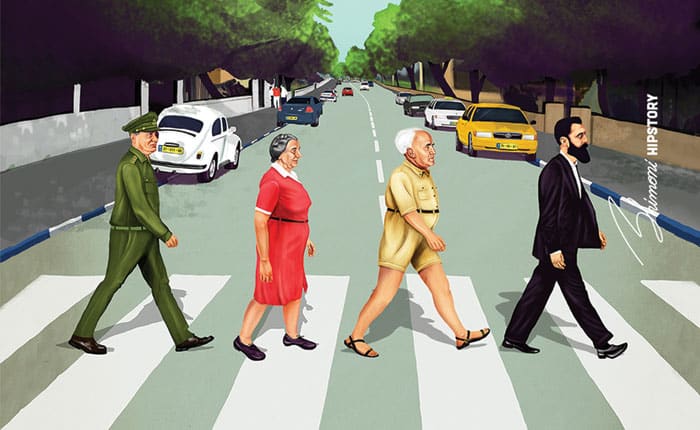
If you look closely at the “A(llen)bby Road” painting by Amit Shimoni, you’ll see that it’s more than just a parody of The Beatles’ Abbey Road album cover. The obvious reference are the four historic Israeli figures depicted crossing Allenby Street in Tel Aviv.( From left to right: General Moshe Dayan, Prime Minister Golda Meir, David Ben-Gurion and Theodore Hertzl.) In the background is the 466-foot Shalom Meir Tower, Israel’s first skyscraper..
With a closer look, the painting has a bit of symbolism: The dates on the license plate on one car reads, “25-06-87” (Shimoni’s birthday) and another license plate reads “14-05-48” (the day Israel was founded). Although the scene takes place in Tel Aviv, the cars are driving on the left side as they do in the United Kingdom, where the original Abbey Road is located. Shimoni told the Journal that the blue and white stripes on the curb “are a joke since you can never find free parking in Tel Aviv, so it’s like a utopia.”
“A(llen)bby Road” is a celebration of Israeli history and pride, elevating Dayan, Meir, Ben-Gurion and Hertzl to rock and roll Hall of Fame superstar status.
Shimoni originally created the painting digitally in 2014 for the Israeli Consulate as part of his Project HIPSTORY.
“I started this project and illustrate the Israeli leaders as nowaday hipsters,” Shimoni told the Journal. “It was 2014, hipsters were still a thing. And in HIPSTORY, there are a lot of details in the characters that are telling their stories in a way to present them to a young audience. And in A(llen)bby Road, it’s the same idea — put the historic leaders into one of the biggest symbols of pop culture.”
And it all started while he was a student at Bezalel Academy of Arts and Design in Jerusalem. While procrastinating on a project, at the last minute, he made a graphic painting of Ben-Gurion as a modern-day hipster. The reception Shimoni received inspired him to keep on creating in that style.
It all started while he was a student at Bezalel Academy of Arts and Design in Jerusalem. While procrastinating on a project, at the last minute, he made a graphic painting of Ben-Gurion as a modern-day hipster.
As his work garnered more notoriety, he set up an online shop for fans to turn his artwork into posters, tee-shirts, mugs, coasters and any other print-on-demand medium.
Over time, Shinoni created more artwork of historic figures as hipsters: a tattooed, pompadour-coiffed Albert Einstein wearing a sleeveless shirt with a peace sign on it. There’s Charles De Gaulle wearing a scarf with a stylish baseball cap worn intentionally askew to the right. John F. Kennedy is depicted sporting a pencil-thin goatee and wearing a yellow baseball-style t-shirt emblazoned with an image of what looks to be his purported mistress, Marilyn Monroe. And then there’s Mona Lisa, sporting a French bob haircut while wearing a graphic tank top with the background of her painting on it, and a tattoo of Da Vinci’s “Vitruvian Man” on her left bicep.
In total, there’s more than 60 icons that he has digitally painted as hipsters, including some still alive and making history, including Volodymyr Zelensky, Elon Musk, Ringo Starr, Serena Williams and Angela Merkel.
And when you hover your cursor on the face of the icons on the HIPSTORY website, there’s a quote from the icon depicted. Shimoni’s respect for both history, taste for satire and talent for art have captured attention from around the world. His work has been featured at Urban Outfitters, on MTV and Comedy Central.
Since he created “A(llen)bby Road” nine years ago, around every Yom Ha’atzmaut Shimoni gets calls and emails from around the world from people who want to use his creation to celebrate another year of Israel.
Three years ago, “A(llen)bby Road” was shared by the official Twitter account for the State of Israel.
In 2022, Shimoni moved into the world of digital art. His work was sold quite well, and he donated much of the proceeds to charities providing clean water throughout sub-Saharan Africa. Most recently, Shimoni is focused on fine-tuning his talents to stay ahead of the rapid encroachment of artificial intelligence in the art world.
“I’m trying to create a new concept through AI and figure out where all of this profession of being a digital artist is going,” Shimoni said. “In this era, you just create and later try to figure out what it is.”
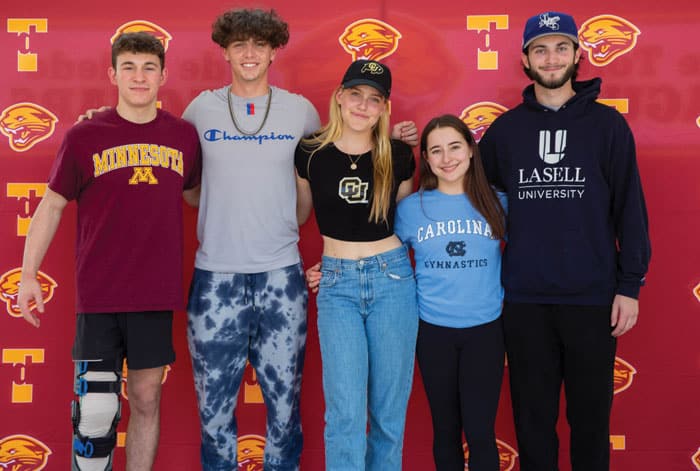
On Thursday, May 18, five de Toledo student-athletes signed college letters of intent: Molly Neinstein for gymnastics at University of North Carolina, Willow Gretsch for tennis at University of Colorado-Boulder and Zach Smollin for gymnastics at University of Minnesota. Zachary Grundfest and Ryan Schenck will both be playing baseball for Lasell University in Newton, Massachusetts.
“As a former coach and proud Head of School, I am always impressed by the determination and grit of our student-athletes,” Mark Shpall, de Toledo’s head of school, told the Journal. De Toledo is a college-preparatory Jewish High School located in the West Hills.
“Having five seniors sign college letters of intent this year – including three Division 1 offers – is an exciting validation of how de Toledo students embrace our school values in their pursuit of both academic excellence and cocurricular passions,” Shpall said.
Molly Neinstein fell in love with gymnastics when she was 7 years old. “I just took a recreational class for fun, and when the coaches challenged me to try a press handstand, I was hooked,” Neinstein told the Journal. “That love has never left me for an instant ever since.”
After a potentially career ending injury, Neinstein worked her way back to the sport after spinal fusion surgery in 2021.
“Gymnastics has taught me the power of perseverance,” she said. “I’ve had my share of challenges, suffering serious injuries and needing back surgery; but those setbacks have taught me just how strong I truly am. I’ve learned that the secret to success is never giving up.”
A USAG Women’s Developmental Program Level 10 Gymnast, Neinstein represented the United States at the Pan American Maccabi Games in Mexico City and won gold in All-Around, vault and floor and silver on uneven bars. She fell in love with the UNC campus the first time she visited the school.
“The sense of team spirit at UNC is incredible,” she said. “Everyone pulls for each other, and the coaches are so committed to each athlete’s success.”
Willow Gretsch is excited to attend Colorado; her mother is an alum. “My two favorite things in the world are connecting with my teammates and playing tennis, so I couldn’t be happier,” Gretsch told the Journal.
When Gretsch was 9 years old, her dad took her out to play golf, but she couldn’t stop looking at the tennis court and asked if she could take a lesson. By the end of that first lesson, she fell in love with the sport.
During her four years at de Toledo, Gretsch has not once dropped a set in the more than 100 matches she has played. In 2023, she was the Independence League Singles Champion, becoming the first league-championship in de Toledo Tennis program history.
“Tennis has taught me discipline; it’s taught me how to focus on one goal at a time,” Gretsch told the Journal. “Looking back on things, I think tennis actually helped me learn how to be smarter about scheduling my time and finding room for everything that’s important to me.”
Zach Smollin was just a baby when he started tumbling, trying to imitate his older sister who was involved in gymnastics.
“I think I must have been two when I started jumping on a trampoline, and my first official competition took place on my fifth birthday,” Smollin told the Journal.
Over the course of his 14-year career, Smollin has won multiple state titles on floor exercise, highbar, parallel bars and vault.
Gymnastics, Smollin said, has taught him about personal sacrifice.
“Three years ago, I suffered my first serious knee injury, but battled through that to end up winning gold medals at the 2022 Maccabi Games,” he said.
When Smollin had another bad injury earlier this year, he considered giving up the sport. He said his family, as well as everyone at de Toledo and the University of Minnesota, has pulled me through, supporting his rehab process.
“A big part of the focus of Jewish education at de Toledo is on what it means to be a truly good person, and there’s no doubt that athletics has helped make me more dedicated and patient in everything I do.”
– Zach Smollin
“A big part of the focus of Jewish education at de Toledo is on what it means to be a truly good person, and there’s no doubt that athletics has helped make me more dedicated and patient in everything I do,” he said.
Zach Grundfest started going to Dodgers’ games when he was 3 years old and was playing in a league by the time he turned five. “I would say baseball has been the love of my life,” Grundfest told the Journal.
He added that being on the baseball team at de Toledo is like being part of a family. “My teammates aren’t just my teammates,” he said. “They’re not just my friends. They’re my brothers now, and I know they’ll be part of my life forever.”
Grundfest, who loves the Boston area, says he chose Lasell because it offers the perfect combination of “small class sizes, a great sports management program and a fantastic baseball opportunity.”
Ryan Schenck also started baseball early.
“I was just 3 years old when I first saw my older brother playing Wiffle Ball in the backyard,” Schenck told the Journal. “I made sure my parents signed me up for t-ball by the time I was four.”
For Schenck baseball is more than a sport. It’s a classroom.
“At de Toledo, there’s a huge focus on the happiness of every student,” he said. “We’re given a lot of opportunities to explore classes, electives and sports teams that we love.”
He continues, “Every time I step on the field, I learn something new about how to push myself both mentally and physically.”
Schenk says baseball has helped rejuvenate and motivate him to be the best in everything he does.
“Baseball has shown me there’s no better feeling than setting goals and then achieving them,” he said.
Welcome to the Re-CHARGING Reform Judaism Conference! Welcome to New York City!
Welcome to the Stephen Wise Free Synagogue! It is our honor to host you.
We are very pleased — amazed really — to see so many friends and supporters. When we first began to brainstorm about a possible conference, we anticipated that perhaps several dozen colleagues might attend. What began as a trickle soon became a torrent of interest from the broad spectrum of Reform leadership, representing much of the glorious diversity of our movement: rabbis, cantors, educators, administrators, and lay leaders of synagogues of all shapes, sizes and geographical locations, as well as other critical organizations such as Hillel, and national and international Reform institutions. The conference planning committee alone soon mushroomed to 90 colleagues.
And it began to dawn on us that we were onto something much bigger than we initially thought: that there is a deep hunger for gathering together in this manner — organic, grass- roots, and informal — to discuss the future of our movement and North American Jewry.
Hineimatovu’mana’imshevetachimgamyachad — how good for brothers and sisters, colleagues and friends, Jewish professionals and volunteers, to gather together after the severe isolation imposed upon us in the past three years. Just to be with so many partners to discuss ideas, values and beliefs is a great joy.
Why are we gathering?
While we may each have a different perch from which to understand the Jewish community, I think that what brings most of us here and now is a sense of urgency that we are at an inflection point in the history of North American Jewry and the Reform movement. That fundamental and rapid changes are unfolding before our eyes that have already and will increasingly challenge our vitality and well-being: a sense that we need each other to identify the key challenges ahead, so that we may craft effective responses that will strengthen the Reform movement we love, and fortify the Jewish community we serve.
When I refer to the Reform movement, I do not mean any one of us separately; I mean all of us together. Outcomes are the product of our collective and cumulative efforts. For example, the numbers of graduates seeking to become Jewish professionals reflect, at least in part, the scope and success of our collective youth engagement years before people contemplate career choices. The uniqueness of this gathering in conception, design and execution, is in our understanding that none of us is bigger— or smaller — than the Reform movement. We are — all of us — entrusted with the precious legacy of ages past, and in our collective hands, lay much of the destiny of the North American Jewish community.
We have identified three central ideological pillars that we think are most relevant for recharging Reform Judaism. There are more, but these are the ones that the dozens of us on the planning committee eventually settled upon as constituting what we believe are our highest priorities at this moment in time, and we will spend the next two days together discussing them in depth:
First: the fraying commitment to Zionism, and the increasing distancing between North American liberal Jews and Israel.
Second: rediscovering, recharging and restoring the optimal balance between universal values and Jewish peoplehood. How to ensure that TikkunOlam remains rooted in KlalYisrael: that our efforts towards social repair emerge from, and are a reflection of, our deepest commitment to the particularistic covenant of the Jewish people?
Third: refreshing our religious commitments in an increasingly post-religious century. How to develop the ideas, vocabulary and ritual practices that will kindle the innate spiritual yearnings of every human being, and inspire more of our congregants, as well as the many in the Jewish community who are disengaged, unaffiliated or spiritually adrift?
The stakes today are very high. For those of us who believe that of all the many agencies instilling Jewish literacy, cultivating Jewish identity, and advancing Jewish continuity in North America, synagogues are the most important of all, it is deeply worrying that the dramatic growth of our movement in the 20th century appears to have peaked, and our institutions seem to be contracting, not expanding. While there are some important and notable exceptions, broadly speaking, our numbers, our vigor, and hence, our revenue are in decline. The pandemic accelerated and exacerbated these trends. We are not alone. These developments are unfolding across the spectrum of liberal religious denominations in North America. But the fact that we are not alone, does not diminish the need for us to respond with all the energy and creativity within our powers. Jews have always been good at confronting changing times head-on and devising new ideas and new strategies to reinvigorate Jewish life.
I wish we surveyed our own movement in depth because we would ask different questions than the large agencies that study North American populations, and we would uncover data that would be uniquely important to our specific efforts. We would zero in on motivations and practices that would reveal more about our congregants. What are their values and beliefs? Do we, in fact, reflect their sensibilities and aspirations? What are they looking for, and what would they be willing to fund? We would investigate why enrollment in Reform professional schools is declining. We would learn more about the commitments, motivations and beliefs of our future clergy and educators. Why do they want to be Reform Jewish leaders? What are their views about the great religious, political and cultural issues of our times? Are they committed to Israel, Zionism, Jewish peoplehood and Jewish particularism, and do these values drive, or at least inform, their decision to apply to our rabbinical, cantorial or educational programs? We would investigate how the year-in-Israel impacts on students during their training and even decades later.
While we have not comprehensively surveyed our own movement for many years, nonetheless, we can gather considerable information from general and Jewish population surveys conducted by others. According to the latest data gleaned from the 2020 Pew survey, when asked, over 2.1 million Jewish adults say they identify with Reform Judaism (Brandeis Demographic Profile of Reform Jewry, 2023).
On its face, this is great news. More American Jews, by far, describe themselves as Reform than any other denomination or movement. More American Jews, by far, embrace our understanding of a liberal Judaism that eagerly welcomes the promise and potential of modernity. Fifty-two percent of currently-enrolled religious school students — more than half — receive supplemental Jewish education in Reform synagogues (Jewish Education Project, 2023). Fewer than 10% of American Jews say they are Orthodox. There are also nearly 2million Jewish adults who describe themselves as either “none” — no particular religious practice or beliefs, or “secular” — and many of these Jews, too, are not out of our reach.
There is vast potential for a renaissance of Reform Judaism. Most Jewish adults — 65% — want their children to be engaged with Judaism, and 81% feel a sense of Jewish belonging (Keren Keshet). We still have time if we can figure out how to engage the unengaged. The data point to engagement as the key to Jewish continuity, both in the broad community and, certainly, in our own synagogues.
And here, there are worrying signs. While over two million Jewish adults describe themselves as Reform, only around 555,000 of them actually affiliate with a Reform synagogue (Brandeis, 2023). Contrast that with an affiliation rate of 56% for Conservative and 93% for Orthodox Jews. And how to account for the many liberal Jews, including young adults raised in our congregations, who find more interest and meaning in Chabad activities than our own? According to a recent study by the Jewish Educational Project, enrollment in supplemental Jewish education declined by 40% between 2006 and 2019. The only exception was Chabad-run supplementary schools.
Only 34% of American Jews are affiliated today (Keren Keshet). If we can attract more Jews, we will keep many of them. They will return to our congregations as adults and will add immeasurably to the strength and vitality of the North American Jewish community.
Nearly 90% of adults raised Jewish are still Jewish, according to the 2020 Pew Survey. Two-thirds of adults raised Reform still identify as Reform.
We need to find ways to engage our own congregants more deeply and attract many more North American Jews. We must figure out how to reverse, or at least slow, widespread Jewish illiteracy, disaffiliation and disengagement. We delude ourselves if we think we can overlook pervasive detachment and still sustain Jewish continuity in North America. Sooner or later the protecting walls of Jewish nostalgia and generational loyalty will collapse under the mounting pressures of illiteracy and disinterest.
We are not the only ones to recognize the urgencies of our times. We have many friends and potential benefactors who understand that the Reform movement is too big to fail. All who care about the health and well-being of the Jewish community realize that as goes our movement, so goes much of North American Jewry. It is why there are many individuals, philanthropies and communal agencies that are willing to support us and may not even consider themselves Reform or liberal. They, too, appreciate that what transpires during these years in our movement will ineluctably shape the future of the Jewish community.
Many of the future leaders of the organized Jewish community will either emerge from our synagogues, or not at all. And therefore, communal agencies recognize that our problems are also their problems, and hence, they are willing, or can be persuaded, to encourage us, help us and fund us.
Our challenges cannot be adequately and comprehensively addressed by technique — by tinkering with, or overhauling, this or that program. It is a question of values. All of life begins with ideas and commitments. Values come first, and then, we create the organizational infrastructure to propagate them. We do not first build a program and then figure out what are our principles. First, we have deep-seated beliefs, and then we build institutions and initiatives to disseminate them.
When it comes to the three central pillars of this conference, we cannot shy away from the intensifying ideological struggle unfolding within the North American liberal Jewish community. To retreat from the competition of values is to leave the field wide open to those who are willing to engage. Mindful of our affection and respect for each other — relationships often built up over many decades — I hope that during these todays, we state our views and critiques with clarity and conviction. Judaism is a tradition of machloket— disputation, disagreement and debate. We do not take offense when we disagree with each other. To the contrary, Jews are offended when we too readily agree! If we feel we have taken a wrong ideological turn we need to say so and lay down counter-claims.
This conference reflects the will of its participants to roll up our sleeves and engage the debate, vigorously, energetically and fully.
I am especially concerned that those of us who are unshakably committed to the central religious value of Jewish peoplehood have not been vocal or effective enough. I am troubled by weakening attachments to Israel, the most eloquent expression of Jewish peoplehood in our times.
I fear that we are losing the soul of the Reform movement.
For the record, like so many of us, I am appalled by elements of the current Israeli government. We will never sanitize ultra-nationalist extremists and religious fundamentalists. They are out of the mainstream, and beyond the pale, of normative Jewish and Zionist values.
But the process of distancing from Israel was gathering strength for many years before this government came into existence. If anything, the crisis imposes upon us a greater urgency. It is a test of our leadership — a demanding trial in historically momentous times. We must double down and increase our efforts in Israel, supporting the many millions of Israelis, the majority, who share our values. That should be our response to those in our community who seek to walk away. I worry — deeply — that increasing numbers of liberal young adults, including those entering Reform leadership, express indifference to Israel, or worse: opposition not to the policies of Israeli governments, but to the very legitimacy of the Zionist enterprise and the Jewish state.
To critique decision-makers is what Jews do. It is a sign of health, energy and vitality. To turn against Israel; to join our ideological opponents and political enemies in castigating Zionism, is a sign of Jewish illness, an atrophying of our intellectual and emotional commitment to our people. Israel is the Jewish people’s supreme creation of our age. When you analyze what it took over nineteen centuries, to create and defend this tiny country, you may point to historical, sociological, political, economic, and a host of other factors that brought the modern Jewish state into being, but at some point you just need to step back and marvel at this inexplicable miracle. According to the laws of history it was impossible.
There shouldn’t even be Jews in the world. We should have disappeared long ago, as all the other nations of antiquity that lived by our side, including the superpowers of the ancient world that were destined to rule forever, and were convinced that they finally destroyed these pesky Jews. The first mention of our people outside the Bible is in the Merpentan Stele from approximately 1200 BCE, wherein the Pharaoh of Egypt proclaims: “Israel is laid waste — its seed is destroyed…” “I destroyed the Jews” — this is history’s first ever mention of our people.
Given the growing hostility to Israel in our circles, liberal and progressive spaces, and mindful of the increasing disdain for Jewish particularism, it is not enough for us to proclaim our Zionist bona fides every now and again, often expressed defensively, and with so many qualifications, stipulations and modifications, that our enthusiasm for Zionism is buried under an avalanche of provisos. It is not enough to issue occasional press releases or tweets that we are a Zionist movement committed to the age-old religious value of the covenant of the Jewish people.
We are the leaders. We must lead. We must be proactive. We must aggressively counter intensifying and expanding anti-Zionist, anti-peoplehood forces in liberal spaces throughout the Western world. We must let people know, with clarity and conviction, what we believe. We must take on forces in American society, whether local or national, grassroots or in the halls of Congress, with whom we may agree on many other matters, but who disdain Israel, support her enemies, or are connected to elements in American society that hate Jews.
We cannot march arm-in-arm with Israel-haters, lending them our moral authority, and confusing our own followers. We must oppose them. And we must let everyone know why we cannot join them.
And sooner or later we will have to attend to the growing fissures in the Reform movement, itself. We cannot pretend they do not exist for the sake of a false sense of unity. Otherwise, the rifts that emerged between the anti-peoplehood, anti-Zionist Reform Jews of the first half of the 20th century, and the Zionists who were committed to Jewish particularism, will reopen in our movement with devastating consequences for 21st-century Reform synagogues. We must develop curricula from early childhood through advanced Jewish studies that instill a love of our people and a commitment to the Jewish state.
We have already experienced these ruptures in our movement. We thought those days were behind us. We were wrong. There is something innate in the philosophy of Western Jewish liberalism that inclines us to elevate universal aspirations, not as complementary to, or a reflection of, Jewish peoplehood, but as its replacement. As stated with breathtaking and radical honesty by the founding generation of our movement:
“We recognize in the modern era of universal culture of heart and intellect, the approaching realization of Israel’s great messianic hope for the establishment of the kingdom of truth, justice and peace among all men. We consider ourselves no longer a nation, but a religious community, and therefore, [do not] expect…a return to Palestine.” (Pittsburgh Platform, 1885)
It dawned on me only a decade or so ago, that the anti-peoplehood stance of late 19th to mid-20th-centuryReform Judaism — the rejection of Jewish particularism in favor of an almost messianic-like embrace of Western universalism – was not a historical aberration. The exception was not the Pittsburgh Platform, as I had assumed for most of my career. The exception was the 20th century that inflicted existential threat after existential threat on our people — Eastern European pogroms, Western European fascism, the Holocaust,
Israel’s War of Independence, the Six Day War, the Yom Kippur War, Communism and the struggle to free Soviet Jews — these compelled even fervent anti-peoplehood Reform Jews to warm towards Jewish particularism for a period of time. But now, in an era of no perceived existential threats against the Jewish people; when, if anything, Israel is perceived by many liberal Jews as the neighborhood bully — and notwithstanding the distressing rise of Western anti-Semitism — it is natural, and we should have expected, that this strain of Jewish liberalism that denigrates Jewish particularism, would reemerge.
Reform Judaism occupies the seam in Western religious life, bridging both the universal and the particular. It is a good place to be. But, in truth, we have often distorted the balance between tikkunolam and klalYisrael, thus disfiguring Judaism’s unique approach, and contribution, to the world. We must constantly be on guard against, and effectively oppose, those would take us back to the future, to the bitter disputes that almost ripped our movement apart in the 20th century.
It was only a relative handful of Reform Zionist rabbis and lay supporters who refused to accept the anti-peoplehood, and thus, the anti-Zionism, of the early 20th-century Reform movement. They are the ones who eventually reshaped and recharged our movement, and along with it, much of the North American Jewish community. They are the ones we remember — the few in numbers at first, but the mighty in convictions and influence. They are the ones we study. They are the ones we admire. We name synagogues after them.
They knew that we had taken a wrong turn, and they fought back with every intellectual and institutional capacity they had. The founder of this synagogue, Rabbi Stephen Wise, even created a competing liberal seminary in the building next door – the Jewish Institute of Religion — to counter the then ferocious anti-Zionism of the Hebrew Union College.
The same trends, the same fissures and the same ruptures will reemerge if we are not on our guard and allow Jewish universal aspirations to overwhelm and entomb the theology and reality of the covenant of the Jewish people that lay at the very center of Jewish civilization and religious thought.
At no time in the history of our people, was separation from the Land of Israel considered permanent. At no time did we abandon the dream of return. At no time did we consider dispersion to be a blessing. At no time did the Rabbis sever Torah from Israel, or God from the people. At no time was tikkunolam — the universal demand la’assottzedekau’mishpat – to do what is just and right — ripped from the moorings of klalYisrael — the centrality of Jewish peoplehood. It was never one or the other. One without the other diminished both. It was all part of a unified whole. Loyalty to the Jewish people absent concern for all the families of the earth, is a distortion of Judaism. And TikkunOlam divorced from Jewish peoplehood is not Jewish universalism; it is just universalism. It is more Kant than Kedoshim. It is more Montague, than Micah, more John Locke, than Jeremiah, more Mill than Malachi. To contend that the Hebrew prophets only cared about repairing the world, and not about the well-being of the Jewish people, qua people, is to misunderstand and disfigure the entire prophetic tradition.
Judaism absent Jewish peoplehood is not Judaism; it is something else. Whenever Jews abandoned their ideological — or practical — commitment to AmYisrael, they eventually drifted away. This was precisely the accusation leveled by Abba Hillel Silver towards his anti-Zionist colleagues in the pre-War years. By continuing to insist that the Jews are “no longer a nation, but a religious community,” Silver contended that Reform rabbis were reconstituting “Paul’s insistence upon a religious creed entirely divorced from nation and land.” In a scathing critique, he noted that this declaration of Reform rabbis “was the first of its kind ever made by an assembly of Jewish religious leaders,” implying that had the Reform movement continued down this path, we, too, would have eventually drifted away from Jewish civilization. (1935 CCAR Conference)
If the North American Reform movement, in word or in deed, by action or silence, becomes, in fact, or even in perception, an anti-Zionist, anti-particularistic movement that cares only, or mostly, about universal concerns, unanchored in, and unmoored from, the centrality of Jewish peoplehood – most American Jews will abandon us— as they would have in the 20th century had we not come to our senses.
With your indulgence, I end on a personal note:
One of my favorite biblical verses is in Psalm 118 that constitutes part of the Hallel service we chant on the three festivals and other joyous occasions.
The Psalmist wrote:
“Even maassu habonim hayta le’rosh pina”— the stone that the builders rejected has become the cornerstone.
Whenever I hear this verse, I immediately think of my father, of blessed memory. Those of you who worked with him or remember him, might know that the great efforts to build our movement in Israel were highly controversial, especially in those early years from the 1970s through the end of the 20th century. Many senior Reform professionals and lay leaders were convinced that diverting resources to Israel was futile and would harm the North American movement. Some of these controversies are documented in the American Jewish Archives in Cincinnati. My father showed me several exchanges before he died. It makes for fascinating historical reading.
Had the sentiments of many in the North American Reform movement prevailed, there would be no Beit Shmuel, no Mercaz Shimshon, no kibbutzim. We would not have joined the World Zionist Organization, and few of the dozens of Reform synagogues, community centers, youth groups, and educational facilities that we are rightly so proud of in Israel today, would have been built.
Is it conceivable to imagine North American Reform Judaism now — half a century later — without what we have built in Israel in the past fifty years? That too, was accomplished by a relatively small group of Reform professionals and their dedicated, doggedly loyal and generous lay supporters — who were right about Israel, right about Reform Judaism, and right about history.
The stone that was widely rejected has become the cornerstone of our world movement.
May it be that our gathering over these two days be looked upon in future years as the cornerstone of a glorious century to come for the Reform movement we love, and for the entire Jewish people.
Rabbi Ammiel Hirsch is the senior rabbi of Stephen Wise Free Synagogue, a Reform congregation on New York’s Upper West Side, where the Re-CHARGING Reform Judaism conference took place May 31—June 1, 2023. He is the author of the newly published book, “The Lilac Tree: A Rabbi’s Reflections on Love, Courage, and History.”
But to the sons of Kohath he did not give [wagons], for incumbent upon them was the work involving the holy [objects], which they were to carry on their shoulders. –Numbers 7:9
Everything is faster than it used to be.
Instead of wagons, there are cars and planes.
Instead of letters, there are emails.
Instead of emails, there are texts.
Instead of meetings, there are Zooms.
Instead of Zooms, there is this could have been an email.
Instead of family meals, there is fast food.
Instead of dining in there is driving through.
Instead of paper tickets, there are QR codes.
Instead of long-form entertainment, there are TikToks.
Instead of steamboats, there are speedboats.
Instead of steam engines, there are bullet trains.
Instead of coffee, there are energy drinks.
Instead of newspapers, there are Tweets.
Instead of slow cooking, there are microwaves.
Instead of microwaves, there are air fryers.
Don’t get me started on the broken promise of the Instant Pot.
The sons of Kohath weren’t given wagons to carry our holy objects.
They needed to feel this weight on their skin
in case anyone forgot the weight of our burden.
You could ask them and they’d tell you.
To read more articles from The Media Line, click here.
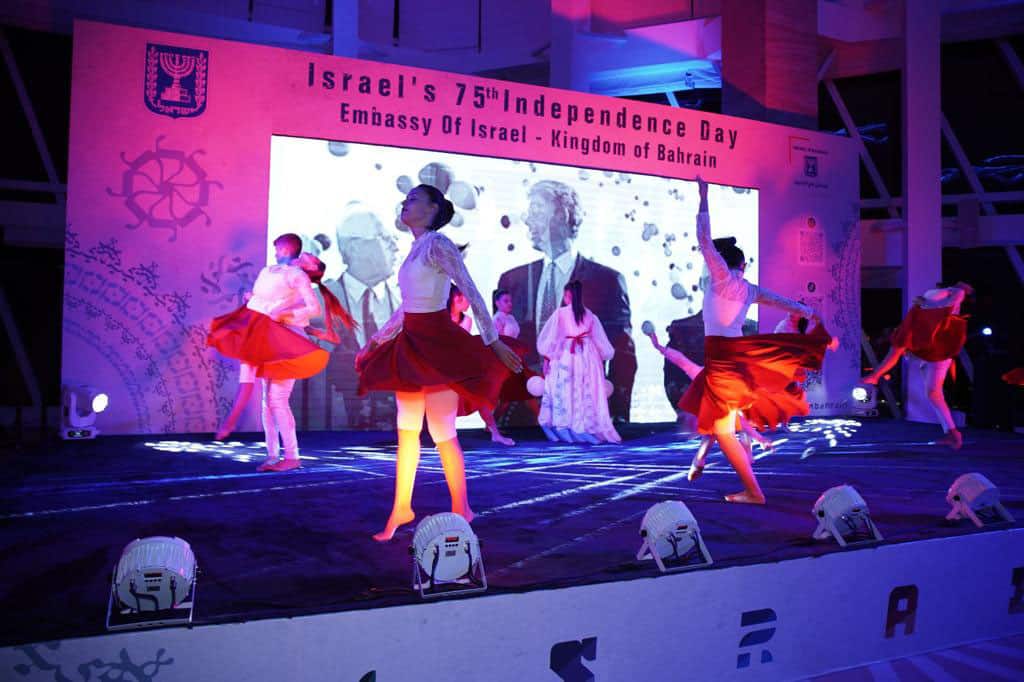
The Israeli Embassy in Bahrain celebrated Israel’s 75th Independence Day in May with a major event at the Wyndham Grand Hotel Manama, attended by Bahraini Industry and Commerce Minister Abdulla bin Adel Fakhro and many government officials, academics, businesspeople, diplomats, and friends of the embassy. It was only the second time the Israeli Embassy has organized such an event in the kingdom, following the signing of the Abraham Accords between Bahrain and Israel in 2020.
Israeli Ambassador to Bahrain Eitan Na’eh noted “the importance of the growing cooperation between the private sectors between the two countries,” and mentioned the recent implementation of many joint commercial projects between Bahrain and Israel.
He also pointed out “the importance of growing cooperation between the young generations in Bahrain and Israel, who are the generations for the future.”
“There is a growing relationship between Bahrain and Israel since the beginning of the signing of the Abraham Accords, and there is an acceleration in relations since the visit of Israeli President Isaac Herzog to Manama in December 2022,” he said.
At the celebration, guests were served a mixture of Jewish, Israeli, Arab and Bahraini dishes prepared by Arab Israeli chef Elias Matar. The dishes were highly praised by all.
Israel’s Tzuza dance group performed at the event, with 12 young dancers presenting a unique show that shed light on Israel over past decades through music and dance.
The Bahraini Interior Ministry’s orchestra played both the Israeli and Bahraini national anthems.
The event also featured a photo exhibition titled “Israel in the Eyes of Bahraini Youth,” which displayed photos taken by young Bahrainis who visited Israel last year.
There was also a group dance by young Bahrainis and Israelis, who performed the traditional dabke and other Israeli and Bahraini folk dances.
A number of Bahraini and Israeli businessmen who were at the celebration also held bilateral discussions and meetings.
Mahmood, a young Bahraini who visited Israel last year, told The Media Line there was a “need for Bahraini citizens to visit the State of Israel, because of its historical monuments and Islamic, Christian and Jewish sanctities.”
“Today we celebrate the 75th anniversary of the State of Israel. The existing relations between Bahrain and Israel are very important for both parties, and we as Bahrainis are happy to learn about Israeli culture,” he said. “There are many similarities between the two parties, even in religion, there are similar teachings regarding food, drink, and others.”
Ahmed Abdelnabi, a Bahraini entrepreneur, told The Media Line, “At the beginning of my professional life, I now start my practical life in entrepreneurship, specifically in the field of artificial intelligence and applications, and I see a great opportunity to enter into this field with Israeli companies. … I will visit Israel soon in order to search for agreements that could benefit me in my work, and this matter will certainly be fruitful.”
Safaa Qassem, a Bahraini entrepreneur, told The Media Line, “We are moving toward peace, and there are more Bahraini-Israeli agreements, and we are waiting to get more benefits from these agreements that we are moving toward. Today we celebrate the 75th anniversary of the founding of Israel, and we hope that peace will come to the Middle East.”
“I fear that we are losing the soul of the Reform movement,” Rabbi Ammiel Hirsch said at the opening of “Re-Charging Reform Judaism,” a two-day conference held this week in New York City. “Here and now is the place and time to have the urgent conversations that will shape the future of our movement.”
Reform Judaism, which originated in Germany as a liberal response to Orthodoxy, is the largest denomination in Judaism, but has been declining in recent years. The conference was convened to reverse the decline and reimagine a more vibrant future for the movement.
Although I’m in the Orthodox world, I have many friends in the Reform movement, just as I have in other denominations. I’ve always felt that all denominations have something to offer and that we can all learn from one another. In that spirit, I asked myself: What would I have talked about at the conference if I were one of the speakers?
On the conference website, I counted 68 speakers, with diverse topics such as:
Zionism and Jewish Peoplehood
Envisioning the Future of Re-CHARGED Reform Communities
Identity Formation of Proud Reform Jews as They Enter Adulthood
Embracing Jewish Peoplehood to Re-CHARGE our Future
The Components of Healthy Jewish Identity Formation in Relation to Israel
Re-CHARGING the Mission of our Sanctuaries and Communities: The Place of God
The Formation of Ethically Responsible and Jewishly Committed Reform Jews
The Promise of Tikkun Olam and Social Justice: Universalism v. Particularism
Re-CHARGING Reform Ritual and Practice
What could I add to all this?
The conference already covered major issues like Jewish peoplehood, Zionism and Jewish identity, and it’s clear that the movement is wrestling right now with how to interpret Jewish values in a changing world.
I can imagine that there were hundreds of deep conversations and debates during the conference over those Jewish values and how they would shape the future of the movement.
So, instead of piling on more cerebral heft to that conversation, I thought I’d go in another direction and harken back to my Sephardic tradition.
The Judaism I grew up with in Casablanca centered around the family table. We lived in a Muslim country, but through the protection of the King we were free to practice our Judaism. The beating heart of this practice was the Friday night Shabbat meal.
There were many other rituals, but Friday night was the magical ritual, the one that rose above all. To this day, no matter at which stage I am in my life, the Friday night Shabbat table continues to be my weekly anchor that keeps me connected to the things I love most.
It blows me away that 3,300 years after we received the commandment to honor the Sabbath, the ritual has become more and more relevant as technology has become more and more invasive. It’s hard to meet anyone, Jewish or non-Jewish, who doesn’t like the idea of disconnecting from the digital world once a week– and reconnect with our humanity. With friends. With family. With our community. In person. Live. Not on Zoom.
It’s hard to meet anyone, Jewish or non-Jewish, who doesn’t like the idea of disconnecting from the digital world once a week– and reconnect with our humanity.
So, what would I have talked about at the conference?
I would have suggested that the Reform movement take a page out of my Casablanca Judaism and make the Friday night table the beating heart of the movement. I can envision a movement-wide investment in a “Friday Night Re-Charge” initiative that would urge all Reform members and communities to do their own version of the Friday Night Re-Charge meal.
Friday night could become the weekly rhythm of the movement, with Reform communities from across the country sharing Shabbat stories on a dedicated website. The website would be a resource with ideas to help enhance the Friday night experience.
The Friday night initiative is not a substitute for working through the major issues Rabbi Hirsch enunciated in his address. But it’s a practical and doable idea that the movement already believes in and can start immediately. And it can boost the morale of the movement and give it momentum while it figures out its future.
Most important, perhaps, is the fact that hardly anyone will disagree, something any denomination would appreciate.
What New York City was for me from my 20s through my 60s is not what New York City is for me now in my early 70s.
There was the fabled New York of the advertising business. In my 20s and 30s, there was no better excitement and sense of having professionally “arrived” than being dispatched from L.A., flying business class, to the New York office, working on a new business pitch in what was referred to as the Big Apple. I’d be an instant part of a creative team with big Madison Avenue names, the giants of the industry who were winning all the awards at the Clios and the One Show. I’d travel on an expense account staying at the then uber-hip Paramount Hotel and eating at Elaine’s where the creative crowd hung out waiting to see if Woody Allen would show up. Late night I’d be taken to the Carlyle hearing the famous Bobbie Short sing. And then at 1am, we’d head back to the office to continue the brainstorming, leaving at 5 a.m. to return by 10:30 a.m. And start all over.
Then there was the New York of the Jewish world, the metropolis of Jewish leadership and ideas, of community evolution, its organizations and new foundations, of great meaning and planning for the Jewish people. Living on the West Coast, I was at its center, there every two weeks, as the owner of the largest communications and marketing agency at the time focused on the nonprofit world. There was the Upper West Side, the Jewish thinkers, the movers and shakers, the conferences, and the meetings we believed were so important. And there were the friends I was making with whom I passionately shared so much in common. There was the invisible bridge with constant traffic running back and forth between Israel and New York, between the new Jewish leaders of the former Soviet Union and New York, between the emerging new generation leaders of Western, Central and Eastern Europe and New York. And I got to play a part in it all.
Today, I go to New York a few times a year. As a grandfather. One of our daughters lives in bucolic Maplewood, N.J., with her family, a 35-minute train ride into Manhattan. We fly into Newark. We now know New Jersey in a way I never anticipated in my New York years. We know its family attractions, its neighborhoods, its parks, and New Jersey transit. Once in a while when my wife and daughter are tied up, I do the very exciting grandfather thing and take my grandchildren alone on the train and transferring to the subway, to places like the Central Park Zoo, the Circle Line Tour, Katz’s Deli (you been to Katz’s, the mother of all Jewish delis). I know my way around.
This week, I went to New York for several days, alone. I was meeting with one of my writing teachers. It was the first time I had been there by myself in years. I walked, according to the Health App on my iPhone, nearly 20,000 steps each day. I always loved walking in New York. I passed restaurant after restaurant where I had once eaten, hotel after hotel where I had once stayed, building after building where I had once sat in meetings, store after store where I shopped as a young husband and father to bring back gifts to my wife and kids from a business trip. I walked the Upper West Side, the Upper East Side, Gramercy Park and Greenwich Village, past apartment buildings where friends and colleagues lived ans invited me to so many extraordinary Shabbat Dinners. I walked past apartments buildings where I had stayed in friends’ guest rooms, who have since died. I bumped into a former colleague now in her 80s who listed for me her ongoing activism in the Jewish world. But she asked me nothing. Colleagues, even ones with years of history, aren’t necessarily friends.
New York is a symbol of a past life. I consciously chose not to hold on, knowing when it was time to create another kind of life, a more appropriate one here in Los Angeles.
New York, I realized on this trip, is a symbol of a past life. I have aged out of that period. I consciously chose not to hold on, knowing when it was time to create another kind of life, a more appropriate one here in Los Angeles.Literally in my backyard where I write six hours a day. I’m very proud I was capable of making this transition. I never thought about the strength it required, until this week walking around New York.
Gary Wexler woke up one morning and found he had morphed into an old Jewish guy.
Photo Credit Zach Lyons Photography – Courtesy of Future PLC
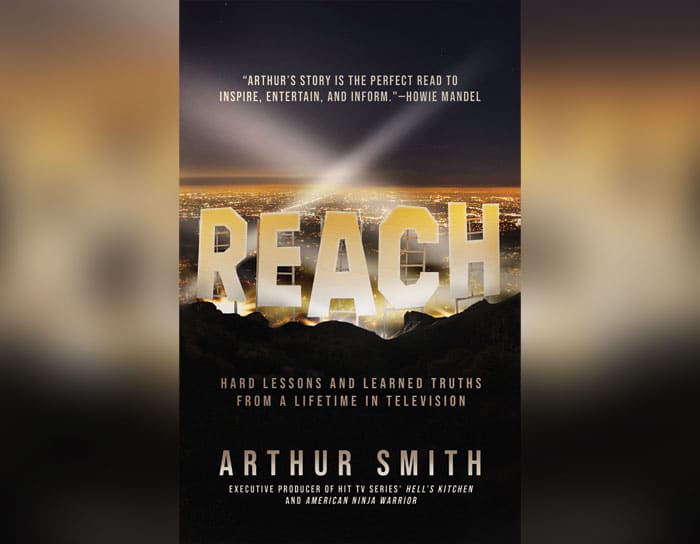
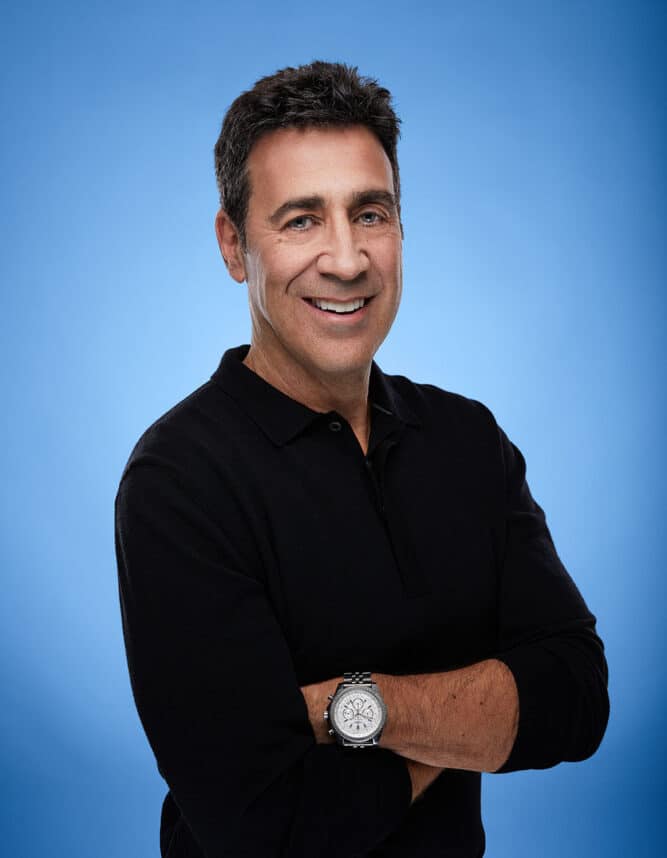
Just ask television producer Arthur Smith, author of the inspirational memoir, “Reach: Hard Lessons and Learned Truths from a Lifetime in Television,” which comes out on June 6.
“Reach is the power of extending yourself,” Smith, who is responsible for such hits as “Hell’s Kitchen” and “American Ninja Warrior,” told the Journal. “[It’s] not being afraid to put yourself out there.”
Throughout his book, Smith shares moments from his pioneering career in nonfiction television.
“I really like to think of it as a memoir with a purpose,” Smith said. “The stories I have selected [are] not necessarily the biggest hits or the funniest stories, they’re stories that support the message of the book.”
Smith’s “Hell’s Kitchen” introduced the United States to Ramsay and vice versa, and was the first successful network food TV show.
And, he adds, they are entertaining. For instance, people will see a side of Dwayne “The Rock” Johnson and what makes him special, as well as the beginnings of Gordon Ramsay. Smith’s “Hell’s Kitchen” introduced the United States to Ramsay and vice versa, and was the first successful network food TV show.
“There’s another one with Magic Johnson that makes me laugh every time I think about it,” Smith said.
His memoir is naturally also very personal.
“I grew up an extremely shy kid, and when I tell people this, they find it really hard to believe, because I’ve been an actor, I’ve been a producer,” Smith said.
Smith shares how everything changed.
“I don’t want to ruin it for the readers,” he said. “Something happened to me when I was 9 years old, and I didn’t realize it at the time … but it changed my life. It changed the way I viewed the world.”
Smith said that he was forced into a situation where he had to reach, to be vulnerable.
“I can literally trace that moment to the next one [and] the next one,” he said. “I became obsessed with reaching, and so I started to take really big chances.”
Those “reaches” led to life-changing accomplishments.
After getting his start in sports production, Smith rose to become the youngest-ever head of CBC Sports. Years after moving from Canada to the United States to produce entertainment programming with his mentor, Dick Clark, Smith spearheaded an entirely new approach to sports television at FOX Sports Net. Since 2000, when he launched A. Smith & Co. Productions, he has produced over 200 television shows on more than 50 networks.
In conjunction with his book, Smith established the REACH FOUNDATION, where all of his proceeds from “Reach” will go.
“The foundation is going to give money to a select group of charities,” Smith said. “All of which in some way lift people up to reach in their own lives, and to reach for their dreams.”
Smith says that it’s easier to reach when you’re coming from a strong foundation.
“That foundation was my parents,” he said. “I have great friends, a great wife and great daughters. But my parents really set everything in motion for me.”
He continued, “My mother drove me crazy, like a good Jewish mother can do. But she was always there, and she was the one who told me to go for it.”
Smith believes if you tell a child that they’re special, they believe it. And he is proof.
“My dad was my role model,” Smith said. “He was the most grateful man I know. [Whenever] my father and I were having a sandwich together, and it’d be the exact same sandwich, his would be so much better than mine. Because he appreciated everything so much, because he loved everything so much.”
One habit Smith picked up from his father was putting on his tallit every day. Smith can’t start his day without being grateful.
Between a father who kept him grounded and a mother who made him feel special, it’s no wonder Smith was positioned to take on the world of nonfiction television, which is exactly what he did.
“It’s all about momentum,” he said. “I feel like I’m running this string of positive momentum. All that being said, I’ve had disappointments too. The secret is to bounce back.”
Smith also attributes his strong Jewish values to his parents.
“My father used to say, ‘There’s never the wrong time to do the right thing, and there’s never the right time to do the wrong thing,’” Smith said. “It’s not unique to him, but it was something that he would often say. And I live my life by that.”
One of the things that makes Smith’s nonfiction television so unique and engaging is that they present great stories with an emotional impact.
For instance, “American Ninja Warrior” is a family show that gets the audience invested in the characters.
“It’s the same on “Hell’s Kitchen,” even though they’re very different shows,” Smith said.
A lot of this stems from Smith’s background in sports.
“Even though I love sports and I’m a big sports fan, the thing I enjoyed most about sports was not the game itself,” he said. “It was the setup of the game. It was the story.”
While none of the women in his family are particularly interested in sports (Smith also has two sisters), he said, but they are all big fans of sports movies, the Olympics and “American Ninja Warrior.”
“I’m always reaching for that bigger, broader audience,” he said. “I guess so much of my life has been focused on bringing as many people into the tent that it’s resulted in television that I like, that makes you feel.”
Smith’s company works really hard at making the audience care about the characters. Other key ingredients for engaging television include a great concept, the right talent to go with the concept, great execution from the producers and freshness of concept.
“In the nonfiction genre people get tired of the same thing,” he said. “The biggest hits in reality/nonfiction television come from originality. So we have to keep reinventing. We have to keep freshening up ideas. We have to keep reaching.”
For more on Arthur Smith, check out the interview on Taste Buds with Deb on JewishJournal.com.
Los Angeles is where aspiring filmmakers come to get their big break and showcase their work to the world. Oftentimes, that break starts with landing in film festivals, where they are then discovered and promoted to a wider audience.
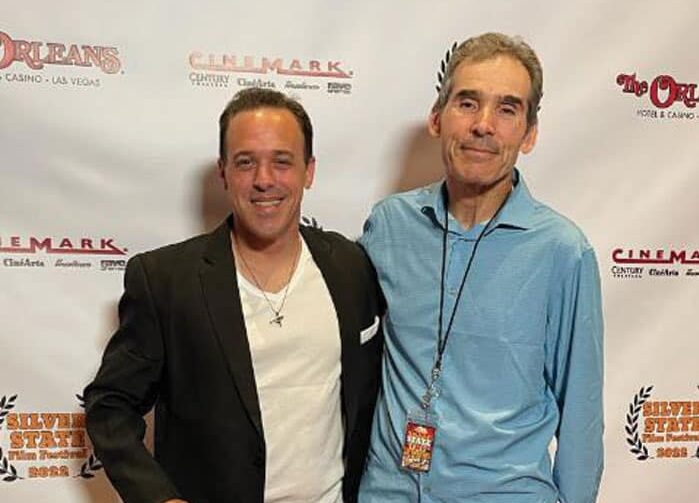
One of those local festivals, the Marina del Rey Film Festival, has been giving indie filmmakers the opportunity to break into show business for the past 11 years. Peter Greene and Jon Gursha started the festival because they saw a need.
“My partner came up with the original idea, because there were no film festivals on the Westside of Los Angeles, where we both lived and worked,” Greene said. “[We] celebrate and promote independent film here in LA and around the world.”
Among the movies playing at the festival, which this year runs from June 8 to 14, are two films with Jewish themes: “Witness,” a short documentary about the story of Lublin/Majdanek Concentration Camp, and comedian Daniel Lobell’s “Reconquistador!” which is about him going back to Spain to perform comedy and trace his Sephardic roots. The films are going to be screened at Cinemark 18 and XD on Center Drive.
At a time when people are staying home instead of going to the movies, Greene is advocating for in-person showings. “[We want] to promote the film theater experience,” Greene, who also ran the Silicon Beach Film Festival and Golden State Film Festival, said. “It’s easy to stream films in your own home or even on a smartphone, but there’s nothing like seeing a film in a quality movie theater with excellent projection and great sound. All of our festivals are in high quality venues, which we believe is still the best way to see a film.”
Greene grew up in a Jewish home in New York City, and he’s been working in television and film since he was in high school. After attending film school, he was a production assistant on commercials. From there, he worked in production, development, marketing and promotion, and produced a dozen different film and TV projects, from low budget cult films to studio features.
What initially sparked his love of film, he said, was “growing up in and around New York City, which is such a fertile place for film and culture. From there, [I was exposed] to even more of it in college.”
Running the festival ties into the Jewish values that Greene admires and practices.“The Judaism I practice is very open and welcoming, and that’s what our festivals are all about,” he said. “We give filmmakers the opportunity to screen their stories on the big screen, from issue-oriented documentaries to pure entertainment.”
At the Marina del Rey Film Festival, Greene picks what submissions to screen based on the quality of the storytelling. “Film is a wonderful medium to tell stories,” he said. “Today, more than ever, it’s easier to do in a high quality manner. We have shown feature films that were shot on iPhones that are extremely engaging.”
While it may be easier than ever to shoot a film thanks to smartphones, according to Greene, it’s even more difficult to get exposure because of all the content that’s out there.
While it may be easier than ever to shoot a film thanks to smartphones, according to Greene, it’s even more difficult to get exposure because of all the content that’s out there, with a number of platforms like TikTok, Instagram, YouTube and streaming services competing for viewers’ attention. With his festival, he’s grateful to give up-and-coming filmmakers a chance to shine.
He said, “Our goal is to help independent filmmakers promote their work and get it out into the world to experience.”
The Marina del Rey Film Festival will take place June 8th-14th. Learn more and purchase tickets at Marinadelreyfilmfestival.com.




 Los Angeles poet Rick Lupert created the