fbpx

June 1, 2023

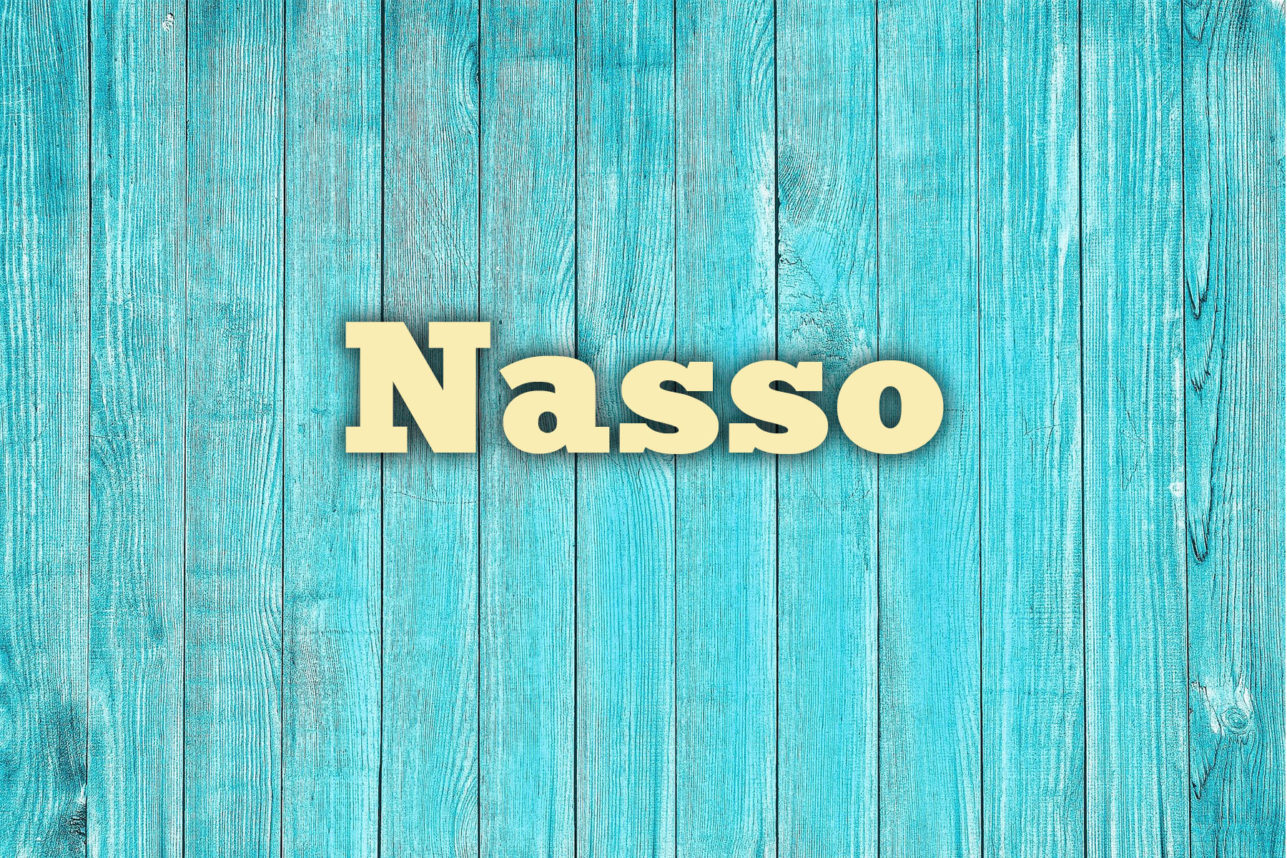
Table for Five: Nasso

One verse, five voices. Edited by Salvador Litvak, the Accidental Talmudist

When Moses would come into the Tent of Meeting to speak with Him, he would hear the voice speaking to him from the two cherubim above the covering which was over the Ark of Testimony, and He spoke to him. – Num. 7:89


Aliza Lipkin
Writer and educator, Ma’aleh Adumim, Israel

Moshe came to the Tent of Meeting to speak to G-d. If so, why is it written he listened to G-d’s voice and then he spoke? Before speaking, Moshe would first attune himself to G-d’s Essence, which emanated from above the Ark and was audible through the Cherubim. In this way, he would actively align himself with G-d in order to properly communicate.

This is indicative of how we should approach a conversation with another individual. We should align ourselves with the spirit of where they are coming from in order to understand them and thus communicate with them effectively. 

In addition, the cherubim were winged creatures with childlike faces. Perhaps G-d chose to speak from between two pure innocent beings with wings spread open, to convey metaphorically how we ought to converse with one another. 

We should aspire to have pure intentions and leave a space for openness and a willingness to hear and be heard. An honest face-to-face interaction that allows for self-expression between two parties can raise the relationship to a higher level. The cherub’s extended wings represent the possibility to soar and reach new heights. 

If we approach one another with humility and a true desire to connect to the godliness within the other, the results can be truly divine. If not, we continue to fuel the flame of the revolving sword between the cherubs that keep us barred from Gan Eden.


Rabbi Elliot Dorff
American Jewish University

When Moses heard God speaking, he had no doubt that it was indeed God. How, though, are other people supposed to know if someone claiming to have heard God actually did? Jeremiah (8:10; 14:14; etc.) complains repeatedly about false prophets, and the Rabbis (B. Bava Batra 12a) were sufficiently worried about false claims about hearing God that they declared that prophecy ceased with the destruction of the First Temple and was replaced by interpreting the Torah. That, though, compounded the problem, for, as the Rabbis (Numbers Rabbah 13:15-16) themselves recognized, “there are 70 faces to the Torah” – that is, any verse can be interpreted in multiple ways. Judaism is definitely *not* fundamentalist! 

How, then, are we supposed to determine what is a good interpretation of what God wants of us and what is not? The Rabbis (B. Eruvin 13b) state part of the answer by saying that it depends on the character of the interpreter: even though both the schools of Shammai and Hillel heard “the word of the living God,” the law is according to the School of Hillel because they were kind and humble and taught the opinion of the School of Shammai before articulating their own position. Part of the answer, though, depends on the content of what is asserted, for if God, as we say in our prayers three times a day, is “good to all” (Psalms 145:9), then an accurate hearing of God’s word in our time must also be good for all involved.


Rabbi Tova Leibovic-Douglas
Ritualist, spiritual counselor, educator

One of my favorite topics to teach individuals learning about Judaism for the first time is our tradition’s diverse theological beliefs. 

The story I like to share is when a friend who identifies as a Jewish atheist had a Shabbat dinner with a friend who identifies as Orthodox. I witnessed their heated and respectful debate on God for hours. From Spinoza to Buber, the two were at it, and it made me relish that our tradition’s tent was large enough for such differing beliefs and discourse. 

Yet, when I read this verse, the compelling depth of faith expressed in our Torah is present; this mystical and magical connection between the Divine and Moses is remarkable. Moses enters the Tent of Meeting to speak with the Divine, only to have the Divine talk to him directly, highlighting this unique and intimate relationship, one that was filled with a stream of communication. This scene is the blueprint for our potential personal relationship that we may cultivate with the Divine. It showcases a lesson that most of us need: listening before speaking is paramount, especially concerning our hearts and faith. 

We no longer have those cherubim above the Ark of Testimony nor a Tent of Meeting, but we have our expansive souls beckoning for a deeper connection. We have the potential for discourse with one another, even with the Divine. This verse reminds us that our personal Tent of Meeting awaits us to begin the conversation so that we may listen.


Rabbi Cheryl Peretz
Associate Dean, Ziegler School of Rabbinic Studies at AJU

Each time my Zoom connection informs me that it is unstable, I chuckle at technology’s way of assessing my mental state while simultaneously interrupting the ability to hear the person on the other side. Following a long, repetitive passage describing the gifts the leaders of each tribe would bring to the portable tabernacle, the final verse of this week’s portion calls our attention back to Moses, the nature of God’s communication, and what it takes to have an uninterrupted connection.

Rashi notes that the “Voice” mentioned is the same thunderous voice heard at Mt Sinai in the moment of revelation. Yet, another word in the verse calls our attention to interpretation and meaning. In Hebrew, the word used for God speaking to him is midabeir, a grammatical structure that implies reflexivity. In other words, God was speaking to God’s self, and that is what Moses hears from the cherubim. Only in that moment of clarity does Moses experience God speaking directly to him as before. 

That same voice of God remains available to us today when we tune our internal soundwaves for clear reception. With awareness and consciousness we too can hear the voice of God in the defining moments of goodness, the answer to questions, and in the gentle urging to move towards light and love that is at the essence of who we are meant to be. 

The reality is that God is always talking, even at this very moment; the question is whether or not we are listening. 


David Sacks
Podcaster,  “Spiritual Tools for an Outrageous World” 

The Ba’al HaTurim, the great 12th century Torah commentator, opens our eyes to something about this passage that illustrates the never-ending levels of holiness that exist in Hashem’s words. 

If you look at the words for “between the two cherubim” in Hebrew, it’s “M’ben Shney HaCeruvim.” The first letters spell “Moshe”. 

Rabbeinu Bachya probes further. He says that the distance between the two wings of the angels where Hashem spoke to Moshe was about a foot long. Rabbeinu Bachya writes that the heart is approximately that length as well. 

In other words, G-d speaks to us through our heart. He also points out that the fullness of the tongue is approximately that length, too. Meaning, speech is a gift from G-d, and therefore the words we choose carry great weight and need to be uplifting and thoughtfully chosen. 

It’s remarkable to think that there are actual portals within us that G-d communicates through. Or perhaps even more amazingly, that we ourselves are a portal that G-d uses us to communicate His message to the rest of the world. 

Of course, we play a crucial role in this process, too. Each of us tells a story with our lives. We write that story one day at a time through the choices we make. Thousands of little decisions eventually become who you are, and what you stand for. When people speak about us, they will be reading from the book we wrote with our very own actions.

Table for Five: Nasso Read More »

Stealing Is Wrong. Did We Forget That?

I was in my freshman year of high school, and one day after class, my friend and I were hanging out at our local CVS. We were looking through the makeup section, checking out eye shadow and lipstick and mascara. 

I still couldn’t believe this girl was my friend; she was one of the cool kids. She had purple hair and wore ripped up jeans and listened to punk rock. I wanted to be cool like her.  

As I picked up some mascara, my friend whispered in my ear, “Steal it.”

“What?” I said. 

“Just put it in your backpack. If it’s under $10, the alarm won’t go off.”

“But why?” I whispered. “I can afford it.”

“This is a corporation. They work stealing into their bottom line. Stick it to the man. Steal it,” she said, egging me on.

Her argument made sense. Corporate America was evil! They underpaid their workers. They stomped on mom and pop shops. If I took this $5 mascara, it was me fighting back against them. I was actually doing something good. 

Her argument made sense. Corporate America was evil! They underpaid their workers. They stomped on mom and pop shops. If I took this $5 mascara, it was me fighting back against them. I was actually doing something good. 

In that moment, I hoped to impress my friend and do my part in making the world a better place. So I put the mascara in my backpack, held my breath and walked out of the store. The alarm didn’t go off. The cashier didn’t come after me. Nothing happened. 

My friend giggled and I felt a rush of adrenaline. I couldn’t believe I’d stolen something. I couldn’t believe I could just get something for free like that. I was empowered.

After that, I didn’t steal again per se, but I also wasn’t careful if I took some pens from my work, and I wouldn’t say anything if a cashier accidentally gave me too much change back at the store. I was happy to get things for free, even if they weren’t meant to be free, or find some cash on the ground. 

Years after that incident in ninth grade, when I was in my junior year of college, I was shopping with a friend at the grocery store. I’d pick up some food and water bottles, and was about to go to check out when she encouraged me to walk out of the store and not pay. I thought back to when I was 14 years old and I’d gotten away with theft.

“Sure,” I told my friend, as we made our way towards the exit without paying. 

As I got outside, a security guard came running after me. 

“Did you pay for that?” he said, pointing to my cart. 

“I thought I did,” I said, lying. “Did my card not go through?”

“No,” he said. “You have to go back in and pay.”

My face turned red. My heart was beating rapidly. 

“Oh, OK,” I said. “I will.”

I went back to the check out and paid. 

I was so embarrassed. I knew in my gut that what I did was wrong, and getting caught was a wakeup call. I never purposely stole again.

There are a number of laws in Judaism that deal with stealing. Along with not intentionally stealing, you can’t even steal from someone as a joke or to teach them a lesson.

Now that I’m an observant Jew, I’m very careful about stealing. There are a number of laws in Judaism that deal with stealing. Along with not intentionally stealing, you can’t even steal from someone as a joke or to teach them a lesson. 

When it comes to work, you cannot take too long of a lunch or coffee break, since it would be like stealing from your employer. And if you find a lost object, there are strict laws you need to follow so that you don’t accidentally end up stealing it. 

Unfortunately, we live in a society where stealing is no longer seen as a big deal. In California, people are stealing hundreds of dollars worth of items from stores every day and using excuses as I once did to justify their actions. 

For example, they may say that theft is factored into a company’s bottom line. A company knows it’s going to happen, and they account for it. Wouldn’t that make stealing OK? Isn’t it justified if it’s a big corporation?

The truth is that no matter what the circumstances, stealing is objectively wrong. Once you steal one small thing, you will start to justify stealing bigger and bigger things. You may go to great lengths to steal and end up hurting others in the process. 

You will certainly be hurting yourself. On a spiritual level, stealing hurts your soul. It makes you into a more callous person who is less sensitive to others. You don’t remember that someone put effort into making the thing you’re stealing. You don’t know whom you’re going to affect when you steal. 

As a recent victim of a burglary, where a robber stole $25,000 worth of equipment from my husband’s podcast studio, I’m familiar with this. The burglar may have thought, “If I steal these things, I can sell them and make some money. The owners will recover from this. But I need the money more than they do.” 

The burglar didn’t know about the years my husband and I spent trying to make his dream come true, how we scrimped and saved and took out loans to pay for this entrepreneurial endeavor. The burglar didn’t think about the trauma he inflicted on us, and how we now have nightmares and are in intensive therapy to deal with it. 

There is a spiritual sickness in our society. It’s not just in California, but also in America as a whole. Everywhere, people are stealing from one another and committing far more heinous crimes. It seems like there is no regard for basic morals. So how can we fix it?

By changing our actions and working on ourselves. 

Start with improving yourself and encourage others to do the same. Learn about the Jewish laws on theft. Teach your children never to steal, even if they’re plucking a flower from a neighbor’s garden. Show them that we have to ask permission to do even that. Show them that we need to always respect other human beings. 

Small actions add up and make all the difference. We can make things better. 

Remember: We are not powerless. We are powerful. 

Want to get in touch? Email me at Kylieol@JewishJournal.com.


Kylie Ora Lobell is the Community Editor of the Jewish Journal.

Stealing Is Wrong. Did We Forget That? Read More »

Debra Messing and Mandana Dayani: Jewish Champions

In an effort to ensure the clearest recording of her voice during our interview, Debra Messing places my phone on her lap and speaks in an elegant voice that I’ve associated with warmth and laughter since “Will and Grace” first aired 25 years ago. 

As I listen to Messing’s recollection of the time when, as a high school senior, a peer learned of her Jewish faith and asked to check her head for horns, I realize that although the world knows Messing as an Emmy award-winning actress, at her core, she is a good Jewish girl from Rhode Island whose life experiences and commitment to her decisions have prepared her for this exact moment.

In refreshing contrast to the apathy of many Jews in Hollywood toward Judaism and the Jewish community, at the peak of her career, Debra Messing is choosing to focus on her Jewish identity while fighting the scourge of antisemitism that has risen during the past decade. 

After a few seconds, Mandana Dayani, an entrepreneur, civic action activist and creator and co-founder of I Am a Voter, who is seated next to Messing, reaches for my phone and speaks clearly in a voice I have known since our childhoods together. Dayani has been featured in nearly every major American media outlet, but seems particularly invested in reaching Jewish readers. “Being in the [Jewish] Journal is really important to Deb and me,” says Dayani. They both speak with an ease that suggests being interviewed for a Jewish American newspaper is like coming home. 

At the height of her career, Dayani is also choosing to focus on her Jewish identity. And like Messing, she’s committed to reinventing Judaism and Jewish identity through unabashed pride and joy, while also fearlessly fighting rising antisemitism. Both women have been targeted by antisemites, whether during their childhood or, more recently, online.

Dayani and Messing are self-proclaimed “best friends and super nerds” who reconnected several years ago while on vacation with a mutual friend.  Both women have been targeted by antisemites, whether during their childhood or, more recently, online.

Dayani and Messing are self-proclaimed “best friends and super nerds” who reconnected several years ago while on vacation with a mutual friend. There’s a palpable chemistry between the two that is rooted in activism, respect and love. “Mandana is my soulmate,” Messing told me. “It’s just as simple as that. She is the epitome of a mensch; she loves so exuberantly in a way that is unapologetic and generous. And she’s brilliant, so her mind is fascinating to me.”   

Messing and Dayani are even dressed similarly, both clad entirely in black. But there’s a subtle difference to their appearance that, like everything else about them when they’re together, demonstrates a harmonious yin and yang attribute of their magical chemistry: Dayani wears one of her trademark pantsuits, tailored to perfection. Everything is crisp, straight and precise; she could move seamlessly from her couch, where we conduct the interview, to a seat in her home office.

Messing’s attire is subtly softer. Dressed in a turtleneck, black pants and a chic belt cinched at her waist, she appears as a self-actualized version of Grace Adler, the iconic Jewish character she played to perfection for nearly a decade on “Will and Grace” (the show, which was co-created by Jewish producers David Kohan and Max Mutchnick, had a three-season revival starting in 2017). Cast as one of the first openly Jewish female lead characters on television, it was Messing who insisted the show feature jokes about the Jewish-American experiences (cue Grace’s references to her bat mitzvah and Camp Ramah). 

There is even a softness to Messing’s famous red locks, which now are lighter, seemingly suggesting that today, Grace Adler is happy with the way her life has turned out and the choices she has made, and perhaps she has started a new role as chair of the women’s leadership division of a major Jewish organization.

Given Messing’s familial background in Jewish leadership, this wouldn’t be a stretch. Her father, Brian, was a former vice president of the Jewish Federation of Rhode Island (JFRI), as well as president of Temple Sinai in Cranston. Her mother, Sandra, who passed away in 2014, was president of the women’s career division of JFRI and a board member of UJA national (United Jewish Appeal). “I remember my dad being on the phone at night soliciting funds for JFRI. My mom talked a lot about helping the Russian Jews coming into Rhode Island through HIAS get settled. Their commitment was a part of my entire childhood,” recalled Messing, who lives in New York City. 

But whereas we can only imagine that Grace’s fictional childhood happily included Camp Ramah and other Jewish rites of passage in America, growing up, Messing experienced antisemitism and a pernicious sense of having been made to feel like “the other.”

A young Debra Messing in Rhode Island, where she spent her childhood.

“I knew from kindergarten that I was different,” she said while sitting cross-legged in Dayani’s West Los Angeles living room. Messing, along with her parents and brother, Brett, moved from Brooklyn to Rhode Island when she was three, and she looked nothing like most of the other children she attended school with  in the 1970s, many of them Irish or Italian Catholics. 

In fact, Messing was only one out of three Jewish children in her elementary school. In an address at the opening plenary of the 2015 General Assembly of the Jewish Federations of North America, she said, “I had kinky, curly hair and a strong nose. All of my friends were blonde or had straight shiny brown hair and small noses. I stood out. I never felt beautiful.”

Incidentally, it was that nose that led some to advise Messing early in her career to undergo plastic surgery. In 2017, she revealed that during filming of her first film, 1995’s “A Walk in the Clouds,” director Alfonso Arau said, “Her nose is ruining my movie.” That same year, Messing told Today.com, “My nose and I have come this far, and like Barbra Streisand, I’m defiantly keeping it.”

“I felt shame for being different. And I felt that letting people know I was Jewish was dangerous.” — Debra Messing

In Rhode Island, Messing and her family experienced several antisemitic incidents that still resonate deeply with her. The driveway lights outside the Messing home were constantly broken by baseball bats, and she still remembers the day after Halloween, when a swastika was painted on her grandfather’s car while he was visiting the family. “There was terror in my mother’s face,” recalled Messing. “I felt shame for being different,” she said. “And I felt that letting people know I was Jewish was dangerous.” 

In third grade, a boy told Messing, “Get in the back of the line, kike.” At the time, she did not even understand the meaning of the antisemitic slur.

And when Messing missed school days in observance of Jewish holidays, students interrogated her about where she had been. On one occasion, when she explained her absence due to Yom Kippur, a group of students confronted her and yelled, “Well, why do you get Christmas off?” After that, Messing decided it was safer to withhold the truth from her peers. “I would lie and say I was sick,” she said, whenever she missed school due to Jewish holidays.

And then, there was the high school student who genuinely wondered if Messing had horns. As a teenager, Messing visited Alabama for America’s Distinguished Young Women program (then known as America’s Junior Miss), a scholastic achievement program. “We were all seniors in high school. All nerds,” said Messing. “I was having lunch with some amazing young women, all from the deep South, and one of them heard me say I was Jewish, and she said, ‘Oh, my God! Where are your horns?’ I said, ‘Excuse me?’” Messing then repeated the young woman’s next questions regarding Jews and horns: “She then asked, ‘Do ya hide them with your hair? Where are they? Can I feel them?’ Now these were the valedictorians of their schools.”

Messing finally felt at ease when she left Rhode Island to attend Brandeis University, an institution where classes are canceled on Rosh Hashanah and Yom Kippur. “At Brandeis, it was like, ‘Oh, I’m with my people!’” she said. After graduating summa cum laude with a bachelor’s degree in theater arts, she was  one of 15 students accepted to New York University’s elite Graduate Acting program, graduating with a master’s degree in fine arts.

 As she listened to Messing’s descriptions of experiencing antisemitism as a youth, Dayani nodded in agreement. “Every single Jewish person I know in my life has experienced antisemitism,” said Dayani. “Last month, there was a swastika drawn in a bathroom in my daughters’ elementary school. Every day, I receive targeted antisemitic threats online. I am never going to let this behavior be okay. And if I have succeeded as an activist, then I will make it my mission to use my skills and network to fight antisemitism and hold these trolls accountable.” 

Messing added, “With social media, it’s so easy for people to spit hate at you, because there are no consequences. I never imagined that hate would be so brazen and so celebratory.” 

Messing and Dayani are particularly concerned by the normalization of antisemitism on social media. “There’s no shock value,” said Dayani, who posts regularly about antisemitic incidents worldwide (often posting several times a day). “Why is no one alarmed? I think the hardest part is that it feels like peers and so many people I know just accept antisemitism. It doesn’t bother them the way it should. And that feels very lonely and unjust.”

A Force of Nature

A decade later and six-thousand miles away from Messing’s upbringing in Rhode Island, Dayani was standing in formation in Tehran, Iran with dozens of other young girls at school, all of them dressed in the mandatory hijab (Islamic head covering for girls and women), as they chanted “Death to Israel!” and “Death to America!” 

As Dayani spoke about growing up as a young Jewish girl in post-revolutionary Iran, Messing was visibly moved and dismayed.

A young Mandani Dayani at the home of her grandmother, Touran, in Iran.

“I’ve repressed 99% of my memories from my childhood,” Dayani said, “but a lot has come back to me after seeing this [current] revolution in Iran, that includes a profound connection to Iran again.” She referenced the historic protests and demands for regime change that have swept Iran since the September 16 death of Mahsa Amini, a 22-year-old Iranian Kurdish woman who was killed by Iran’s brutal morality police. “I remember many moments of fear from seeing the modesty police as a young child, the bombings, the everyday fear of being Jewish,” Dayani described about her own childhood.

Dayani also has a personal connection with Iranian Kurds: Though her mother, Janet, is an Iranian Jew, her father, Parviz, is a Kurdish Jew; her paternal grandfather, Michael Dayani, served as the rabbi of Iran’s Kurdish Jews. 

“I was very aware of the sacrifices my parents made for me to have this one chance, but also how profoundly lucky I was to be here in this country,” she said. “It was a coin toss between me and the other girl who looked exactly like me — who stayed and who could go? The self-awareness and the gratitude made me ask, ‘How do you make this all worth it? How do you pay back to anyone else who’d had a little less luck?’ I’m still very aware of this.”

What brought together the granddaughter of a Kurdish rabbi and the daughter of Rhode Island Jewish community leaders to forge a deep friendship and become passionate activists? For Messing and Dayani, the answer lies in Judaism and Jewish history. “We’ve been persecuted from day one,” Messing said, adding that antisemitism has made Jews particularly compassionate toward the suffering of others. “But the generational trauma has built resilience,” said Dayani. “We’re all a bit fearless, because we’ve seen it. We know how this road ends. And we know what happens if we don’t say anything.”

Dayani and her family eventually escaped Iran in the late 1980s, like tens of thousands of other Iranian Jews, first resettling in Queens, New York, where her father worked as a shoe salesman. The family lived in a small studio apartment and Dayani still remembers time spent with her teacher during naptime at a Jewish day school. “She gave me orange juice and breadsticks and taught me how to speak English,” she recalled. “That’s what is so beautiful about the Jewish community — how many heroes showed up along the way for me to be sitting here with you. I try to explain this to people — it is so beautiful to know that you could knock on the door of any other Jew in the world and be welcomed into their home, arms wide open. It is a blessing and privilege to have this belonging that others spend their whole lives searching for.” 

After a few years, the family moved to Southern California. And that is how Dayani and I met over 30 years ago, as Iranian Jewish refugees at Horace Mann School in Beverly Hills. Back then, I was a scrawny tomboy. And Dayani was what she remains today: a force of nature. 

We both lived in modest apartments on Rexford Drive, just within the Beverly Hills city limits, enabling us access to the outstanding, and equally important, free public schools. And as little girls, Dayani and I were both also resettled in Ladispoli, Italy — a small city outside of Rome that offered temporary resettlement to many Iranian and Russian Jewish refugees. Both of our families, in addition to tens of thousands of others, were rescued by HIAS, a nonprofit humanitarian aid organization previously known as the Hebrew Immigrant Aid Society.

But whereas many Iranian Jewish refugees have long forgotten the magnanimity of organizations such as HIAS, Dayani nearly brought me to tears during our interview when she disclosed that last year, in her role as president of Archewell, she advised the company to make a donation to HIAS for its support of Ukrainian refugees. 

Archewell is the media and philanthropic company founded by Prince Harry, Duke of Sussex, and Meghan, the Duchess of Sussex. It includes Archewell Audio and Archewell Productions, and its nonprofit is named Archewell Foundation. “The Duke and Duchess, both remarkable humanitarians, exuberantly said ‘yes,’ and were thrilled to support the organization’s ongoing support of refugees around the world,” said Dayani, who recounted that calling Joe Goldman, Community Engagement Director for the Western Region at HIAS, to inform him about the grant was one of the most meaningful highlights of her career. “I was seeing it all come full circle,” she said.  

I Am a Voter

To claim that Mandana Dayani is an overachiever is an understatement. Her first taste of activism occurred in the fourth grade. A graduate of the USC Gould School of Law, she began her career as an attorney at Paul Hastings LLP, but has left an indelible mark on several fields, including her later work as a commercial talent agent, as well as an entrepreneur and executive in fashion, media and entertainment, Dayani developed and launched The Rachel Zoe Collection, The Zoe Report, and Curateur at Rachel Zoe, Inc., and oversaw the company’s business development, publishing, ventures and television production (though she could have done without having to appear on-screen on “The Rachel Zoe Project”). 

Dayani left Rachel Zoe, Inc. in 2015 to serve as Chief Brand Officer for Everything But the House, raising $84 million in venture capital, building all its consumer-facing operations, and producing its TV project for HGTV. 

But the realms of activism and women’s empowerment are particularly close to Dayani’s heart. Last month, she spoke on a panel for Vital Voices in Washington, D.C. and also met with Vice President Kamala Harris. Also in May, she spoke at Fortune’s Most Powerful Women NextGen Conference. Dayani also founded The Learning Series, a women’s event series, and is a very active angel investor in women-led companies. The Tel Aviv Institute has named Dayani and Messing as two of the 100 Most Influential Jews in the World. In March, she spoke at the Forbes 30/50 Summit in Abu Dhabi, along with Hillary Clinton, Gloria Steinem and Olena Zelenska, the First Lady of Ukraine, and at the Women’s Global Forum in Washington, D.C. with former Attorney General Eric Holder. 

But Dayani’s most meaningful role as an activist has been as the creator and co-founder of I Am a Voter, a nonpartisan civic engagement organization. Since launching, I Am a Voter, co-founded by CAA, Natalie Tran, and Tiffany Bensley, has generated billions of media impressions and has partnered with hundreds of brands shaping culture across entertainment, fashion, beauty, tech and sports, including the NBA, Disney, Bumble, Starbucks, the NFL, H&M, ABC, Fox, McDonalds, CFDA, Urban Outfitters, Tory Burch, and iHeartMedia and celebrities such as Jennifer Aniston, Tracee Ellis Ross, Steph Curry, Tom Ford, Lizzo and Olivia Rodrigo. Messing is also a founding member. 

Dayani also founded Register a Friend Day, which has partnered with hundreds of influencers, student organizations, and companies to register voters across America. The organization has been effective in leveraging digital-first registration tools, nonpartisan facts, and engaging content to inspire young people to vote.

I Am a Voter, according to its website, aims “to create a cultural shift around voting and civic engagement by unifying around a central truth: our democracy works best when we all participate.” Dayani’s commitment to combating voter apathy is so deep that the headline for an October 2020 Los Angeles Times front-page story that profiled her read, “She wants to make voting as epic as the next Marvel movie.” Her childhood experiences as a refugee have rendered her uniquely appreciative of this country, but also concerned about its apathetic voting patterns. 

For Dayani, tackling voter complacency started with women. In 2018, she brought together 25 female leaders in areas such as fashion, marketing, technology and entertainment and stressed the imperative to increase voter turnout in an impartial, non-partisan manner. The prior year, she and her husband, Peter Traugott, president of the Israeli-founded production and media company, Keshet Studios, welcomed their second daughter, Miller. Shortly after Miller was born, Dayani was watching coverage of the child separation at the U.S.-Mexico border, and “knew the consciousness of our country was in crisis.” She boarded a plane to Tornillo, Texas, where the first tent camp for migrant children was located. Dayani said she had to see it herself. 

“I could not believe this was the same country that had saved my family,” she said. “I remember coming to America, being afraid of all the bright lights, holding my mother’s hand and thinking, ‘This is going to be okay because I have my mom.’ I can’t imagine having been separated from my parents.”

Dayani added, “As a country, we have treated luggage better than we have treated the children of the most vulnerable populations on earth — refugees coming to our country seeking a better life.” Upon her return from Texas, Dayani took meetings with many members of Congress and Senate to ask how she could leverage her skills to help. The answer was nearly unanimous: increase voter participation. 

Nearly all of the pivots in Dayani’s career have been anchored in her belief that “you can learn as you grow,” and that has included combating voter apathy. “I don’t understand how we can get people excited about this many mascaras and Marvel movies a year but we can’t get them excited about something that’s so important,” she told The Los Angeles Times in 2020. “This is the coolest thing you could ever do. How are people not voting?” 

On social media, celebrities ranging from Taylor Swift and Halle Berry to Dwayne Wade have shown off I Am a Voter merchandise. The keyword in the movement’s brand is as simple as it is ubiquitous: “Vote.” The movement officially launched in September 2018 during New York Fashion Week, “together, with the help of the best marketing minds I had ever worked with my career, incredible women such as Raina Penchansky, Sophia Bush, Heather Greenfield, Carla Hawkes, Sunny Jenkins, Sahar Sanjar, Alle Fister, Maddy Roth, Sara Riff, Jessica Kantor and April Uchitel, to include just a few, we reimaged civic engagement,” said Dayani.

Accidental Activists and Vital Women

In 2019, Messing found herself face to face in a Twitter battle with then-president Donald Trump. The issues were divisive and included Messing’s dismay over what she described as Trump’s refusal to denounce white nationalists. But by this point, Messing was no stranger to activism, and was fully committed to what she described as standing up to injustice. Messing supports The Human Rights Campaign, an American LGBTQ advocacy group that has also honored her for her LGBTQ activism. For many years, she also served as Global Health Ambassador for Population Services International (PSI), focusing on HIV/AIDS. PSI helps vulnerable populations worldwide access health care, and Messing has visited its HIV/AIDS prevention programs in several African countries, such as Zimbabwe, Malawi and Zambia. 

Messing has testified before the House Foreign Affairs Subcommittee on Africa and Global Health (she helped secure $100 million in aid), and has spoken at the International AIDS Conference. She hopes that her work on-and-off the screen has reached the hearts and minds of millions. In a 2012 appearance on NBC’s “Meet the Press,” then-Vice President Joe Biden said, “I think ‘Will and Grace’ probably did more to educate the American public than almost anything anybody’s ever done so far.”

Last month, Messing was inducted into Manhattan’s Jewish Hall of Fame. The U.S. has designated May as both Jewish American Heritage Month and Asian American and Pacific Islander (AAPI) Heritage Month. At New York City’s Bryant Park, Noa Tishby, former Special Envoy for Combating Antisemitism and Delegitimization of Israel, and Andrew Yang, a prominent business and politician, co-hosted an event celebrating JAHM and AAPI Heritage Month. “These two communities are the most targeted for hate crimes in the US right now,” Messing posted on Instagram. “We shared stories of persecution and resilience; we recognized how much our communities are alike.”

Dayani and Messing both use their public personas as a means to amplify what is important to them. The two co-founded “The Dissenters” a limited podcast series (its name is a nod to late Supreme Court Justice Ruth Bader Ginsberg). Their guests were not traditional celebrities, but activists. In fact, the only time when the duo appeared star-struck was when they described their conversations with “accidental activists,” once-ordinary people who identified a problem and set out to solve it. 

Guests have included best-selling author Glennon Doyle, civil rights activist and sexual assault survivor Amanda Nguyen and Dayani’s mentor, activist Shannon Watts, founder of Moms Demand Action, the largest gun safety grassroots movement in our country (in May, Dayani, alongside Watts and Messing, spoke at the second annual Vital Voices Festival in Washington, D.C.). Before Dayani co-founded I Am a Voter, Watts had some advice for her friend and colleague: “Shannon told me that if you wait to know everything before you start something, you’ll never start anything,” said Dayani. Other guests on “The Dissenters” have included Jane Fonda, Hillary Clinton, Adam Schiff and Jameela Jamil. 

In addition to HIAS, the Anti-Defamation League and several other non-profits, Dayani also supports Together Rising, an all-women-led organization that has raised over $45 million for women, children and families in crisis.

During the Twitter row between Messing and Trump, it was especially important for Messing and Dayani to invite Dr. Edith Eva Eger, a 93-year-old Holocaust survivor and clinical psychologist to discuss antisemitism, her experiences in Auschwitz, as well as how to heal from trauma.

“The root of Judaism is so much about togetherness, compassion, understanding and generosity,” said Dayani. “And responsibility to the community and the world at large,” added Messing.”

Messing and Dayani’s lives have been changed by extraordinary Jewish women. “My mother was the one who, with every Jewish tradition, every Jewish meal, was the gatherer of people,” said Messing. “Keeping the traditions alive was vitally important to her.” Dayani described her mother, Janet Dayani, as “a warrior. She’s the matriarch and the strongest, most resilient, loving and fearless woman I have ever known.” She also described her maternal grandmother, Touran (“Touri”), who passed away several years ago, as “informing everything I do and believe.”

Dayani and Messing also work closely with Israeli actress, producer and activist Tishby. “Noa is amazing,” said Messing. Dayani said Tishby will be a much-needed face for Jewish unity and activism.

“The Joy of Judaism” 

A headliner of the 2017 Women’s March, just one year later, Messing announced she would boycott the 2018 event because its leaders refused to denounce antisemites such as Louis Farrakhan. The decision was complicated; Messing had been marching in support of women’s rights since college. But she understood the one-sided imbalance: Whereas she wanted to stand with women, the Women’s March was not willing to stand with her (actress Alyssa Milano also publicly announced she would not attend or speak at the march). Ultimately, as a woman, Messing wanted to attend the march. But as Jew, she refused.

A headliner of the 2017 Women’s March, just one year later, Messing announced she would boycott the 2018 event because its leaders refused to denounce antisemites such as Louis Farrakhan.

Today, Dayani and Messing seek to be at “the forefront of reimagining Judaism for the modern woman,” according to Dayani, who after conversations with Penchansky, CEO of Digital Brand Architects, a leading talent management company, and Noa Tishby said it became clearer that the secret to fighting antisemitism is to celebrate Judaism, particularly “the joy of Judaism,” including the rituals.

“We’re in desperate need of embracing Judaism and rebranding it as exciting,” said Dayani, who views herself and Messing as “two successful advocates, women, embracing Judaism, and using their platforms to share that with the world.” Regarding her travels in the Midwest, Dayani said, “I was the first Jew some people had ever met. We need to do a better job of not constantly playing into every single stereotype in films and TV shows, and actually explaining the rituals, traditions, and profound beauty and spirituality of Judaism.”

“We need to do a better job of not constantly playing into every single stereotype in films and TV shows, and actually explaining the rituals, traditions, and profound beauty and spirituality of Judaism.” —Mandana Dayani

For the duo, the notion of highlighting the joy of Judaism exists between two realms: the internal and the external. “It’s almost like returning home, like defining yourself,” said Dayani, “but we also need to build community through our Judaism. Nothing in my life has been as powerful as sitting at the table at Shabbat. I think everyone should host Shabbat dinners and from time to time, invite non-Jews. When it comes to reinventing the joy of Judaism, it’s about the fact that it’s possible. And on most Shabbats, I get Shabbat Shalom texts from Jessica Yellin, Jonathan Tucker, Noa, Jackie and Ken Deutsch, Emmy Rossum and others—it’s such a beautiful source of unity.” Regarding Yellin, a former Chief White House Correspondent for CNN, Dayani said she is “transcendently brilliant. And her brilliance is so deeply rooted in her Judaism.”

Today, Dayani is most focused on I Am a Voter. Often asked if she has plans to run for office, she now jokes about her eight-year-old daughter, Anderson, and her political aspirations. “I now put that entirely on my daughter, who apparently is running for president,” laughed Dayani, “and we [she and Messing] are solely here to run her campaign.” Last winter, Anderson visited the White House with her mother for the annual Hanukkah Party and informed President Biden on-stage that she would one day like to run for president, an interaction that Biden shared on his social media channels. 

Messing recently completed shooting a film with Robert De Niro titled “Wise Guys,” which tells the true-life story of mobster Frank Costello, once called the “prime minister of the underworld,” and his Jewish wife, Lauretta Geigerman (Messing plays Geigerman). The film, set in the 1950s, was directed by Academy Award-winning director Barry Levinson, best-known for directing “Rain Man,” “Good Morning, Vietnam,” “Bugsy” and “Wag the Dog.” The film is based on Nicholas Pileggi’s 1985 nonfiction book, “Wiseguy: Life in a Mafia Family.” She also recently completed her return to Broadway, starring in “Birthday Candles.”

Messing has also filmed a pilot for “All Hands on Deck,” a docuseries about creating communities of care and helping families learn how to build infrastructure within their own communities so they are less vulnerable. It will be co-hosted by Messing and activist Shelly Tygielski, founder of Pandemic of Love. Chicken Soup for the Soul Television Group and Flicker Films are producing the pilot episode, along with 3 Arts Entertainment (Messing is an executive producer).

Dayani hopes that she and her family will visit Israel soon (Messing, who has never been to Israel, is “dying to go”). Dayani’s husband, Peter, whose father escaped Nazi Germany, executive-produced “A Small Light,” which recently premiered on National Geographic and is now streaming Disney+ and Hulu. “A Small Light” is a biographical miniseries about Miep Gies, the woman who hid and protected Anne Frank and her family.

Theirs is a friendship of shared values and dreams; even their initials are the same backwards. And if anyone can help rebrand being Jewish as fun, amazing and inclusive, it is them. 

For now, both Dayani and Messing remain dedicated to their family, their activism and their friendship. At this point, it’s hard to imagine them living without each other. Theirs is a friendship of shared values and dreams; even their initials are the same backwards. And if anyone can help rebrand being Jewish as fun, amazing and inclusive, it is them. “I love being Jewish,” said Dayani. “I don’t know anyone that feels as loved as the Jewish community within itself.”

For more information on I Am a Voter, visit iamavoter.com


Fast Takes with Mandana Dayani and Debra Messing: 

Jewish Journal: What keeps you up at night?

Debra Messing: Fearing that the violence against Jewish people will escalate. I live in New York City; it’s really bad in New York City right now.

JJ: What do you wake up for in the morning? 

Mandana Dayani: What keeps me up at night is hope. And that’s what wakes me up. To be an activist, you have to have this belief that things can get better, or else, what’s the point? 

DM: The first thing that comes to mind is my son, Roman.

JJ: Favorite Jewish holiday? 

DM: Passover. The happiest memories of my entire childhood were around that [Passover] table, celebrating our freedom, our survival, our resilience, our strength, and tolerance, in general. 

MD: It’s not a holiday, but Shabbat. Always Shabbat. 

JJ: What is one beloved Jewish heirloom currently in your possession?

MD: Everything from my grandmother. 

DM: My maternal grandfather’s pinky ring. His name was Aaron (his nickname was “Al”) and the ring has an Aleph on it. I recently wore it during the filming of “Wise Guys.”

JJ: Complete the sentence. Wisdom is: 

MD: Fearlessness. Experience. 

DM: Shared. Wisdom is not meant to be held by you, but shared.

JJ: Courage is: 

DM: Hope mixed with action. 

MD: A mixture of hope and self-acceptance. 

JJ: Being Jewish means: 

DM: Being resilient. 

MD: Belonging. I literally feel like I can knock on any Jewish door on this earth, and they would take me in, make me dinner and hug me, and help me figure out what’s next. 


Tabby Refael is an award-winning writer, speaker and Iranian American Jewish civic action activist. Follow her on Twitter and Instagram @TabbyRefael

Debra Messing and Mandana Dayani: Jewish Champions Read More »