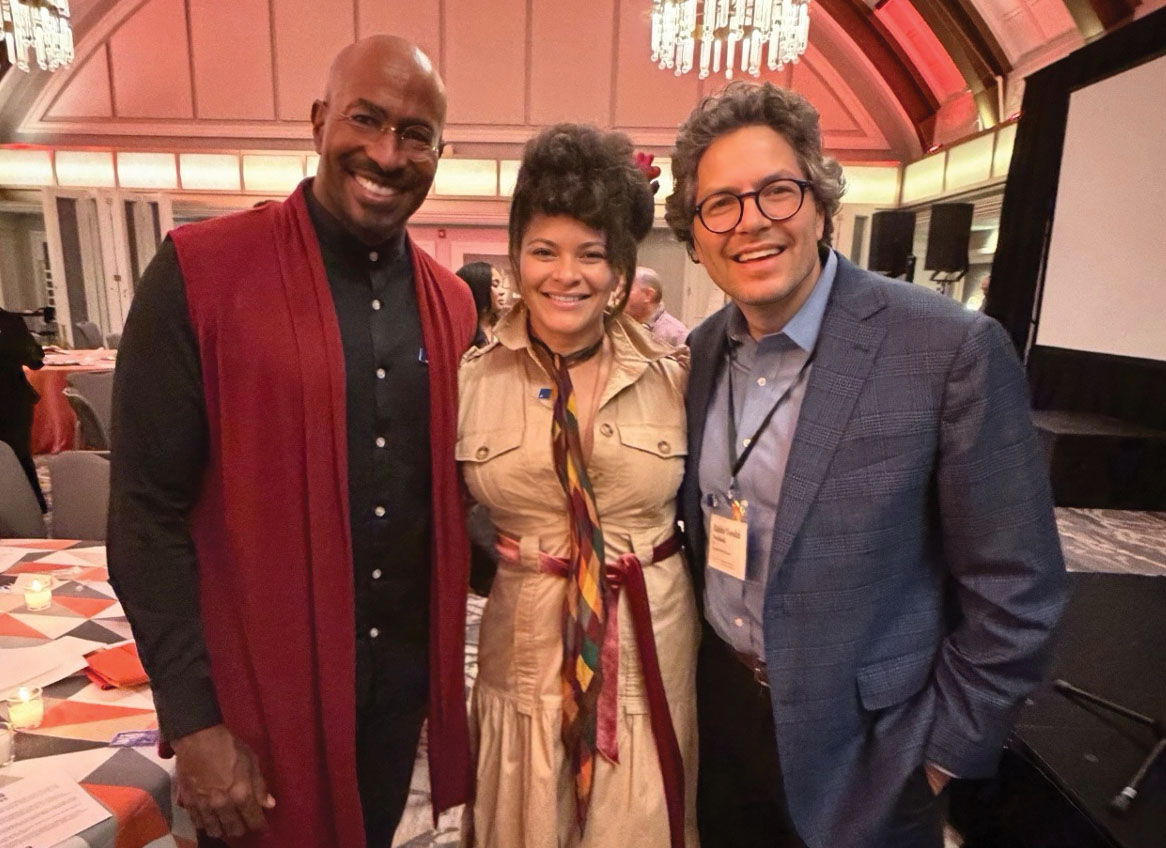
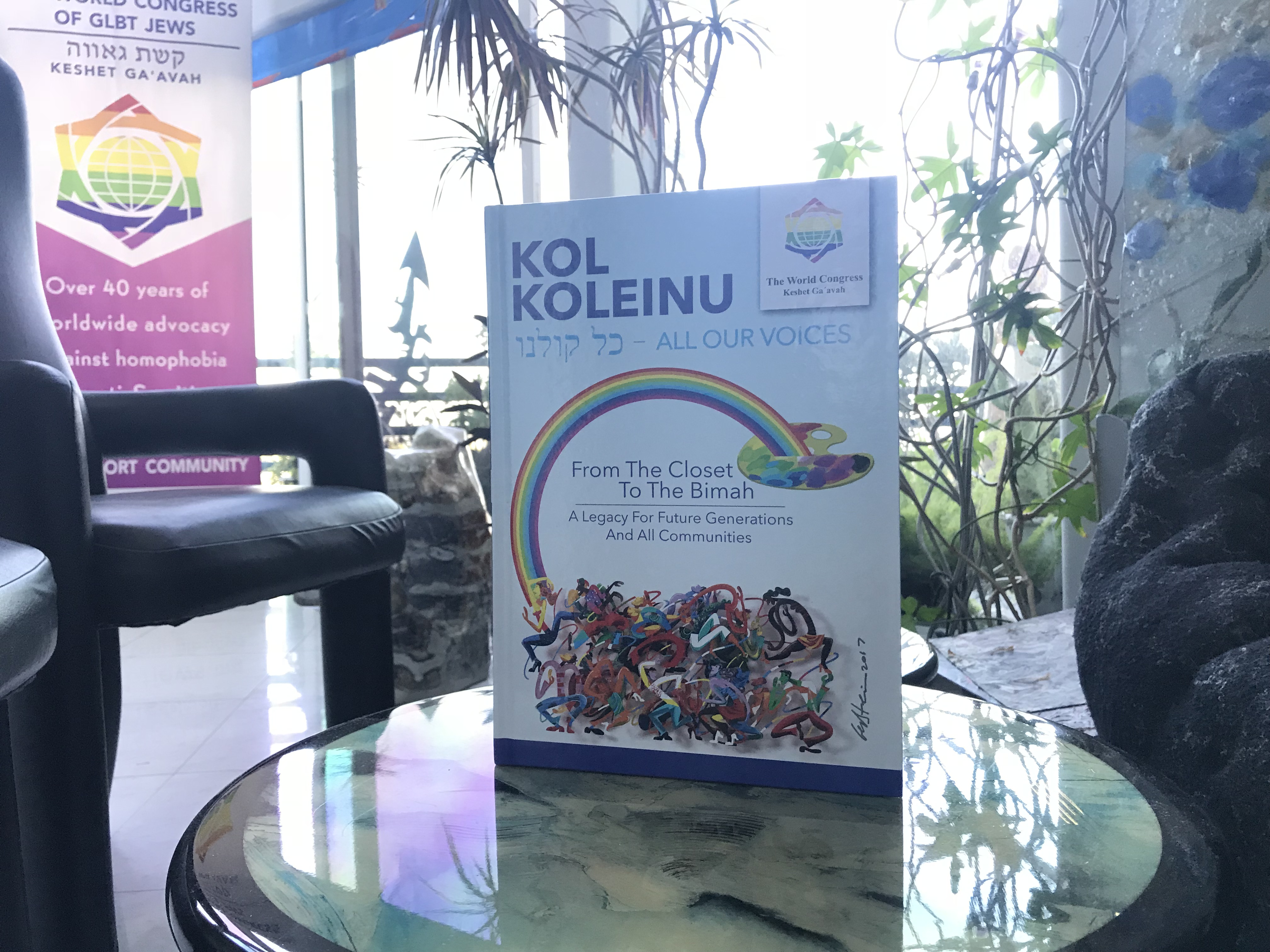
While many Jews around the world remembered and honored those who perished in the Shoah on International Holocaust Remembrance Day, Jan. 27, The World Congress Of GLBT Jews (Keshet Ga’avah), celebrated the documentation of its 30-year history.
“We had nothing written to witness for future generations,” World Congress President Franck Giaoui said. “How do you do [that]? In the future people would not have witnessed [what happened] 40 years ago so how do you remember? We decided to make a book.”
“Kol Koleinu (“All Our Voices” in Hebrew): From the Closet to the Bimah – A Legacy For Future Generations And All Communities” features the voices of Jewish members of the LGBTQ community and their struggles of being minorities within minorities.
Giaoui was one of several event coordinators for the launch at the Los Angeles Sculpture Gallery and said he was delighted to see “Koleinu” circulate in so many hands.
Giaoui grew up in France, was raised to be an activist, and joined several Jewish and LGBTQ organizations before moving to New York to oversee World Congress. One of the biggest reasons he wanted to create “Kol Koleinu” was to “write and preserve LGBTQ history” and share those voices on a global scale.
According to its mission statement, the non-profit operates as a “worldwide voice for LGBTQIA+ Jews,” striving to educate and strengthen the sense of community to ensure diversity and inclusivity. World Congress, which officially got its title at San Francisco in 1980, has chapters in the Americas, Europe and the Middle East and works with these countries to set up conferences, translate materials and meet other specific needs they desire.
World Congress has previously held conferences in Argentina, Israel and Italy. This year’s conference will be in Sydney, Australia from March 21-24.
Harper Shecter, one of the other main coordinators of the event, immersed herself with The World Congress in 2018 after being asked to share her Jewish transgender journey in “Kol Koleinu.”
“They realized they didn’t have enough transgender representation,” Shecter told the Journal. “There was an issue before at one of the prior conferences where some things weren’t really known, and someone was made to feel uncomfortable. I don’t think it was anyone’s fault. I think it was circumstantial not really having the information in front of them so it was imperative to them to have someone who could talk about trans right and the transgender experience.”
Shecter is one of more than 50 people who share their stories in the book. The chapters include anti-Semitism, interfaith relationships, gender and different Jewish LGBTQ experiences around the world.
“There’s so many places that have different experiences and it [the book] captures the image of what it’s like day to day with a certain struggle. It’s a collective as a Jew or as a LGBTQ person,” Shecter said.
The World Congress has many allies around the world including Los Angeles’ French Consul General Christophe Lemoine, who not only attended the event with his partner but was the keynote speaker.
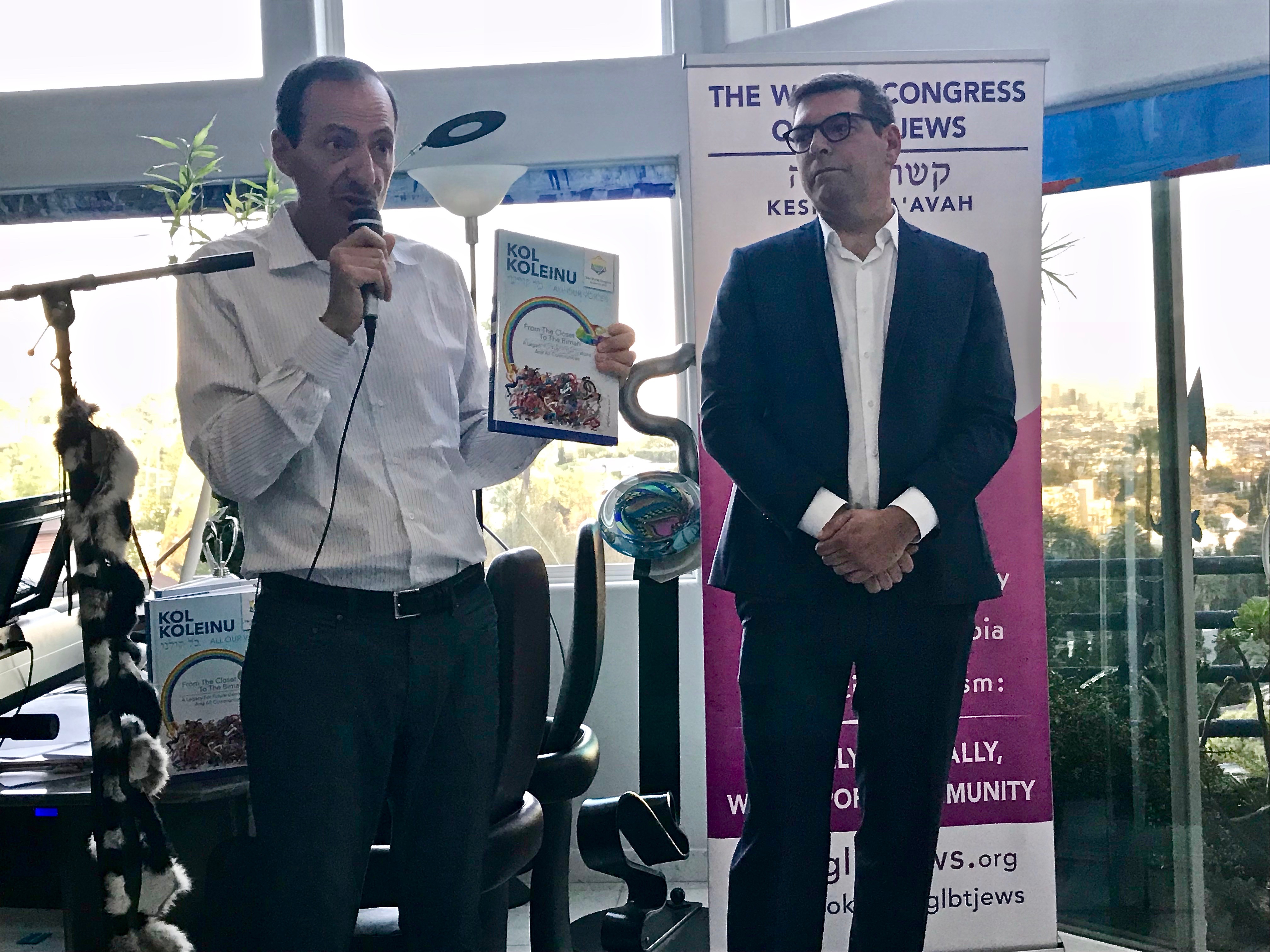
Lemoine, whose involvement in French politics spans decades, said he was proud to represent France at the event.
“France isn’t France without the Jewish community. It’s a very old Jewish community and it’s part of France. We need them to live in this community without fear.” he told the Journal.
“Anti-semitism is an old thing but we try to have measures and educate people to stop,” Lemoine added. “There was a plan launched in 2012 after the attack of a Jewish school in Toulouse, and there were measures taken against anti-semitism about educating people and fighting it and we saw a decrease…we were happy about this. It’s an ongoing effort. It’s something you don’t stop until there’s zero attacks.”
Giaoui said until recently the organization had little involvement in the United States because it was seen as a “progressive space.” His first exposure to 21st-century anti-semitism in the States happened at the Chicago Dyke March in 2017.
“We weren’t expecting to have anti-semitism in the U.S.,” Giaoui said. “It’s very surprising that people in the LGBTQ community, especially some activists, were very politicized and it was difficult… Unfortunately, I think the anti-semitism is mixing with anti-Zionism and I think we have to now tackle this issue not only in older conservative European countries [but] in the U.S.”
Giaoui hopes that “Kol Koleinu” helps educate many Jewish people around the world and many non-Jews. He said he became more educated about LGBTQ issues from reading stories about transgender experiences, the first gay couple in Latin America to legally adopt and more about interfaith relationships. He hopes that more people become allies from reading the book and potentially forming more chapters in areas that need it.
“We are not fighting anti-Semitism with only Jewish people,” Giaoui said. We need allies and we have to be generally concerned with not just ourselves and this is how we build bridges. I was born into a Muslim country and then I moved to France where I was the only [Arab] around my friends. So then I was gay in a conservative family. We are always the minority to someone else, we are always a stranger to someone, but at the end of the day we are all one. Our belief is that we have to widen our minds in order to be successful, otherwise we won’t succeed.”
To learn more about The World Congress or “Kol Koleinu: From the Closet to the Bimah A Legacy For Future Generations And All Communities” visit their website.