
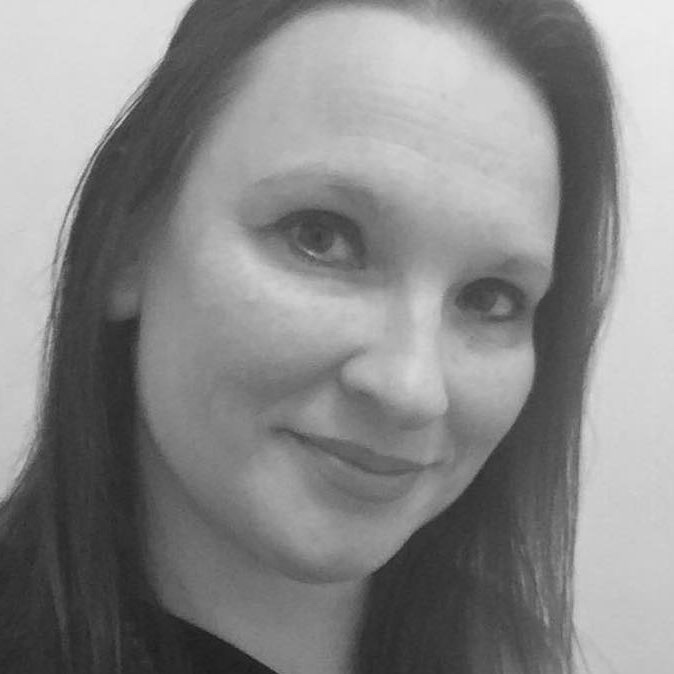
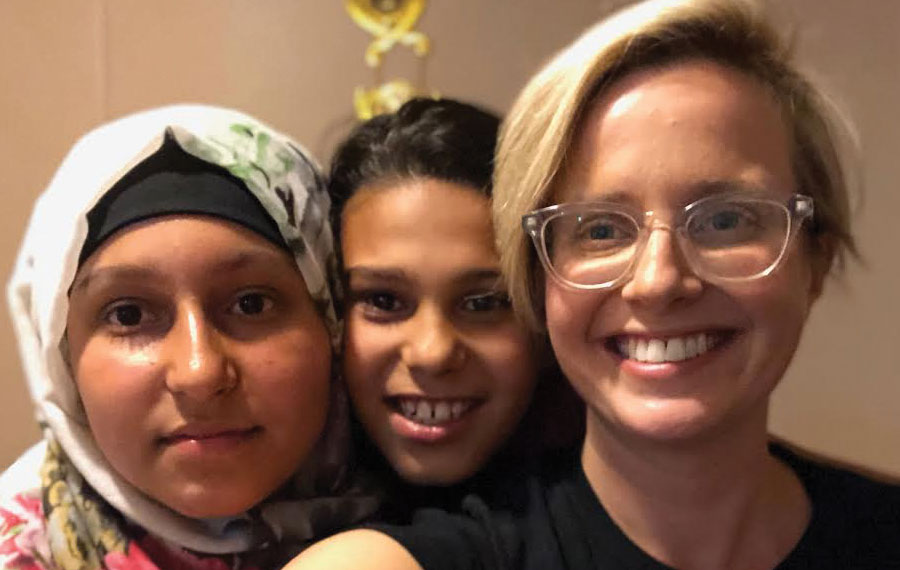
Refugees usually arrive in a new country with little to their names, isolated because their language and customs are different. But some refugees who arrive in Los Angeles benefit from Miry’s List, an organization founded by Miry Whitehill, an Eagle Rock mother of two who knew that her local community could provide direct help to people who are strangers in a new land.
In July 2016, Whitehill’s friend introduced her to a local Syrian refugee family, sponsored by her friend’s church. They went over to drop off baby supplies and discovered the family had no crib mattress and that the apartment was sparsely furnished. With two other local mothers and the family’s permission, Whitehill compiled a list of the family’s needs that included blankets and shoes, toys and school supplies, kitchen utensils and cleaning supplies. She posted her list on Facebook, and in two weeks, all the items had been collected.
“This was the original Miry’s List family,” Whitehill said.
Today Miry’s List is a nonprofit with a team of 31 people, mostly in Southern California, with over 130 volunteer listmakers around the world using Amazon wishlists to send gifts directly to the door of needy refugee families in Los Angeles. “Personal shoppers on behalf of resettlement families,” Whitehill said.
This year, LA2050, an initiative driving and tracking progress toward a shared vision for the future of Los Angeles, chose Miry’s List’s “Welcome, Neighbor” program as one of five winners in the My LA2050 Activation Challenge.
Refugee resettlement in the United States is federally funded and managed by the State Department, Whitehill explained, with nine licensed agencies to resettle families and refugees. The agencies’ local affiliates oversee the first 90 days in the U.S., picking up families from airports, arranging culturally appropriate food and somewhere to stay. Resettlement agency funding is based on the number of cases; when the annual refugee cap goes down, so does funding. Last year, one partner scaled down the number of caseworkers from nine to just one. And while the federal government hasn’t stopped the refugee program, it has slowed the number of accepted refugees from Syria, Sudan and Afghanistan, predominantly Muslim countries that are “facing a very real ban by this federal government,” Whitehill said.
Even in the best of scenarios, it’s hard for refugees to acclimate, she added. “There’s a mourning process. There’s grief because you’re missing people, but it’s more than that. It’s the acceptance of the reality that you are likely never going to see most of those people again. It really takes years to accept and come to terms with, if at all.”
According to Miry’s List’s annual report, over 53,000 refugees were resettled in the United States in 2017. Miry’s List programs benefited more than 1,500 people resettling in Southern California from Syria, Iraq, Iran and Afghanistan, and Miry’s List volunteers have organized more than 500 events, ranging from birthday parties to English lessons to doctors’ appointments for refugee families. Because many refugees go into debt to buy their airline tickets to the U.S., coming in 2018 is a “Fly Me Home” initiative, through which Miry’s List hopes to pay for the cost of travel loans for 500 newly arrived resettling families, totaling $2 million.
Miry’s List has three chronological pillars — Survive, Hive and Thrive — that help families after arrival. Survive provides temporary housing, food delivery and basic supplies to make families feel safe. After a family moves into a permanent home, Hive provides the wish lists and arranges for English tutoring, playdates, rides to appointments, employment mentoring and pregnancy support. Thrive is when families feel so safe and supported that they volunteer to help as other refugee families arrive.
“Everyone of every political party and religion believes that families should have what they need to take care of themselves, the opportunity to feel safe, to feel normal.” — Miry Whitehill
The “Welcome, Neighbor” program will activate 100,000 Angelenos over the next two years to work through neighborhood councils to help resettle refugees while promoting volunteerism. The program began with a New Arrival Festival celebrating the city’s designation of June as New Arrival Month and featuring educational panels, music and food. Future stages include Neighborhood Councils voting on and adopting the Neighborhood Welcoming Resolution, written by Whitehill and adopted by the Eagle Rock Neighborhood Council and the City of Los Angeles in 2017; forming welcoming committees to foster refugee and immigrant inclusivity; and leading Welcoming Actions like hosting a town hall meeting on refugee resettlement to educate neighbors.
Whitehill notes that the program also is easily replicable in other cities that want to become a home for new immigrants.
“We are trying to be great neighbors,” she said.
She also named Westside spiritual community IKAR, which partnered on a refugee assembly in June, and the Cool Shul, a Westside emergent community, which partnered with Miry’s List for the High Holy Days. Still, not all Jewish community leaders are publicly supportive.
“Some Jewish community leaders have said, ‘I personally support what you do but I’m not going to talk about it [from the pulpit],’ ” Whitehill said. “When congregations reach out to me and want it to be official on behalf of the synagogue, I really notice that. It’s one thing to personally align [with the issue], it’s another thing for the community to come together. But what we do is not controversial. Everyone of every political party and religion believes that families should have what they need to take care of themselves, the opportunity to feel safe, to feel normal.”
Whitehill is originally from an Orthodox Jewish background, has lived in Israel and speaks Hebrew with her children but says, “We don’t come with any faith-based hat on. We come as neighbors.”
The third family Miry’s List ever served were Palestinian refugees coming from Jordan. The mother revealed that she had never met an Israeli or a Jew who wasn’t a soldier. “I’m happy to be your first,” Whitehill told her. That was more than two years ago and the two have become close friends.
Another time, Whitehill sat with a family of Palestinian refugees, sharing stories from the Torah and the Quran. “All the big stories are recorded in both,” she said. “Moses at the burning bush, where a voice calls for Moses and he replies, ‘Here I am’ — hineni. Whether you call it God or a burning bush or a person asking for help, that’s the moment when you can step up and say, ‘I’m here for you,’ ” she said, ‘Ana Huna’ is our slogan. Its Arabic for ‘I’m Here.’ ”
Another family, the Alawads, came to the U.S. from Syria two years ago with five children. Last February, they named their sixth child Miry, after Whitehill, who regularly visits them in San Diego.
“I feel so connected with them. It’s beyond helping one family,” Whitehill said. “It’s creating a new path for people to just help each other.”

































