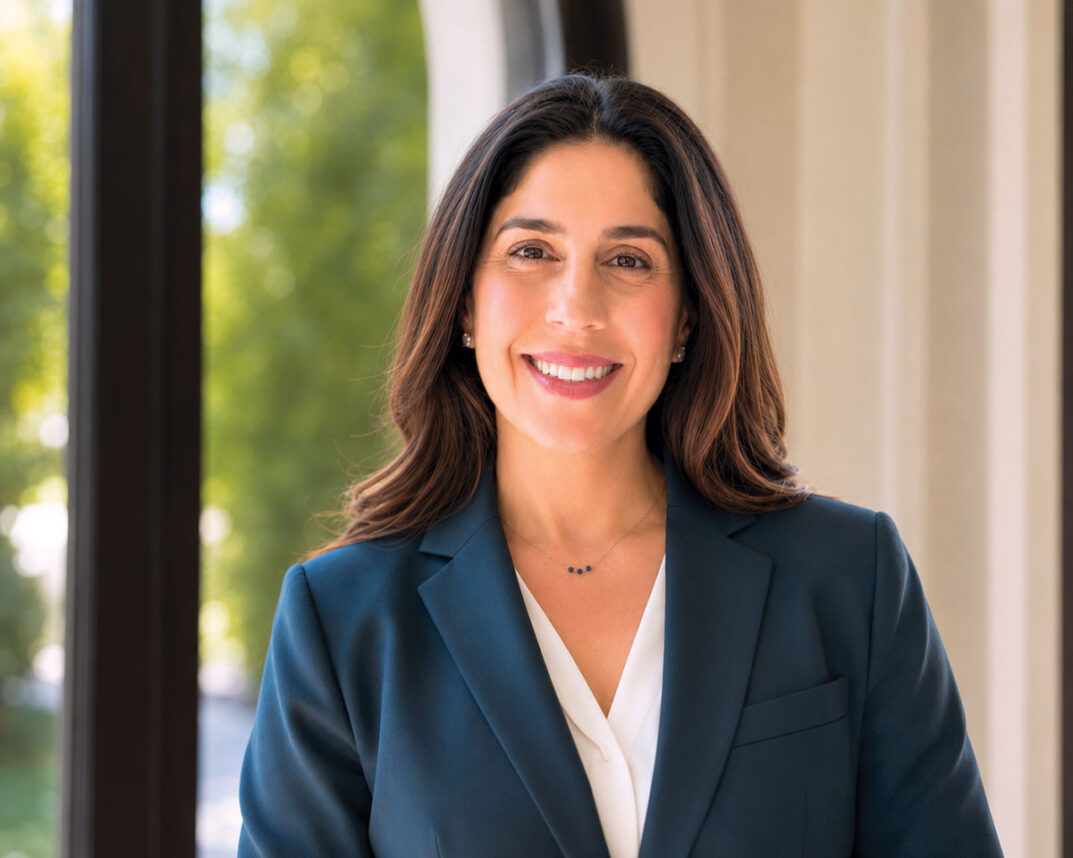

The New Israel Fund (NIF) announced last weekend that UCLA Jewish History Professor David N. Myers has been appointed president of NIF’s board of directors.
Myers, 58, replaces Israeli attorney Talia Sasson, who concluded her three-year term in October.
The Journal spoke with Myers by telephone following the announcement. Below is an excerpt from that interview.
Jewish Journal: How did you first get involved with NIF?
David Myers: I have had a very strong connection to Israel since the first time I went at age 11 when my parents took me. I’ve been going back with nearly yearly regularity ever since. I’ve been 40 or 50 times. I’ve always felt a deep, spiritual bond to Israel. I started graduate school there and as I became an adult, became more aware of the complexity of Israel and its political situation.
I became involved in NIF for the last 10 years and the last five years as a member of the board because it is the perfect meeting point of my deep connection to Israel and my deep concern for the values of justice and equality that NIF stands for and that Israel’s Declaration of Independence stands on.
JJ: What is the actual role of the president of NIF and do you have any new ideas that you’re looking to implement?
DM: There is an extraordinary professional staff that engages in the work day-to-day. The president is a lay volunteer that serves for a three-year term and the job is to do several things: To be a spokesperson for the fund here and in Israel alongside the professional staff; to lend support to the core mission of the fund, particularly in terms of raising money for the extraordinary grantees, who really hold aloft civil society in Israel; and to run the board, which is the chief decision-making body of the organization — and that’s in a certain sense the most specific task.
I’m also headed to Israel this week for five days [in my new role]. We’ll do a series of interviews there with the media. The position has particular prominence in Israel because it’s an important organization and there’s a lot of curiosity about who [I am]. After an initial round of interest, I suspect we’ll all settle back into a regular rhythm.
I think I can bring a measure of strategic thinking to the organization insofar as I’m not involved with the day-to-day operations. It affords me some measure of distance to reflect on what the general priorities are.
JJ: Heading to Israel as the new president, the NIF has received a lot of criticism from the Israeli right and from Prime Minister Benjamin Netanyahu. How do you plan to navigate this?
DM: I’m going to try and be who I am, which is to say a proud, loving Jew with deep bonds to Israel who is concerned about the current state of affairs and is concerned from a perspective of love and compassion. I believe if I’m able to convey that — not everybody — but some people will be able to understand that the goal of the New Israel Fund is to allow Israel to realize the exalted ideals contained within its Declaration of Independence, which is a document I carry around with me because I believe in them so deeply.
“The goal of NIF is to allow Israel to realize the exalted ideals contained within its Declaration of Independence. — David Myers”
That’s what NIF is devoted to: its vision of Israel — a homeland for the Jewish people and a place where freedom, justice and equality are uniformly offered to all citizens. If we can succeed in conveying that, we will have made significant progress in explaining who we really are.
JJ: When were you last in Israel and what was your gauge of the political climate at that time?
DM: I was last in Israel in June. My sense was this is a time of great challenge, that Israel — like much of the world — is experiencing attacks on the foundations of its democratic institutions, in ways that I think threaten those core ideals embedded in the Declaration of Independence. If you look at some of the laws that have been introduced, especially the Nation State Law, I think you can see that the core principle of equality for all is under attack.
I think the time is a critical one. I think NIF has never had a more important role to play in attending to the crisis of democracy and I think people of goodwill in Israel who understand this challenge will join together in support of these principles. We have to make clear what’s at stake. We’ve not always been able to do that successfully, and I hope moving forward we’ll be able to do it with more effectiveness.
JJ: In September 2017, your predecessor Talia Sasson responded to a tweet asking whether Israel was an “evil country” or “just committing ethnic cleansing on a regular basis?” She responded, “It’s both.” Is this still the view of NIF, and if so, how do you navigate the attacks where people continue to call the organization pro-BDS and anti-Israel?
DM: First of all Talia Sasson is one of the great crusaders for justice in Israel that you will ever meet. I know few people who are as committed to democracy and as patriotic as Talia. The twitter-sphere is a very ephemeral medium and it invites responses in the heat of the moment. My own view is that the day has passed when we are going to let the anti-democratic forces define who we are. The focus needs to be on the challenge to democracy, and we come as lovers and deeply committed principled people to uphold the foundations of democracy in Israel. I think we need to get better at explaining who we are, not who we aren’t. (Editor’s note: After this interview, an NIF spokesperson requested that we note that Sasson “apologized and deleted the tweet,” shortly after posting it.)
JJ: The 2016 NIF financial report showed donations dropped to the organization by 20 percent. Do you feel NIF requires a PR overhaul?
DM: We know why that happened: Many of our donors were concerned about what was going on in the United States following the election of Donald Trump as president, and decided to commit their resources to what they felt was an urgent crisis of democracy in this country.
We’ve continued to raise approximately $1 million more every year [than the previous year] from individual donors. I would say at every moment of leadership transition there’s an opportunity to recalibrate and redefine and sharpen focus. That’s the moment that we should seize the opportunity.
In Jewish philanthropy and philanthropy in general, we’re experiencing a transfer of wealth from the older generation, which possesses a very specific set of commitments – to a younger generation, which doesn’t yet have a clearly defined set of commitments. We have to be ready for that, and we have to think proactively.
My presidency is a moment to expand the circle and consolidate forces out there in defense of Israel as a Jewish and democratic state.