fbpx

October 17, 2018

JDate to Refund Customers After Renewing Payments Without Consent

Online religious dating sites JDate and Christian Mingle are now required to pay up to $985,000 in restitution to customers whose subscriptions were automatically renewed or those denied refunds when requested, according to Los Angeles County District Attorney’s Office Monday.

The Santa Monica City Attorney’s Office and local prosecutors including the District Attorney’s Office found that site’s creator Spark Networks U.S.A LLC, was “automatically renewing customer payments, without their express prior consent as required by federal and state law, among other alleged violations of law.”

According to Los Angeles County District Attorney Jackie Lacey, federal and state law requires businesses to make these auto-renewals clear to consumers, and to get their “express, affirmative consent” – before they collect any money.

Chief Deputy City Attorney Adam Radinsky told the Journal the investigation started after California residents complained about renewing subscriptions without their consent.

According to its site, “Spark Networks SE is a leading global dating company with a portfolio of premium brands designed for singles seeking serious relationships.”

JDate, the company’s first site, launched in Los Angeles in 1997.

Driven by the success of JDate, Spark Networks continued to develop “niche-focused” online-dating communities including Elite Singles, Attractive World, eDarling, LDSSingles, Adventist Singles, and Jswipe.

The online dating company was fined $500,000 in penalties Monday and was ordered to have full transparency with its customers about automatically renewing memberships.

Radinsky also told the Journal that they hired an administrator to distribute restitution and that only California consumers who were affected will receive notice about their refunds.

“This is a California case so they will give notice to California customers,” Radinsky said. “It’s a four-year time frame so consumers who were automatically renewed without consent will get $25 dollars.”

Along with paying a fine and paying restitution, the company is now following a new set of regulations to ensure full transparency.

These rules, that were provided to the Journal in a statement from the L.A. C.D.’s Office, include, clearly and conspicuously disclosing the renewal terms, getting consumers’ consent through a separate checkbox that does not include other terms and conditions, sending clear summaries of the renewal terms after payment and allowing consumers to cancel accounts easily.

Spark Networks CFO Robert O’Hare told the times they have been cooperating with the Santa Monica City Attorney’s Office for the past three years, “are happy to bring this matter to a positive resolution,” and “are committed to ensuring all of our brands comply with consumer protection laws.”

JDate to Refund Customers After Renewing Payments Without Consent Read More »

The ‘Surrogate’ Elton John

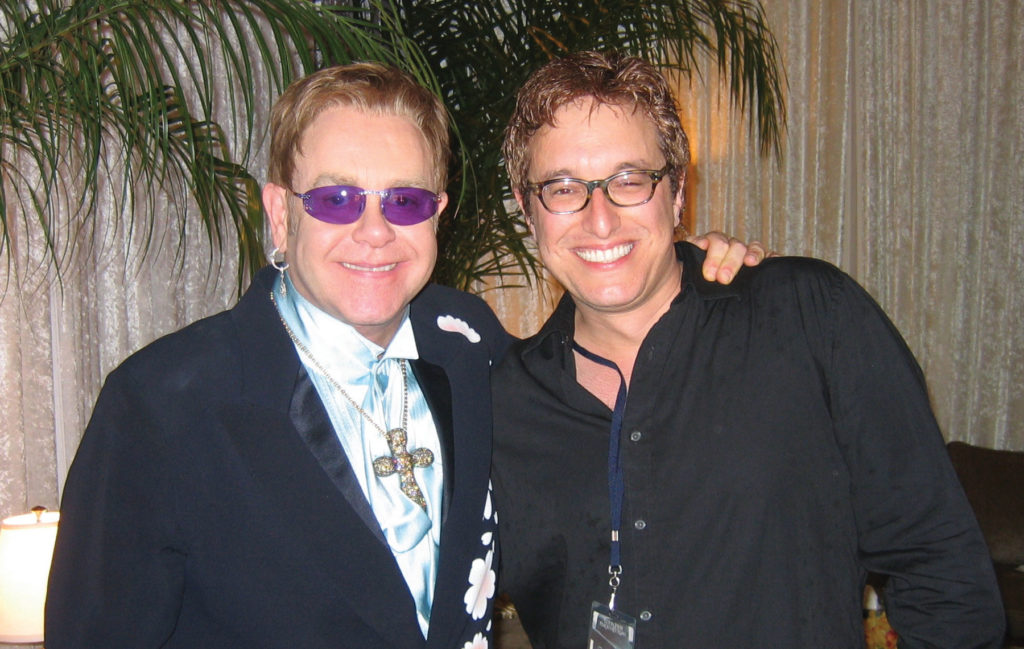
Most teenagers have a musical hero: an artist they listen to again and again when they are happy, when they are sad, when they just want to chill. But few ever get to meet their hero. However, San Fernando Valley resident Adam Chester went one better. He actually gets to be his musical hero —  Elton John, or rather, he fills in for him at band rehearsals.

Chester, who also works as a sales manager at the Keyboard Concepts piano store in Sherman Oaks, and is the author of a humorous book titled “S’Mother: The Story of a Man, His Mom, and the Thousands of Altogether Insane Letters She’s Mailed Him,” said he has been playing piano since he was 3 years old. Neither of his parents was a musician, but musical talent does run in his family. His grandmother was a violinist. His uncle was a concert pianist. And his aunt was a sound engineer. So it’s not altogether surprising that Chester, who grew up in a Conservative Jewish household in New Jersey, showed early promise as a piano player. He remembers neighbors setting up lawn chairs outside his family’s garden apartment to listen to him play when he was 5. His electric keyboard was positioned by a ground floor window. 

Chester continued to play piano throughout his youth. “In high school is where I really got focused,” he said. By then, he was already a fan of Elton John. But when he heard John’s opus-like “Funeral for a Friend” on the radio, he was sold. 

“I just loved his piano playing, his voice, everything about it,” he said. Elton John posters lined the walls of his room. Chester even performed “Funeral for a Friend” as part of his high school rock ensemble, emerging from a dry-ice filled coffin onstage in a white tuxedo.

 He headed west for college at USC, where he studied music theory and composition. “I wanted to write and sing and be the next Elton John or Barry Manilow or whoever was hip back then,” he said.

Chester, who is married with two sons, had some early success. He worked with Barry White and producer Jimmie Haskell. Some of his music was used in television and film. But to pay the bills, he took a job at Music Plus in Hollywood. One day, one of his regular customers came in with her husband. Chester recognized him immediately. It was Davey Johnstone, Elton John’s longtime guitar player.

Chester and Johnstone became friends. They played a few gigs together around Los Angeles. Then in 2005, Johnstone approached Chester with a proposition.

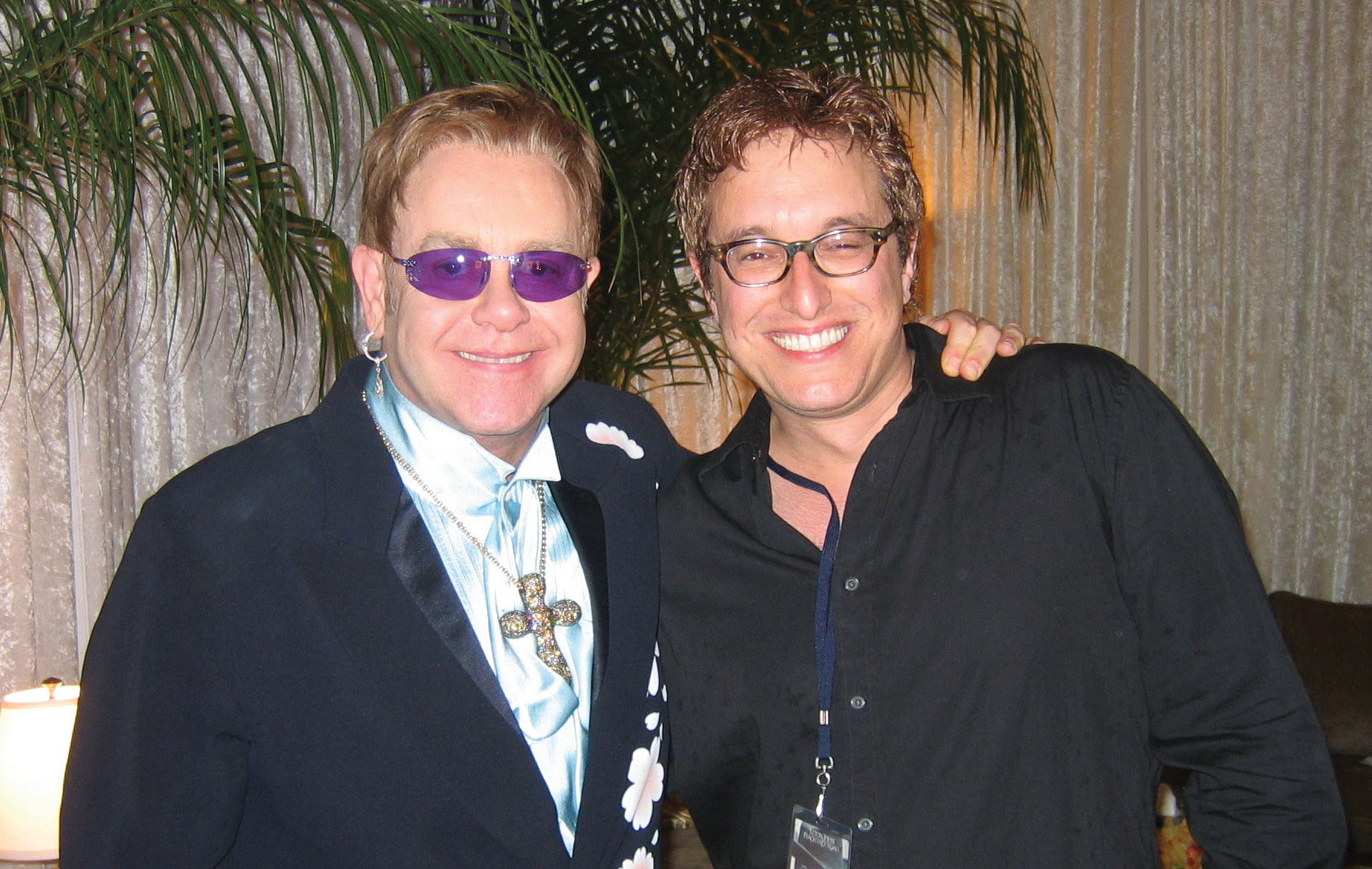
Adam Chester (right) with
Elton John

“He asked if I would sit in as Elton for all the Elton John band rehearsals,” Chester recalled. “I would sing and play piano with the band so Elton would not have to be there.”

Someone else had been filling in for John but that person didn’t sing. Chester didn’t hesitate. He was in. Shortly thereafter, he met Elton John in Boston. John was about to begin his Captain Fantastic and the Brown Dirt Cowboy anniversary tour. It had been 30 years since the release of the album featuring such songs as “Someone Saved My Life Tonight” and “Philadelphia Freedom.” The band needed to rehearse the entire album until the musicians were tight. They did, with Chester on piano and vocals.

“I was in heaven,” Chester recalled.

“He asked if I would sit in as Elton for all the Elton John band rehearsals. I would sing and play piano with the band so Elton would not have to be there.”
— Adam Chester

Since then, Chester, who has a regular gig at Bar 1200 at Sunset Marquis, has been “Surrogate Elton John,” the title Johnstone gave him, on multiple occasions. 

“I became Sur Elton with an S.U.R. instead of Sir Elton,” Chester is fond of saying. (Elton John was knighted by Queen Elizabeth II in 1998.)

Chester also had the opportunity to sit in for John at John’s 60th birthday concert at Madison Square Garden and a gala concert in London for the BRIT Awards. Earlier this year, the Recording Academy hosted a Grammy salute to Elton John that included some of the biggest names in contemporary pop, including Ed Sheeran, Sam Smith and Miley Cyrus. Chester got to accompany all of them on piano while John, along with his husband David Furnish and longtime collaborator Bernie Taupin, sat in the audience. And just a few weeks ago, Chester headed to Pennsylvania to rehearse the band for John’s three-year farewell tour.

“I’m not trying to copy him,” Chester said. “I never want to do an Elton tribute band. I think that would diminish what I do … I definitely try to put a little bit of myself in there.”

It’s been a dream gig for the kid from New Jersey. “It’s never work,” he said. “I’m at the edge of my seat. I’m so excited to be with the band.”

The ‘Surrogate’ Elton John Read More »

‘Steambath’ is the Controversial Comedy About Life and Death

Bruce Jay Friedman’s darkly comic play “Steambath” posits a provocative scenario in which a motley crew of recently departed souls discover that the afterlife is a steam room and God is a Puerto Rican attendant named Morty. 

When it opened off-Broadway in 1970, its profanity, brief nudity and what some perceived as blasphemy, courted controversy and it closed after 128 performances. A film version made for PBS in 1973, starring Bill Bixby, Kenneth Mars and Valerie Perrine, proved so controversial that only 24 stations aired it. Five somewhat enlightened decades later, the play is controversial for different reasons: Its dialogue is decidedly misogynistic and full of ethnic, religious and gay slurs. 

Odyssey Theatre artistic director Ron Sossi considered shifting the time frame and updating old references for its new production, but in a modern context, “the politically incorrect stuff is worse,” he told the Journal after a rehearsal. Those plans were dropped, and the 1970s milieu and context remain intact. 

“It’s a funny play, and naughty,” Sossi said. “Even the politically incorrect stuff is fun to do. I think you should press people’s buttons every once in a while. But who knows what the reaction is going to be? I think it will be a lot of pro and a lot of against, not a lot of middle ground.”

Button-pushing elements aside, the director believes that the play’s central theme remains relevant. “We have all this stuff we want to do and think we have enough time to do [it]. We don’t acknowledge death. Maybe if we eat enough health food and do enough exercise we’ll never die. We’re all living our lives thinking there’s always tomorrow.”

“Even the politically incorrect stuff is fun to do. I think you should press people’s buttons every once in a while.”  — Ron Sossi

Sossi also thinks that the play will have particular resonance with Jewish audiences. Friedman “is a very Jewish writer. [The play] has a lot of Woody Allen in it, Neil Simon, Murray Schisgal,” he said. “The kind of humor in it will be very recognizable.”

Gabriel Grunfield, an Israeli-born film and television writer-producer on the Odyssey Theatre board of directors, describes “Steambath” as “a Jewish play about keeping the faith despite all odds. There are so many things in the Old Testament that have to be taken on faith,” he said. “If we choose faith over logic, our world improves and that’s what this play is about. I believe [Friedman] would have made God Jewish, but that would have been too on the nose.”

In this production, comedian Paul Rodriguez plays God, who relishes devising creative ways to kill off Earth’s mortals. Jeff LeBeau plays Tandy, the victim of presumably tainted Chinese food. He was drawn to the themes of “examining your life, why you’re alive, how we kid ourselves,” he said, as well as the idea of “embracing every moment and celebrating it, because you don’t know how much time you’re going to have.”

Playing Tandy, who goes through the various stages of grief ­­— denial, anger, bargaining with God — before accepting his fate, has made LeBeau examine his own existence.

“It’s moved me more toward religion, toward God. It’s actually made me want to go to synagogue,” said the actor, whose family name was Lubovitch before his grandfather changed it. Jewish on his father’s side, he grew up in Los Angeles around his paternal relatives, and although he was brought up celebrating Hanukkah and Christmas, “I really feel an affinity for the Jewish side,” he said. “I identify with the sensibility.” 

A self-described “nerd, outcast, misfit,” he gained confidence — and the attention of girls — after he discovered the theater. When he landed the role of Tevye in “Fiddler on the Roof” at his “very Jewish” high school, there were some who raised an eyebrow at his casting, he said. Today, there’s genetic proof of his heritage. “Since I did 23andMe, I can prove I’m 48.5 percent Ashkenazi Jew,” he said.

Robert Lesser (“Die Hard,” “Hester Street”), plays Bieberman, a bellyaching type with questionable hygiene habits. “He reminds me of a social studies teacher I had in junior high school, or my father when he spit out the car window,” he said. Lesser believes that other Jews will be able to relate to the play and its characters. “There are no people on Earth that question things more persistently and deeply than we Jews, no matter where we are on the religious spectrum,” he said.

Lesser has been acting since childhood, in camp and school plays. Growing up on New York City’s Upper West Side, descended from Russian and Polish immigrants and “surrounded by secular Jews,” he feels a strong Jewish connection and takes pride “in Jewish culture, humor, art and the intellectual tradition that we have,” he said.

He recalls seeing the original production of “Steambath” with Hector Elizondo as God and Anthony Perkins playing Tandy and directing. “I always felt that it was a masterpiece of that era,” he said. “It’s profound and authentic, [posing] an existential dilemma and an eternal question that we all have to sort out.”

Grunfield hopes that the audience comes away from the theater laughing, but is also motivated “to re-examine their own sense of faith. These are terrible times, politically and otherwise,” he said. “We have to have faith that God will save us at the end of the day.”


“Steambath” runs at the Odyssey Theatre through Dec. 16. Visit OdysseyTheatre.com for more information.

‘Steambath’ is the Controversial Comedy About Life and Death Read More »

Maccabi Haifa Visits Sinai Temple Basketball Camp

Under the banner of “Hoops and the Holy Land,” 300 Sinai Temple basketball camp students not only got to meet but also had the opportunity to play with members of Israel’s Maccabi Haifa Basketball Club on Oct. 10.

The Israeli team was in town to play the Los Angeles Clippers in an exhibition game at Staples Center the following day. Students got to take part in the clinic that included basketball drills and a meet and greet with the players, including point guard Amit Alon, center Daniel Koperberg and power forward Roman Sorkin.

“Los Angeles has a really prominent Israeli and Jewish community,” Andrew Holtz, Maccabi Haifa operations manger and scout, told the Journal. “We wanted to try to do some community outreach while we were out here. I started calling all the local temples and [Sinai Temple’s] Rabbi [Erez] Sherman was super helpful and very open to the idea. We saw an opportunity with our free day to take advantage and give back.”

Benjamin Altman, 12, said, “I think it’s a really good experience, meeting people who play [professional] basketball.”

“I really want to meet some basketball players,” said Jonah Houriani, 8, who has been playing the sport for three years. “I want to play some more basketball and maybe learn some new moves.”

Following the hourlong clinic, families enjoyed a dinner and conversation with Rabbi Sherman, American-Israeli Maccabi Haifa owner Jeff Rosen (who lives in Miami), head coach Barak Peleg and team captain Willy Workman.

“It’s been an extraordinary journey to be part of an Israeli business, an Israeli sports team,” Rosen said. “In 11 years, we’ve brought over at least 15 young Americans who make aliyah to play with us.”

Sinai Temple Religious School Director Danielle Kassin said, “Sports and Judaism go hand in hand. I believe very strongly in the values on the court. I love the idea that in Judaism and on a basketball team you have community.”

Kassin spearheaded the social component of the event, which included both the basketball campers and students from Sinai Temple day school making Hanukkah cards to send to Maccabi Haifa’s philanthropic organization, Haifa Hoops for Kids. 

“Haifa Hoops for Kids basically allows us to bring underprivileged children in Israel to the games in Haifa free of charge,” Holtz said. “Throughout the year, our team puts on clinics and after-school programs to keep the kids in Haifa off the streets while their parents are at work.”

The clinic and the dinner were sponsored by Behzad Souferian, founder and CEO of the Souferian Group in Beverly Hills, his mother, Flora Matloub, and the Sinai Temple Israel Center. The Souferian family also raises funds for Haifa Hoops. Souferian and his family fled Iran in 1978, when he was 3, and came to Los Angeles. A scholarship athlete at USC, Souferian was the first Persian Jewish student to play basketball for a major university. He also played professionally in Israel and Germany. He saw “Hoops in the Holy Land” as an opportunity to support two of his passions, the Jewish community and basketball.

“I realized if you could play basketball, it didn’t matter where you came from [or] your background,” Souferian said. “It was the equalizer. I learned what it means to be dedicated, what it means to be disciplined, how to be a hard worker, how to work with teammates, how to develop game plans. A lot of the foundations that I have now in my real estate development company were based off things I learned at a young age from my basketball upbringing.”

“Every year, when we bring the guys to the States and we try to play NBA games, we try to reach out to the community to do as many clinics and create as many bridges as we can,” Rosen said. “To listen to the kids, to hear that thrilling excitement at watching some of our guys play, it’s priceless.”

Maccabi Haifa Visits Sinai Temple Basketball Camp Read More »

Galician Jewish History on Display at the Burton Sperber Library

Earlier this month, the Burton Sperber Library on American Jewish University’s campus was abuzz with chatter about Galicia, the historic Central European kingdom that straddled the border of modern-day Poland and Ukraine for centuries until World War I. 

Around 30 assembled guests perused a peninsula-shaped arrangement of tables featuring books on the subject. Some picked up copies of a quarterly research journal —“The Galitzianer,” published since 1993 — featuring old maps, and then Andrew Zalewski, a bespectacled Philadelphia-based cardiologist, arrived at the podium. 

“Show of hands. Who here has Galician roots?” Zalewski asked. The vast majority of hands shot into the air. “And who here is a Gesher Galicia member?” This was met with far less enthusiasm.  

“So I’ve got work to do,” he retorted before firing up a PowerPoint presentation. 

Zalewski is a board member of Gesher Galicia, a nonprofit carrying out Jewish genealogical and historical research on Galicia. He’s also the editor of the organization’s research journal, the aforementioned “Galitzianer.” 

An expert on the subject who frequently lectures, Zalewski also has written two books on the topic, focusing on the Jewish community that lived in the region from the late 18th century until the early 20th century. 

“The Jews of Galicia are often viewed in black-and-white terms, as a monochromatic entity, only Chassidic,” he said. “But I’ll show you tonight that this was a vibrant, colorful, paradoxical community.”

Zalewski told the Journal he relishes each opportunity to educate on the topic of Galician Jewry and hopes his efforts continue to help shed light on the past for others.

“My father, who survived the Holocaust, never spoke about the family and I was too young to ask probing questions,” he said. “And yet when I became interested in learning more about my Jewish roots, I was surprised to find so many details. The richness of Jewish history of Galicia has to be retold today in many venues and formats to help others to better understand their ancestry.”

“The Jews of Galicia are often viewed in black-and-white terms, as a monochromatic entity, only Chassidic. But I’ll show you tonight that this was a vibrant, colorful, paradoxical community.” ­ — Andrew Zalewski

The Jewish Genealogical Society of Los Angeles (JGSLA) hosted Zalewski on Oct. 8 for the event dubbed “Jewish Galicia: Vibrant Past Rediscovered.” Founded in 1979, JGSLA is a nonprofit with more than 500 members dedicated to sharing information, techniques and research practices with those interested in Jewish genealogy and family history. 

During the presentation, Zalewski, a product of Galician lineage, outlined the “roller coaster” of Galician Jewry: times of peace and unrest for Jews in the region, tolerant and intolerant monarchs, gender roles, anti-Semitic legislation, the effect of nearby Russian pogroms and the roots of progressive Judaism. He also showed a variety of old maps, census documents detailing Jewish demographics (which hovered around 10 percent) and renderings of city life throughout the region, including traditional garb, ornate synagogues and Jewish town centers. 

“As we traversed in an hour from 1772 to 1918, it’s impossible not to be in awe of the road traveled by our ancestors, which is not often a straight line, but rather with many detours and zigzags,” he said in closing. 

JSGLA member Rebecca Stanley, 29, a genealogy student and museum educator, came to learn more about her paternal Galician roots.  

“As someone whose family is from Tarnopol, I got a bigger understanding of what their life was like in the late 1800s, which is when my great-grandparents were around,” she said. “I was part of the Gesher Galicia mailing list before, but I changed my email. Now I want to get back on it.”

Henny Smoller, 64, attended to find out more about her maternal Galician heritage. A Sherman Oaks resident and member of Adat Ari El, Smoller’s mother’s side of the family hails from a world away — the town of Gwoździec (modern-day Poland). 

“The images of the synagogues [Zalewski] showed evoked memories of the synagogue in my mother’s town,” Smoller said, speaking of the Gwoździec synagogue featured in “Raising the Roof,” a 2015 PBS documentary detailing the reconstruction of the 18th-century structure eventually destroyed by the Nazis. “I found the talk very interesting, and it only makes me want to learn more and piece together the bits I don’t know about from before the Holocaust.” 

She then turned to her 25-year-old son, Evan Smoller, her “chauffeur” she joked. “I told him this is your family history so it’s important to learn about.” 

Evan told the Journal he was glad he caved and joined his mother for the evening. “I’ve heard some stories about my grandmother’s shtetl and stories specific to life there, but this gave a broader picture going further back and detailing the different laws, the push-and-pull between traditional and secular Judaism, and how Jewish life looked across Poland and the Austro-Hungarian Empire,” he said. “I’m really glad I came along for this.”

After Zalewski’s talk, audience members peppered him with questions. Others talked to one another, exchanging family stories concerning shared Galician roots. 

“It was hard to get people to leave,” JGSLA President Sandy Malek said after finally managing to do just that. But that’s fine by her. “We don’t want people to just listen and leave,” she said, “but rather find some common ground, to discuss and question. And every single question leads to 15 or 30 more in genealogy. It’s practically never ending.”

Galician Jewish History on Display at the Burton Sperber Library Read More »

Welcoming Refugees as Neighbors

Refugees usually arrive in a new country with little to their names, isolated because their language and customs are different. But some refugees who arrive in Los Angeles benefit from Miry’s List, an organization founded by Miry Whitehill, an Eagle Rock mother of two who knew that her local community could provide direct help to people who are strangers in a new land. 

In July 2016, Whitehill’s friend introduced her to a local Syrian refugee family, sponsored by her friend’s church. They went over to drop off baby supplies and discovered the family had no crib mattress and that the apartment was sparsely furnished. With two other local mothers and the family’s permission, Whitehill compiled a list of the family’s needs that included blankets and shoes, toys and school supplies, kitchen utensils and cleaning supplies. She posted her list on Facebook, and in two weeks, all the items had been collected.

“This was the original Miry’s List family,” Whitehill said. 

Today Miry’s List is a nonprofit with a team of 31 people, mostly in Southern California, with over 130 volunteer listmakers around the world using Amazon wishlists to send gifts directly to the door of needy refugee families in Los Angeles. “Personal shoppers on behalf of resettlement families,” Whitehill said.

This year, LA2050, an initiative driving and tracking progress toward a shared vision for the future of Los Angeles, chose Miry’s List’s “Welcome, Neighbor” program as one of five winners in the My LA2050 Activation Challenge.

Refugee resettlement in the United States is federally funded and managed by the State Department, Whitehill explained, with nine licensed agencies to resettle families and refugees. The agencies’ local affiliates oversee the first 90 days in the U.S., picking up families from airports, arranging culturally appropriate food and somewhere to stay. Resettlement agency funding is based on the number of cases; when the annual refugee cap goes down, so does funding. Last year, one partner scaled down the number of caseworkers from nine to just one. And while the federal government hasn’t stopped the refugee program, it has slowed the number of accepted refugees from Syria, Sudan and Afghanistan, predominantly Muslim countries that are “facing a very real ban by this federal government,” Whitehill said. 

Even in the best of scenarios, it’s hard for refugees to acclimate, she added. “There’s a mourning process. There’s grief because you’re missing people, but it’s more than that. It’s the acceptance of the reality that you are likely never going to see most of those people again. It really takes years to accept and come to terms with, if at all.”

According to Miry’s List’s annual report, over 53,000 refugees were resettled in the United States in 2017. Miry’s List programs benefited more than 1,500 people resettling in Southern California from Syria, Iraq, Iran and Afghanistan, and Miry’s List volunteers have organized more than 500 events, ranging from birthday parties to English lessons to doctors’ appointments for refugee families. Because many refugees go into debt to buy their airline tickets to the U.S., coming in 2018 is a “Fly Me Home” initiative, through which Miry’s List hopes to pay for the cost of travel loans for 500 newly arrived resettling families, totaling $2 million.

Miry’s List has three chronological pillars — Survive, Hive and Thrive — that help families after arrival. Survive provides temporary housing, food delivery and basic supplies to make families feel safe. After a family moves into a permanent home, Hive provides the wish lists and arranges for English tutoring, playdates, rides to appointments, employment mentoring and pregnancy support. Thrive is when families feel so safe and supported that they volunteer to help as other refugee families arrive. 

“Everyone of every political party and religion believes that families should have what they need to take care of themselves, the opportunity to feel safe, to feel normal.” — Miry Whitehill

The “Welcome, Neighbor” program will activate 100,000 Angelenos over the next two years to work through neighborhood councils to help resettle refugees while promoting volunteerism. The program began with a New Arrival Festival celebrating the city’s designation of June as New Arrival Month and featuring educational panels, music and food. Future stages include Neighborhood Councils voting on and adopting the Neighborhood Welcoming Resolution, written by Whitehill and adopted by the Eagle Rock Neighborhood Council and the City of Los Angeles in 2017; forming welcoming committees to foster refugee and immigrant inclusivity; and leading Welcoming Actions like hosting a town hall meeting on refugee resettlement to educate neighbors.

Whitehill notes that the program also is easily replicable in other cities that want to become a home for new immigrants.

“We are trying to be great neighbors,” she said. 

She also named Westside spiritual community IKAR, which partnered on a refugee assembly in June, and the Cool Shul, a Westside emergent community, which partnered with Miry’s List for the High Holy Days. Still, not all Jewish community leaders are publicly supportive. 

“Some Jewish community leaders have said, ‘I personally support what you do but I’m not going to talk about it [from the pulpit],’ ” Whitehill said. “When congregations reach out to me and want it to be official on behalf of the synagogue, I really notice that. It’s one thing to personally align [with the issue], it’s another thing for the community to come together. But what we do is not controversial. Everyone of every political party and religion believes that families should have what they need to take care of themselves, the opportunity to feel safe, to feel normal.” 

Whitehill is originally from an Orthodox Jewish background, has lived in Israel and speaks Hebrew with her children but says, “We don’t come with any faith-based hat on. We come as neighbors.” 

The third family Miry’s List ever served were Palestinian refugees coming from Jordan. The mother revealed that she had never met an Israeli or a Jew who wasn’t a soldier. “I’m happy to be your first,” Whitehill told her. That was more than two years ago and the two have become close friends. 

Another time, Whitehill sat with a family of Palestinian refugees, sharing stories from the Torah and the Quran. “All the big stories are recorded in both,” she said. “Moses at the burning bush, where a voice calls for Moses and he replies, ‘Here I am’ — hineni. Whether you call it God or a burning bush or a person asking for help, that’s the moment when you can step up and say, ‘I’m here for you,’ ” she said, ‘Ana Huna’ is our slogan. Its Arabic for ‘I’m Here.’ ”

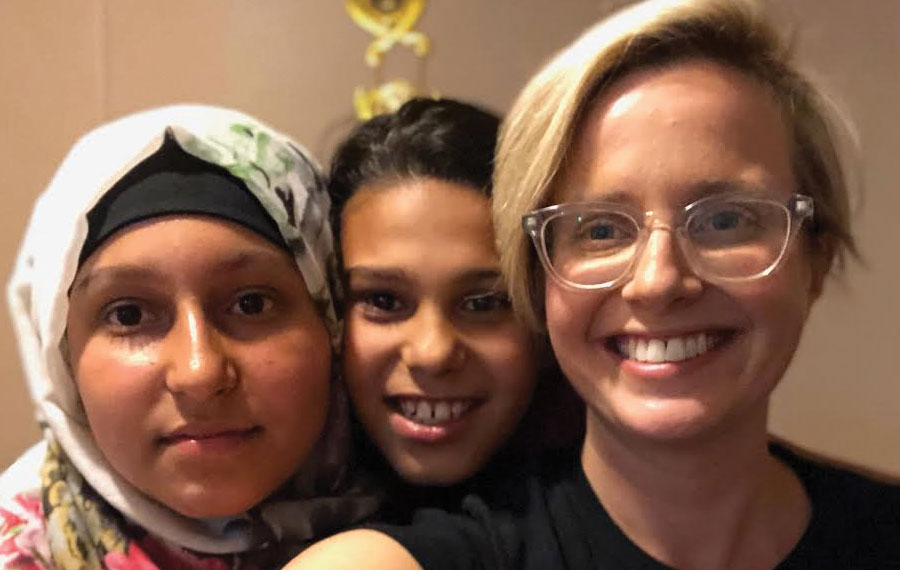
Another family, the Alawads, came to the U.S. from Syria two years ago with five children. Last February, they named their sixth child Miry, after Whitehill, who regularly visits them in San Diego. 

“I feel so connected with them. It’s beyond helping one family,” Whitehill said. “It’s creating a new path for people to just help each other.” 

Welcoming Refugees as Neighbors Read More »

ADL: Twitter Should Take Down Farrakhan Tweet Comparing Jews to ‘Termites’

The Anti-Defamation League (ADL) is calling on Twitter to take down a tweet from Louis Farrakhan that compares Jews to “termites.”

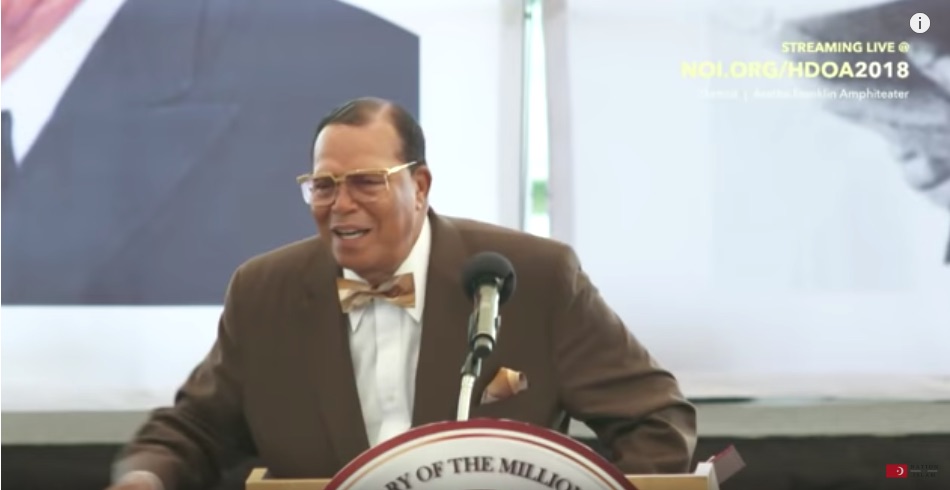
In an Oct. 16 tweet, Farrakhan wrote, “I’m not an anti-Semite. I’m anti-Termite.” The tweet featured a video of Farrakhan speaking in front of a crowd on Oct. 14 marking the 23rd anniversary of his Million Man March.

“To the members of the Jewish community that don’t like me, thank you very much for putting my name all over the planet because of your fear of what we represent,” Farrakhan said in the speech. “I can go anywhere in the world and they’ve heard of Farrakhan.”

Farrakhan added, “I’m not mad at you, because you’re so stupid.”

The minister proceeded to allude to criticisms calling him an anti-Semite.

“Stop it,” Farrakhan said, “I’m anti-termite. I don’t know nothing about hating somebody just because of their religious preference.”

https://twitter.com/LouisFarrakhan/status/1052304476923719680

In a statement emailed to the Journal, ADL CEO Jonathan Greenblatt said that Twitter should take down “Farrakhan’s hateful content.”

“Louis Farrakhan has a long history of vile, anti-Semitic and anti-LGBTQ rhetoric. His latest remarks dehumanizing Jews by calling us termites are despicable,” Greenblatt said. “We call on Twitter to remove Farrakhan’s hateful content from the platform to prevent him from spreading and normalizing such hateful messages. This content is exactly the kind of thing the new Twitter policy the company outlined just a few weeks ago is meant to stop.”

Buzzfeed reporter Joe Bernstein tweeted that Twitter told him that Farrakhan’s tweet didn’t violate their policies:

https://twitter.com/Bernstein/status/1052636257531154434

Twitter could not be immediately reached for comment.

Several congressional Democrats, such as Reps. Keith Ellison (R-Minn.) and Maxine Waters (D-Calif.), have reportedly been seen with or dined with Farrakhan. Women’s March leaders have also attended Farrakhan’s speeches and been involved with his Nation of Islam organization. A photo was recently taken of Farrakhan with former Attorney General Eric Holder at Aretha Franklin’s funeral.

This article has been updated.

ADL: Twitter Should Take Down Farrakhan Tweet Comparing Jews to ‘Termites’ Read More »

David Myers Appointed NIF Board President

The New Israel Fund (NIF) announced last weekend that UCLA Jewish History Professor David N. Myers has been appointed president of NIF’s board of directors.

Myers, 58, replaces Israeli attorney Talia Sasson, who concluded her three-year term in October. 

The Journal spoke with Myers by telephone following the announcement. Below is an excerpt from that interview. 

Jewish Journal: How did you first get involved with NIF?

David Myers: I have had a very strong connection to Israel since the first time I went at age 11 when my parents took me. I’ve been going back with nearly yearly regularity ever since. I’ve been 40 or 50 times. I’ve always felt a deep, spiritual bond to Israel. I started graduate school there and as I became an adult, became more aware of the complexity of Israel and its political situation.

I became involved in NIF for the last 10 years and the last five years as a member of the board because it is the perfect meeting point of my deep connection to Israel and my deep concern for the values of justice and equality that NIF stands for and that Israel’s Declaration of Independence stands on.

JJ: What is the actual role of the president of NIF and do you have any new ideas that you’re looking to implement? 

DM: There is an extraordinary professional staff that engages in the work day-to-day. The president is a lay volunteer that serves for a three-year term and the job is to do several things: To be a spokesperson for the fund here and in Israel alongside the professional staff; to lend support to the core mission of the fund, particularly in terms of raising money for the extraordinary grantees, who really hold aloft civil society in Israel; and to run the board, which is the chief decision-making body of the organization — and that’s in a certain sense the most specific task. 

I’m also headed to Israel this week for five days [in my new role]. We’ll do a series of interviews there with the media. The position has particular prominence in Israel because it’s an important organization and there’s a lot of curiosity about who [I am]. After an initial round of interest, I suspect we’ll all settle back into a regular rhythm.

I think I can bring a measure of strategic thinking to the organization insofar as I’m not involved with the day-to-day operations. It affords me some measure of distance to reflect on what the general priorities are. 

JJ: Heading to Israel as the new president, the NIF has received a lot of criticism from the Israeli right and from Prime Minister Benjamin Netanyahu. How do you plan to navigate this?

DM: I’m going to try and be who I am, which is to say a proud, loving Jew with deep bonds to Israel who is concerned about the current state of affairs and is concerned from a perspective of love and compassion. I believe if I’m able to convey that — not everybody — but some people will be able to understand that the goal of the New Israel Fund is to allow Israel to realize the exalted ideals contained within its Declaration of Independence, which is a document I carry around with me because I believe in them so deeply. 

“The goal of NIF is to allow Israel to realize the exalted ideals contained within its Declaration of Independence.  — David Myers”

That’s what NIF is devoted to: its vision of Israel — a homeland for the Jewish people and a place where freedom, justice and equality are uniformly offered to all citizens. If we can succeed in conveying that, we will have made significant progress in explaining who we really are.  

JJ: When were you last in Israel and what was your gauge of the political climate at that time? 

DM: I was last in Israel in June. My sense was this is a time of great challenge, that Israel — like much of the world — is experiencing attacks on the foundations of its democratic institutions, in ways that I think threaten those core ideals embedded in the Declaration of Independence. If you look at some of the laws that have been introduced, especially the Nation State Law, I think you can see that the core principle of equality for all is under attack. 

I think the time is a critical one. I think NIF has never had a more important role to play in attending to the crisis of democracy and I think people of goodwill in Israel who understand this challenge will join together in support of these principles. We have to make clear what’s at stake. We’ve not always been able to do that successfully, and I hope moving forward we’ll be able to do it with more effectiveness.

JJ: In September 2017, your predecessor Talia Sasson responded to a tweet asking whether Israel was an “evil country” or “just committing ethnic cleansing on a regular basis?” She responded, “It’s both.” Is this still the view of NIF, and if so, how do you navigate the attacks where people continue to call the organization pro-BDS and anti-Israel? 

DM: First of all Talia Sasson is one of the great crusaders for justice in Israel that you will ever meet. I know few people who are as committed to democracy and as patriotic as Talia. The twitter-sphere is a very ephemeral medium and it invites responses in the heat of the moment. My own view is that the day has passed when we are going to let the anti-democratic forces define who we are. The focus needs to be on the challenge to democracy, and we come as lovers and deeply committed principled people to uphold the foundations of democracy in Israel. I think we need to get better at explaining who we are, not who we aren’t. (Editor’s note: After this interview, an NIF spokesperson requested that we note that Sasson “apologized and deleted the tweet,” shortly after posting it.)

JJ: The 2016 NIF financial report showed donations dropped to the organization by 20 percent. Do you feel NIF requires a PR overhaul?

DM: We know why that happened: Many of our donors were concerned about what was going on in the United States following the election of Donald Trump as president, and decided to commit their resources to what they felt was an urgent crisis of democracy in this country.

We’ve continued to raise approximately $1 million more every year [than the previous year] from individual donors. I would say at every moment of leadership transition there’s an opportunity to recalibrate and redefine and sharpen focus. That’s the moment that we should seize the opportunity.

In Jewish philanthropy and philanthropy in general, we’re experiencing a transfer of wealth from the older generation, which possesses a very specific set of commitments – to a younger generation, which doesn’t yet have a clearly defined set of commitments. We have to be ready for that, and we have to think proactively.

My presidency is a moment to expand the circle and consolidate forces out there in defense of Israel as a Jewish and democratic state.

David Myers Appointed NIF Board President Read More »

Weekly Parsha: Lech Lecha

One verse, Five Voices. Edited by Salvador Litvak, Accidental Talmudist

Your name shall no longer be called Abram, but your name shall be Abraham, for I have made you the father of a multitude of nations. – Genesis 8:11


Rabbi Cheryl Peretz
Associate Dean, Ziegler School of Rabbinics Studies, AJU

Jewish tradition places great significance on names. With the addition of just one letter, at the age of 99, Abram becomes Abraham and his transformation to the father of many nations is confirmed. 

At the same time, Abraham is not the only biblical figure whose name is changed. Sarai becomes Sarah; Jacob becomes Israel. Joseph, Joshua and Esther all experience name changes. With these models, a long-standing custom emerged to introduce a name change after a grave illness or other life-changing moments. 

So important is naming that rabbinic Midrash teaches: a prophecy. From one’s name comes his/her destiny. As one is named, so too is his/her reputation. In the Book of Samuel we read, “K’shem ken hu — like his name so is he.” 

Ashkenazic Jews name children after those no longer living, while Sephardic Jews name children after the living — both hoping and praying that the child will be endowed with the positive traits and strong image of the one for whom she/he is named.

In the end, it is up to each one of us to be worthy of the name we have been given — to create a good reputation, to live in kindness, compassion and commitment, and to remember the lesson of Ecclesiastes: “A good name is better than fragrant oil.” Ken yehi ratzon — so may it be.


Rabbi Michael Barclay
Spiritual leader, Temple Ner Simcha

The addition of the letter Hei into Avraham’s name occurs at the end of this week’s Torah portion, but to understand it, we need to look at how the portion begins. God tells Avram lech lecha, “Go to/into/for yourself away from your land, your family and your father’s house, to a place that I will show you.” These first words to Avram define their relationship and are the essence of the entire portion. We are commanded to go into ourselves, away from what we know, to a place of God’s choosing. Be still. Meditate. Listen. Receive.

Sefer Bahir teaches that God added the Hei so that “all parts of Man’s body should be worthy of life in the World to Come” (Bahir 8). This is based on the Talmudic teaching that Avram was first given mastery over 243 limbs (the numerical value of Avram), but with the Hei, he mastered all 248, the additional ones being two eyes, two ears, and his sexuality (Nedarim 32b). These five are the ones which most easily distract us, and make it difficult to focus on spirituality. 

With God’s covenant of placing the Hei in Avraham’s name and Avraham’s commitment of circumcision, Avraham removes himself from the distractions of what he sees, hears and is attracted to. Instead he deepens his spirituality, masters his appetites and becomes worthy of a true life. Like Abraham, may we all be blessed to have God’s name present in every word, action and experience of our lives.


Miriam Yerushalmi
Author, president of SANE

Each of the 22 letters of the Hebrew alphabet possesses a particular life force and power. Kabbalistically, the three lines of the letter Hei represent thought, speech and action — the totality of human functioning. 

One meaning of the root word Hei (spelled Hei-Yud), is “to break” (free). Significantly, God implanted the Hei into Abram’s name after commanding him to leave his land, his birthplace and his father’s house, to set out for an unknown destination. By breaking away from his past and hearkening to God’s command, Abram would fulfill his potential and become Abraham the Patriarch, father of multitudes.

The Hebrew word eretz (land) comes from the root ratz (to run), which is also the basis of ratzon (desire). Running indicates a desire to go somewhere. If this desire is not directed toward a spiritual goal, it may deteriorate into escapism, distracting you from reaching your true potential.

Your “birthplace” represents your genetic predisposition to a particular temperament. Your “father’s house” is your family background. Abram was raised by idol worshippers in an environment alien to and devoid of the spirituality his soul sought.

By adding the Hei, HaShem empowered Abraham to shed his past and to lech lecha, to go to his true self, to become the progenitor of a great nation.

This is a lesson for all humanity: God, with his unlimited powers, grants us unlimited ability to conquer our past, change our inborn temperament, and discard limiting beliefs and distracting habits, in order to reach our true selves.


Rabbi Ari Segal
Head of School, Shalhevet High School

This pasuk suggests a shift in Abram’s very nature. Something changes when Abram becomes Abraham, when he adds the “ha” to the name of his youth. The shift is toward fatherhood, not just of a single child or family, but “of a multitude of nations.” (Using the English, we might call this Abram’s “aha!” moment.) But what does this “ha” mean, that such a small sound established Abraham as one of the greatest patriarchs in history?

Well, “ha” is not a random syllable. It is a word, which, when used in Bereishis 47:23, means “to give to someone else.” “Ha” is a word of inherent generosity, a word that implies selflessly and ceaselessly providing for the needs of others.

“Ha” is what it means to be a parent. In adding that word of giving to his name, Abraham came to embody the care and sacrifice that defines the experience of parenting. And the implications go further. Parents are invested with considerable power as leaders of their families. As Abraham becomes the father to the people who will be a leader among nations, the truest characteristic of parental leadership is embedded in his identity. 

A leader is not the person who wields the most power, but rather the one who exhibits the most graciousness. The person who gives the most of his or her time, energy, resources and spirit — he or she embodies the generosity inherent to leadership, be it of a family, a community or a nation.


Sara Brudoley
Torah teacher and lecturer

Our sages taught us that before the creation of the world, HaShem created the Hebrew letters and concealed in each one unique spiritual powers. When HaShem wants to show Avram a practical path to transformation, so that he may fulfill his destiny and disconnect from his past, he adds the letter Hei to his name.

He is part of HaShem’s name, and so HaShem imparts a piece of himself unto Avraham, instilling in him great new powers. 

The name Avram means “father of Aram” — the country he came from. Now, as Avraham, he is to be the spiritual father of a multitude of nations, and in fact, the whole world. The power of the Hei is the ability to manifest things from the theoretical into the actual.

It’s the power of giving birth, and indeed Yitzchak is born after Avraham and Sarah receive their new names. Hei also signifies prosperity, healthy ego, steadfastness of principles, strong leadership and gentle sensitivity.

Avram is further commanded to circumcise himself in order to be whole. Rashi explains that Avram is not in control of five parts of his body: two eyes, two ears, and the head of his male organ. HaShem adds the letter Hei (which has a numerical value of five) to his name, bringing the total numerical value of his name Avraham to 248, equivalent to the 248 parts of the body, and the 248 positive commandments. HaShem thus makes Avraham whole, and ready to fulfill his mission.

Weekly Parsha: Lech Lecha Read More »

Restaurant Detox and an Immune-Boosting Green Soup

It’s deep autumn, and if you made it through this past summer and the Jewish holidays relatively unscathed, good for you. The endless inclement weather, media bombardment that reached an unprecedented lack of proportion — it seems for many of us, it was the summer of discontent.

I spent July and August in the swampy heat of the East Coast, which takes some adjusting to because I live and work in the breezy, tropical elevation of East Africa. It’s a challenge to adapt to a new schedule but for a chef, it’s hard to stay out of the rhythmic hum of the professional kitchen for that long. 

The average person would be thinking, “I’d love to stay out of the kitchen for any period of time,” but hear me out. Because I spent a lot of time with my parents, who weren’t too enthused by the idea of me running my crazy food experiments in their beautiful, white-tiled kitchen, we ate restaurant and take-out food much more than usual. In spite of daily 5- to 7-mile walks and regular Soul Cycle classes, when I hopped on the scale in September, I discovered I’d gained 10 pounds. It may sound funny coming from a chef and restauranteur, eating out frequently won’t leave you feeling your best, but the effects were so dramatic and instantaneous I feel duty bound to tell you. 

In my day-to-day life in Uganda, I eat at my café once a day and then, unless I’m eating at a friend’s house or infrequently in a restaurant, I’m eating food I prepare. That means the vegetables are organic as is the meat, there are no preservatives or additives in my food and, although I’m also a pastry chef, I rarely indulge in sugary treats — maybe if I’m baking a new recipe, and even then, I’ll stop at a bite or two. It’s also worth noting that I rarely sit down when I’m at work in Uganda. I wake early, hustle for 12 to 14 hours and exercise only on weekends — I certainly don’t have Soul Cycle classes here, and for security reasons, I rarely walk much (there are no sidewalks where I live,) and definitely not the mileage I was doing in the U.S. over the summer. 

According to my Apple watch, I was averaging 12,000 to 17,000 steps a day in the States, yet my daily steps in Uganda during the week tend to be more in the range of 5,000 to 8,000. Not only did I gain weight and feel awful, but I also wasn’t eating that much. When I compare my intake on a routine day in Uganda — where I eat one or two meals, a hearty breakfast after the morning rush and then a lighter but still fairly substantial dinner, I eat more in terms of volume when I’m in Uganda.

So why the weight gain and sluggishness? I’m no doctor or dietician but I think it’s related to food quality and chemicals. Foreign Service Officers at the embassy where I work often tell me they missed my food after they return from an extended home leave in the U.S., and almost all of them report weight gain. 

“After I returned to Uganda last week, despite jetlag, a lack of motivation to cook at home, and a long week ahead at work, I took the time to prepare a few simple meals if for no other reason than to feel better.”

It seems that unless you stick to fairly “clean” options when eating out, such as a good Japanese restaurant or a salad bar, most establishments in the U.S. run on a fairly thin margin and therefore can’t afford to serve wild-caught fish or anywhere near the high-quality, pesticide-free vegetables I eat from my garden and the markets here in Africa.

Restaurants rely heavily on salt, fat and sugar to make inferior quality food tasty, and there is more deep-fat frying in poor-quality oil in restaurant kitchens than you might suspect. The end result is yo-yoing blood sugar that can lead to cravings for more sugar and carbohydrates and prevent your body from knowing when to stop eating.

It’s also worth noting that I suffered a bout of bronchitis when normally my immune system is in top form and I rarely even catch a cold. Although I’m not suggesting that you never eat out, it should be noted that our food choices and stress levels have a huge effect on our health and well-being; cooking a majority of your meals gives you the most control over what you consume.

After I returned to Uganda last week, despite jetlag, a lack of motivation to cook at home, and a long week ahead at work, I took the time to prepare a few simple meals if for no other reason than to feel better. I knew I couldn’t make it through my very physical workweek unless I ate enough protein, so rather than starving myself, I made a big pot of soup with some chicken stock I had in the freezer and supplemented that with scrambled eggs, a simple roast chicken, Israeli chopped salads and a few berries from my garden. After I dragged myself to the market, I spent only about three hours chopping, prepping and organizing, and at the end of this week, I’m already 5 pounds lighter and feel almost back to my old, energetic, pre-summer self.

This soup recipe was developed in our embassy kitchen when we inadvertently burned the soup du jour during a particularly intensive prep for a lunch special. Caught with only an hour before the rush, the other chefs sent me to the walk-in fridge to scrounge up an alternative. I saw a pile of fresh collard greens that had been delivered that morning, a head of cauliflower and a bundle of kale and spinach. 

Inspired by one of my favorite Bulgarian soups, a riff on the Greek avgolemono but featuring spinach, I quickly washed and chopped the greens, cut the cauliflower into chunks and threw the whole tangle into the pot with onions and garlic. We covered it with vegetable stock and added some herbs and, at the end, a small amount of cream. When everything was soft, I whizzed it all together with my immersion blender — a tool no kitchen should be without. In less than an hour, we had a smooth and comforting soup, spiked with lemon juice both for the acidity it brings and the brightness it lends to its color. 

SPINACH, KALE AND CAULIFLOWER SOUP

6 tablespoons olive oil

2 tablespoons butter or ghee (optional)

2 medium white onions, chopped

6 cloves garlic, minced

3 cups spinach leaves, chopped

3 cups collard greens, destemmed and chopped

3 cups kale, destemmed and chopped

1/2 cup parsley, chopped

2 teaspoons sea, salt

1 teaspoon freshly ground black pepper

1 chicken-flavored stock cube

8 cups vegetable or chicken stock

1 medium head of cauliflower, chopped

1/4 cup heavy cream (or coconut cream)

1/8 cup lemon juice

In a medium stock pot, add olive oil and butter (if using) and fry onion and garlic until translucent and fragrant.

Add in all the chopped greens (including parsley) covering the pot and waiting for them to shrink before adding the next batch until all greens are incorporated and have begun to soften. Add salt, pepper and stock cube and then the stock and the chopped cauliflower.

Cover and simmer on medium heat until all the greens, as well as the cauliflower florets, are very soft (about 30 minutes.) Remove from heat and add cream and lemon juice and, using an immersion blender (or stand blender), blend the soup until smooth and lump free. If soup is too thick, thin it out with more cream or stock.

Heat gently to serve and garnish with fresh parsley leaves. Serves 6.


Yamit Behar Wood, an Israeli-American food and travel writer, is the executive chef at the U.S. Embassy in Kampala, Uganda, and founder of the New York Kitchen Catering Co.

Restaurant Detox and an Immune-Boosting Green Soup Read More »