While reporting on the current generation of immigrants, I’ve been struck by how they resemble Jews who, like them, left the old country for a risky journey to the United States.
We forget family roots as the years pass. Only determined genealogists have the curiosity to trace families back to the towns of the Ashkenaz and Sefarad.
But there is no better time than now to think about roots.
Who would think that the top news of the day would be American Nazis running wild, rampaging with their swastikas and anti-Semitic chants? They are evocative of the vicious young men who stormed through Russian cities and villages during pogroms, in Jewish quarters in the Middle East, in European cities when Hitler reigned.
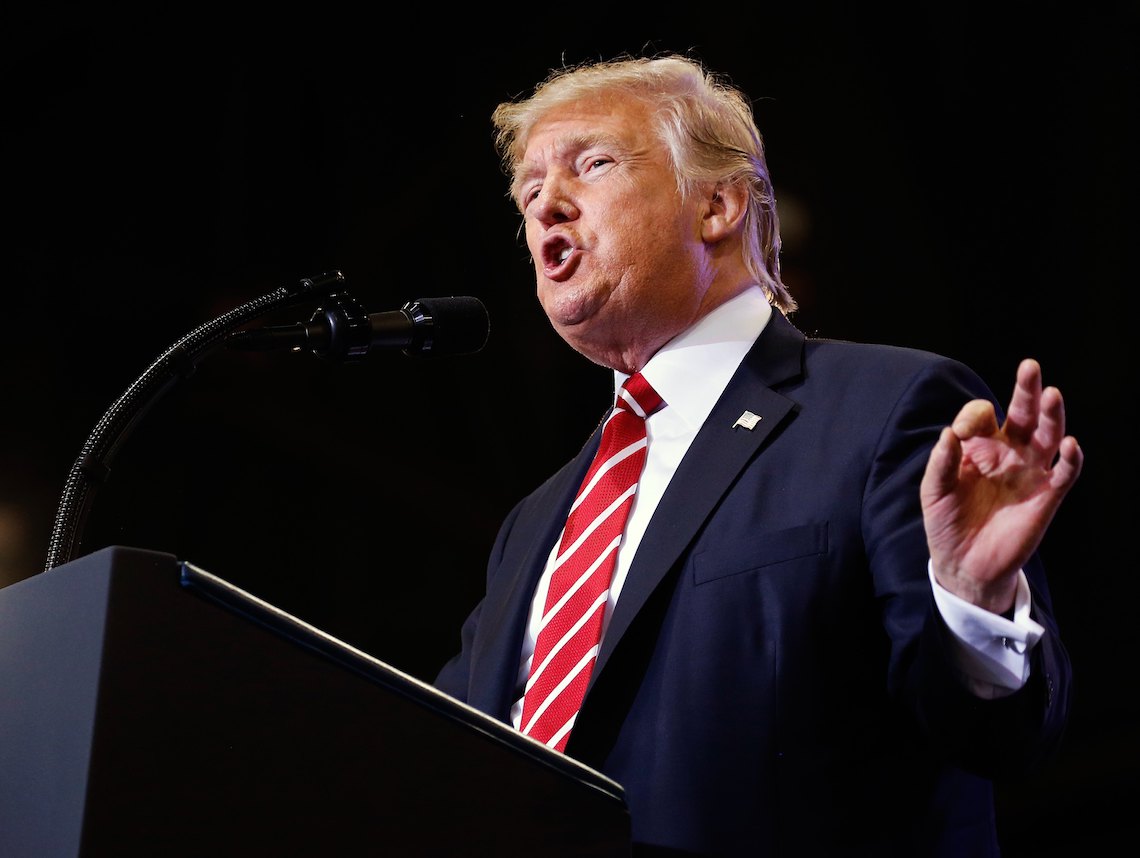
Then, to make matters worse, President Donald Trump sank to the level of Hitler apologists when he said of the clashes in Charlottesville, Va., “You … had some very fine people on both sides.”
The United States has been a welcoming land for Jews. But the Nazi sympathizers and Trump’s comments ought to remind us of a certain precariousness in our lives. Paranoid perhaps, but that gloomy thought is with me as I cover the immigration issue for the website Truthdig.
When Trump took office with his pledge to sharply limit immigration and to deport those here without documentation — numbering about 11 million — Truthdig Editor-in-Chief Robert Scheer, son of an immigrant mother, said he thought immigration was one of the most important stories of our time and that we were in the middle of it in Southern California. I thought so, too.
Take Boyle Heights, for example.
I began exploring Boyle Heights, Los Angeles’ traditional immigrant center, for the Los Angeles Times in 1970.
Much has changed since then. Brooklyn Avenue, the Boyle Heights’ main street of some of our readers’ youth, is now Cesar Chavez Avenue, and the Jews who made it their community long ago migrated westward. But some of the heritage of the old Boyle Heights — then a multiethnic, working-class neighborhood with a tradition of activist politics — remains.
That activism was apparent to me during a recent community workshop organized by Truthdig Managing Editor Eric Ortiz. The event was designed to show young people how to get news out in this era of internet journalism.
The concerns of these young journalists , who contribute to Boyle Heights Beat, a bilingual community newspaper and website, ranged from fighting the gentrification of Boyle Heights to reporting on the wave of fear in the Latino community over the rapidly increasing arrests of undocumented immigrants.
One story in a recent edition was about Los Angeles’ first all-solar-powered arts and music festival in Mariachi Plaza. Another was a moving account by a Boyle Heights Beat reporter about what happened when her father, here on a green card, was deported. What distinguishes the stories is that they give full pictures of life in Boyle Heights, rather than limiting themselves to the usual media accounts of undocumented immigrants being hauled away by authorities.
My former Los Angeles Times colleague Hector Tobar wrote of these usual accounts in a New York Times op-ed, calling such stories “kind of immigration porn,” designed to titillate readers and viewers. “You are many times more likely to see a deportee on the TV news than a Latino doctor or teacher,” he wrote. “My objection is not to the coverage of deportations. … But the humiliated and hunted people you see in coverage of the deported are not the whole person. Tenacity and stubbornness are the defining qualities of undocumented America.”
These were the qualities of our Jewish immigrant forebears. They had the tenacity, stubbornness and courage to leave the old country for a faraway land whose language they frequently could not read or speak. They were impoverished before they left and often more so when they arrived. Grit and, often, family members pulled them up — sometimes way up.
These qualities are not recognized in the cruelly restrictive immigration measure proposed by Trump that would cut the number of immigrants to this country by half and, among other provisions, require English language skills. It would also eliminate some family sponsorship of immigrants, the route most immigrants follow to get into the United States. The provision would devastate Latino and Muslim families.
One of the provision’s authors was Trump aide Stephen Miller. As Jewish Journal Publisher and Editor-in-Chief Rob Eshman wrote, Miller is the descendent of immigrants who benefited from American openness and generosity.
If you can, visit immigrant communities, go to meetings, explore the schools and watch people fight deportation in immigration court. Look carefully. You’ll see in their faces the faces of your parents, grandparents or great-grandparents.
Today, Latinos and Muslims are under threat from the Trump administration. As inconceivable as it sounds, one day it could be us.
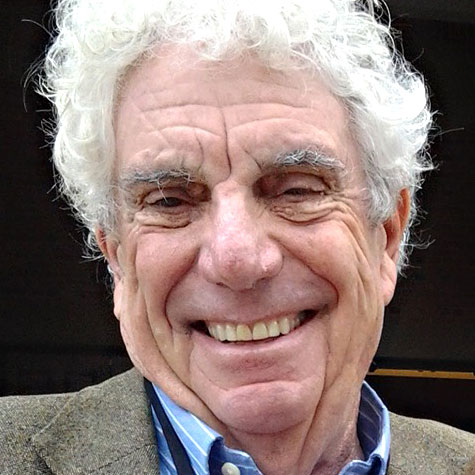
BILL BOYARSKY is a columnist for the Jewish Journal, Truthdig and L.A. Observed, and the author of “Inventing L.A.: The Chandlers and Their Times” (Angel City Press).