fbpx

August 23, 2017

Elul 2: Alan Dershowitz

I almost never dream. On that rare occasion when I do, it’s the typical dream that Freud would be proud of. I fly through the air. I can’t find the room in which an important test is being held. I’m driving too fast. I see almost no relationship between my dreams and my accomplishments.

I do have hopes, wishes, aspirations, goals – but they are rooted in reality. Dreaming is fantasy and fantasies rarely produce accomplishments.

The concept of “dreamers and their dreams” may be intended in a metaphoric way – as a euphemism for aspirations. I’ve always had aspirations. Coming from a relatively poor family, I wanted to strike a balance between doing good for the world and doing well for my family. My goal was to be able to make a living out of doing good without compromising my principles. I have strived to achieve those dual goals throughout my life.

The path I chose was one of challenge – to challenge authority, challenge conventional wisdom, challenge government and most important, challenge myself. It is not a path to popularity. Nor is it a road to a restful existence. To get back to the metaphoric dreams, mine do not result in restful sleep. Instead, they produce restlessness, even occasional nightmares. But as I turn seventy and look back on my life, I have very little to complain about – at least so far.


Alan Dershowitz is the Felix Frankfurter Professor of Law at Harvard University.

Elul 2: Alan Dershowitz Read More »

GOT

The Torah of ‘Game of Thrones’

I used to think HBO’s “Game of Thrones” depicted fantasy.

Over seven seasons, the show has featured creatures and events that are not of this world, even as they are fun to imagine: an army of the dead; domesticated dragons; faithful dire wolves; human “wargs,” who can enter the minds of animals and control them; and the threat of an indefinite winter that will sow chaos and cold throughout the Seven Kingdoms of Westeros.    

These are not things we mortals must contend with, so for those of us who enjoy “Game of Thrones,” we suspend our disbelief over dragons that win wars and obsess over cliffhangers without ever taking the show too seriously. We tell ourselves it’s a guilty pleasure, without feeling much guilt. It’s absorbing but not deep; brilliant but not profound.

And we couldn’t be more wrong.

In the wake of two terror attacks in Europe last week — in Spain and Finland — as well as the storm over the deadly neo-Nazi march in Charlottesville, Va., I watched “Game of Thrones” on Aug. 20 with new eyes.

If there is a core truth that our world shares with the fictional civilization of Westeros, it is that we are both caught in an inexorable pull toward calamity.

Conflict is the ruling ethos of our day. Gone is the postwar era in which U.S. leadership, international agreements and economic collaboration sustained a world order. The stability that much of the world enjoyed for the latter part of the 20th century has been destabilized by the forces of populist nationalism, protectionism, nuclear threats, competition for global dominance, terrorism, civil war and climate change. “Game of Thrones” used to look like melodrama; now it looks like metaphor.

In the world of Westeros, as in ours, the precondition of existence is to combat an endless stream of existential threats. On the show, it’s a remote and resurgent army of the dead known as White Walkers, who want to annihilate the Seven Kingdoms and everyone in it; for us, it’s amorphous terrorist cells that plot to kill in the name of God and achieve world dominion through an Islamic caliphate.

On the show, the nefarious Cersei Lannister will plot, plunder and murder to preserve her power; in our world, Kim Jong Un and Bashar Assad have demonstrated that no human price is too high to pay to prolong their reigns. Nature brings catastrophe, too: Just as Westeros faces the danger of an endless winter, we face global warming.

Under conditions like these, where there is no rest or respite from the challenges to basic survival, “Game of Thrones” tells us there are no easy solutions for a world in flux. Human beings must expend their time and their resources, using all their economic, political and military capital to stave off chaos. And then it comes, anyway. Again and again and again. 

Forces for good exist, although not always in divine balance. There are heroes on the show, honorable men and women who serve as moral actors and fight for a better world no matter how dangerous the risks or impossible the odds. Many of them die. Evil forces tend to prevail more often because the cravers of power are willing to risk everything precious and the heroes are not. And as history has proven time and again, when evil eventually is defeated, it usually comes after horrendous destruction and loss. As in life, the show resists condemning bad characters to their fate until they’ve done bad deeds. But then it’s too late.

“When you play the game of thrones,” villain Cersei Lannister tells hero Ned Stark in Season One, “you win or you die. There is no middle ground.”

What better explanation is there for the extreme political partisanship we see in many places in the world today? People wonder where the moderates have gone, but in a dog-eat-dog world, there’s no room for centrists. Neutrality is an abdication of responsibility when survival demands you take a side.

Although most every kingdom in Westeros functions more smoothly than our current administration, there are always plots to upend the status quo. The emancipation of women has unleashed strong but not always fair female leadership, altering the destiny of Westeros. The game of thrones is now a faceoff between two queens: a cunning despot and an emancipator of slaves.

But the outcome doesn’t really matter.

“I’m not fighting so some man or woman I barely know can sit on a throne made of swords,” one battle-worn character said to another in last week’s episode.

So for what, then?

“Life,” he said. 

“Death is the enemy. … [And though] the enemy always wins, we still need to fight him. You and I won’t find much joy while we’re here. But we can keep others alive. We can defend those who can’t defend themselves.”

In a world on fire, the show tells us, protecting the vulnerable is the noblest aim. It’s a very Jewish idea — and it isn’t surprising to find it here; the show’s creators, D.B. Weiss and David Benioff, are both Jewish.

So as it nears its final season, “Game of Thrones” has traded fantasy for realism, assuring us there is little reward for doing good but that life ticks on, enabling the game to continue.


Danielle Berrin is a senior writer and columnist at the Jewish Journal.

The Torah of ‘Game of Thrones’ Read More »

Brandeis University reopens after bomb threat

Brandeis University reopened its campus following an email bomb threat.

The suburban Boston campus closed Wednesday morning after the university received the threat. People on campus were moved to a secure facility and anyone not on campus was told not to enter.

After law enforcement surveyed the campus and declared it safe, the university reopened in the afternoon.

A statement from the university said the source of the threat is still under investigation. The statement did not specify whether the threat directed at the nonsectarian Jewish school was anti-Semitic in nature.

“The Brandeis campus has been re-opened after a check of buildings by public safety personnel following a bomb threat received earlier today,” the statement said.

Brandeis University reopens after bomb threat Read More »

Gal Gadot’s ‘Wonder Woman’ tops ‘Spider-Man’ as biggest non-sequel superhero movie

“Wonder Woman,” starring the Israeli actress Gal Gadot, has become the biggest non-sequel superhero movie ever, beating out the 2002 version of “Spider-Man.”

The movie earned $404.1 million in the United States as of Monday, and has passed $800 worldwide, with the film set to open in Japan on Friday, Forbes reported.

Forbes noted that if the film can take in another $5 million at the box office — and it is still being shown at more than 800 movie theaters in the United States — it will pass “The Hunger Games,” “Captain America: Civil War” and “Iron Man 3” in earnings.

Gadot tweeted a thank you to her fans on Monday.

“Wow! Just heard the news! Thank u to everyone who has shown their support to WW in theaters!” she wrote. “What an amazing ride this has been! #grateful

The film is set to be released in the United States on DVD and Blu-ray on Sept. 19.

Warner Bros. has already begun preparing for the sequel, “Wonder Woman 2,” which is slated for release in December 2019.

Gal Gadot’s ‘Wonder Woman’ tops ‘Spider-Man’ as biggest non-sequel superhero movie Read More »

Friedman: Trump’s ‘both sides’ remark ‘wasn’t fine’

U.S. Ambassador to Israel David Friedman on Wednesday joined the many Republicans, including the Republican Jewish Coalition, criticizing President Donald Trump’s response to the Charlottesville protests.

[This story originally appeared on jewishinsider.com]

“I think the reaction wasn’t fine,” Friedman told reporters during a ceremony celebrating the arrival of El Al’s first Boeing 787 Dreamliner in Tel Aviv.

But Friedman – who served as one of Trump’s advisors on Israel and Jewish-related matters during the presidential campaign — maintained that the President  “was treated very unfairly in the media. People should give him a chance, and I think he will really do a great job for America.  These incidents don’t reflect who he is, what the U.S. administration is.”

Last night, during a campaign-style rally at the Phoenix Convention Center in Arizona, Trump defended his several responses to the Charlottesville protests, blaming the media for misrepresenting what he said by repeating the statements, but he omitted the “many sides” and “both sides” remarks.

Friedman: Trump’s ‘both sides’ remark ‘wasn’t fine’ Read More »

Bomb threat called in to Michigan Jewish agency forces building’s evacuation

A bomb threat called in to a Jewish agency in Ann Arbor, Michigan, forced the evacuation of the building.

The caller to the Jewish Family Services of Washtenaw County on Tuesday morning said there would be an explosion in the building in 20 minutes, the MLive news website reported, citing Ann Arbor police. The caller, who had a male voice, did not make any other specific threats and did not threaten the Jewish community specifically.

More than 100 clients and staff were in the office when the receptionist received the threat. The agency is located in an office building, which was evacuated. Police determined there were no explosives there.

In February, a bomb threat was called into the Hebrew Day School located at the Jewish Community Center of Greater Ann Arbor. No bomb was found.

Bomb threat called in to Michigan Jewish agency forces building’s evacuation Read More »

A new approach to Jewish mothering

My teenage son would not be excited about my writing this at his desk, or my being in his room at all. But he started high school last week and I can’t believe it.

Ours is not an empty nest, but I know how soon it will become one, and I just wanted to sit with his stuff around me. I’m lying about that last part. There is no way I could long for my son’s “stuff” because it’s everywhere: the sneakers, the headphones, the endless stream of water glasses he fills to the top with ice, sips and abandons.

No, I am sitting in his room because I am hoping to be inspired. I am sitting in the exact spot where my desk used to be before we ripped out my office to put in his private lair — I mean bedroom. I did a lot of writing in this small corner of our house over the past decade, including a book about the need for laughter in marriage.

Dumb, dumb, shortsighted, dumb.

It’s not that we don’t need to laugh in marriage; we most definitely do, but a mere few years later I see now I was focused on the wrong family dynamic. The relationship you really need to pull out the clown car for is the one with your teenager.

I first heard the phrase “family dynamic” in a therapist’s office in Connecticut, circa 1975. I remember all four members of my family squeezing onto a couch across from an ancient-looking woman, probably 40, dressed in soft separates and nodding a lot. We had just moved from New York City, a decision only my father was happy about. I was still young enough to roll with it, but my mother, a native New Yorker like the one Donna Summer was singing about in her top-40 hit, was eating scrambled rage and toast for breakfast, and my sister was in the middle of her 13th year, already hit by the hormonal wrecking ball of being a teenager.

That was, I have no doubt now, the straw that broke the Klein camel’s back.

To date, our family dynamic is healthy enough without an outside ringleader, mostly because we find laughing together as therapeutic as my mother found spending her Saturdays at Loehmann’s. The unit is fine, but as the school year kicks off, I’m the one who’s feeling meshugge. Not just because I can’t stop the march of time, but also because I can’t seem to find the line between concerned parent and overbearing Jewish mother, a cliché I am deathly afraid of becoming. If you’ve seen any Woody Allen movie made before he married his girlfriend’s daughter, you would be too. He always features at least one loud, nagging, unattractive Jewish mother who is eating something greasy while telling her children to “stand up straight,” “do something about the pimples” and “marry rich.” In fact, I go out of my way to behave quite the opposite as a mother: I proudly aspire to be  “underbearing,”

The boys are back in school this week, which means I am privy to a lot more parenting conversations that I often feel I have to slowly back away from for fear of exposing my laissez-faire style.

“What do you mean you don’t read your son’s texts after he goes to bed?” one of the moms I know from temple asked me recently.

“I mean I don’t read my son’s texts when he goes to bed.”

“But … but … ” she looked at me like there was a burning bush in my house that I was ignoring.

“I’m not going to walk in his room and grab his phone after he’s asleep,” I added.

“Walk in his room? You let him keep his phone in his room at night?” another one chimed in.  “Haven’t you seen ‘Screenagers’ ”?

“Um … no. And yes. He keeps it in a charger by his window.”

“I’ll bet he does,” the first one said.

“What kind of a Jewish mother are you?” No. 2 added, tossing her highlighted hair back and laughing.

“A lame one, I guess,” I said, half-jokingly while heading to my car, breaking a non-peri-menopausal sweat.

Will my fear of becoming a Jewish cliché be my son’s undoing? Leaving him vulnerable to cyberpredators? To a debilitating lack of sleep as he scrolls endlessly in the wee hours of the night? To a stream of naked selfies from girls that he forwards to his friends — and then gets caught and arrested for trafficking in child porn?

I suddenly found myself looking back fondly to a simpler time when being a Jewish mother meant worrying that your precious child was going to get sick from snot-nosed kids on the bus, or that he didn’t get enough lox on his bagel. Or praying to God silently — sometimes not so silently — for him to find a nice Jewish girl to marry.

That’s how I ended up at his desk, you know, to write, of course. And, perhaps, to take a more “CSI: Teenager” approach to my Jewish mothering.

A new approach to Jewish mothering Read More »

Tips for clearing out your home: Where to donate, shred and dump

Is it time to lighten your load? I’ve been on a major purging kick this summer, going through the garage, closets and cabinets, and under the bed — basically anywhere clutter has collected — and getting rid of all kinds of things. I’ve also been keen to avoid throwing unwanted items in the garbage because I’d rather not have my junk adding to the landfill. To that end, I’ve found some great resources for taking my castoffs so that they can find new life, or at least be disposed of properly.

Clothes

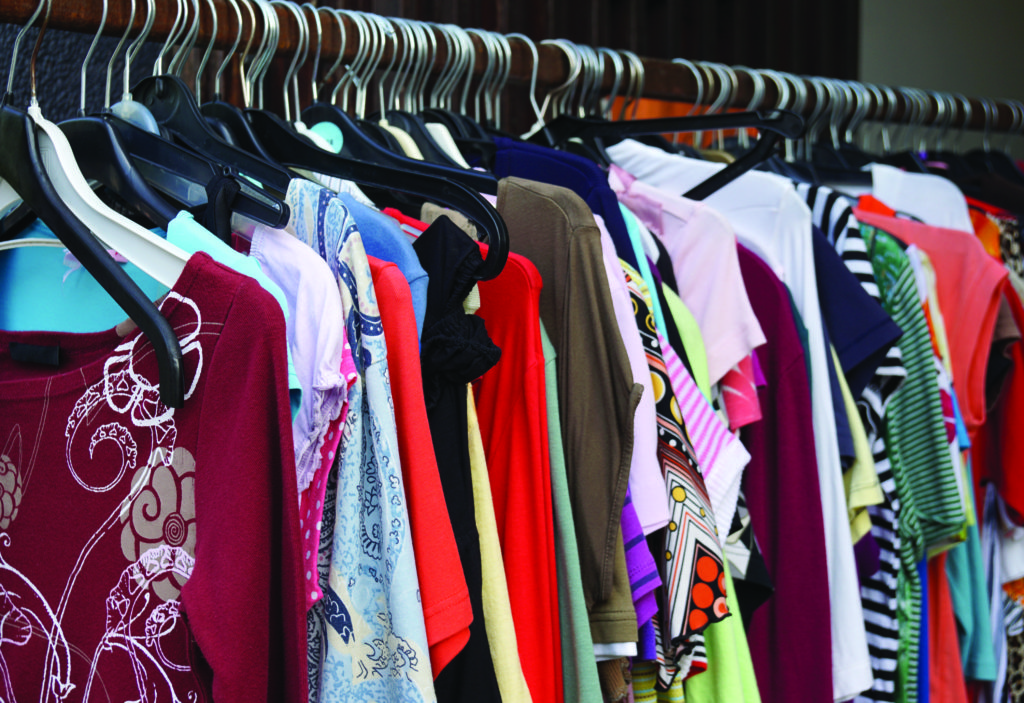
There must have been a clothing donation surplus this summer because I actually had trouble giving away mine. The local thrift shop wasn’t taking donations, and when I ventured farther to a Goodwill that did take clothes, I was disheartened to see my stack of clothing would be added to a 14-foot pile in a warehouse — not exactly where I wanted to see my designer duds end up.

Fortunately, I did find some other worthy places for my unwanted clothing. Multiple trips to several thrift stores convinced me that smaller enterprises such as the National Council of Jewish Women (NCJW) Thrift Shops (ncjwla.org) and the BTS Thrift Store in Culver City (btsthriftstore.com), a division of the addiction treatment center Beit T’Shuvah, appreciated my goods more. I was also swayed by the shopping experience at the stores themselves — both had great inventory and nothing seemed “junky” at all.

If you have clothing you think might be worth some money, consider selling it to Buffalo Exchange (buffaloexchange.com). Simply bring in your freshly laundered items to the buying counter, and they’ll appraise them and offer you cash for them. A similar store is Crossroads Trading (crossroadstrading.com), but I’ve had better luck with Buffalo Exchange taking my clothes.

You also can donate business attire you no longer wear to an organization such as Clothes the Deal (clothesthedeal.org), which provides low-income men and women with professional attire for job interviews. Check the website for a drop-off location near you.

Books

All my books are precious to me, so I want to make sure that when I give them away they will find good homes.

As a fan of The Last Bookstore in downtown Los Angeles, I was happy to see that it has a program called Re-Book It (rebookit.org), in which it either collects unwanted books and resells them at its store (usually for $1); distributes them to local libraries, charities, hospitals and schools; or recycles them. The store schedules pickups for your used books rather than taking drop-offs, so check the website for more information.

One of the most convenient resources for donating books, CDs and DVDs is American Book Drive (americanbookdrive.com) and its collection bins. Designated organizations receive a portion of the proceeds from the eventual sale of the books, so it’s a good way to help a local nonprofit or school. For example, the collection bin in my neighborhood benefits the Santa Monica-Malibu Education Foundation. Other participating organizations include the Society for the Prevention of Cruelty to Animals Los Angeles and the Susan G. Komen organization.

Baby items

As your baby grows up, all the clothes and furniture she has outgrown take up valuable room in the house. So what do you do if you don’t have friends or family about to be new parents who can take the stuff off your hands?

Baby2Baby (baby2baby.org) provides low-income children, from newborn to 12 years old,  with diapers, clothing and basic necessities. Check its website for items it will accept, and for drop-off locations in your area.

To get outdated and potentially unsafe baby car seats off the road, Toys R Us and Target host trade-in events at which you can turn in any car seat (even if you bought it elsewhere) and receive a merchandise credit to purchase something else. These events happen throughout the year, so ask your local store about the next one scheduled.

Paper shredding

If you have documents dating back to the Paleolithic period (or even the 2000s), you have many shredding options. Shredding services will come to your door, or you can go to them.

If you don’t have a lot to shred, most office supply stores such as Staples and Office Depot have locked shredding bins in which you place your documents, and they are taken off-site for disposal.

But I’ve largely taken advantage of community shredding events. Various cities offer either free or low-cost shredding. For example, Santa Monica offers quarterly free shredding events. And Culver City has them twice a month with a price of $30 for  seven boxes. Check your local community paper for announcements.

Used paint, hazardous waste and electronics

A lot of my clutter was old paint, cleaning supplies, used batteries and broken electronics. I knew enough not to dump them in the trash bin, but how was I going to safely dispose of them?

My favorite find during my purging was the S.A.F.E. Collection Center at UCLA. S.A.F.E. stands for solvents, automotive, flammables and electronics. Aerosol cans? They take them. Fluorescent tubes? Yes. Unused medications? They take those, too. The service is absolutely free. You drive up, people in jumpsuits take everything out of your car, and you’re on your way. Although it’s located on the UCLA campus, the service is not affiliated with the university and is free to all residents of Los Angeles County. There are six additional locations throughout the Southland (lacitysan.org).

Tips for clearing out your home: Where to donate, shred and dump Read More »

White-supremacists

Southern California alt-right group involved in Charlottesville rally

Among the alt-right groups participating in events that led to violence recently in Charlottesville, Va., was one based in Southern California, whose web presence celebrates white nationalism.

The Rise Above Movement, which organized this year, is based on a goal “to revive the spirit of the Western man through athletics, brotherhood, and identity,” according to a Tweet from the group.

RAM, as it is known, is a loose collective of neo-Nazis who “train to fight at political events,” according to an Aug. 13 report in The New York Times.

In an explanation of “Who we are,” included on its Twitter feed, it says, “In a time when you can be handed for your political beliefs or shamed for your heritage, we are here to defend our identity and shard goals.”

An effort to learn more about the group from any of its members was unsuccessful. Someone responding to a battery of questions sent to RAM through its Twitter account declined to answer.

Even so, the group is not unknown to organizations that track hate groups across the country.

Joanna Mendelson, investigative researcher and director of special projects for the Anti-Defamation League’s Center on Extremism, said RAM is a reincarnation of a disbanded, alt-right-affiliated group called the DIY Division.

“Apparently, the organization aims to counter what they describe as ‘consumer propaganda and values’ favoring instead ‘a pioneering spirit, the spirit of a fighter, our warrior spirit’ ” she said. “However, RAM operates more like an alt-right fight club, championing the movement’s values of white supremacy, anti-Semitism and anti-antifa activity, while pursuing physical fitness goals to prepare them for altercations at protests.”

Antifa is a shortened name for groups that identify as anti-fascists.

Mendelson said the group is based primarily in Southern California but has traveled throughout the state and beyond.

A RAM promotional video online depicts thug-like behavior, including footage of members spraying graffiti with their group name and a tag line of “defend America,” as well as shots of members engaging in intense physical training.

The video also shows the group’s opposition to Muslims, with one person in the video holding a sign that says, “Defend America. Islamists Out.”

Much of their social media have been shut down in the past week for unknown reasons, Mendelson said. An effort to reach the group through Instagram leads to a page that says, “Sorry, this page isn’t available.”

RAM is part of the ever-growing number of hate groups around the United States. The Southern Poverty Law Center (SPLC), which tracks such groups on the left and right, puts the current number at 917, with 79 of them in California, although RAM is not listed among them. In the SPLC’s accounting, every state has at least one group identified as a hate group.

In the 10 days after President Donald Trump’s victory last November, the SPLC recorded an average of 87 hate incidents a day, or some five times the daily average recorded by the FBI in 2015.

As mostly an online movement, the alt-right does not have an official membership or group count, making efforts to quantify its numbers almost impossible. But experts say the election of Trump and his various remarks have provided the faction legitimacy and political prominence it never had.

Large-scale media attention, such as the coverage generated by the violence in Charlottesville, have also elevated the faction’s presence.

The SPLC says the most active groups in the country are affiliated with the Ku Klux Klan, which has an estimated 5,000 to 8,000 members. It also finds that neo-Nazi groups have chapters in more than 30 states.

The hate groups operating in California, according to the SPLC, stretch across the political spectrum, including the Committee for Open Debate on the Holocaust, Nation of Islam, the Christian Anti-Defamation Commission and the Loyal White Knights of the Ku Klux Klan.

Southern California alt-right group involved in Charlottesville rally Read More »

Genetic mutation explains why some men live to 100

Just as smaller animals of a given species generally live longer than their larger cousins, one might expect that taller humans are genetically programmed to sacrifice longevity for height.

But it’s not that simple.

A major multinational study of 841 men and women from across four populations found lower levels of insulin-like growth factor 1 (IGF-1) in men living to age 100 and yet most of them were taller than men in the younger control group.

The apparent explanation for this head-scratcher is that some long-lived men — and only men — have a genetic mutation that makes their growth hormone receptors more sensitive to the effects of the hormone. The cells absorb less growth hormone, yet protein expression is increased by several times.

This mutation seems to be responsible for their ability to live about 10 years longer than the control group of 70-year-old men without the mutation, even though they have a lower amount of growth hormone and are about 1.18 inches taller.

The lead author of the study is professor Gil Atzmon of Albert Einstein College of Medicine in New York and head of the Laboratory of Genetics and Epigenetics of Aging and Longevity at the University of Haifa. Since 2001, Atzmon has been studying the human genome and its impact on aging and longevity.

The researchers working with Atzmon looked at four elderly populations: 567 Ashkenazi Jews in the Longevity Genes Project at Einstein, 152 from a study of Amish centenarians, and the rest from an American cardiovascular health study and a French longevity study.

In 2008, the Longevity Genes Project found a genetic mutation in the IGF-1 receptor of some women, although it’s not the same as the one affecting men’s lifespans.

“We knew in the past that genetic pathways associated with growth hormone were also associated with longevity, and now we have found a specific mutation whose presence or absence is directly related to it,” Atzmon said.

“This study makes it an established fact that there is a relationship between the function of the growth hormone and longevity. Our current goal is to fully understand the mechanism of the mutation we found to express it, so that we can allow longevity while maintaining quality of life,” he added.

The 16 researchers involved in the study, published June 16 in Science Advances, are associated with institutions in Israel and France as well as in New York, Maryland, California, Vermont, Massachusetts and Washington.

While more research is needed to understand why the receptor mutation affects longevity and why it happens only in men, the study suggests that making a slight change in this specific piece of DNA could possibly make people live longer.

Although the presence of the mutation almost certainly ensured longevity, Atzmon stressed that many other factors affect longevity and that many men without the mutation also live to 100 and older.

Atzmon is one of the principal researchers in the Longevity Genes Project at Einstein, along with Israeli endocrinology specialist Dr. Nir Barzilai.

Their groundbreaking 10-year study of healthy Ashkenazi Jews between the ages of 95 and 112 and their children attempted to understand why humans don’t all age at the same rate, and why only one in 10,000 individuals lives to 100.

The centenarians were found to have genetic protective factors (“longevity genes”) that overcame factors such as diet and lifestyle.

Genetic mutation explains why some men live to 100 Read More »