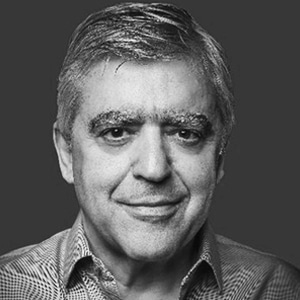
Is the mind more powerful than the heart? This question was hovering in the air during an insightful Torah class last week given by Rabbi Yosef Kanefsky, spiritual leader of B’nai David-Judea Congregation. Kanefsky presented two distinct views of the concept of teshuvah, which is commonly referred to as “repentance” but means, more precisely, “to return.”
He talked about the teshuvah of the mind and the teshuvah of the heart.
To explain the teshuvah of the mind, Kanefsky quoted from Maimonides (the Rambam) and his Laws of Teshuvah. The premise is that we all start with a blank slate and with an equal power to use our God-given free will: “If one desires to turn himself to the path of good and be righteous, the choice is his. Should he desire to turn to the path of evil and be wicked, the choice is his.”
Of course, there are huge impediments to achieving the ideal moral state of mind, not least our physical drives and emotional vulnerabilities, which the Rambam calls “the dark and turbid matter that is ours.”
How does one hope to conquer these impediments? By transcending the emotional idea of belief and entering the state of constant knowingness of God and our God-given power of free will.
Kanefsky quoted Rabbi Joseph Soloveitchik’s commentary on the Rambam: “I would say that ‘to know’ (lei’da) means that our conviction of the existence of God should become a constant and continuous awareness of God, a level of awareness never marred by inattention; ‘to believe’ (le’ha’amin), on the other hand, implies no prohibition on inattentiveness. ‘I believe’ — but it may happen that I become distracted at times from the thing in which I believe.”
Similarly, Soloveitchik adds that the assumption of free choice “cannot rely on belief by itself; it also depends on knowledge, on a feeling of being wholly charged by the tension present in this God-given factor of free choice.”
It follows that correcting our transgressions should also be mindful — hence the Rambam’s call for a “verbal confession.” Again, we are using our free choice to “confess before God” and “cleanse our hands” of our transgression.
The core idea, then, behind this approach is to use the power of our minds and our free will to reach higher levels of goodness and Godliness.
But here’s the catch: If our free will is constantly tainted by our physical and emotional impediments, how “free” are we? And, consequently, how realistic is it to put so much faith in our minds?
This is where Kanefsky introduced the teshuvah of the heart, through the teachings of the mystic Rabbi A.I. Kook. This view holds that we are all born basically good — that, as Rav Kook writes, “It is impossible for a person to fundamentally change his soul’s form and good nature.”
Because “it is a requisite of human nature to pursue the righteous path,” then, whenever a person sins, “if he has not suffered a total spiritual degeneration, his sensitivity will cause him disquiet, and he will suffer pain. He will become zealous to repent, to redress his wrongdoing, until he can feel that his sin has been purged away.”
In essence, Rav Kook interprets teshuvah as “returning” to our innate goodness — to our all-knowing souls that are always connected to God.
So, while the Rambam talks about using our minds to bond with God, Rav Kook talks about using our hearts to uncover the God that is already in us. Both approaches, while complicated and multilayered, are personally empowering.
Therefore, you won’t be surprised to hear that in the great Jewish tradition of seeking balance, it’s smart to incorporate both ideas. As Kanefsky explained, we need to be aware of the power of our minds to control our actions through our God-given free will, but we must also allow our hearts to help us connect to our better and more soulful selves.
If I may complicate your life a little further, I’d like to propose a third teshuvah, this one inspired by the personal example of my friend Rabbi Kanefsky himself: the teshuvah of the eyes.
In this teshuvah, we return not just to ourselves and to God, but to others.
As we open our minds to know God better, we open our eyes to see His children better. As we open our hearts to return to our better selves, we open our eyes to see the “better self” in others.
As we return to our natural state of Godliness, we return to our childhood state of innocence — when our eyes were always open to discovering new things.
And now, during this period of repentance, as we reflect on our transgressions, we can also reflect on the opportunities we have missed over the past year to discover new things — such as new ideas that might expand our thinking, or ancient Jewish traditions that might enrich our lives.
Maybe we can all open our eyes over the coming year to the fascinating stories of Jews in our community whom we’d never think to meet or hang out with. At the very least, let us open our eyes to recognize and value their presence under God’s tent.
As we do the difficult work during these High Holy Days of returning to our own goodness, let us not forget the even more difficult work of seeing the goodness in others.