When I woke up one morning a few weeks ago and saw the photos of more than 100 desecrated graves at Mount Carmel Cemetery in Philadelphia, I felt bereft.
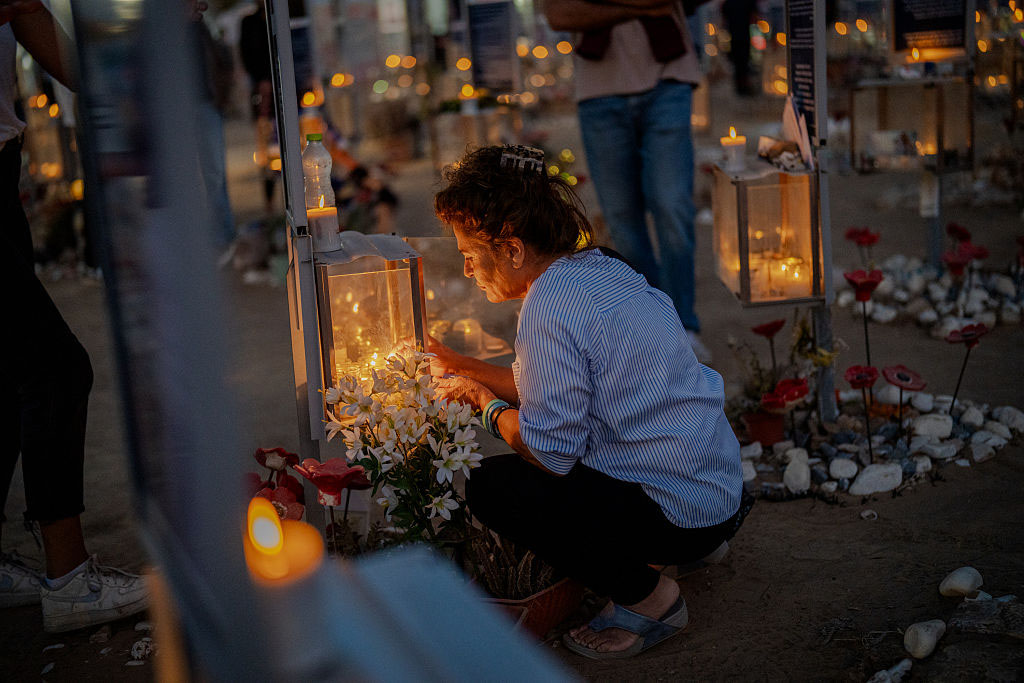
In the 18 months since my husband died, I have been a frequent visitor to his grave, finding solace in the sanctity and peace of the cemetery. On the morning after the incident in Philadelphia, I rushed through my morning tea and returned after several months away. Walking through the grounds, I felt them all present, demanding an answer: Will you be silent or will you speak up?
That evening, I read about the Muslim veterans across the country who had tweeted their offer to stand guard at Jewish cemeteries, and about the incredible fundraising campaign in the Muslim community, raising $135,000 to repair the broken gravestones.
Those who wreak havoc in the name of hate are a very few, outnumbered by those of us who want to live together in love and in peace.
Rabbi Neil-Comess Daniels, of Beth Shir Shalom in Santa Monica, and Hazzan Mike Stein, of Temple Aliyah in Woodland Hills, share this vision, and we decided to create an interfaith gathering for unity, love and mutual respect. We wanted to create something that did not stand against anything — we’ve all had quite a lot of that lately. What we wanted was to joyfully affirm that we are indeed who we know ourselves to be: loving, peace-seeking, fair-minded people who respect one another and hold one another in the highest regard.
It was surprising, maybe even disappointing, that there were some people — rabbis, community leaders, heads of boards — who were hesitant about this event. They thought it was a mistake and that it would be better to “lay low,” not make a splash, avoid becoming a target. While respecting the impulse to be protective, this was so foreign to our own inner directive of “Silent never again!”
Len Lawrence, general manager of the Mount Sinai Memorial Parks and Mortuaries, immediately rose to the call, and with true conviction and generosity, turned to staging an event he hoped would resonate throughout the country.
“We put in a new, large sign at the entrance to the memorial park recently,” he explained, “and some people told me that in times like these, I was crazy to do so. I told them that it is exactly in times like these that I am going to stand even taller. I am proud of what we do and proud of who we are and will never be scared to say so.”
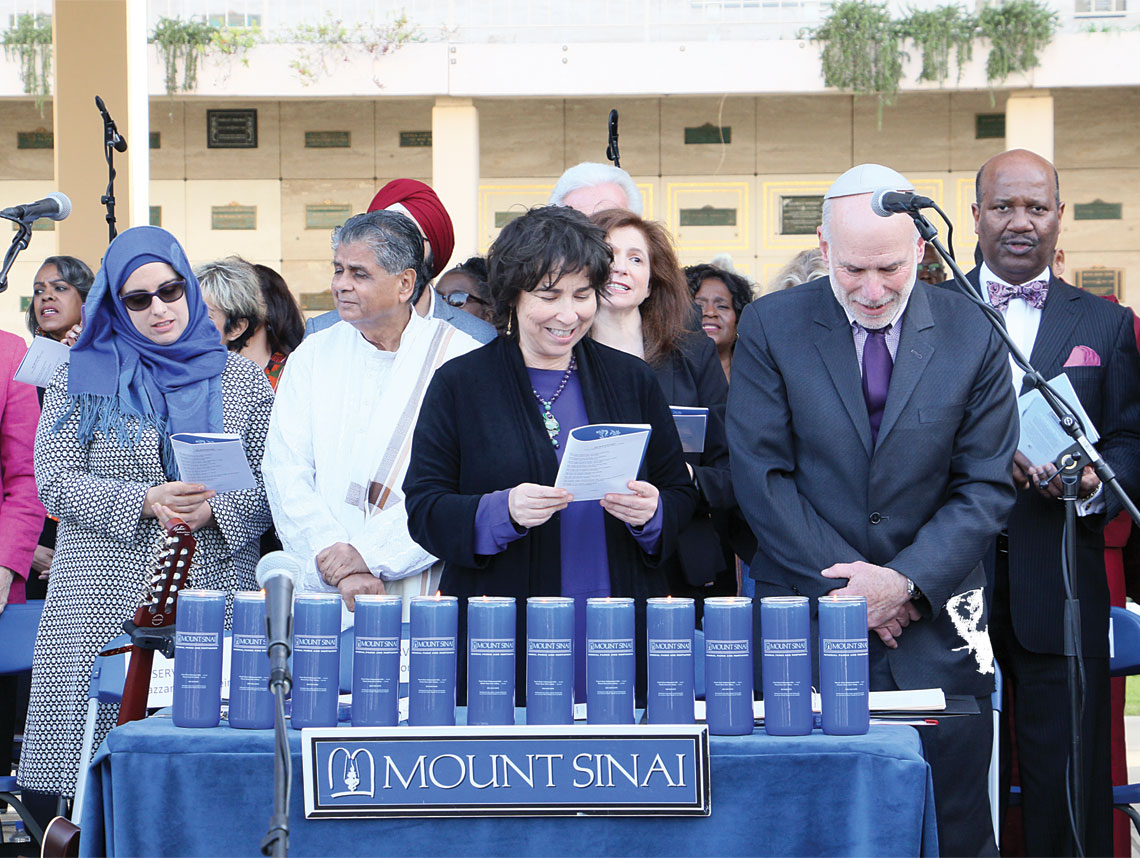
We realized we wanted a way to ground our intention to stand in unity, and to defend one another and our holy sites. So we wrote a unity pledge that was read aloud by everyone present, and our elected officials and clergy signed it. Making a pledge in the presence of our ancestors, resting in peace below our feet in the beautiful hills of Mount Sinai, felt both solemn and joyous. A month after that day in the cemetery, I was able to answer the question posed to me by the spirits I had met.
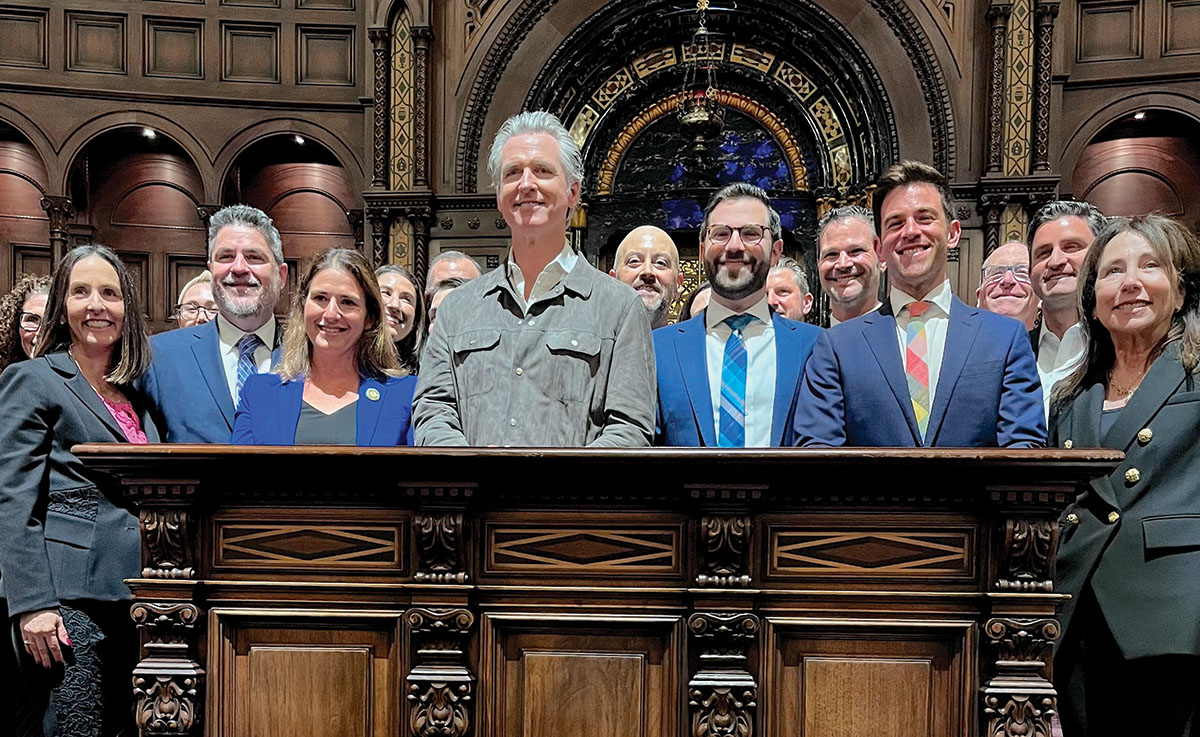
The religious leaders (more than 30 of them) strode up the walkway to the grand setting with an air of sacred joy, of reunion with one’s family. Our Tibetan Buddhist monks — whose chant during the blessing ceremony gave many of us goosebumps — later said they had felt as if a cloud of blessing had descended upon the entire city. Elected officials — Los Angeles Mayor Eric Garcetti, state senators and assembly members, four other mayors, City Council members and two police chiefs — had that same sense of presence and emotion. It was clear that they were there because of a personal need to stand shoulder to shoulder with their community, and assert their commitment to love their brothers and sisters as themselves.
City Controller Ron Galperin led the Kaddish. City Attorney Mike Feuer, as one of the participants in our responsive prayer, read this verse from Leviticus: “And if a man from another country is living in your land with you, do not make life hard for him; Let him be to you as one of your countrymen and have love for him as for yourself; for you were living in a strange land, in the land of Egypt: I am the Lord your God.” City Council President Herb Wesson had tears in his eyes when he read this from Holocaust survivor and Nobel Laureate Elie Wiesel: “I swore never to be silent whenever and wherever human beings endure suffering and humiliation. We must take sides. Neutrality helps the oppressor, never the victim. Silence encourages the tormentor, never the tormented.”
My late husband, actor-musician-activist Theo Bikel, always warned against silence and implored us to speak out. He used to say: “We are like a field of flowers, each distinct and with roots of our own. But together we are a gorgeous field. I take care of my own flower not because it is better or more special but because it is my duty, and otherwise it will wither and die — and the beauty of the field will be forever diminished. It is the beauty of this field that I ultimately hold most cherished.” It was his legacy we celebrated while raising our voices together, flowers in a field, united in love.
Aimee Ginsburg Bikel is a journalist who was a correspondent for Yedioth Ahronoth for 16 years. She is the founding director of the Theodore Bikel Legacy Project. She was married to actor, musician and activist Theodore Bikel from 2013 until his death in 2015.