Hanging above the sofa in the den of my next-door neighbor's house when I was a child was an old-fashioned family portrait painting; the figures in it looked stiff, the background was dark brown, muddied by time, and it was forbidding.
But spookiest of all, the picture bore a giant tear right through canvas at the lower left-hand side of the image. The gash, I was told, had been made by Nazis.
I knew that much of my friend's family hadn't made it out of Germany, and the picture was a precious record. But that's about all I was told at the young age of 6 or so, when this picture was an object of great fascination for me. The gash was a symbol for remembering something that was, in all other ways, a big giant secret.
At that time, in the 1950s, the Holocaust was still too fresh to talk about much, particularly to children, and so dark pasts were hidden, acknowledged through mementos rather than stories. I never quite knew which questions were OK to ask.
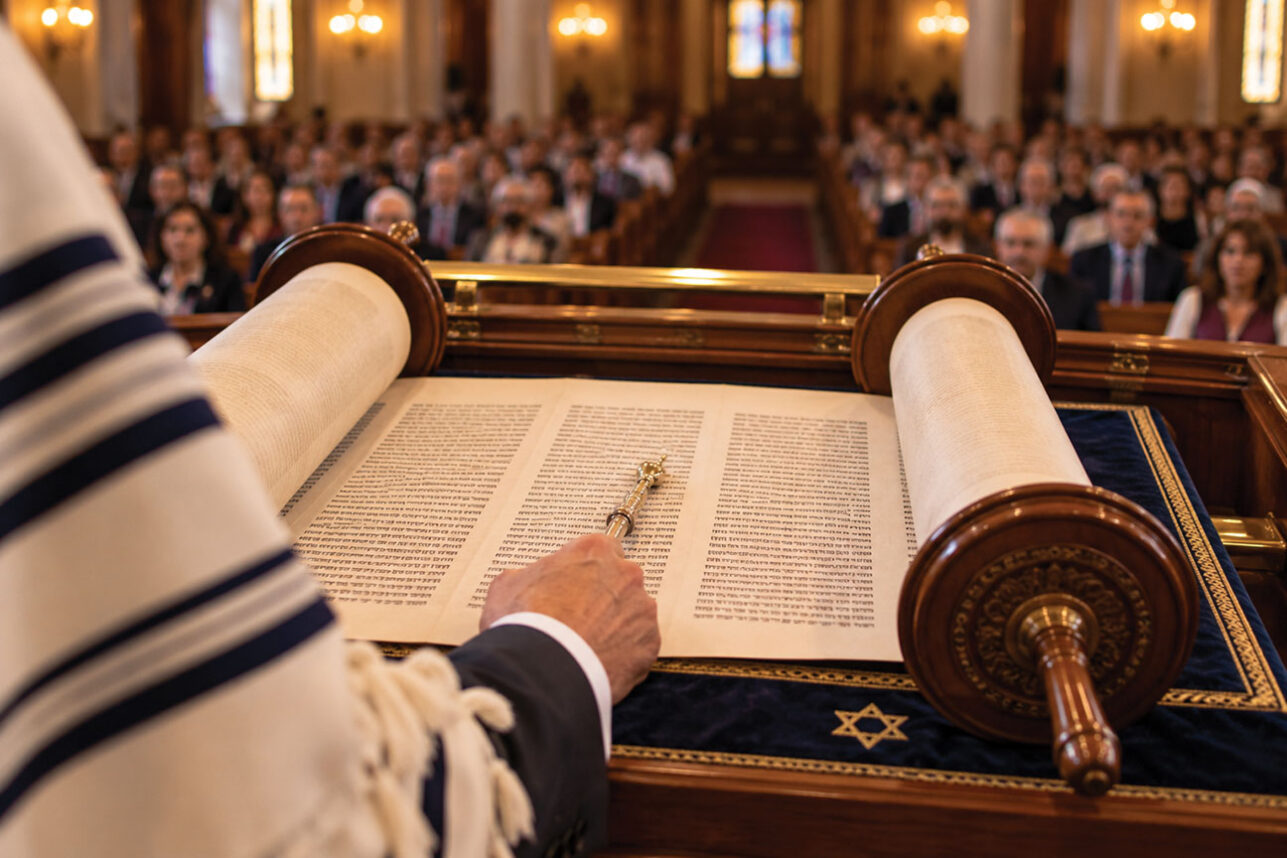
I thought of that picture last week, as I listened to Nobel Prize-winning author Elie Wiesel speak to a rapt audience of 1,700 people crammed into the sanctuary and every other nook and cranny of Stephen S. Wise Temple. He'd come for an informal, staged chat with Rabbi David Woznica, and, as always, Wiesel's message was a call for remembrance. His own experience as a Holocaust survivor did not need retelling, but once again, as he often does, Wiesel challenged the audience to ask other survivors those questions I'd once felt were taboo.
“We are members of an endangered species,” he said in his famously lilting voice that contains traces of his native Romanian intonation, as well as some French and much American flavor. “A survivor has an authority that no one else has.”
We can't expect those survivors to volunteer their stories, he chided. And isn't he right? How many families have let the secrets lie dormant for decades?
And we can no longer wait, Wiesel insisted, as the survivors are aging. He told the story of a group of students in a class he taught about the Holocaust. After a few meetings, he said, he realized that “almost all my students were children of survivors.” But none could talk about the experience with their parents. So they asked him questions, and he told them to go home and ask again.
“They are privileged,” he said, “both parents and children — and to bring them together is so rewarding.”
Wiesel has taken on a rock-star status, which maybe has both helped and softened his message. When he walked into the sanctuary, the crowd immediately rose to its feet in an ovation, even before he'd opened his mouth. His every minor quip got lots of laughs — and he is funny — and now, at 78, he's lost some of his bristle and is willing to charm.
But I wondered how deeply his message penetrates those of us applauding him, despite the increased urgency in light of the recent Holocaust-denier's conference in Iran. At an L.A. synagogue, isn't he preaching to the choir? We remember. We know. But is that enough?
Or have we, by now, all heard so many stories as to become inured?
“I do not think that the Holocaust can be forgotten,” Wiesel said. “It is the most recorded event in history. But I am afraid it will lose its uniqueness. I'm afraid it could be cheapened, diminished, trivialized.”
He talked of a long-ago mini-series on TV that he hated. He talked of increased anti-Semitism abroad. He talked of Iran, and of his belief in the need for a law against denying the Holocaust, such as they have in Germany — the right to free speech makes such laws impossible in the United States.
And he talked of listening.
“Anyone who listens to a witness becomes a witness,” he said.
What keeps Wiesel's passion and curiosity alive? Among Jews, we come in contact with survivors all the time. They are our neighbors, our parents and grandparents, our friends' parents, our grumpy encounters in the checkout line at Trader Joe's or our brilliant university professors. They are the same and different from us. They have a story we are often still afraid to hear.
My friend Julie Tuomi called me just the other day, before I'd gone to hear Wiesel, and she mentioned that her 97-year-old grandmother, Senta Marcks, might be worthy of a story for The Jewish Journal. Marcks is a survivor, Julie said, and maybe we would like to hear her story while she “still has all her marbles.”
I love Julie, and I know she loves and admires her grandmother, but I have to admit that initially I kind of groaned inside at her suggestion, wondering when I could find the time to talk to Marcks, wondering if, really, there was anything new in her story — Holocaust or no. So, I avoided committing.
After Wiesel's talk, I called Julie back.
“Let's go this Saturday,” I suggested.
No time to waste. Anything she wants to say, I want to hear. And as it turned out, the grandmother had since been hospitalized from a fall; visiting her at the hospital had become a double mitzvah, even more urgent than before.
So on Saturday evening, Julie and I set out, our daughters in tow, and we went to Marcks' hospital room, where she was sitting up in bed, glowing with joy at our arrival. She didn't know my purpose for coming, and of course she was glad for any company. When Julie told her I wanted to hear about how she'd had to leave her home, her eyes widened, her smile grew enormous, and she leaned back on her pillows to collect herself.
“I was born in 1910 in Breslau,” she began. “I lost my parents and my husband to the Nazis. Only my daughter and I left.”