Imagine that you are a Jew, and that you are president of the United States. Your security adviser has just whispered in your ear that 200 Jewish girls in Africa have been kidnapped and are being threatened with rape.
Or imagine that you are the most prominent rabbi in the world and you’ve just heard that a Jewish village in Iraq has been massacred by terrorists.
What would you do?
I ask those questions because of two parallel items. One, the frightening persecution of Christians throughout the Middle East and parts of Africa over the past few years, and two, the frightening silence of the world’s two most prominent Christians: The President of the United States and the Pope.
How could they stay so quiet when people of their own religion are being massacred?
Call me politically incorrect, but for Jews, this is a natural question. We can’t imagine keeping quiet when “one of our own” gets hurt. When a Jew gets attacked in Paris, Tel Aviv or Buenos Aires, Jews in Los Angeles and Montreal go nuts. That’s just who we are.
But why?
The question came up last Friday night at my friend Jonathan Medved’s home in Jerusalem, where I was invited for Shabbat.
Medved’s answer was so simple and yet so resonant, that it lingered with me for several days. It’s hardly the first time I’ve heard it– we’ve all heard it. But maybe it was the wine, or the war, or something– this time the answer hit home a little stronger.
Unlike Christians, he said, we’re more than a religion, we’re a people.
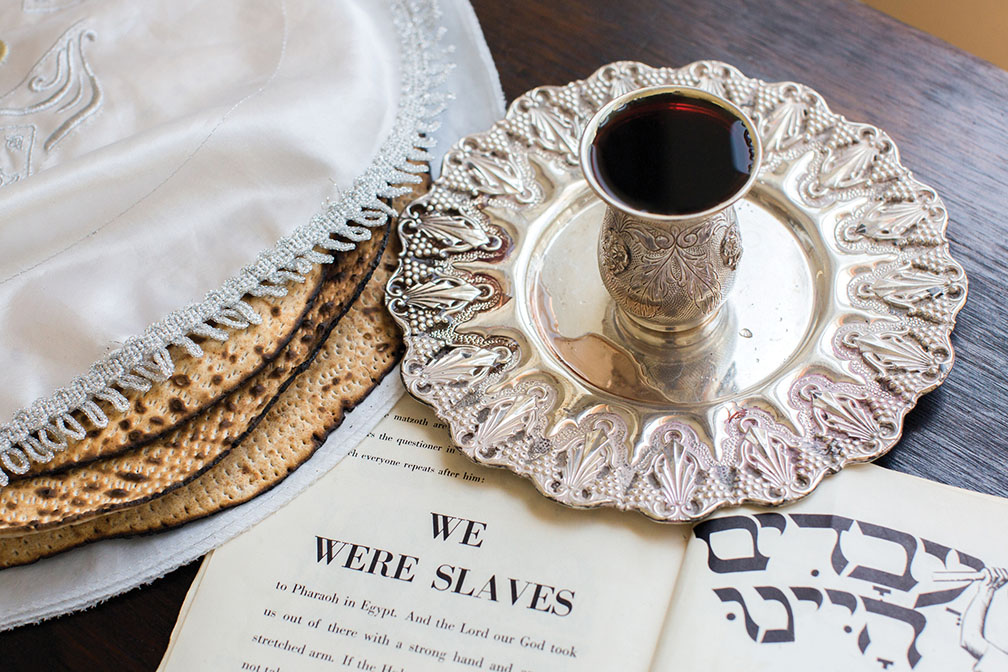
It felt right to hear that answer at a Shabbat table, the Jewish ritual that, perhaps more than any other, has kept the Jewish people together for millennia.
When one of the great scholars of our time, Rabbi Adin Steinsaltz, had to describe the Jewish people, he had plenty of options to choose from. After all, we are the people of the book; the wandering Jews; God’s chosen people; the people of Jewish law; the citizens of Zion; we are so many things, in so many expressions, in so many places and times.
Steinsaltz found a way to wrap all these complexities of identity in one neat, elegant package. He went even further than peoplehood.
Jews are a family, he wrote.
However schmaltzy or idealistic that may appear to the cynic who sees Jews fighting all the time, there is an intuitive plausibility to that idea.
For one thing, since when does a family never fight or argue? A family that tells you it never fights is either a family that lies, or a family that never sees each other.
But more importantly, the idea of “family” speaks to the marriage of diversity and identity. In Judaism, regardless of what you do or believe, you're still part of the Jewish people.
You may be an atheist, your brother may be ultra-Orthodox, your sister may be a poet who plays in a punk band, and your younger brother may be dabbling in Buddhism, but still, you are all family.
When your ultra-Orthodox brother invites you to the marriage of one of his ten kids, chances are, you will show up, even if you don't believe in God. And if your hippie sister doesn’t show? So what. She’s still his sister, and he’s still her brother, and that still counts for more than something.
Simply put, Jews and Judaism are too diverse, and the Jewish story too complex, to wrap up in one identity or ideology. This has been both a source of confusion and alienation (who are we?) and a source of strength (we are all).
It makes sense, then, that in times of danger, the cerebral confusion of identity would dissipate and the primal clarity of family would rise to the surface. Even if you can’t stand the ideology or crazy lifestyle of your sister, when you get a phone call that she's in danger, how can you not go nuts?
In the multicultural zeitgeist of America, where we worship the secular religion of inclusion, it’s often uncomfortable to express this tribal impulse. It’s more acceptable to express the sentiment of caring for all humans, which many Jews see as the ultimate Jewish value, since it honors the Jewish teaching that every human is created in the image of God.
But just as there’s a difference between friends and family, there’s a difference between sentiment and impulse. In times of safety, I have the luxury of expressing sentiments of love for all my neighbors. But in times of danger, I am moved by an impulse to protect my people; the same impulse, perhaps, that would make me instinctively protect my daughter.
Does this explain why our Christian president and our Pope have been so lethargic in their response to the persecution of Christians? I don’t know. It may explain the unique bond between Jews, but ultimately, at the level of global leadership, none of that should matter.
If I were president, every human being would be a Jew.