In rabbinic circles, one increasingly hears sentiments like, “I’m not going to get fired for my politics on gun control or health care, but I could get fired for just about anything I say about Israel.” Rabbi Scott Perlo has coined this the “Death by Israel Sermon.” Across the country, our communal discourse on Israel has grown so ugly that many have stopped caring and engaging at all.
I work with institutions and leaders across the country to build open, constructive communication across political divides on Israel. I’d like to share three patterns that prevail in the current American Jewish conversation about Israel, why it should urgently concern us and what we can do about it.
The first and most common pattern is avoidance. Dodging the “Death by Israel Sermon” is just one example. Most Jewish social justice organizations have explicit policies to avoid Israel. It seems every week another institution bans Israel from its listserv. Even what presents as apathy among millennials is often a mask for avoidance: “Oh, that nasty conversation? Who wants to go there?”
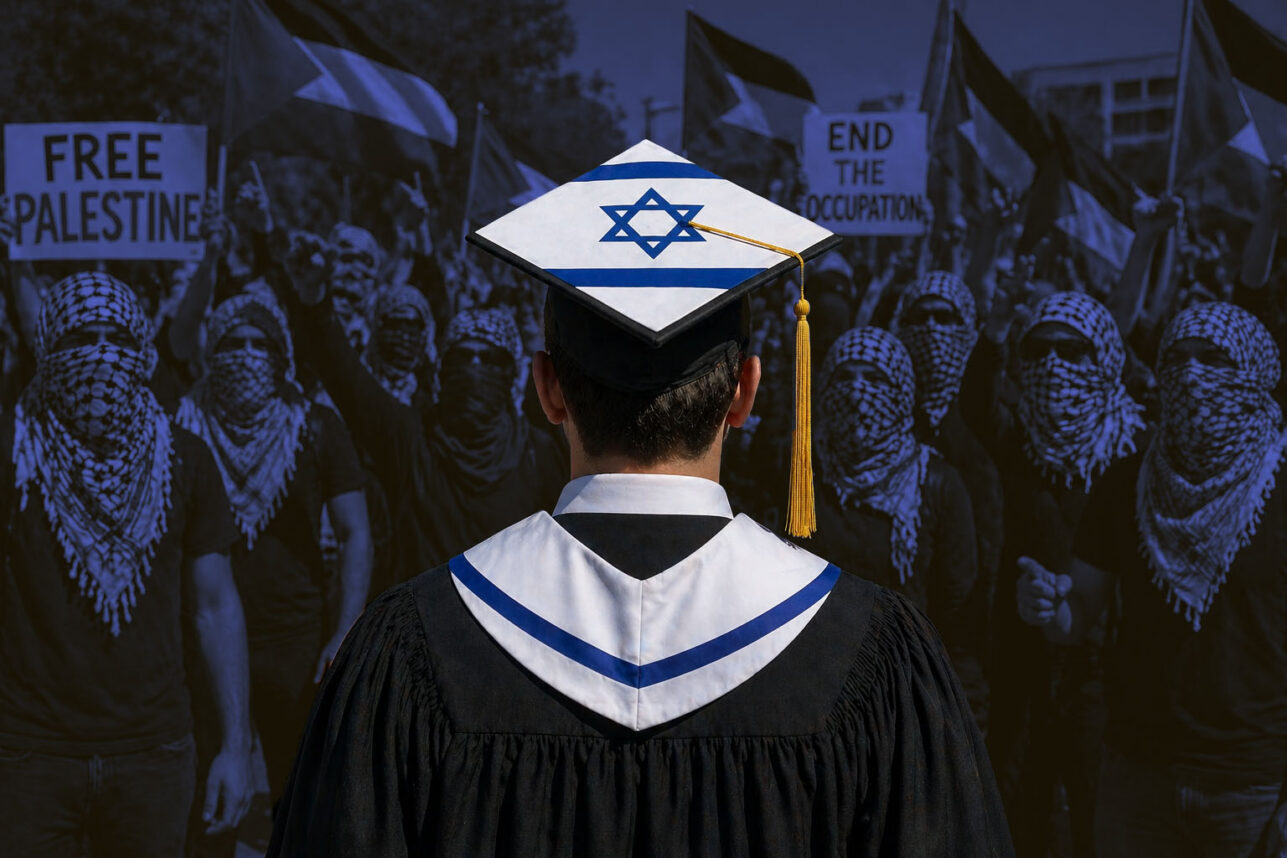
The second pattern is open antagonism: vilification, ad hominem attacks, quoting each other out of context, impugning motives, distorting each other’s posi-tions to reckless caricatures.
The third could be called “avoidance 2.0” and refers to the widespread tendency to con-gre-gat-e, conference- and talk exclu-sively to those with whom we agree. We splinter into self-affirming nuclei of our respec-tive orga-ni-za-tions, each of them morally supe-rior and self-certain, talk-ing past one another, and now and then col-lid-ing in frus-tra-tion and hos-til-ity. Rival camps rally and take pride in the num-bers of those who are with them, while dismissing those who aren’t as dan-ger-ous, igno-rant, mali-cious or loony.
These dynamics are hardly unique to us as Jews. Consider the toxicity of the abortion conversation. In such entrenched social conflict, informal interactions across lines of disagreement grow rare, intensifying the ease with which we can malign and demonize our ideological counterparts. Adversaries harden against each other’s genuine integrity and concerns, dismissing each other in categorical and one-dimensional terms. Voices of nuance and uncertainty get trampled. Hostility and silence become the only perceived options for engagement.
These patterns are enormously costly and debilitating. We’re unraveling relationships and institutions, corroding community, and generating cynicism, distrust and fear. We’re alienating potential allies and turning people off, particularly younger generations of Jews. We’re engendering fatigue and burnout among activists of all stripes as well as the broader public. We’re obstructing and distracting from genuine problem solving and drowning out creative thinking. Resources that should be used to negotiate intelligent ways forward are instead used to attack or simply fight for the chance to be heard.
A dominant strand of Jewish tradition directs us to a more productive way, one that would replace these counterproductive patterns with mahloket l’shem shamayim, “sacred disagreement,” that is no less passionate and yet is generative rather than destructive.
Rabbinic sources — trying to account for radically divergent interpretations of Torah — present revelation as multivocal and contradictory in its very DNA: “One voice divided into seven voices and these into 70 languages” (Exodus Rabba 28:6). “Just as a hammer [stroke] scatters many sparks, so a single scriptural passage yields many senses” (Babylonian Talmud, Sanhedrin 34a). “The scroll of the Torah is [written] without vowels, in order to enable man to interpret it however he wishes … as the consonants without the vowels bear several interpretations, and [may be] divided into several sparks” (Bahya ben Asher, “Commentary on the Torah,” Numbers 11:15).
Embrace of intellectual heterogeneity is written into our very blueprint for meaning and truth. This does not mean that every perspective is deemed equally convincing or valid. Rival exegetes in our tradition compete over the relative persuasiveness of their readings. But this theology does demand of us intellectual humility — embrace of our limitations and uncertainty, recognition that truth cannot be known through only one voice but rather only through rigorous search and deliberation.
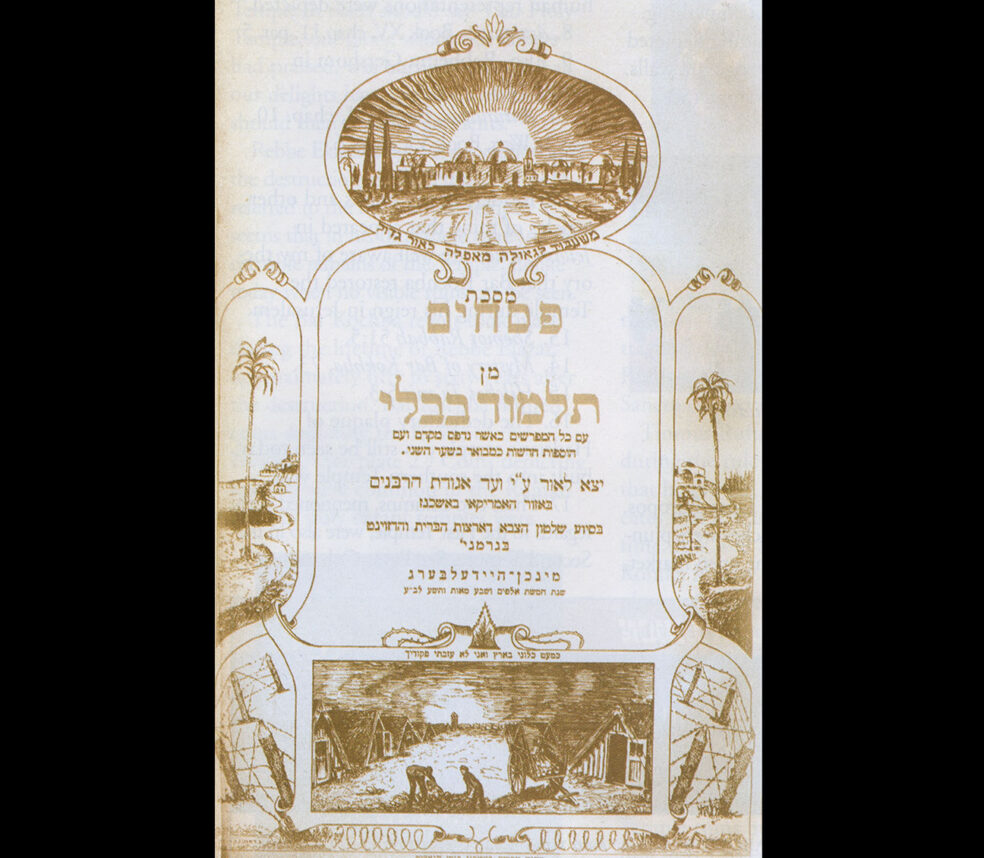
The Talmud lives out this theology in its idiosyncratic format. Each page presents a record of argument, often without resolution. The Talmud’s structure similarly implies that the best way forward will not be discerned through single-mindedness or conflict avoidance, but only through investigating our differences proactively. The rabbis don’t just tolerate disagreement, or agree to disagree. They lean into their differences rather than tiptoeing around them, quieting them, or seeking to overcome them in search of facile common ground. They recognize that legal decisions must be rendered as an operative necessity. But they treat their disagreements as signposts to something that matters and needs to be thought through deeply, as springboards to greater intelligence.
Of course, not all disagreements are created equal. The paradigm for mahloket l’shem shamayim is presented in the Mishnah and later commentary through the disputes between Hillel and Shammai, as contrasted with Korah’s rebellion (Mishnah Pirkei Avot 5:17). Numerous commentaries try to tease out what distinguishes Hillel and Shammai from Korah, and cluster around two principles: the dispute’s method and its purpose. Hillel and Shammai exemplify a constructive method of argument: sustaining connection even in the face of profound disagreement. Goes another interpretation, Hillel and Shammai differ from Korah in their objective, that is pursuit of truth rather than power or victory. Even if they lose, they win, for they don’t hold their views out of stubborn attachment to them or ambition for dominance, but in collaborative pursuit of knowledge and wisdom.
How can we restore such a spirit of “sacred disagreement” to our communal conversation about Israel?
In recent years, a few pioneering organizations, institutions and leaders have spawned efforts to model and teach generative engagement across our differences on Israel. Individual synagogues and campus Hillels have hosted rounds of study, dialogue and inquiry. Citywide initiatives in San Francisco and elsewhere — and national efforts, like Jewish Council for Public Affairs’ Campaign for Civility — have produced resources, models and lessons learned that must be built on across the country. I have been honored to be involved with several of these efforts, working alongside partners and colleagues to replace the false choice of hostility versus silence with curiosity and mutual learning in the face of our most passionately held differences.
If we are to create an infrastructure of community resilience through times of crisis, as well as strategies for prevention and reconciliation, what is now a trickle of such initiatives must become a torrent. We must make our commitment to “sacred disagreement” as widespread as we have made our commitment to social justice. We need wide-scale communal investment at national and local levels, training rabbis, funders, lay leaders, rising leaders and seasoned professionals in the art of heavenly dispute. We need programs at every level that actively build relationships and support meaningful communication across lines of distrust, aversion and dismissal.
A community’s destiny does not rise and fall based on how it handles its times of harmony and consensus, but on how it responds to its moments of greatest discord and disagreement. We are now in such a moment on Israel. How we meet this challenge will impact the Jewish people for generations to come.
Rabbi Melissa Weintraub is a member of the Shalom Hartman Institute of North America faculty, the founding director of Encounter, and an independent Israel engagement consultant, educator, facilitator and trainer.