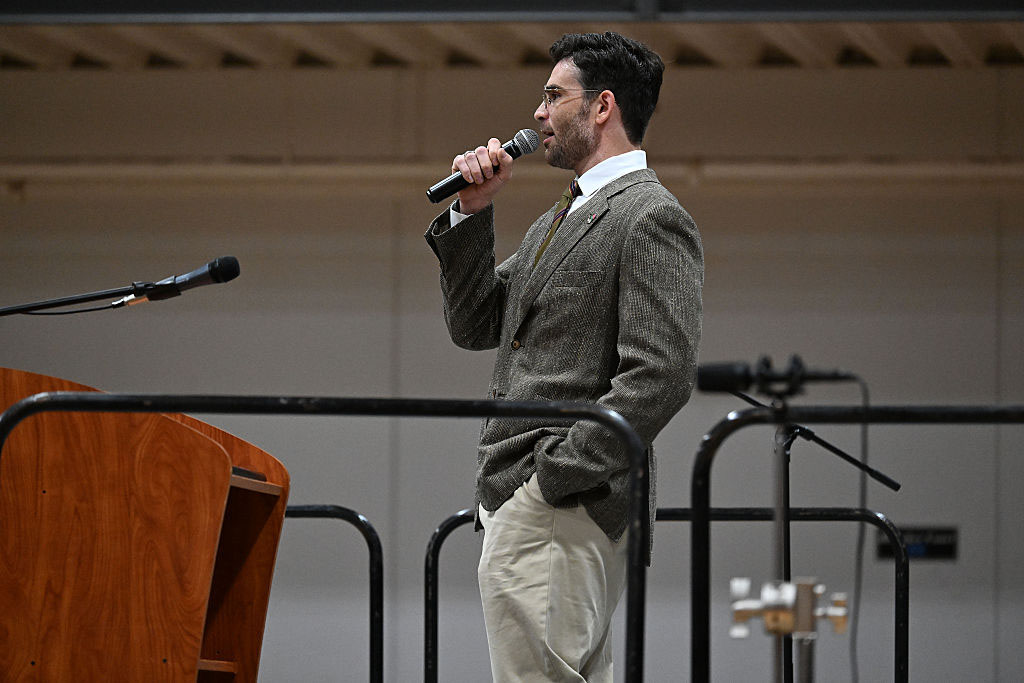
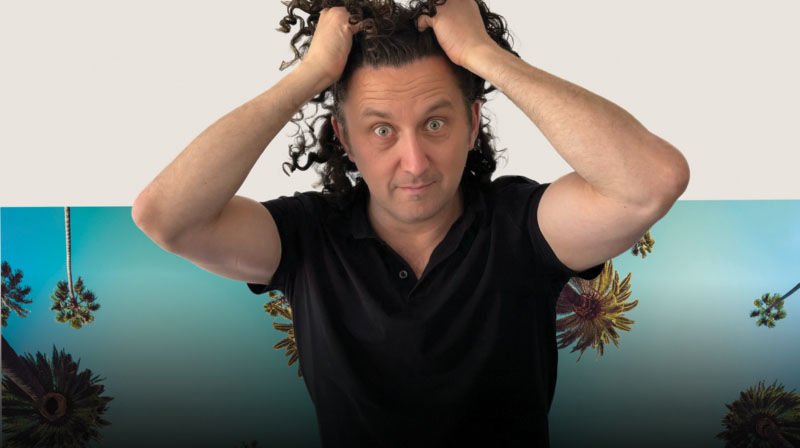
At the very beginning of his one-man show, “Marcus Is Alive,” which I saw last Thursday night at a cozy little theater in Hollywood, Marcus Freed grabs the audience’s attention by throwing out one of life’s ultimate questions:
What if?
Indeed, what if?
Who hasn’t asked that question? Who hasn’t wondered how their life might have turned out had this or that not happened?
In Freed’s case, how would his life have turned out had he not jaywalked on a Friday night in 2017 and found himself on the asphalt with life-threatening brain damage after being hit by a white Lexus?
The play delves into that question and many others.
What makes it interesting is Freed himself: he not only has nine lives, he’s a quirky character with a limitless number of talents and interests, from yoga and meditation to acting, singing, comedy and writing to Torah study and spirituality and, of course, to storytelling.
All of those come into play as he recounts a life dominated by a near-death experience that led to two brain surgeries, agonizing pain and an infusion of love from his family and community.
No matter how crazy his story gets— like the two screws that got loose in his brain after the surgery, or his desperate search for the hit and run driver—Freed finds a way to weave in his search for love. He pokes fun at himself as he recalls his failed marriage proposals, wondering when he will settle down with a soulmate like many of his friends.
But Freed is also an incorrigible philosopher who can’t leave any issue alone. So he muses later in the play that the outpouring of love he received after his accident was a reminder that there’s more to love than romance. Sometimes life sends you accidental love from a communal circle that goes just as deep.
His instinctive drive to stay alive comes with a sense of whimsy. With jazz music playing, he turns into an LA film noir detective when he goes on the hunt for a missing person; at other times, his journey takes him to psychics, rabbis, fortune tellers and other oddball characters. Freed seems at home with all of them. Depending on the scene, he’ll take on a number of accents, from Yiddish to Shakespearean to WASP American.
The play is a dance between the somber and the humorous. Those are tough things to balance, but Freed must pull it off for the play to work. Too serious would be a downer; too light-hearted would lack credibility.
Maybe that’s why at a moment of intense physical pain and frustration at mounting medical bills, Freed breaks down, getting on his knees with a cri de coeur that stuns the audience. As skilled as he is at finding humor in his story, he doesn’t ignore the darkness.
If a search for love drives Freed, there’s also a search to understand death. On that front, he offers questions more than answers, in particular this eternal one: How much of our fate is in our hands and how much is in the Almighty’s?
What’s clear is that whatever fate has in store for Freed, the man loves life. He especially loves it when a group of friends come to his rescue with a crowdfunding campaign that relieves him of his crushing financial burden.
His love of life comes with an existential question that floats throughout the play: Why is he still alive? Why did he dodge all those bullets?
He wants us all to ponder those questions: Why are any of us still alive? What is our purpose?
Freed wonders near the end what his life would have been like had the accident never happened.
He doesn’t know. He can’t know. The only thing he knows is that his near-death moment led him to a poignant story that he now gets to perform on stage, and that’s more than enough reason to stay alive.
For more information, visit https://www.marcusjfreed.com/marcus-is-alive