
One of the challenges of living in chaotic and uncertain times is that we’re constantly bombarded by bad news. And then, seemingly out of nowhere, some good news will sneak in. It could be an inspirational sermon, a feel-good story, a spiritual insight, anything designed to uplift us.
Human nature, however, prefers to settle in one place. It’s less confusing if we just pick a side. In a sense, the bad news and the good news compete for our minds and hearts. That’s why I often meet people who fall squarely on either side: those who see everything as a blessing, others who can’t stop railing about the darkness of our times.
Of course, they’re both right.
For me, the deepest value of the Passover holiday, which just ended, is that it doesn’t let us pick a side. We’re forced to confront the darkness of slavery, just as we’re forced to contemplate the immeasurable value of freedom. This dual confrontation — the ability to hold two very opposite thoughts at the same time — is the essence of a healthy mind.
We can confront the unspeakable darkness of the massacres in Ukraine, while not ignoring the incredible outpouring of humanitarian aid to rescue millions of refugees.
We can rail against the rise of terrorism in Israel, while not ignoring that the Abraham Accords have begun to transform the relationship between Jews and Arabs in the Middle East.
We can commiserate that technology is owning our lives, while remembering that we have the free will and agency to take back control.
We can express outrage at societal sins like racism, while not ignoring the significant progress that this country’s system of laws has enabled.
We can bemoan the numerous ills of Los Angeles, while also watching a sunset on Santa Monica beach and reminding ourselves that this is still one of the great cities of the world.
No matter what human nature dictates, life is not either/or. We confront darkness and turmoil, but we don’t ignore the light. We embrace the light, but we don’t ignore the turmoil.
In other words, no matter what human nature dictates, life is not either/or. We confront darkness and turmoil, but we don’t ignore the light. We embrace the light, but we don’t ignore the turmoil.
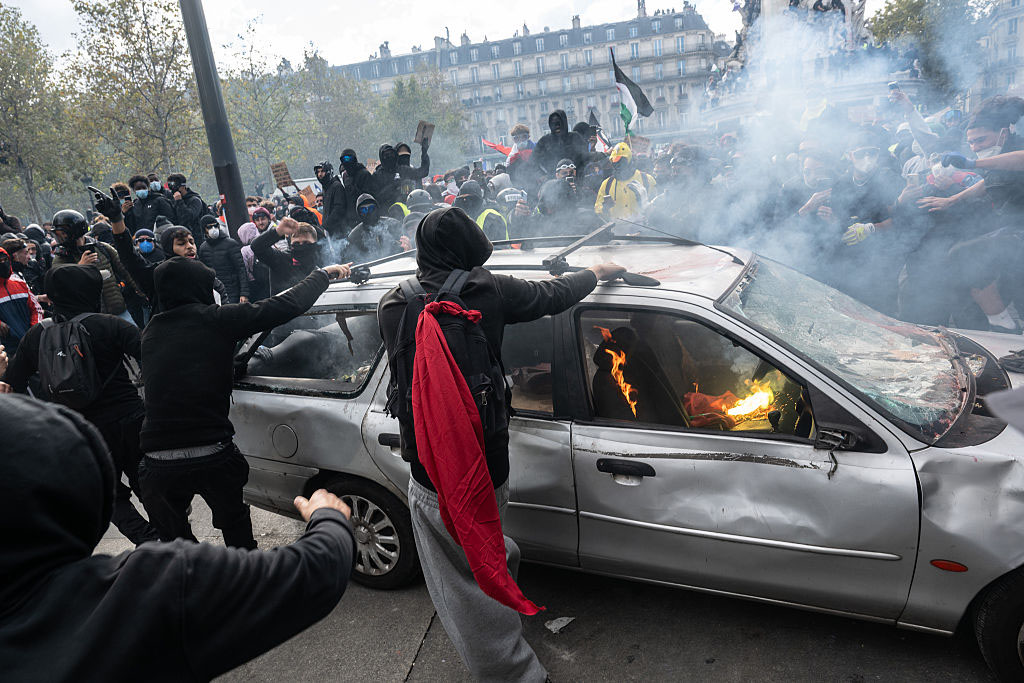
There was plenty of turmoil in Los Angeles thirty years ago after a jury acquitted four police officers charged with using excessive force against Rodney King, despite a graphic and incriminating video that was seen around the world. The civic uprising that ensued, which became known as the L.A. Riots, led to 63 deaths and more than 2,000 injured.
For our cover story this week commemorating the 30th anniversary of that defining chapter of our city’s history, our weekly columnist Tabby Refael spent the past few months reaching out to Angelenos from across the spectrum. She asked them to share their memories and lessons from those fateful days. Each response is worth a read, whether from a civic leader or an ordinary citizen.
She asked me if I had anything to share. I recalled breaking a curfew on a Friday night, while parts of the city were ablaze, to walk over to a friend’s house in Venice Beach for Shabbat dinner. As you’ll read, it was a foolish decision that could have cost me my life.
An especially poignant recollection is from Jonathan Jackson, son of Rev. Jesse Jackson, who told the Journal, “During the LA Riots, I witnessed the best and the worst of humanity.”
An especially poignant recollection is from Jonathan Jackson, son of Rev. Jesse Jackson, who told the Journal, “During the LA Riots, I witnessed the best and the worst of humanity.”
As Tabby writes, “For Jackson, one of those most uplifting moments of the upheaval was encapsulated in Dr. Madison Richardson, the lone Black surgeon on Reginald Denny’s surgical team, who helped save Denny’s life after he was severely beaten by four Black assailants. Denny’s life-saving surgical team included three other doctors — two were white; one was Korean.”
Tabby also reached out to photojournalist Yael Swerdlow, who was freelancing for The Los Angeles Times and who captured one of the iconic photos of the uprising — a raw photograph of an angry six-year-old Reggie Gardner in the backseat of his uncle’s car on Crenshaw Boulevard. Swerdlow shares the story, and the photograph.
As you’ll see, the story is not just of a city burning, but of a city “rising from the ashes.” Just as Passover compels us to look at both sides of the human condition — the darkness and the light, the lowest and the highest — the story of the LA Riots reminds us how low we can go, and how high we must aim.