fbpx

April 28, 2022

Russian Doll Season Two Is a Jewish Acid Trip

The first season of the Netflix hit “Russian Doll” was sublime. The story follows Nadia Volvukov, played by the electric Natasha Lyonne, who finds herself in a “Groundhog Day”-esque nightmare where each day ends with a gruesome death, only to repeat the same day all over again. Nadia’s grandparents were Holocaust survivors and her mother was a paranoid schizophrenic. In season one, we suspect her mother’s mental health struggles are connected to a form of inherited trauma. In order to stop dying and reliving the same day, Nadia must not only investigate her present, but also her past, and how her life is connected to those who came before her. Season two delves even deeper into these themes. Nadia is transported back in time to 1982, 1968, and, finally, to 1944, where she learns how her family’s story impacts her own choices today. “If Season One was about asking, ‘How do I stop dying?’” explained Lyonne on “The Tonight Show,” “Season Two asks, ‘How do I start living?’”

From the beginning, “Russian Doll” has been very Jewish. Nadia’s birthday party in episode one is set in a former yeshiva; one of the first lines of the show is “it’s laced with cocaine like the Israelis do it”; and quite a bit of time is spent in a rabbi’s office trying to make sense of the drama of repeatedly dying. The second season keeps Judaism front and center. Seeing yeshiva boys run out of Nadia’s apartment circa 1982 and watching Nadia dance with her ten-year-old mother to klezmer records are lovely flourishes, but the darker moments are what truly reveal Lyonne’s own upbringing as an Orthodox Jew, and as an individual clearly connected to the history of her people. In 1944 Budapest, Nadia finds herself in a warehouse where the  confiscated valuables of Hungarian Jews are being stored under Nazi supervision. The seemingly civilized citizens of Budapest walk through the aisles as though it were a department store, plucking items to their liking off shelves—furniture, jewelry, clothing—all without a hint of regret. An air of Jewish death and destruction hangs over this season for its entire run.

An air of Jewish death and destruction hangs over this season for its entire run.

Nadia is on a mission in the past. In season one, she explains that her grandparents lost everything in the war, and after reaching America, they elected to transfer their money into gold out of paranoia that banks and cash were untrustworthy. “But my mom,” continues Nadia, “because she’s a piece of work, she spent it all.” In the past, Nadia attempts to prevent her mother from recklessly losing her inheritance, but soon realizes it’s not that simple, as the wealth was already lost when European Jewish communities were looted and liquidated decades earlier. There is trauma attached to the wealth, just as there is trauma attached to the family who has continually lost it. Navigating Nadia’s own family history, Lyonne takes audiences through a psychedelic and philosophical whirlwind that viewers will certainly have to watch more than once to catch all the twists and turns. The concluding message of the season is that try as we might, we cannot change the past and, hard as we wish, we cannot alter its effect on who we are today.

The greatest strength of “Russian Doll” is the character of Nadia herself: a fiery red-headed chain-smoker who swaggers through the streets of New York muttering aphorisms under her breath in a raspy, Joe Pesci-like dialect. Lyonne has no doubt created an iconic Jewish archetype. Nadia is a gritty, cool, beatnik Jew—Nadia the cosmopolitan, the humorist, the punk. Her Judaism is one that doesn’t get quite the modern-day representation it deserves in the media but one that is surprisingly recognizable to viewers. It’s a Judaism of a different time and of a different New York, the tough Jew that has been replaced by the brainy or awkward Jew. It’s a Judaism that combines the sex appeal of Lou Reed, the comedy of Joan Rivers, and the intellect of I.L. Peretz. “Russian Doll” amalgamates all of this, which is why it is a more Jewish program than viewers may realize from focusing only on the plot, which, as a fan of the show, I will say one would be forgiven.

The current season relies on that fast-moving plot rather than on characters and relationships, which makes it less rich, and ultimately less impressive than its predecessor. Not to mention, it loses the cyclical pattern of storytelling after each of Nadia’s deaths, which contributed to the first season’s genius. I was originally skeptical of a sequel to the first season, having thought it ended with a perfect conclusion, but I was pleased to find that the dialogue in the latest rendition remains wickedly smart and packed with delightful pop-culture references. The writing is still an opportunity to look into Natasha Lyonne’s head, which is always a treat, and  makes a second season ultimately worth it. The season is overwhelming at some points in its experimentation with non-linear narratives. It’s downright trippy in others. It won’t be everyone’s cup of tea, but perhaps this was the goal.

The current season relies on that fast-moving plot rather than on characters and relationships, which makes it less rich, and ultimately less impressive than its predecessor.

“I guess I’ve learned to be increasingly less apologetic about being an intellectual,” said Lyonne during a recent interview with InStyle, in a half-joking manner. “I don’t really care anymore. I don’t care if it makes you uncomfortable. I know who I am.” This is the grain of salt I took in watching season two. Whether I was seeing a zany DMT-hallucination or a casual conversation with a “righteous among the nations” priest in Nazi-occupied Hungary, I knew I was seeing something both authentic and smart — and from one of the most authentic and smartest Jewish minds producing media today.


Blake Flayton is New Media Director and columnist at the Jewish Journal.

Russian Doll Season Two Is a Jewish Acid Trip Read More »

Peace Not Slaughter – A poem for Parsha Acharei Mot

…and slaughter them as peace offerings to the Lord.

-Leviticus 17:5

This isn’t the first time I’ve noticed
slaughter and peace commingling together
in a single sentence in the Torah.

Animals are slaughtered as a peace offering.
Some people don’t regard animals
in the same way I do, so to kill one

to offer as a peace offering to the Eternal
may seem like no big thing, but I woke up
with a cat next to me this morning

and I have a desperate need to
separate those concepts.
Peace should not involve slaughter.

In Ukraine slaughter is happening
and people around the world are
crying for peace.

This is where these two words
belong together, one as an antithesis
of the other.

If I had to choose a winner, I’d suspect
the hearts of the world would pick peace.
Though sometimes guns are bigger than hearts.

War is brutish like Goliath. Peace is David
writing poems under a waterfall outside
his city of peace, a place where

no-one has figured out how to live up to
the legacy of the name of where they live.
I hear some peace-starved individuals

have to leave their pets at the border
as they run from the slaughter.
Imagine having to leave even one

family member behind. This is the
curse of slaughter. My God asks
only for peace. Never slaughter.


God Wrestler: a poem for every Torah Portion by Rick LupertLos Angeles poet Rick Lupert created the Poetry Super Highway (an online publication and resource for poets), and hosted the Cobalt Cafe weekly poetry reading for almost 21 years. He’s authored 25 collections of poetry, including “God Wrestler: A Poem for Every Torah Portion“, “I’m a Jew, Are You” (Jewish themed poems) and “Feeding Holy Cats” (Poetry written while a staff member on the first Birthright Israel trip), and most recently “The Tokyo-Van Nuys Express” (Poems written in Japan – Ain’t Got No Press, August 2020) and edited the anthologies “Ekphrastia Gone Wild”, “A Poet’s Haggadah”, and “The Night Goes on All Night.” He writes the daily web comic “Cat and Banana” with fellow Los Angeles poet Brendan Constantine. He’s widely published and reads his poetry wherever they let him.

Peace Not Slaughter – A poem for Parsha Acharei Mot Read More »

A Bisl Torah – Elevate

It has become “tradition” to light yellow candles on Yom Hashoah, honoring the memories of those that perished in the Holocaust. What is the purpose in lighting these candles year after year?

The Midrash asks a similar question regarding the lighting of the Menorah. If God is the creator of light, does God really need more light? How can human beings possibly offer a light that is comparable to the light provided by our Creator? The rabbinic text admonishingly suggests that we are missing the point. The light of the Menorah isn’t for God. Rather, God wants the Menorah to be lit in order to elevate our souls.

Monise Neumann, Holocaust Educator and National Consultant for International March of the Living teaches that it is impossible to grapple with the number 6 million Jews. Who can possibly fathom the sheer magnitude of 6 million murderous deaths? Instead, she asks us to focus on one name. One story. One life. This week, as we light the yellow candles, we are elevated through our accountability. Reminding ourselves of our obligation to remember this soul and ensure that their memory continues to be a blessing.

Choose one person. Like the Menorah, you will be elevated as you learn their story and carry on their name.

Shabbat Shalom


Rabbi Nicole Guzik is a rabbi at Sinai Temple. She can be reached at her Facebook page at Rabbi Nicole Guzik or on Instagram @rabbiguzik. For more writings, visit Rabbi Guzik’s blog section from Sinai Temple’s website.

A Bisl Torah – Elevate Read More »

A Moment in Time: Yom HaShoah/ Holocaust Memorial Day: We are the Remnant

Dear all,

Today, the 27th of the Hebrew month of Nisan (in 2022, the 28th of April), we commemorate Yom HaShoah, Holocaust Memorial Day.

When Hitler came to power in 1933, there were approximately 9.5 million Jews in Europe. By 1945, two out of every three Jews, roughly 6 Million, were murdered.

Two out of every three. Not just gone…. Murdered.

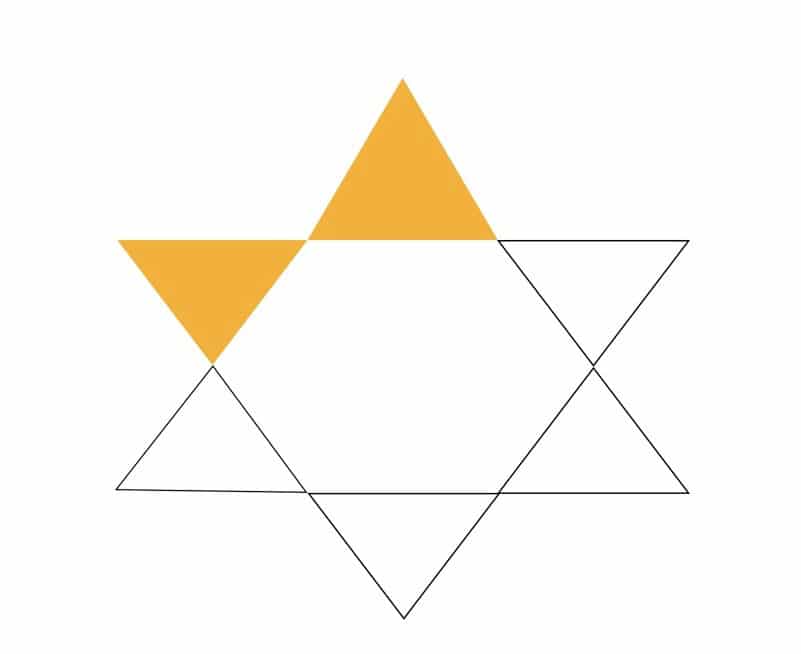
This star above symbolizes the remnant. Only two of every six lights survived.

No, it is not possible to comprehend. And it leaves a huge onus, a scared responsibility on us.

How do we best honor those who perished?

Each time we light our Shabbat candles, we erase darkness.
Each time we sing a Hebrew melody, we defy our oppressors.
Each time we attend Torah study, we remind Hitler that he lost.
Each time we stand up for human dignity, we destroy ignorance.
Each time we plant a tree in Israel, we sow seeds of the future.

Each time we teach our children to harness light, we embrace hope.

And each moment in time we stop to remember the victims, we vow “Never again.”

With love, prayers, and Shalom,

Rabbi Zach Shapiro

A Moment in Time: Yom HaShoah/ Holocaust Memorial Day: We are the Remnant Read More »

Comedians Reflect on Their Big Life Decisions in Beth Lapides’ New Audiobook

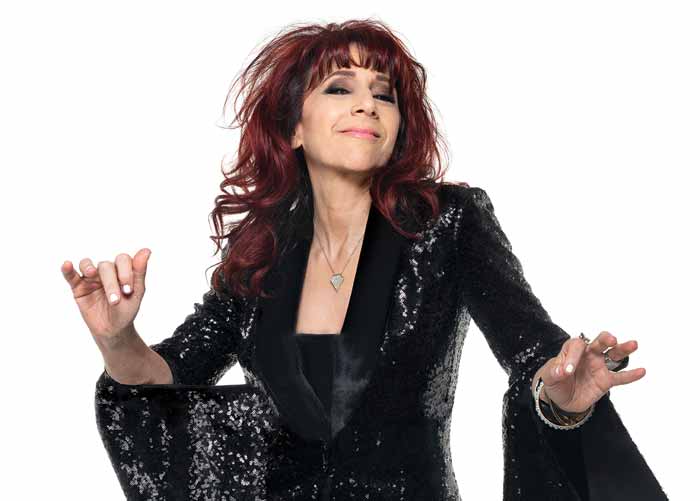
Beth Lapides has been a staple in the Los Angeles community scene for over two decades. In the early ‘90s, the writer, comedian and producer started “UnCabaret,” a show she created out of frustration with the limits of performing in comedy clubs around town. Since then, the show has featured legendary comedians such as Bob Odenkirk, Judy Gold, Patton Oswalt and Margaret Cho. 

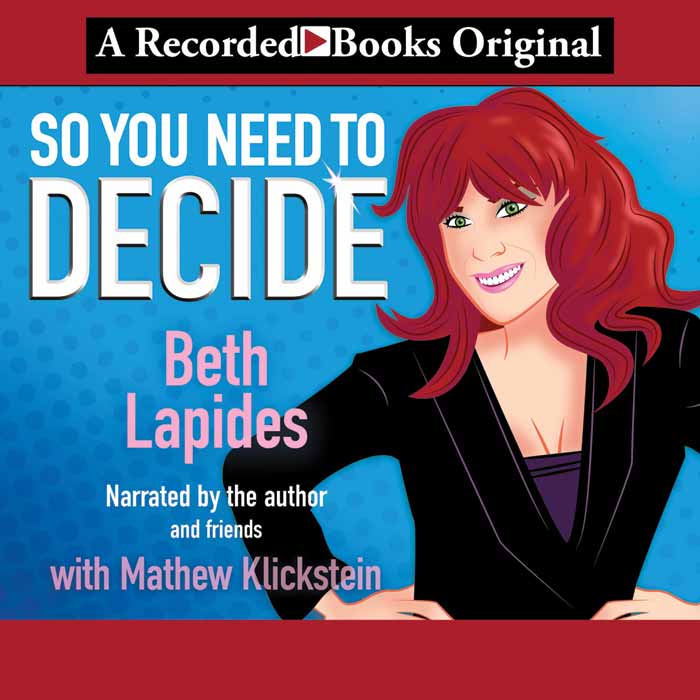
Now, Lapides has come out with a new audiobook called, “So You Need to Decide,” which consists of intimate conversations with comedians, writers and cultural icons about big decisions they’ve made in their lives. 

“I knew I had a lot of life-story to share around decisions, and because of all the years of ‘UnCabaret,’ I knew lots of people had juicy stories around decisions,” she said. “I knew I wanted to interlace my own stories with a quilt of conversations.”

The book includes stories about decisions made around family, work, love, spirituality and moving. Odenkirk details his decision to quit “Saturday Night Live,” where he was a writer in the late ‘80s and early ‘90s, Judy Gold discusses finding a way to have a baby in a two-mom family and Dana Gould shares how he came to terms with a breakup decision via a billboard. 

“I was looking for great storytellers,” said Lapides. “To me, that means people who have a story and are funny and smart about it. So, folks who I knew had made interesting decisions, difficult decisions, had given thought to a decision-making strategy, and would be open to sharing.”

Lapides describes her personality as “completely and wholly Jewish … overthinking, analytical, questioning, morally driven [and] neurotic.”

Lapides, who considers herself a New Age Jew and describes her personality as “completely and wholly Jewish … overthinking, analytical, questioning, morally driven [and] neurotic,” interviewed fellow Jewish performers for the audiobook. It includes Alex Edelman, who referenced the Talmud when talking about his breakup, and Josh Gondelman and Judy Gold, who highlighted the Jewish idea of questioning. 

Growing up in New Haven, Conn. in a Conservative Jewish household, Lapides attended synagogue and went to Jewish sleepaway camp. Though she didn’t have a bat mitzvah when she came of age, she went to plenty of them in her community, and they inspired her to ask questions.

“Those services helped me sit and think about what does it mean to be a man?” she said. “What does it mean to be a woman? [Or] to be an adult, [which was] something I wanted so badly, and yet was mystified by. Maybe it was in these Saturday mornings at shul that I learned to value questioning.”

From there, Lapides questioned her Jewish identity, which helped her reach her own conclusions about who she wanted to become. 

“It wasn’t easy to reconcile the Conservative Judaism of my childhood – which was heavily focused on ‘Never forget’ – with my new age yogi ‘Be here now’ belief system,” she said. “Back and forth they would go. Be here now, never forget. Be here now, never forget. While it’s true that two opposite and conflicting things can both be true, I felt so unresolved about it. One day I finally reversed it and thought oh, ‘Never forget to be here now.’”

Once Lapides entered show business, she then questioned how things were being run on traditional stages, and decided to break out and produce something unique with “UnCabaret,” where performers could fully be themselves. Though she had to take a break from live shows during the peak of the pandemic and go strictly on Zoom, the show is back in person and online once a month.

The goal of the audiobook is to entertain and help listeners decide how they want to shape their lives as well.   

In “So You Need to Decide,” Lapides is again questioning, but this time, she’s putting the spotlight on the performers and inquiring about their fascinating lives. The goal of the audiobook is to entertain and help listeners decide how they want to shape their lives as well.   

“I hope listeners begin to see, understand, even feel the liberation that comes from decision-making,” she said. “I’ve heard that the book is helping people and I’m so glad. That might be because of the quilt of voices. Decision-making is essentially the art of creating your life.”

“So You Need to Decide” is available for purchase on Audible or Amazon.

Comedians Reflect on Their Big Life Decisions in Beth Lapides’ New Audiobook Read More »

Table for Five: Achrei Mot

One verse, five voices. Edited by Salvador Litvak, the Accidental Talmudist

And Aaron shall place lots upon the two he goats: one lot “For the Lord,” and the other lot, “For Azazel.”

–Lev. 16:8


Rabbi Ilana Grinblat
VP of Community Engagement, Board of Rabbis of Southern California, The Jewish Federation of Greater Los Angeles

Spiritual leader and author Eckhart Tolle noted that “after two ducks get into a fight, which never lasts long, they separate and float off in opposite directions. Then each duck will flap its wings vigorously a few times thus releasing the surplus energy that built up during the fight.” Afterwards, the ducks “float on peacefully as if nothing had ever happened.” 

By contrast, people tend to rehash arguments in their minds for hours, days or even years after the conflict—unable to regain their equanimity. “We are a species that has lost our way,” Tolle explained. 

The strange ritual where the high priest placed the sins of the people symbolically on a goat and sent it into the wilderness seemed to serve the same purpose as a duck flapping its wings. It offered people a way to release their past grievances and mistakes and return to the present moment renewed. 

How can we translate this ritual into a contemporary medium? During Neilah on the beach at Open Temple, congregants attached pieces of paper with their sins written on them to balloons which were released into the sky to float away on the wind. 

This release is needed more frequently than once a year. How do we release each day’s troubles to regain our peace? Do you create art, dance, meditate, or take a walk? How do you flap your wings? 

As it turns out, we have a lot to learn from the goats and the ducks. 


Rabbi Michael Barclay
Spiritual Leader, Temple Ner Simcha, Westlake Village

The moment of death is as powerful as the moment of birth, and this verse reminds us of this power as it prepares us for Yom Kippur. 

Although Maimonides states that a sin cannot actually be transferred to the Azazel scapegoat, this ritual awakens the deepest part of our souls and makes us hyper-aware of each moment of life through the awe of conscious death. This truth has been viscerally experienced by any person who has been to a kapparot ritual (sacrificing a chicken before Yom Kippur), which developed from the Azazel scapegoat after the destruction of the Temple. While Maimonides may be right that the sin is not actually transferred; the awareness of our personal actions, sins, responsibilities, and blessings is exponentially increased through being present at an animal sacrifice: at a conscious transition of life to death. 

In our modern lives we are distanced from this powerful moment as our food just shows up on our table, the leather is already tanned and made into our belts and shoes. But being present at the moment of death is something that awakens the deepest part of our souls and inspires us to live consciously and with respect for every millisecond of life. 

Although rejected by animal-rights activists, this ritual of Azazel and its descendant, the kapparot ceremony, have power and value both individually and for the world. Someone once said that “Sacrifice is where violence and the sacred intersect”. It is terrible and magnificent at the same time, but truly leads us to personal awareness and real acts of teshuvah.


Benjamin Elterman
Screenwriter, Essayist, Speech Writer at Mitzvahspeeches.com

The word Azazel was translated into English by William Tyndale in 1530. He took the literal translation of Azazel, “the goat [ez] that was sent away [azal]” and came up with the word “escapegoat” which overtime would become scapegoat. Ironically, this word has the opposite meaning of its source. Where scapegoat refers to someone that takes the blame for something they are not guilty of, the goat sent to Azazel is our recognition that a part of ourselves must be faced, dealt with, and cast out. 

The two goats must be identical. One goat is sacrificed in the holiest place in the world and the other is thrown off a cliff. There are popular stories such as the Prince and the Pauper and The Man in the Iron Mask, that tell of how twins separated at birth lead vastly different lives if not for circumstances. And one might think the same idea with this mitzvah, as the thing that decides which goat goes where is a lottery. Chance. 

But the Torah is implying something different. While a goat is at the mercy of circumstance and chance, a human being has free will. We have the choice to cave to our evil inclination or to overcome it. By seeing the separate directions in which these two identical animals go, it makes clear for us how low we can fall or how high we can soar. 


Nili Isenberg
Judaics Faculty, Pressman Academy

The Talmud (Yoma 67b) states that the ceremony of the goats is an example of a commandment for which the reason is unknown. Certainly this passage is full of mystery. At face value, if one offering is “For the Lord,” for whom is the other offering? One Midrash (Pirkei D’Rabbi Eliezer) goes so far as to suggest that the second offering is a bribe to Satan! 

More recently, the second goat in our verse has become associated with the term “scapegoat,” which is laden with even heavier meaning in this week of Yom HaShoah. How can we mention the word scapegoat without thinking of the six million who perished in the Holocaust? Rabbi Soloveitchik (1903-1993) commented on the lottery process by which two identical goats were selected for their respective fates: “Casting of lots… epitomizes the instability, uncertainty, and vulnerability which characterizes human life generally, and particularly the destiny of the Jews.” 

Regarding the scapegoat, Maimonides (1138-1204) reflected that “there is no doubt that sins cannot be taken off the shoulder of one being to be laid on that of another, but these ceremonies serve as an allegory, to bring fear into the soul.” If so, what fear do we obtain from seeing the suffering of one little goat? And what fear do we obtain from the suffering of six million? And what fear do we obtain from all the suffering and death around the world today? Let this fear speak to us and bring us to action.


Nicholas Losorelli
Second Year Rabbinical Student, The Ziegler School of Rabbinic Studies

With Pesach just behind us, having purged and purified our homes of chametz and reenacted the exodus from Egypt at our Seders, Torah portion Aharei Mot is now flinging us forward into thinking about Yom Kippur (can you hear it now, Rabbis already saying, “The High Holidays are coming!!!”). This week we transition from the private home-based rituals of Pesach, into considering the more public act of teshuvah, atonement. 

During Temple times there was one peculiar feature of Yom Kippur: two goats, one marked for God and one “marked for Azazel”. Azazel? What or who the heck is Azazel? Rashi says Azazel is a craggy distant desert cliff, and others say Azazel is some kind of goat-demon. Whatever Azazel is, we know that this goat somehow physically carries off Israel’s sins to some public Azazel-space, and in this way, sin is like a tangible force of nature. It’s hard for the modern mind to grasp sin being like an earthquake or gravity, because we often think of sin as ethical and intangible. However, aren’t our actions tangibly felt in both body and mind, with far reaching aftershocks, the consequences of which need to eventually come down to earth? 

Our Torah teaches us that there’s value to making the invisible visible by physicalizing teshuvah, because sometimes something doesn’t feel real until we put it into words, and often isn’t resolved until we put it into action. So, it’s never too early to think about teshuvah, because after all, the High Holidays are always coming.

Table for Five: Achrei Mot Read More »

To Honor the 6 Million, Let’s Do 6 Million Mitzvot

The act of remembering is a mental act. It’s more of a thought than an act. Remembering friends and family members whom we’ve lost works on our minds. We think back to our moments with them, to their words of wisdom, to what they stood for.

Remembering the 6 million Jews who were murdered in the Holocaust also works on our minds. We’re constantly reminded to confront the horrors, to think about the stories, to see the films, to “never forget.”

But then, what do we do?

For the past several decades, we have invested in memory. The industry of Holocaust remembrance is huge, and for good reason. The mere thought of people forgetting this singular atrocity is inconceivable. That’s why we have countless memorials, museums and community events devoted primarily to remembering this lowest point in Jewish history.

I’d like to suggest we add one element to this Jewish imperative to remember: to do a mitzvah, or good deed.

Specifically, every year at Yom HaShoah, we could encourage six million Jews to do one mitzvah they would not otherwise do, in honor of one Holocaust victim.

If you don’t light Shabbat candles, light them one Friday night. If you don’t go out to feed the needy, find a place to do that. If you don’t study Torah, take one class. If you don’t do Friday night dinner, do it once. If you don’t have a mezuzah in your home, put one on. If you haven’t visited an elderly person in a while, pay them a visit. And so on.

There’s no need to wait until next Yom HaShoah to make this a movement. Each one of us can start right now.

We grieve the 6 million Jews, and then we do something Jewish in their honor. What better way to ensure we’ll never forget?

To Honor the 6 Million, Let’s Do 6 Million Mitzvot Read More »

Palestinian Flag, Anti-Israel Posters Hung in LA High School Classroom

A teacher at Alexander Hamilton Senior High School in the Castle Heights area of Los Angeles was found to have a Palestinian flag as well as various posters spreading anti-Israel messages in his classrooms.

The Parents Defending Education (PDE) advocacy group first released photos of the flags and posters in September 2021, obtaining them from a parent of a student in the class. The photos showed a Palestinian flag next to a Black Lives Matter flag and Pride flag adorning the walls of the classroom. Other photos showed posters in the classroom stating “In 2020, Make Israel Palestine Again,” “F— America,” and “F— the Police.” PDE’s discovery resulted in news coverage in The Daily Caller and Fox News; Los Angeles Unified School District (LAUSD) told both outlets that “specific posters will be taken down.”

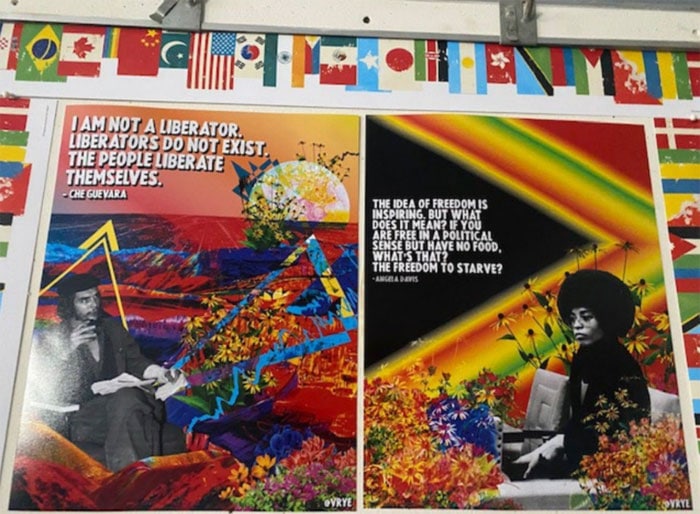
On April 27, PDE uncovered more photos of posters in the classroom from emails obtained via a Freedom of Information Act (FOIA) request. One poster stated that “we honor mothers who have lost children to police violence” as well as “Palestinian mothers with children in Israeli jails.” Other posters depicted the late Cuban dictator Fidel Castro, his right-hand man Che Guevara and Angela Davis in a positive light. The Castro poster states: “Condemn me. It does not matter. History will resolve me.”

Additionally, the emails that PDE obtained showed a school official, whose name is redacted in the document posted to the PDE website, telling the teacher––whose name is also redacted in the document––that some of the posters ran afoul of the district’s guidelines and needed to be taken down. Another email from someone in the district’s Human Relations, Diversity and Equity department said that the teacher had required students to “reflect” on the posters and flags and they “shifted their positions depending on their personal experiences.” The students also “adamantly defended their teacher’s freedom of speech. The third email posted on the PDE’s site states that the teacher was going to likely be suspended 1-3 days. The flags as well as the posters of Castro, Guevara and Davis are allowed to remain on the classroom’s walls, per PDE.

A LAUSD spokesperson told the Journal, “All employee matters are confidential. For privacy reasons, and so as not to interfere with any on-going investigation, we are not at liberty to discuss any details of this matter or disclose additional information at this time. The posters have since been brought down.”

“It’s no surprise the teacher who thought it was appropriate to decorate his classroom with insane anti-American and anti-Semitic posters was an ethnic studies major,” Nicole Neily, President of the PDE, said in a statement to the Journal. “Ethnic studies is rotten to the core and has no place in our classrooms or curricula. California public schools should get rid of ethnic studies requirements and universities should stop pretending that anti-Semitic political extremism is a legitimate field of study.”

Jewish groups also weighed in.

“It is critical that teachers create healthy learning environments for students of diverse backgrounds,” American Jewish Committee Los Angeles Assistant Director Brian J. Hertz said in a statement to the Journal. “This incident mirrors the conversation around California’s Model Ethnic Studies Curriculum, in which Jewish narratives had been ignored in the name of a warped understanding of social justice. We’re grateful to LAUSD for taking disciplinary steps and removing the anti-Israel posters.”

StandWithUs CEO and Co-Founder Roz Rothstein similarly said in a statement to the Journal, “These deceptive posters erase over 3,000 years of Jewish history and connection to their ancestral home by framing Jews as colonizers. There is also a call for dismantling Israel and stripping away Jewish rights to self-determination. This type of hate and distortion of history have no place in the classroom.”

Anti-Defamation League Los Angeles Regional Director Jeffrey I. Abrams also said in a statement to the Journal, “Hamilton High School is located in the historically Jewish neighborhood of Pico-Robertson, with numerous Jewish students and faculty. Creating a safe and secure learning environment is critical for all students, Jewish and non-Jewish alike, including in the classroom itself. We are hopeful that Hamilton High School will remain a model for a campus which both respects diversity, and respects its Jewish students and faculty.”

Palestinian Flag, Anti-Israel Posters Hung in LA High School Classroom Read More »

Print Issue: 30 Years After | Apr. 29, 2022

CLICK HERE FOR FULLSCREEN VERSION

Print Issue: 30 Years After | Apr. 29, 2022 Read More »

What to Expect at the 35th Annual Israel Film Fest

There’s a film industry half a world away that’s yearning to be seen, and it will be returning to Los Angeles next weekend: the 35th edition of the Israel Film Fest will hit area theaters throughout the month of May, marking its return to in-person screenings for the first time since 2019.

“People during COVID got used to watching everything on TV,” festival Founder and Executive Director Meir Fenigstein told the Journal. “And now to bring them back to the theater, it becomes an extra effort. What do you do to bring them back to the theater?”

Fenigstein may have asked that question rhetorically, but in the 40 years he has been running the Israel Film Festival (first five in New York, now 35 in Los Angeles), he knew exactly what to do: curate a variety of powerful films. 

Fenigstein says there will be stories of love, war, comedy, tragedy — in other words, something for everyone in the festival’s 30 films. The lineup of Israeli films may even come as a welcome respite from the names and franchises that get incessantly marketed to Angelenos at every turn. 

During the first weekend of the festival (May 5-8), ticket-buyers will also get to meet filmmakers and actors, many participating in question and answers sessions.

Opening night will coincide with Yom Ha’atzmaut on the evening of Thursday, May 5 with a screening of the war epic “Image of Victory.” 

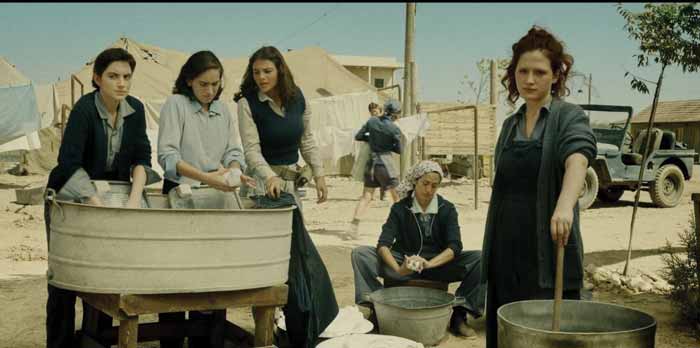
Opening night will coincide with Yom Ha’atzmaut on the evening of Thursday, May 5 with a screening of the war epic “Image of Victory.” Directed by Avi Nesher, the film is about an Egyptian filmmaker tasked with documenting a raid on a kibbutz. “Image of Victory” comes to the festival as one of its most acclaimed films, having already won several Ophir Awards (the Israeli Academy Awards) over the past year. It is also the most expensive feature film in Israel’s history, with a budget of over 50 million NIS (over $15 million).

The festival brings a variety of films, several of which will be making their U.S. debut. Many filmmakers, actors and actresses will also be making their maiden voyage to Hollywood.

The festival brings a variety of films, several of which will be making their U.S. debut. Many filmmakers, actors and actresses will also be making their maiden voyage to Hollywood.

Actress Agam Schuster is one such actress who will be visiting LA for the first time. To Schuster, the Israel Film Festival will be extra special for being an opportunity to bring an Israeli ethos to the epicenter of filmmaking.

“I think that Israel films are very unique, [and] they are not trying to hide,” Schuster said. “They’re not trying to make a very nice atmosphere. What you see is what you get. The Israeli industry makes so much noise in the entertainment world because of its many issues. [It’s] the stuff that touches a nerve.”

“Two”

Schuster co-stars in the film “Two,” about a lesbian couple whose relationship is put to the test as they attempt to start a family through in vitro fertilization. When it was released in 2021, Schuster and the crew participated in 20 virtual film festivals — until a recent screening in front of a live crowd in Tel Aviv. 

“It was so amazing to feel the energy and the reactions of the audience,” Schuster said. “It was huge.” 

Many of the filmmakers have been enduring the monotony of virtual film fests due to the COVID-19 pandemic. They will be unleashing energy that has been building inside their creative souls — and it just might be a joyfully contagious spirit for audiences to be around at the festival. 

Fenigstein specifically encourages young filmmakers to come to the festival to be inspired to create the next generation of film. He cited Academy Award-winning director Guy Nattiv as one of the many Israeli filmmakers whose participation in the festival as a student helped propel their career. In 2002, Nattiv, a film student, won his first award at the Israel Film Festival for his short film, “The Flood.” 

“I came to LA as a young Israeli filmmaker, and I was blown away because [Fenigstein and the festival] gave exposure to my film in the heart of the industry, in Los Angeles,” Nattiv said. “A lot of amazing people came there. And he gives attention to big names and people who are just starting up, and that gave me a feeling that just boosted me up.”

Over the next 20 years, Nattiv crafted a successful career as a filmmaker. He would go on to receive much acclaim for his 2018 short film “Skin,” which made him only the third Israeli to win an Academy Award. He is currently working on the film “Golda,” starring Helen Mirren as the Israeli prime minister during the 1973 Yom Kippur War. A release date has yet to be announced. 

The films at the festival will be screened primarily at Lumiere Music Hall in Beverly Hills and Laemmle Town Center 5 in Encino. Audiences who want to meet the filmmakers in person are encouraged to attend during the opening weekend of the festival, May 5-8. Screenings will run through May 26th. Tickets and showtimes for the festival are available on their website, IsraelFilmFestival.com.

What to Expect at the 35th Annual Israel Film Fest Read More »