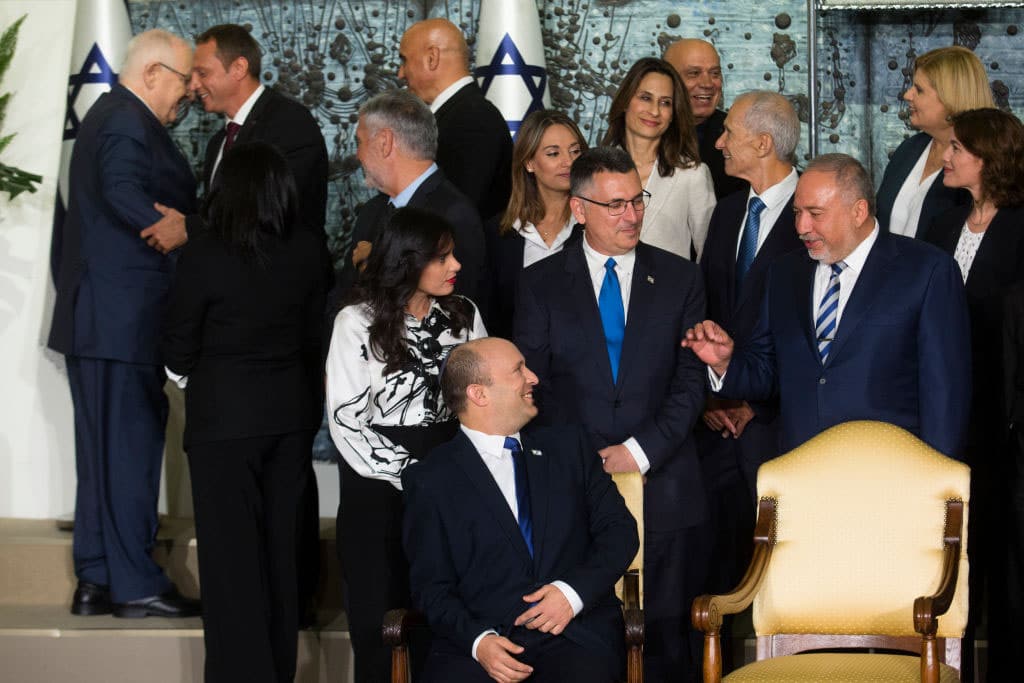
The cynics are back in the driver’s seat in Israel. The improbable unity coalition that no one thought would last five minutes, but ended up lasting ten months, looks like it’s on its way out. In a stunning announcement on Wednesday, coalition whip Idit Silman of Yamina said she was quitting the coalition because it was “harming” Jewish identity in Israel.
The coalition, let’s face it, always had a “too good to be true” quality. How could it not? When you bring together passionate ideological rivals to govern a country, with a majority of only one seat, the real miracle is that it lasted so long.
Silman’s attempt to seize the high ground of “Jewish identity” was quickly undermined by reports that she was promised the Health Ministry if she joined opposition leader Benjamin Netanyahu’s Likud party. In one swift blow, she returned Israel to the politics-as-usual of “What’s in it for me?”
Let’s just say the miracle was nice while it lasted.
As I noted at the time, the mere formation of the coalition improved the cynical image of politics. Imagine, for starters, someone like Yair Lapid allowing the leader of a much smaller party (Naftali Bennett) to take first rotation as prime minister. Imagine an Arab party sitting next to a hard-core Zionist party. Imagine the Left and the Right forced to compromise for a common good.
Yes, it was a shared and intense opposition to Netanyahu that united these rivals in the first place, but over time, the coalition surprised many by getting some important things done.
It was a shared and intense opposition to Netanyahu that united these rivals in the first place, but over time, the coalition surprised many by getting some important things done.
Among them, it finally pushed through a budget. This followed two years of governmental paralysis with four gridlock elections brought on by an indicted Netanyahu’s obsession with staying in power. But once the new coalition was formed, it quickly got down to business, focusing on less divisive areas that concerned all Israelis, such as the economy, healthcare, transportation and security. Sure, there were many tense moments when the coalition looked like it would blow up, but everyone gritted their teeth for a higher cause.
The cynics in the opposition must have hated this spectacle of a unity coalition representing the country and doing some good things. After all, the only coalition they believe in is one that aligns with their right-wing ideology, and if that leaves out constituencies like the center, the Left and the Arab sector, well, who cares?
Indeed, the rejoicing has begun in the right-wing camp. “I was very moved to hear MK Idit Silman’s statement,” Netanyahu said in a video statement, adding later that “We all welcome her with a warm embrace and open arms.”
Of course he’s moved. More than anything, Netanyahu yearns to get back in power. Over the next few weeks, we can expect him and his right-wing camp, including the Haredi parties, to go on a full-court press to put the last nail in the coffin of a historic and game-changing coalition.
There’s still an outside chance the unity coalition may trudge along; even with Silman’s defection, the two camps are deadlocked. But new elections or some right-wing coalition are more likely. One thing for sure: the next few weeks will be politics at its ugliest.
In the meantime, it’s worth noting that not many people have fallen for Silman’s excuse to defect— her opposition to Health Minister Nitzan Horowitz, leader of the left-wing Meretz party, who ordered hospitals to allow patients and visitors to bring hametz onto their premises during the Passover holiday. Horowitz, it has been widely reported, was only telling institutions to follow a top court ruling on the matter.
But Silman picked this one chametz episode for her grand exit, claiming that it “harmed Jewish identity in Israel.”
I disagree. What harms Jewish identity in Israel is cynicism. It’s ultra-Orthodox parties claiming to represent Torah and Judaism but putting money for their institutions and maintenance of political power above all else. It’s the belief that governing coalitions that exclude significant segments of Israeli society are good for the country. It’s putting “What’s in it for me?” above “What’s in it for Israel?”
The unity coalition, however short-lived it turns out to be, was Jewish identity at its most enlightened, honoring the timeless Jewish ideal that everyone deserves a seat at the table.
The unity coalition, however short-lived it turns out to be, was Jewish identity at its most enlightened. Through the difficult work of compromise, it honored the great and timeless Jewish ideal that everyone deserves a seat at the table.
As we gather at our Seder tables this year, it’s worth reflecting on that inclusive ideal, and show some recognition for those leaders in Israel who managed to pull it off for ten miracle months.