fbpx

April 6, 2022

When Terror Strikes… Zionists Everywhere Can Strike Back Too

Israelis are sticking to their routines – starting the pre-Passover scrubbing-and-food-shopping frenzy. But, after terrorists murdered 11 of ours, Jews and Druze, Arabs and Ukrainians, in eight days, we’re extra-wary. Civilians who have guns are packing. Our soldier-heroes and police-heroes are patrolling.  And the rest of us, especially the security-forces’ parents, are praying.

Israel supporters living thousands of miles away may think they cannot help, but they can. Terrorism is a bloody mind game wherein psychological resilience helps quash the physical violence. When terrorists attack, Israelis often feel extra-vulnerable and lonely. So when terror strikes, Zionists everywhere can strike back too, sending the message “You are Never Alone” in multiple ways. Such global “chizuk” (support) — showing that terrorism distances the evil-doers from their perverse goals ­— strengthens Israelis while demoralizing the terrorists.

Politically, there’s a clear pro-Israel agenda to champion: ensuring America’s ironclad support for Israel, orchestrating international pressure against Palestinian pray-to-slay policies, refuting the Big Red-Green Lies against Israel, and blocking the Iranian mullahs’ rush to go nuclear. Moreover, those who can afford post-Coronavirus overseas trips can start planning Israel visits, while young people can apply to Birthright and other Israel programs.

After terrorists murdered 11 of ours, Jews and Druze, Arabs and Ukrainians, in eight days, we’re extra-wary. Civilians who have guns are packing. Our soldier-heroes and police-heroes are patrolling.  And the rest of us, especially the security-forces’ parents, are praying.

This week, however, offers more immediate, non-partisan, ways to support Israelis – with opportunities for symbolic and material expressions growing over the next six weeks.

As thousands of troops and police officers patrol every Israeli downtown, feed them! Pull out your credit card. Get online. Pick out your favorite dining establishment in your favorite Israeli city or town. Call and offer to pay for as many dinners and snacks for security personnel as you can afford. As thanks, just ask for occasional photos and videos recording the reactions, with permission to post online. 

In 2015, when a spurt of stabbings hurt businesses in downtown Jerusalem, Shmarya Richler, a Montreal immigrant distributed free, yummy Muffin Boutique goodies to all security personnel. His generosity made matters worse for himself economically, but not spiritually, especially after others chimed in. One informal 24-hour fundraiser led by my friend Fran Kritz from Maryland’s Kemp Mill Synagogue (KMS), funded 300 meals alone. Others followed. The soldiers and police officers were dumbfounded.

Beyond, those personal initiatives, people can adopt police or army units through FIDF: Friends of the IDF, through the Michael Levin Base for Lone Soldiers, or through friends whose children serve. I know one family that sends fruit to their kid’s unit, whenever he is stuck on base for Shabbat, and bought all the soldiers matching jackets and kit bags to build morale.

Generosity is contagious. Once individuals, synagogues, schools, organizations, or groups of friends post grateful Israelis’ reaction, the waves of kindness will cascade, helping to break this terror wave.

Looking ahead, we’re now entering a high season for Zionist celebration, engagement, and activism.

On Seder night, every Jew should leave an empty seat for one of our recent martyrs. 

On Seder night, every Jew should leave an empty seat for one of our recent martyrs. It could be Rabbi Moshe Kravitzky, the Chabad rabbi who ran a soup-kitchen for ten years in Beer Sheva – until a terrorist ran over him as he bicycled. It could be Shirel Aboukrat, the female border police officer, who immigrated from France – or her Druze partner Yazan Falah, who was also 19. If you really want to be Zionist and multicultural, honor Amir Khoury, the Christian-Arab motorcycle cop killed while killing the killer to protect ultra-Orthodox Jews – and Ukrainians — in B’nai Brak, at “Haredi” stronghold.

Attached is a reading many of us first recited 20 years ago, as terror menaced Israel, peaking with the infamous Seder Massacre at Netanya’s Park Hotel, which killed 30. Hearing Rabbi Seth Mandell describe the empty seat around the Mandell’s family Shabbat table since Palestinian terrorists murdered their 13-year-old son Koby in May, 2021, first inspired this idea. We can cope with an empty seat one or two nights in our lives – terror-survivors who have lost relatives face a lifetime of empty seats.

Your Seder can also be Zionized, using supplemental texts celebrating the Jews’ 75-year-old modern Exodus, thanks to Israel’s establishment, and the waves of immigration Israel has absorbed from Eastern and Western Europe, from Muslims lands and North Africa, from Ethiopia and the former Soviet Union, including hundreds of recent arrivals from Ukraine and Russia. Texts from my book “The Zionist Ideas,” keyed to moments in the Seder, can be found on my website www.giltroy.com and on the American Zionist Movement’s website. They range from: reading about Natan Sharansky’s release from the Gulag and arrival in Jerusalem; to Rabbi Joseph Soloveitchik’s explanation that Jews are a “machaneh” – an interconnected community of fate – and an “edah” – a community of values envisioning a better life and a better world; to saying “Hallel,” praise the lord, with Golda Meir in 1958, celebrating Israel’s accomplishments after only ten years.

Barely two weeks after Passover ends, Israel freezes. Israelis stand solemnly when the siren moans, ushering in Yom HaZikaron, Israel’s Memorial Day (starting Tuesday evening, May 2, this year). Even thousands of miles away, Israel supporters can join in with the 3 S’s of solemnity: standing for a moment of silence – at home or with others; saying one terror victim’s name aloud while lighting a memorial candle; and striking, as Israelis do – abstaining from entertaining movies, television, or songs for 24 hours.

Lift the mood the next day for Yom Ha’atzmaut, Israel Independence Day, with Ice Cream for Breakfast on May 4 – at home and in schools. By letting the next generation taste the Israeli miracle’s sweetness, we remind ourselves too of how lucky we all are to be living in a world with a democratic Jewish State defending noble values in the Middle East. Follow it up more substantively, with a festive but thoughtful Zionist Salon, reading Zionist texts that help us appreciate why we needed a Jewish State, how it functions today, and what it does and can do for all of us worldwide.

It’s easy to be cardiac Zionists — loving Israel in our hearts. But holidays without rituals are like people without homelands: they get fuzzy, abstracted, distorted and eminently forgettable.

Finally, as I have proposed in these pages before, on Sunday May 29, celebrate Yom Yerushalayim, Jerusalem Day, by making a JerusAlbum. These can be online or in print, cataloguing trips you or your relatives took. These albums can collect historic photos or lovely scenes online – enhanced, this year, by photos of all the supportive activities you and your family have undertaken.

It’s easy to be cardiac Zionists — loving Israel in our hearts. But holidays without rituals are like people without homelands: they get fuzzy, abstracted, distorted and eminently forgettable. This year, in the spirit of Zionist pioneering, let’s go from our hearts to our hands, actively building a vibrant Israel connection, with the inspiring Zionist narrative, and the anchoring Jewish past. And it’s clear. Escalating from Cardiac Zionists to Hands-on Zionists is like going from reading about good food to eating it: it is much more nutritious and far more satisfying, not just filling but fulfilling too.


Professor Gil Troy is the author of nine books on Presidential History including “Why Moderates Make the Best Presidents: From George Washington to Barack Obama.” His latest book, written with Natan Sharansky is “Never Alone: Prison, Politics, and My People.” Follow him on Twitter @GilTroy

When Terror Strikes… Zionists Everywhere Can Strike Back Too Read More »
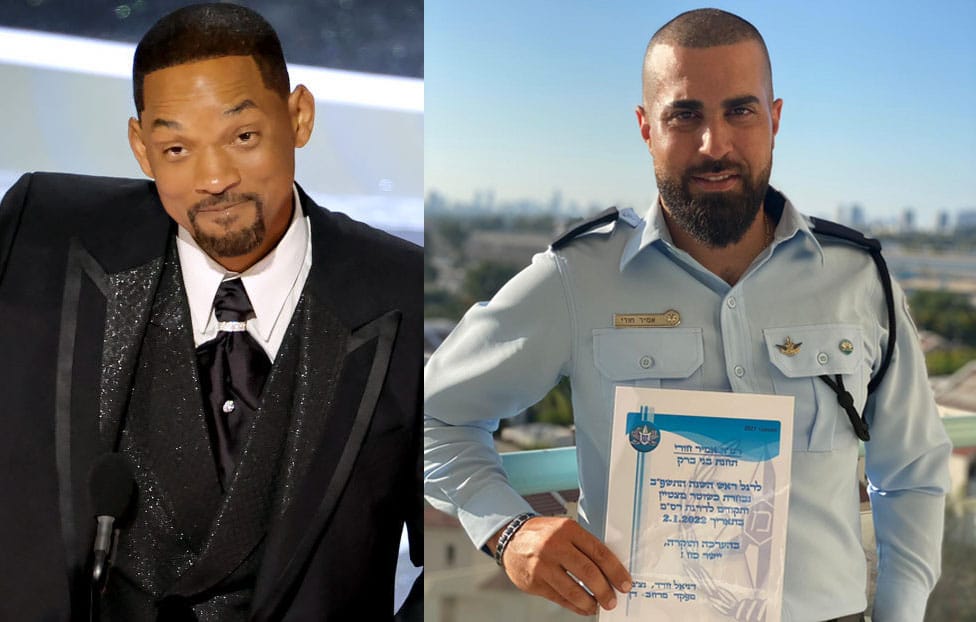
Will Smith Vs. Amir Khoury

Everyone seemed to be talking about the “Slap Heard ‘Round the World” last week.

That’s understandable. It’s not every day that you witness a physical assault unfold on live television involving public figures that, in some ways, you feel you know because you’ve seen them so many times on TV and in film. It happened so quickly and so unexpectedly that many of us thought it was a “bit” of some sort. It wasn’t.

Such a moment can and should inspire conversations about what it means to stand up for others when they are insulted or abused, whatever the context or the intent. It might lead us to reflect on the fraying of societal norms, the coarseness of today’s discourse, and, more broadly, the disturbing “ambient rage” that manifests as troubling violent outbursts on planes, in retail outlets, and in other public places.

It also gives us an opportunity to reflect on what we pay attention to and what, as a result, we ignore. 

With all the talk about that dramatic moment at the Oscars, much of the world ignored a more important story, one about true courage and what it really means to come to someone’s defense.

Around the same time as the Oscars, a Palestinian gunman murdered five people in Bnei Brak. Two of them — Victor Sorokopot and Dimitri Mitrik — were Ukrainian foreign residents who came to Israel to work in construction. Ya’akov Shalom, out running errands in preparation for the Passover holiday, was gunned down in his car. Avishai Yechezkel, a 29-year-old teacher, was out with his son for an evening walk. He died shielding 1-year-old Ariel from the gunman. 

The final victim was Sgt. Amir Khoury, a Christian Arab Israeli police officer who rushed to the scene. He and a fellow officer exchanged gunfire with the terrorist. Sgt. Khoury and the gunman were both killed in the exchange.

Sgt. Khoury’s fiancé Shani Yashar said: “I told him to be careful. He said he would defend everyone, even if it cost him his life.”

Amir Khoury sacrificed his life in an effort to defend those whose lives he had sworn to protect. Avishai Yechezkel died defending his son Ariel.

This is courage. This is heroism. This is something especially worthy of our attention.

This is a story about our shared humanity. Khoury was Christian. His sacrifice has touched the hearts of Israelis from every segment of Israeli society. The fact that thousands of ultra-Orthodox Jews, including rabbis, journeyed to Nof Hagalil to pay their respects says volumes about the way Khoury’s act of courage has stirred the soul of a nation.

This is also a story about our shared humanity. Khoury was Christian. His sacrifice has touched the hearts of Israelis from every segment of Israeli society. The fact that thousands of ultra-Orthodox Jews, including rabbis, journeyed to Nof Hagalil to pay their respects says volumes about the way Khoury’s act of courage has stirred the soul of a nation.

Here is how Public Security Minister Omer Barlev put it: “In a small country like ours, personal pain quickly becomes one shared by many, by all the citizens of Israel. We will not forget Amir. May his memory be a blessing.”

His fiancé, Shani, said this at his gravesite: “Rest in peace, my hero of Israel. Hero of the whole people of Israel,” she cried. “All of Israel gives you its thanks. I don’t want them to thank you. But you deserve it.”

Will Smith and Chris Rock are the names on everyone’s lips at the moment. Their shocking altercation at the Oscars will ensure that they stay in the headlines.

But there are other names that merit to be on everyone’s lips, such as Amir Khoury and Avishai Yechezkel. Their stories of heroism are the ones we dare not forget and should be telling and retelling at our Seder tables this year. 

May their memories and those of everyday heroes who risk their lives for others be for a blessing.


Rabbi Yoshi Zweiback is the Senior Rabbi of Stephen Wise Temple in Los Angeles, California.

Will Smith Vs. Amir Khoury Read More »

Israel’s Unity Coalition Was Not Harming Jewish Identity, It Was Honoring It

The cynics are back in the driver’s seat in Israel. The improbable unity coalition that no one thought would last five minutes, but ended up lasting ten months, looks like it’s on its way out. In a stunning announcement on Wednesday, coalition whip Idit Silman of Yamina said she was quitting the coalition because it was “harming” Jewish identity in Israel.

The coalition, let’s face it, always had a “too good to be true” quality. How could it not? When you bring together passionate ideological rivals to govern a country, with a majority of only one seat, the real miracle is that it lasted so long.

Silman’s attempt to seize the high ground of “Jewish identity” was quickly undermined by reports that she was promised the Health Ministry if she joined opposition leader Benjamin Netanyahu’s Likud party. In one swift blow, she returned Israel to the politics-as-usual of “What’s in it for me?”

Let’s just say the miracle was nice while it lasted.

As I noted at the time, the mere formation of the coalition improved the cynical image of politics. Imagine, for starters, someone like Yair Lapid allowing the leader of a much smaller party (Naftali Bennett) to take first rotation as prime minister. Imagine an Arab party sitting next to a hard-core Zionist party. Imagine the Left and the Right forced to compromise for a common good.

Yes, it was a shared and intense opposition to Netanyahu that united these rivals in the first place, but over time, the coalition surprised many by getting some important things done.

It was a shared and intense opposition to Netanyahu that united these rivals in the first place, but over time, the coalition surprised many by getting some important things done.

Among them, it finally pushed through a budget. This followed two years of governmental paralysis with four gridlock elections brought on by an indicted Netanyahu’s obsession with staying in power. But once the new coalition was formed, it quickly got down to business, focusing on less divisive areas that concerned all Israelis, such as the economy, healthcare, transportation and security. Sure, there were many tense moments when the coalition looked like it would blow up, but everyone gritted their teeth for a higher cause.

The cynics in the opposition must have hated this spectacle of a unity coalition representing the country and doing some good things. After all, the only coalition they believe in is one that aligns with their right-wing ideology, and if that leaves out constituencies like the center, the Left and the Arab sector, well, who cares?

Indeed, the rejoicing has begun in the right-wing camp. “I was very moved to hear MK Idit Silman’s statement,” Netanyahu said in a video statement, adding later that “We all welcome her with a warm embrace and open arms.”

Of course he’s moved. More than anything, Netanyahu yearns to get back in power. Over the next few weeks, we can expect him and his right-wing camp, including the Haredi parties, to go on a full-court press to put the last nail in the coffin of a historic and game-changing coalition.

There’s still an outside chance the unity coalition may trudge along; even with Silman’s defection, the two camps are deadlocked. But new elections or some right-wing coalition are more likely. One thing for sure: the next few weeks will be politics at its ugliest.

In the meantime, it’s worth noting that not many people have fallen for Silman’s excuse to defect— her opposition to Health Minister Nitzan Horowitz, leader of the left-wing Meretz party, who ordered hospitals to allow patients and visitors to bring hametz onto their premises during the Passover holiday. Horowitz, it has been widely reported, was only telling institutions to follow a top court ruling on the matter.

But Silman picked this one chametz episode for her grand exit, claiming that it “harmed Jewish identity in Israel.”

I disagree. What harms Jewish identity in Israel is cynicism. It’s ultra-Orthodox parties claiming to represent Torah and Judaism but putting money for their institutions and maintenance of political power above all else. It’s the belief that governing coalitions that exclude significant segments of Israeli society are good for the country. It’s putting “What’s in it for me?” above “What’s in it for Israel?”

The unity coalition, however short-lived it turns out to be, was Jewish identity at its most enlightened, honoring the timeless Jewish ideal that everyone deserves a seat at the table.

The unity coalition, however short-lived it turns out to be, was Jewish identity at its most enlightened. Through the difficult work of compromise, it honored the great and timeless Jewish ideal that everyone deserves a seat at the table.

As we gather at our Seder tables this year, it’s worth reflecting on that inclusive ideal, and show some recognition for those leaders in Israel who managed to pull it off for ten miracle months.

Israel’s Unity Coalition Was Not Harming Jewish Identity, It Was Honoring It Read More »

Ritchie Torres, J Street Spar Over Iran Deal

Representative Ritchie Torres (D-NY) and J Street Senior Vice President Dylan Williams sparred on Twitter over President Joe Biden’s efforts to revive the Iran nuclear deal.

Williams tweeted that Torres had told AIPAC that he approaches “the issue not from the perspective of an American, but from the perspective of an Israeli.” “Shouldn’t a US lawmaker approach it from the perspective of US interests?” Williams asked. In a follow-up tweet, he argued that “Israel’s top security experts” believe that the Trump administration should have never left the agreement.

https://twitter.com/dylanotes/status/1511452332290158603?s=20&t=igWF3pf-sjr4L3UfVVBEKg

https://twitter.com/dylanotes/status/1511462297990012931?s=20&t=igWF3pf-sjr4L3UfVVBEKg

Torres replied to Williams by accusing him of “taking what I said out of context and reframing empathy for a US ally as though it were a form of ‘dual loyalty.’” “The fact that I might hold an opinion that differs from yours does not mean I care about America any less than you do,” Torres added. “Your tweet is a cheap shot.”

AIPAC also criticized Williams’ tweet. “J Street is more critical of Torres than of terrorists,” they tweeted. “Democrat @RepRitchie offered a global perspective to a question about a global danger: removing the IRGC [Islamic Revolutionary Guard Corps] from the foreign terrorist list. He rightly opposes delisting a terror group that has killed more than 600 US troops.”

The spat between Torres, J Street and AIPAC comes as 18 House Democrats expressed concern over the potential new deal at an April 6 press conference, Fox News reported, which included Representatives Elaine Luria (D-VA), Josh Gottheimer (D-NJ) and Juan Vargas (D-CA). Gottheimer expressed concern that “war criminal” Russian President Vladimir Putin would be a “guarantor” for the deal; Vargas said that the Biden administration’s handling of the deal was reminiscent of the Obama administration in that “they keep us in the dark. Then … it turns out there are some fatal flaws. It was a bad deal then, and it was a bad deal now.”

Senator Joe Manchin (D-WV) also expressed skepticism over the deal, telling Jewish Insider on April 6: “I’m very leery of [the talks]. I wasn’t for it before and I can’t see myself changing my position.”

J Street tweeted that it was “deeply disappointing” that the group of Democrats are opposing the Iran deal. “If President Biden’s diplomacy succeeds, it will dramatically reduce Iran’s nuclear activities and put them back under rigid inspections and monitoring – while maintaining key sanctions on Iran’s malign regional activities,” they argued. “Diplomacy will make the US and our allies safer and head off a crisis that could lead us to another disastrous, costly war in the Middle East – a war that the American people certainly do not want.”

Mark Dubowitz, CEO of the Foundation of Defense Democracies think-tank, tweeted that it was “amusing to see Iran echo chamber invoking Israeli security officials” to support the new Iran deal. “These officials think it’s an awful agreement but they want more time to prepare a military strike option,” he added. “I guess Iran echo chamber supports an Israeli military strike.” In separate tweets, Dubowitz wrote that the deal would have sunset clauses eventually lifting restrictions on Iran’s nuclear capability and argued that “most of Iran’s nuke expansion occurred after President Biden’s election and his abandonment of pressure.”

Secretary of State Antony Blinken told MSNBC’s Andrea Mitchell on April 6 that he is “not overly optimistic at the prospects of actually getting an agreement to conclusion…We’re not there.”

Ritchie Torres, J Street Spar Over Iran Deal Read More »

Pro-Palestinian Protesters Say “Zionist Professors Are Not Welcomed” on Campus

A couple of pro-Palestinian protesters said during an April 2 protest in New York City that “Zionist professors are not welcomed” on campus.

Video footage from the protest shows Fatima Mohammed, a member of CUNY Law Students for Justice in Palestine (SJP), telling protesters to “demand that Zionist professors are not welcomed on your campus. Demand that Zionist students are not in spaces where Palestinian students are because Zionism is a threat. Zionism is a genocidal threat to us.” 

Additionally, Nerdeen Kiswani, who chairs the pro-Palestinian group Within Our Lifetime and is also a member of CUNY Law SJP, chanted “from the river to the sea, Palestine will be free” at the protest and accused the Jewish National Fund and Jewish Communal Fund of being “Zionist organizations” that are “hiding behind Judaism.” “Every single organization on that list is a legitimate target because every single organization on that list supports the Zionist entity,” she added.

Chancellor Professor of Computer Science Judea Pearl, who is also the president of the Daniel Pearl Foundation and National Academy of Sciences member, tweeted in response to the video: “Dear Fatima Mohammed, I am one of those Zionist professors whom you wish to shun. Let me assure you that your organization, SJP, will be ousted from my campus way before me or any of my students, precisely because of racist demands such as those you have made today. Academia cannot tolerate student groups that call for the ethnic cleansing of other student groups. SJP, as well as other Zionophobic or Islamophobic groups, have no place on any university campus.”

[/speaker-mute]Representative Ritchie Torres (D-NY) similarly tweeted, “Following a terror attack murdering 11 Israelis, an activist calls for ‘Zionist’ professors and students to be purged. How those Zionists are to be purged—she doesn’t say. But the context here is hard to ignore: ‘Globalize the Intifada’ is a call to antisemitic violence.”

Jewish groups echoed the tweets from Pearl and Torres.

“This isn’t free speech, it’s targeted harassment and ENOUGH is ENOUGH!” Stop Antisemitism tweeted.

The Simon Wiesenthal Center tweeted that the protesters are “targeting Jews, seeking to purge demonize and isolate them.” “Any protests from inside @CUNY?” they asked.

StandWithUs CEO and Co-Founder Roz Rothstein tweeted, “A group like SJP—that systematically promotes bigotry and regularly harms campus climate for anyone who cares about #Israel should not be allowed to operate let alone be given funding to promote their racism.”

Students and Faculty for Equality (SAFE) CUNY, a nonpartisan group advocating for Zionist Jews to be treated equally at CUNY, tweeted: “Terroristic CUNY students call for expulsion of Zionist faculty and Jewish students from CUNY. Call for violence against all Jews at CUNY and in NYC. CUNY administration response is deafening silence?”

Within Our Lifetime and CUNY Law SJP did not respond to the Journal’s requests for comment.

Pro-Palestinian Protesters Say “Zionist Professors Are Not Welcomed” on Campus Read More »

The Most Dangerous Month

April is the cruelest month. But with apologies to T.S. Eliot, this year in the Middle East it could be the most dangerous month as well.

Every ten years, the holidays of Passover, Easter and Ramadan overlap, and U.S. diplomats have been working with security officials throughout the region to prepare for an increased likelihood of violence in Jerusalem as tensions rise and true believers of all three faiths converge on the city. 

Ramadan began on April 2 and continues throughout the month. Passover, of course, starts on April 15 and is celebrated for eight days. The Catholic and Protestant Easter takes place on April 17 and the Orthodox Easter one week later on April 24. That is a lot of religious fervor in a dense Jerusalem over a short period of time. 

But even before the calendar turned to April, those tensions already erupted in violence and tragedy. A wave of terrorist attacks over the last week of March resulted in the deaths of 11 Israelis and not only forced the issue of personal security back to the forefront of Israeli politics but also offered an ugly reminder of the fragile foundation on which Israel’s diplomatic outreach to potential Arab allies is resting.

It seems like just over a week ago that many of us were minimizing the importance of the Israeli-Palestinian conflict. The Abraham Accords had laid the groundwork for not just economic and cultural but military cooperation between Israel and four Gulf states, and created the possibility of broadening previously existing relationships with Egypt and Jordan. Angry Palestinian voices protested the formation of these relationships, but it seemed like much of the Arab World was more concerned with the threat of Iran and cooperation with Israel than the complaints of the Palestinians.

Every ten years, the holidays of Passover, Easter and Ramadan overlap. That is a lot of religious fervor in a dense Jerusalem over a short period of time.

But the old era isn’t ready to step aside just yet. All three terror attacks took place within days of the Negev Summit, a series of diplomatic meetings between Israel and its Arab allies. The message was clear: further efforts to improve relations would be met with similar acts of terror. It doesn’t appear that any of the countries that has been meeting with Israel is backing off, but these attacks are the loudest reminder to leaders throughout the region that the potential for backlash to diplomatic progress is quite real. For Saudi Arabia in particular, whose leaders have worked quietly with Israel on security measures even while keeping a careful public distance, the attacks could send a very discouraging message.

The political ramifications within Israel are also noteworthy. Prime Minister Naftali Bennett’s precarious governing coalition is based on the idea of ignoring some of the most controversial issues that split the various factions, but an outbreak of terrorist activity makes that more difficult. Bennett must now fashion a security platform that can at least be tolerated by the wide array of left, center and right lawmakers and their constituencies, all while withstanding heightened criticism from opposition leader Benjamin Netanyahu for sacrificing the country’s safety to appease the more liberal members of his coalition.

Bennett will also face renewed pressure to abandon talks with the Arab countries, which critics suggest send a message of weakness and appeasement to Israel’s enemies. But as the United States continues to press forward toward a new nuclear agreement with Iran, the Gulf states could be Israel’s strongest allies in working to prevent — or at least weaken — the deal. Retreating from these new diplomatic and military partnerships could make Israel even more vulnerable to Iranian aggression.

And all this takes place at a time when Jerusalem will be hosting thousands of pilgrims from three of the world’s most prominent religions at an overlapping time on the calendar. There is never a good time for a terrorist attack, but the next few weeks have the potential to be especially fraught with peril. Elliot said that April was cruel because it was when we dared to hope. That might not be an issue this month.


Dan Schnur is a Professor at the University of California – Berkeley, USC and Pepperdine. Join Dan for his weekly webinar “Politics in the Time of Coronavirus” (www/lawac.org) on Tuesdays at 5 PM.

The Most Dangerous Month Read More »

What Israel is Doing in Ukraine

Two weeks ago, I joined the delegation from Sheba Medical Center to open a field hospital in Mostyska, Ukraine.

It’s a town that is 40 miles west of Lviv, where my grandmother was born and where she left in 1933. She remained the only survivor of her family. And here I am, 89 years later, an Israeli diplomat, returning to extend a hand to the Ukrainian people.

Seventy doctors, nurses, pharmacists and social workers volunteered for the mission. They opened the Israeli hospital “Shining Star,” Kochav Meir in Hebrew, named after Israel’s late Prime Minister, Golda Meir, who was born in Kyiv.

Within a couple of days, an elementary school in a small town nine miles from the Polish border turned into a fully equipped hospital for treating locals and refugees coming from the bombarded cities in the east of Ukraine.

Once the hospital started working, the news spread, and hundreds of patients are coming every day to be diagnosed by the Israeli team, most of whom are children and older people with chronic diseases. 

Once the hospital started working, the news spread, and hundreds of patients, most of them children and older people with chronic diseases, now come every day to be diagnosed by the Israeli team. From time to time, a pregnant woman shows up. One baby has already been delivered at the hospital.

The doctors, the nurses, and the rest of the Israeli staff were well-trained to treat people with trauma and stress. After crossing the main gate and passing both flags of Israel and Ukraine, the Israeli staff greeted the refugees with a smile, a hug and even little gifts for the children. Standing there watching their empathy for the patients, I felt like I had sneaked onto the emergency room set of a “Grey’s Anatomy” episode.

Since the beginning of the crisis, the Israeli government decided to send humanitarian aid to the Ukrainian people. MASHAV, Israel’s National Aid Agency, sent planes loaded with 100 tons of medications, blankets, tents, coats, etc. It provided gigantic generators to the city of Lviv, which had tripled its population since the beginning of the war, to support electricity and water supply and keep the hospitals going.

During the last few weeks, MASHAV has been leading online seminars for educators, therapists, psychiatrists and other professionals in Ukraine to train them on how to deal with trauma situations. They even organized an online workshop for midwives to teach them how to deliver under fire.

After spending two days at the hospital, I returned to Poland to the border crossings and refugee camps.

If you think that only the government in Israel cares about this crisis, spending five minutes at the crossing will prove you wrong: The first thing I noticed when crossing from Ukraine to Poland is a huge Israeli flag on a tent set up by one of the Israeli NGOs. It is a “safe space for children,” said Ayala, who runs the place.

I saw toddlers running around, laughing and playing with toys while their exhausted mothers sat down to rest and have a cup of coffee, relieved to watch the volunteers playing with their kids. Just next to the safe space, I met Re’em, another young Israeli pushing a supermarket cart full of water bottles and energy snacks. “We take it for the people waiting in line on the Ukrainian side,” he said. “Sometimes they wait there for three to 10 hours. Sometimes more.” Suddenly I heard funny voices behind me; it was three Israeli medical clowns amusing the children who were getting bored while waiting in line with their parents. They usually work with sick children at hospitals, but “children are children everywhere,” as they told me. They can make them laugh along with their tired, worried mothers.

Seventy doctors, nurses, pharmacists and social workers volunteered for the mission. They opened the Israeli hospital “Shining Star,” Kochav Meir in Hebrew, named after Israel’s late Prime Minister, Golda Meir, who was born in Kyiv.

I saw another young Israeli who suddenly showed up with a cart full of blankets. “Why did you come here?” I asked. “Because I couldn’t turn a blind eye to these people,” he said, and I wanted to cry (again). I got this answer from so many Israeli volunteers and the medical staff at the hospital.

And then another group of refugees crossed the border: older men and women, young women with two to three children. They were standing tall, wearing name brands, looking around at all the volunteers who offer them food and clothes and toys for the children. At first, they refuse with pride, but slowly, they accept an energy bar, a pair of gloves or a toy for the baby. Most of them don’t even know where they are heading or for how long.

My feelings were mixed on the flight back, heading home to Israel. I felt like I was on a roller coaster. I looked at the little Ukrainian boy, an 8-year-old refugee, who fell asleep on my shoulder, and my heart went out to him and his family: people who only a month ago had a home, work, and dreams. Now, the only thing they have is uncertainty.

But on the other hand, I felt so proud of these Israeli volunteers and my country that sends planes and doctors and builds a hospital. I couldn’t avoid thinking that 80-90 years ago, my family members were refugees in this area and had nowhere to go. And I felt that the Jewish people are blessed today to have a state of their own—the State of Israel, a democratic, prosperous country that has the capabilities to help another country in a time of great need.


Galit Peleg is Director of Overseas Projects and Coordinator for Humanitarian Aid to Ukraine at Mashav, Israel National Aid Agency, Ministry of Foreign Affairs of Israel.

What Israel is Doing in Ukraine Read More »

Pico Shul Hosting Passover Seders for Refugees in Poland

In the late ‘90s, Rabbi Yonah Bookstein and his wife Rachel worked in the Jewish community in Poland. Together, they were the country directors for the Ronald S. Lauder Foundation and managed a Jewish community center, ran adult education and youth programs and hosted events. Now, the couple, who founded Pico Shul in Pico-Robertson, are heading back to the region to host seders for native Polish Jews as well as Ukrainian refugees.

“We’ve maintained close connections with the community of people who worked there over the years and go back to visit regularly. When we heard about all of the need and the refugees streaming into Poland, we felt a real strong pull to do what we could to help.” – Rabbi Yonah Bookstein

“We’ve maintained close connections with the community of people who worked there over the years and go back to visit regularly,” said Yonah. “When we heard about all of the need and the refugees streaming into Poland, we felt a real strong pull to do what we could to help.”

According to the rabbi, thousands of Ukrainian Jews have fled to Poland. Now, over 100 are staying at the Hotel Ilan in Lublin, a smaller town with only 342,000 people and no significant Jewish infrastructure like in Kraków and Warsaw. Before World War II, the hotel was the Chachmei Lublin Yeshiva.

“One funny thing is that there is this hotel in Lublin, so it’s a Passover hotel program, but it’s a very different kind of program,” said Yonah.

The Booksteins decided to go to Poland after talking with the chief rabbi there, Rabbi Michael Schudrich, and finding out about the community that needed help with seders. While they estimate that around 100 will join them, there could be more refugees arriving by Passover.

“We have great memories of doing public sedarim in Poland, and helping out seemed like a really good opportunity,” said Yonah. “We can do it because of our skillset and the fact that we speak Polish and know about the community already.” 

When Yonah and Rachel land in Lublin, which is closer to the Ukrainian border than Warsaw, they’re going to kasher the kitchen, gather raw ingredients like fish, fruits, vegetables and meat and supervise the workers to ensure that the food is prepared properly. They’re also bringing along three of their four children, who were interested in assisting their parents. 

“We felt a call to help, like many people watching the situation from the United States,” said Rachel. “We gave our kids a choice and they were very excited to be of service and part of that community building work we’ve always been doing.” 

The American Jewish Joint Distribution Committee has been importing supplies to Poland for Passover for years, said Yonah. They send matzo from Israel as well as kosher for Pesach wine and grape juice in very large quantities. 

The Booksteins are running an online campaign to raise money for gifts for participants and purchase flowers and decorations to make the holiday even more memorable. Some people are contributing because they have a personal family connection to Lublin or the Ukraine, and others are donating because it’s a direct way to help out the refugees in need.

“We really want to make this not just a refugee seder, but also a celebration of community and freedom,” said Yonah. “We want to make it very special.” 

The seder will also feature haggadot in Polish, Russian and Hebrew – Yonah knows some Russian, but will likely use a translator just to make things easier. In addition to the practical help, the couple is also offering emotional assistance during this turbulent time. 

“We hope we are able to provide not just a Passover celebration, but also comfort, psychological support and care, which is what the chief rabbi has said is really needed,” said Rachel. “Hopefully, if these people feel connected with Jewish people around the world, and know that people like us in LA are thinking about them and caring about them in a very specific and personal way, it will alleviate some of their trauma. We’re hoping to give a personal face to the support they really need.” 

To contribute to the campaign for the seders in Lublin, visit picoshul.networkforgood.com/projects/156968-seder-for-refugees.

Pico Shul Hosting Passover Seders for Refugees in Poland Read More »

How a Woman Can Wear Down a Man

I love the 1959 film, “Pillow Talk,” starring Rock Hudson and Doris Day. Though some of the dialogue would make a modern woman wince, there’s one scene that’s stayed with me throughout the years: A rabid womanizer named Brad Allen (played by Hudson) shares his philosophical musings about marriage with his best friend, Jonathan Forbes (played by Tony Randall), with the following observation: “Jonathan, before a man gets married, he’s like a tree in the forest. He stands there independent, an entity unto himself. And then he’s chopped down, his branches are cut off, he’s stripped of his bark and he’s thrown into the river with the rest of the logs. Then this tree is taken to the mill. And when it comes out, it’s no longer a tree. It’s the vanity table, the breakfast nook, the baby crib, and the newspaper that lines the family garbage can.”

I admit Allen has a point. Over the years, I’ve met a few such furniture items at the park, Shabbat meals and kids’ birthday parties. I probably am guilty of whittling down a few good men to benches and credenzas. But marriage isn’t supposed to metaphorically chop you into pieces; it’s the biggest growth tool I’ve ever encountered. 

Before I got married, I believed in the harmful stereotype of a nagging wife. I guess I’d watched too many films and TV shows from the ’50s and ’60s. But after I got married, I realized that a woman “nags” because she’s tried nearly every other way of expressing a need or request, short of spray painting a kitchen wall with graffiti that says, “Load the dishwasher cup-side down.”

A few years ago, a friend told me that his wife married him because she thought he could do anything. “After we got married,” he said, “she made me feel like I could do nothing.”

Maybe I go easier on women because we put up with much more than men. That’s why last week’s column was titled, “How a Man Ages a Woman.” But when it comes to how women treat men in male-female marriages, my eyes are open. I see the father who is “wearing” his sleeping baby across his chest and listening as his wife tells him exactly what he did wrong when he changed a diaper that morning; the older man whose wife yells at him to “Sit over there!” at the doctor’s office. When he tries to fill out a medical form, she snatches the pen and paper out of his hand and fills it out herself because she’s more thorough. And then, there’s the father whose teenage daughters scoff at him at every turn because their mother taught them, through years of sighs, eye rolling and disparaging feedback, not to take anything their father says seriously. 

I’m not sure I completely agree with Brad Allen’s analysis. Not all men are sage, independent redwoods before marriage. Some, even those old enough to know better, are still saplings. Others act like sprouts. But for those who are trying hard to be majestic redwoods and oaks for their families, there are many ways that a well-intentioned woman can wear down such good men. Here are a few:

She Judges His Actions and His Intentions 

I always thought the first year of marriage would be divine. And then, garbage struck. I spent my first year of married life angry at my husband for forgetting to take out the garbage. Could I have taken it out myself? Yes. But we had an unspoken division of labor. I should have dealt with the action of piled-up garbage. But I didn’t. Rather than asking, “Can you please take out the garbage right away?” I sat and stewed. I stewed longer than chunks of fatty beef and savory greens in a simmering pot of Persian stew. Here’s the story I told myself: 

“He takes you for granted. You’re a housekeeper, not a wife.” Not exactly healthy and helpful thoughts.  

It took me a year to realize there were no nefarious intentions. My husband had forgotten because when it came to that task, he sometimes forgot. I had assigned devious meaning to his intentions. The only problem? He didn’t even have intentions. Who weaponizes garbage? 

The only puzzle piece I should have worked with was the action. Meanwhile, he never mentioned anything about how much clutter I’d piled up in our home, though he was literally knee-deep in it. I would have been so hurt if he’d assumed I had bad intentions. I only wish I’d given him the same benefit of the doubt. 

She Equates a Lack of Fighting with Showing Affection 

A decade ago, my father made an observation about a family friend: “She’s a very good wife,” he said. “In the years that I’ve known her and her husband, I’ve never once heard her yell at him. They’re truly lovebirds.” I thought carefully about this couple. True, I’d never heard the woman yell at her husband. And then, I realized I’d barely heard this woman talk to her husband. 

She didn’t look at him much. She brought him a cup of coffee and didn’t sit down with him when he invited her to have a seat. When she did address him, it was for utilitarian purposes: “Please put the tray on that shelf” or “I need help with the hose.”

Marriage is messy and beautiful; elevating and infuriating. For the sake of our own dignity as well as that of our partner’s, we should aim to be more like compassionate arborists, rather than cynical lumberjacks.

Every now and then, I convince myself that I treat my husband very well because I don’t yell at him (I reserve most of my yelling for my mother and the United States Postal Service). But recently, I’ve realized that not fighting with a man is not the same as showing him actual affection. Not raising your voice at a man isn’t some sort of gift for which a husband should be thankful; it should be a base-level expectation of decency and respect (from both sides). One way to display affection is to randomly hug your husband a few times a day, even if you don’t feel like it. It’s an ambush hug, rather than an ambush fight.

He Actually Believes He Can’t Do Anything Right 

Nothing startles a man who’s convinced he can’t do anything right more than an ambush hug. He may even ask his wife what he did to deserve it.

A few years ago, a friend told me that his wife married him because she thought he could do anything. “After we got married,” he said, “she made me feel like I could do nothing.”

I never fully appreciated the scope of my capabilities until I got married (and had children). I can work, cook, repair, organize, plan, host, schedule, reschedule, and remember the exact location of the pliers I bought seven years ago to remove a spoon from the garbage disposal. But do you know the one thing I can do better than almost anything else in my home? Make sure my husband internalizes that he can’t do anything right.

Marriage is messy and beautiful; elevating and infuriating. For the sake of our own dignity as well as that of our partner’s, we should aim to be more like compassionate arborists, rather than cynical lumberjacks. I know my capacity to build, but I also know my capacity to destroy, and I don’t want to be married to the world’s greatest armoire.


Tabby Refael is a Los Angeles-based writer, speaker, and civic action activist. Follow her on Twitter @RefaelTabby

How a Woman Can Wear Down a Man Read More »

Rosner’s Domain: Terrorism, Twenty Years Later

Twenty years have passed since Israel launched Defensive Shield — the military operation that turned the tide on the Second Intifada. It started at the end of March, 2002 and lasted until mid-May of that year. Aviv Kochavi, the IDF Chief of Staff today, was the young commander of the Paratroopers Brigade. Tasked with a tough mission, to take over the Palestinian refugee camp of Balata while keeping civilians and soldiers as safe as possible, he came up with an idea. Ohad Laslau, who recently published the official history on Operation Defensive Shield, “From Containment to Decision,” records a meeting between Kochavi and then Chief of Staff, Shaul Mofaz, when an operation in the refugee camp of Balata, from which terrorists emerged to blow up busses and cafes, was about to begin.

Colonel Kochavi: What I want to tell you and that’s important, we sat here, and you know, the pressure produces ideas. We will do everything through houses, through roofs.

Lt. Col. Mofaz: What do you mean by “through houses”? 

Col. Kochavi: What is through houses? … tomorrow morning … ten soldiers with disks [will join us].

Mofaz: What is it?

Colonel Kochavi: With disks, to cut through the walls…”

And that’s what they did, moving through the crowded camp, as they cut through the walls of linked houses. The booby traps, the snipers, the ambushes that were prepared for the paratroopers in the streets remained unused as the soldiers slowly moved into the camp without having to expose themselves to such attacks. Laslau describes what happened next: “At the sight of the holes in the walls of the houses in the Balata refugee camp, Mofaz feared that the legitimacy of the action would be compromised, and instructed ‘try to avoid damage, all these holes in the walls, where there are openings, where there are doors and there are windows, use them.'”

Ultimately, the idea was brilliant and the operation a psychological and operational success. But the fight was far from over. The IDF did not yet deter or significantly harm the capability of the terrorist organizations. This took more effort, more time.

It’s been twenty years, and Israel is again asking itself whether a Third Intifada is coming. A string of terror attacks have put the country on alert and rekindled the apprehension and fear of days long gone. Do they not remember how this ended the last time they tried? Do they not know – they, that is, the terrorists — that Israel would not cave under threats and attacks? The answer is, well, complicated.

“They” were very young, maybe not yet born, when Israel launched operation Defensive Shield. So, while the older among us do remember, while the older among us are still traumatized — and also quite certain that Israel shall overcome — the younger Palestinians have no clear memory of how their effort to beat Israel failed in the Second Intifada, and the younger Israelis have no clear memory of how Israel was able to master its resilience amid a huge wave of cruel and needless bloodshed.

Those looking at the Russia-Ukraine war keep asking if this is a “third world war” or a “second cold war,” as if the only option is to have a sequel of a preexisting phenomenon.

Of course, this could also be just another small wave, an eruption of violence that ends within a few weeks, or short months, or it could be something else that we do not quite understand. It is human folly to always look for the familiar pattern as we interpret current developments. Thus, those looking at the Russia-Ukraine war keep asking if this is a “third world war” or a “second cold war,” as if the only option is to have a sequel of a preexisting phenomenon. Thus, those looking at Arab Israelis and Palestinians using violence against Israelis prepare for a “third Intifada,” and a need for a “second Defensive Shield operation,” as if the only option for Israel and the Palestinians is to have a sequel of a preexisting phenomenon.

It is not the only option, and in fact, not even the best option. “Defensive Shield,” writes Laslau, “is a type of military operation that does not have a tangible achievement, in the form of victory. Indeed, its main achievement was in restoring the IDF’s freedom of action in all areas [of Judea and Samaria], at any given time.” In short, twenty years ago Israel did not yet win; it merely learned how to win. It also learned to ignore those who say that terrorism is unbeatable by military means. It is beatable. And if necessary, Israel will prove it once more.

Something I wrote in Hebrew

I wrote about a study that showed two things: First, religious Israelis care much more about diaspora Jews than secular Israelis. And, second, this changes when Israelis are asked whether they agree to take into account the views of diaspora Jews on state-religion affairs.

All of this, of course, creates a kind of paradox: The more Jews in Israel feel responsible for the Diaspora, the less they are willing to compromise ideologically to allow Diaspora Jews to feel at home here. The more Jews in Israel are willing to let Diaspora Jews feel at home, the less they care about the connection with Diaspora Jews. Here, too, is a kind of explanation for some of the crises in relations between Israel and the Diaspora. Those who want relationships are not willing to be flexible in matters of Jewish identity. Those who are willing to be flexible in matters of Jewish identity are not particularly interested in relationships.

A week’s numbers

And this is what it looks like:

A reader’s response:

Zvi Erez asked: “Is Bennett getting more political support because of his success as Prime Minister?” Answer: One, not everyone sees it as success. And two, no. 


Shmuel Rosner is senior political editor. For more analysis of Israeli and international politics, visit Rosner’s Domain at jewishjournal.com/rosnersdomain.

Rosner’s Domain: Terrorism, Twenty Years Later Read More »