I knew the Kol Nidre crowd at the Beverly Hills Hotel was probably expecting me to talk about big issues. Since I deal with such issues all week long, I could have spoken about the alarming rise in anti-Semitism, the complicated relationship with Israel, the challenge of Jewish continuity, the need to fulfill our responsibility to the world, and so on.
But instead, I spoke about a lamb chop.
More specifically, I spoke about public humiliation.
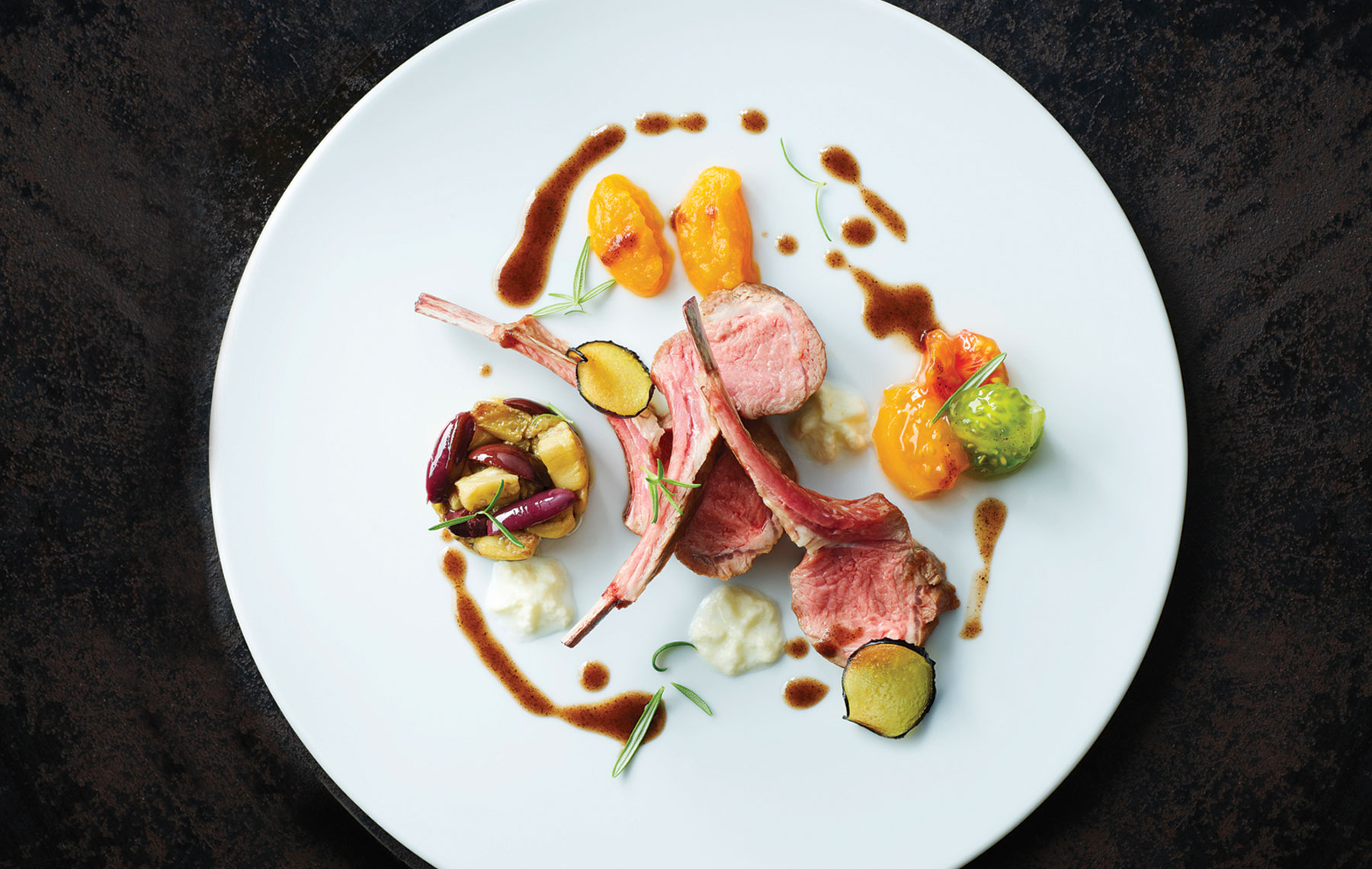
At a family wedding I attended recently, after the initial salad dish, the guests were served a single lamb chop as the next “appetizer.” Because lamb chops are usually part of the main course, there was confusion among some of the guests: Could this be the main course? Is this one of those hip, minimalist chefs who’s trying to impress us? Are we done with real food until dessert?
Meanwhile, my mother, who was sitting at another table, decided she wouldn’t take a chance. So, in full entrepreneurial mode, she convinced one of the waiters to bring her more lamb chops.
Guess what she planned to do with them?
That’s right — bring them to her son, as if I were 8 years old.
At Kol Nidre, I spoke about a class on Chassidut I took years ago, when my teacher used a memorable phrase to describe the ultimate benefit of the class: The refinement of character.
By then, lamb chops were the last thing on my mind. I was up and milling around, schmoozing with old friends and relatives, enjoying the incredible music.
Imagine, then, my discomfort when my beloved mother interrupted my schmoozing to hand me a plate with three lamb chops. In front of everyone, she proudly said, in French: “Tiens, mon fils” (Here, my son).
My initial reflex was: No way! There’s no way I’m going to embarrass myself feasting on three lamb chops in front of people who had only one. (In case you’re wondering, there was plenty of more food on the way.)
But I didn’t say anything. Within a second or two, I did a million calculations in my head and came to this conclusion:
There’s no way I will embarrass my mother.
I just couldn’t see myself rejecting her and forcing her to walk back sheepishly to her table with a plate of food she managed to procure for her beloved son.
So I decided I would take the embarrassment instead of her.
One of my proudest moments of the year was when I refused to embarrass my 87-year-old mother at a family wedding.
I accepted the plate, went back to my seat and started eating, trying not to notice if people were watching me during this awkward moment (of course, she was keeping an eye on me from her table, evidently pleased with herself).
Why did I bring this story up at Kol Nidre?
Because I was trying to make a point about big stuff versus small stuff. All year long, I deal with big stuff. As editor of a community newspaper, I try to elevate the communal conversation, create a big tent with diverse voices, etc. I’m proud of what we’ve accomplished professionally over the past year.
But as a human being, you must believe me that one of my proudest moments of the year was when I refused to embarrass my 87-year-old mother at a family wedding.
At Kol Nidre, I spoke about a class on Chassidut I took years ago, when my teacher used a memorable phrase to describe the ultimate benefit of the class: The refinement of character. This refinement is the work we do every minute of our lives, when we are constantly mindful of our power to hurt or to heal.
It’s a refinement that thrives in the micro, not the macro.
It’s in not rolling our eyes to subtly embarrass someone. It’s in not looking at our smartphones when we talk to our parents or our kids. It’s in making that little phone call to check in on a lonely relative. It’s in accepting a plate of food even when we don’t feel like it.
The media doesn’t care much about our personal relationships. As far as they’re concerned, they’re quite happy if all we do is worry about Donald Trump, gun violence, climate change, the elections, and so on. Sure, all of that is important, and we should never stop trying to improve the world.
But if we get too caught up with the big world, we can easily overlook our immediate world.
The great advantage of the immediate world is that we can make an instant impact. Reach out to a family member you rarely see, dig up amazing family stories, be mindful of little gestures that can hurt people, look for little gestures that can help others — all of those micro moments make an immediate impact.
If we do more of it during the year, we can come to Kol Nidre next year with a lighter load; with fewer requests for forgiveness; with a simple message to the Almighty: “God, this year, I’ve been really good with your children.”
That’s big stuff.