We take it for granted that the way to address the evil of anti-Semitism is to fight it. It’s a natural part of our vocabulary. We fight, we confront, we condemn, we call out. We refuse to stand idly by. All of that makes perfect sense.
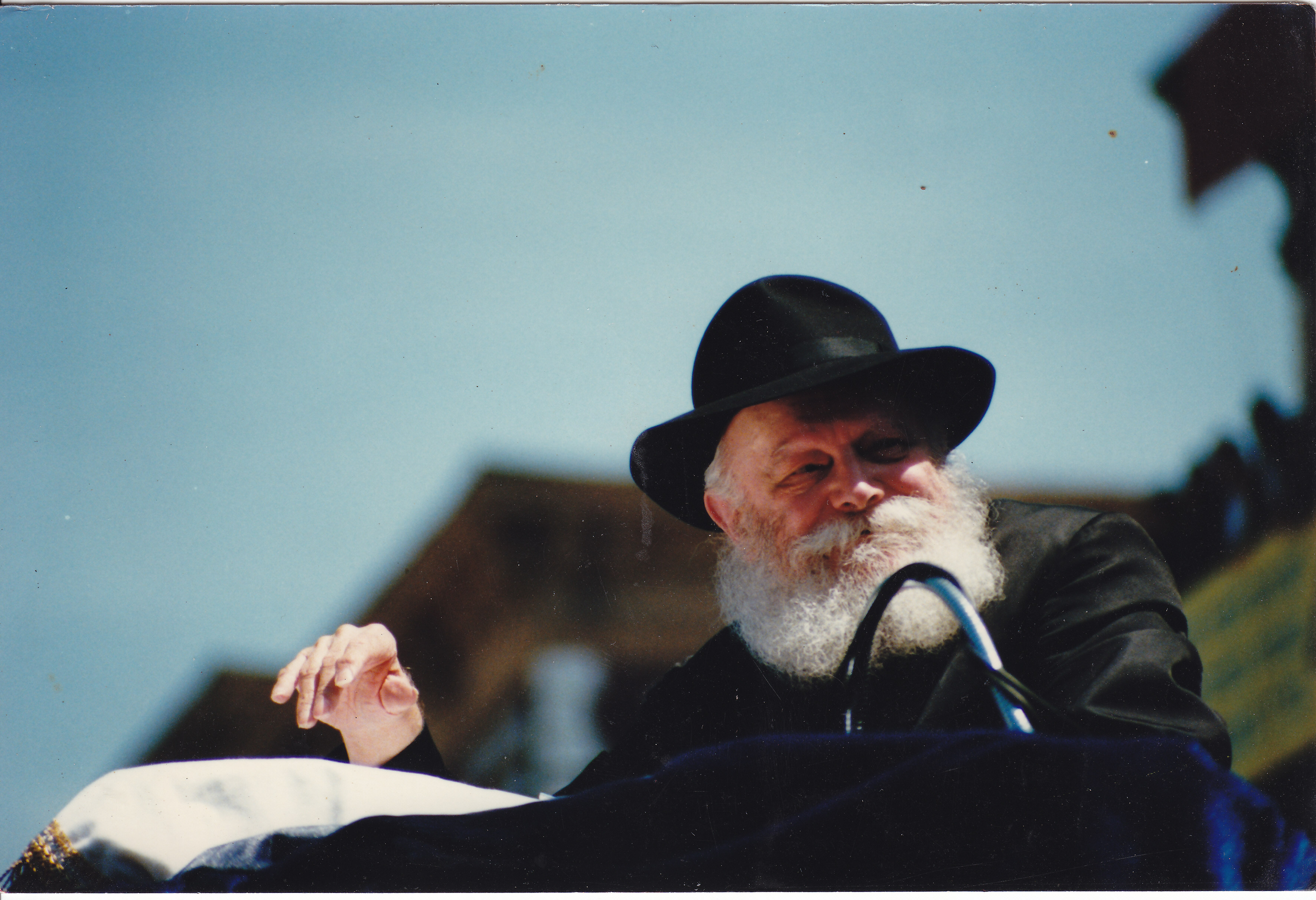
But on this 25th anniversary of the passing of the Lubavitcher Rebbe, Rabbi Menachem Mendel Schneerson, leader of the Chabad movement, it’s worth reflecting on his approach to fighting darkness. You never heard the Rebbe call for protests or demonstrations. He never urged his followers to hit the streets to confront evil.
Instead, he urged them to hit the streets to spread goodness and kindness.
I’ve met numerous Chabad emissaries over the years. Whether I’m speaking with an emissary from Bakersfield, Puerto Rico, Prague, Morocco, Costa Rica, Jamaica or Oxnard, it’s always the same message, the same question: “Can I help you do a good deed today?”
A few years ago, I was walking in Ben Gurion Airport, feeling especially guilty that I was missing the first night of Hanukkah, and thinking: Man, would I love to light a candle tonight. Of course, a Chabad emissary immediately appeared and asked if I wanted to light. As grateful as I was for the opportunity, he looked even more grateful when he saw me light the candle and recite the prayer.
If you want to understand Chabad and the power of the Rebbe’s approach, multiply my story by a few million. Imagine thousands of emissaries in over 80 countries spreading good deeds, day after day, and feeling grateful doing it. It adds up to a lot of goodness.
Imagine thousands of emissaries in over 80 countries spreading good deeds, day after day, and feeling grateful doing it. It adds up to a lot of goodness.
It’s uncanny how any time you see a humanitarian disaster, there’s usually a Chabad emissary involved with the rescue mission. They seem to always have the generator, the supplies, the shelters, the connection with embassy offices or whatever else is needed for emergencies. It’s the Chabad way — they help out any way they can.
Within the Jewish community, their approach is to encourage Jews to do more good deeds. Many of these deeds are actually Torah commandments, but they prefer the friendlier term “mitzvah,” or good deed. They’ve become a kind of global Mitzvah Resource Center for Jews around the world.
If you need a kosher kitchen in Uzbekistan, a mezuzah in Nigeria, a Shabbat meal in Iceland, a Megillah reading in Uruguay, a mourner’s Kaddish in Alaska or a Passover seder in Bend, Ore., chances are a Chabad emissary is around to help you do that mitzvah.
It’s like a force multiplier. The more good deeds are done, the more heaven is brought down to earth, the holier the world becomes.
It sounds idealistic, yes, and in many ways it is. The whole Chabad movement is driven by a deep sense of idealism.
The Rebbe himself was idealistic, but hardly naive. He was a man of the world, a scholar and philosopher, fully aware of the dark side of human nature. Maybe he saw that there already were plenty of groups fighting humanity’s darkness through the standard methods of confrontation and condemnation.
He took his movement in another direction, closer to who he was. It would fight darkness with light, hate with love, despair with hope, complaint with action.
By spreading the goodness of Judaism in such a visible and loving way, the Rebbe showed the world a Judaism that is hard to hate.
Did it work? Does it work? Does fighting darkness with light really change anything? Are there any metrics to measure success?
Chabad doesn’t worry about standard metrics. Its key metric of success is: How many people have we helped today and how many good deeds have we enabled? Maybe that’s the way love works. It doesn’t calculate. It just gives.
This kind of love can be disarming. It’s hard to hate someone who believes only in acts of goodness, even if it’s not your religion.
By spreading the goodness of Judaism in such a visible and loving way, the Rebbe showed the world a Judaism that is hard to hate. He responded to anti-Semitism with the gentle but potent force of pro-Semitism.
For all of us who believe in fighting anti-Semitism through standard methods, we owe the Rebbe a debt of gratitude for contributing his transcendent approach of goodness and kindness.
Whether or not we believe it’s “working,” it’s hard to imagine our world without it.