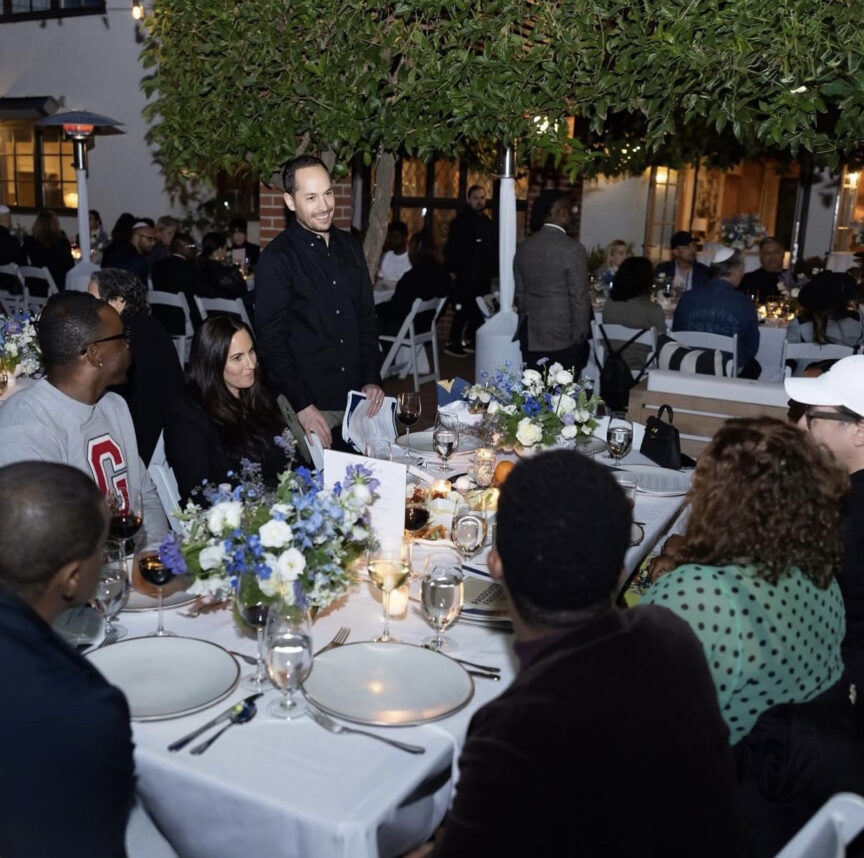

Perhaps you’ve read about a new app that’s all the rage with students at some of the nation’s most prestigious colleges, including Sanford, MIT, Princeton and Columbia.
“Date Drop” connects students in ways that clever come-ons or photos cannot.
It matches students based on their shared values, habits, goals and aspirations – what people actually want for themselves and each other.
The response to the app has been telling.
The novelty of the algorithm isn’t the headline. It’s the spiritual void that it reveals.
“Date Drop” is a small but meaningful attempt to restore the moral architecture of connection, to move people from isolation toward covenant, from choice overload toward shared commitment.
Even in a digital world, face-to-face still matters. Conversation still matters. Chemistry still matters.
In an environment of academic pressure and social anxiety, Date Drop lowers the stakes and raises the odds of something actually happening. The app seems to recognize that its structure represents a new kind of liberation.
One match. One reason to meet. One conversation and …
Date Drop’s inventor told The Wall Street Journal that he’s already raised more than $2 million in venture capital funding.
Imagine if Tevye had that kind of money when he engaged the shadchan, the matchmaker, in “Fiddler on the Roof.”
Consider that famous scene where Tevye wrestles aloud with the very notion of love.
Can affection really grow from a shared life?
For centuries, matchmakers have worked with precisely that assumption. The shadchan knew that alignment could mature into love. They invested in getting to know a person’s character and temperament, values and beliefs.
That model still works in modern Orthodox communities. Thousands of couples are building marriages not because it’s nostalgic but because it’s a part of the human experience. Character sustains what attraction alone cannot.
There’s a broader lesson for our communities, institutions and spiritual leaders. If we want to see people form meaningful relationships, we cannot outsource the work to an app. We need to design spaces, rituals and pathways to dignify a first meeting. To facilitate it so that it’s unforced. Not random but thoughtful.
Date Drop isn’t merely a dating innovation. It’s merely a modern remix of a time-honored tradition.
In a culture saturated with choices, swipes and infinite optionality, they’re craving something more human. Fewer options, more intention. Less performance, more presence.
Students aren’t resisting structure. They’re leaning into it.
Dating apps are supposed to promise efficiency and freedom. And they have delivered tangible outcomes. I’ve officiated weddings for couples who’ve met on JDate and Hinge.
But for many people, the experience is now utterly exhausting. Too many choices flatten people into stereotypes. Too much control eviscerates any possibility for a lasting commitment.
Technology is powerful but its not terribly wise.
Rabbi Jonathan Sacks warned that loneliness is not a peripheral discomfort but a threat to humankind itself. Our moral lives, he argued, flow from our capacity to form bonds of belonging. To live in a world where people care for one another and that care is reciprocated.
When these bonds break, the cost is profound: fragile families shatter, communities splinter. People lose their purpose.
For Rabbi Sacks, our common welfare is rooted in our connectedness – where relationships are a sacred partnership, grounded in responsibility, love, justice and compassion.
To truly see another human being is to glimpse the divine.
Strip away the software and human connection wins every time.
Rabbi Daniel Kraus serves as Vice President of Strategic Partnerships at the Birthright Israel Foundation and Director of Community Education at Congregation Kehilath Jeshurun in New York. An ordained rabbi with an MBA from Yeshiva University, he was named to The Jewish Week’s 36 Under 36 for his leadership in Jewish engagement.