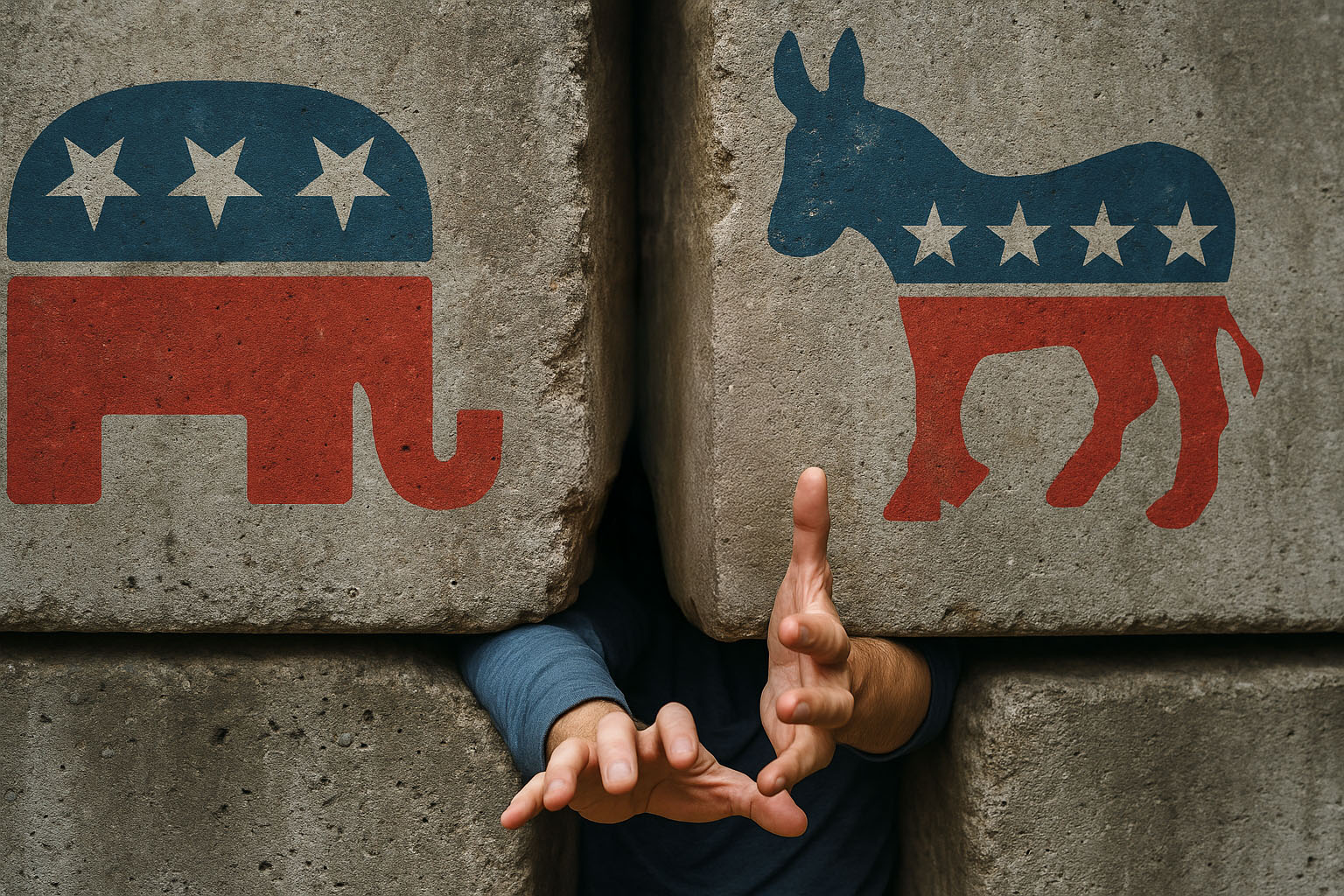
It’s been said that the worst number of political parties to have in a country is one. But the second worst number of parties to have is two. As we see every day, the unnatural binary nature of a two-party system forces false choices, extremism, tribalism and a growing necessity for both parties to kowtow to their most ideologically extreme members. The result is increased polarization, continued gridlock and a growing populist anger and resentment from voters toward the entire political system.
But while the Democrats and Republicans are not very effective at most things, they have demonstrated an immense talent for protecting their mutually beneficial duopoly. Their primary elections and conventions are held at taxpayer expense, reforms such as open primaries and ranked choice voting that would increase voters’ options are strongly discouraged, and the legal and financial barriers to a new party are stultifying. In spite of these obstacles, support for new political options continues to grow, especially among the youngest generation of voters.
It would be understandable if Jewish Americans were to decide to lead the battle for new political options, especially given the way we are being treated by the two major parties. The situation has gravely deteriorated over the 23 months since the Hamas terrorist attacks on Israel, but the increasing animosity toward Israel and Jews has been swelling among the most ardent loyalists in both parties’ bases for years.
Gaza has unquestionably made a bad situation far worse. The recent Democratic National Committee annual meetings were the scene of nasty internal warfare over a resolution that called for a suspension of all military aid to Israel and the immediate recognition of a Palestinian state. Efforts by party leaders to make the resolution less harsh by limiting the arms prohibition to only offensive weapons, calling for a release of the remaining Israeli hostages, and emphasizing the need for a two-state solution that specifically mentioned Israel were unsuccessful.
The symbolic measure was defeated and beleaguered party leaders scrambled to pass a more subdued alternative, which combined the call for the hostages’ release and a two-state solution with an immediate ceasefire and increased humanitarian aid for Gaza. But after that compromise was passed, angry opponents confronted DNC chair Ken Martin, who then actually withdrew his own resolution and instead promised to appoint a task force to study the issue further.
The result was an unavoidable reminder of how the historical political home of most Jewish voters was turning away from them. The question is no longer whether younger progressives will ultimately steer the party even further from its longtime support of Israel, but rather how much longer the dwindling cohort of older Democrats can forestall the inevitable.
But if one were to think that the Republican Party was positioned to take advantage of this opportunity to attract large numbers of American Jews into their tent, one would be gravely mistaken. While Democrats were tearing each other into pieces over Gaza last month, Republicans continue to display a peculiar ambivalence toward Jewish voters that prevents their ostensible Zionism from having more of an impact.
Last week, the Republican-controlled House Appropriations Committee proposed cutting off funding for colleges and universities that fail to address campus antisemitism and requiring schools to specifically implement anti-discrimination policies regarding antisemitism as a precondition of federal funding. But the federal budget they passed earlier this year cut hundreds of millions of dollars for security grants for nonprofit organizations, money which synagogues, schools and Jewish community centers heavily rely on to protect their members from antisemitic violence. This fuels the suspicion of many Jewish leaders that the Trump administration’s crackdown against antisemitism on college campuses is actually cover for unrelated efforts to force universities to make unrelated changes in student admissions and faculty hiring.
One party is compromising Israel’s safety and security. The other is putting American Jews at risk. The Jewish community has a decision to make: do we continue to put habitual partisan allegiance over our safety and welfare? Or do we begin to explore other alternatives altogether?
Dan Schnur is the U.S. Politics Editor for the Jewish Journal. He teaches courses in politics, communications, and leadership at UC Berkeley, USC and Pepperdine. He hosts the monthly webinar “The Dan Schnur Political Report” for the Los Angeles World Affairs Council & Town Hall. Follow Dan’s work at www.danschnurpolitics.com.