A few years ago, a Reform rabbi in Texas mentioned to me after I gave a talk at his congregation that he very much appreciated my use of the term “religiously liberal” to designate the majority of American Jews who are not Orthodox. He explained to me that in his congregation, he has Jews who are religiously but not politically liberal, and so this distinction, in his view, was an important one.
I have contemplated his comment to me a good deal over the past few years while writing a book about polarization of the American Jewish community. I admire this rabbi for showing a sensitivity to the political sensibilities of his entire congregation rather than just the political liberal congregants who—even at a Reform congregation in Texas—are likely the majority.
Until earlier this month, all clergy in this country had a reason to avoid wading into politics given that a ban on political activity by tax-exempt non-profits had been in existence for decades. But on July 8, the I.R.S. interpreted this ban to allow clergy and houses of worship to endorse political candidates. According to the I.R.S., political endorsements by houses of worship are distinct from campaigning activity and more like a private, “family discussion concerning candidates.”
But just because clergy can now endorse candidates does not mean that they should. To its credit, the Reform movement’s Religious Action Center has already condemned this ruling, urging its reversal. We all know how polarized politics has seeped into way too many of our cherished spaces, resulting in unhealable rifts among both families and friends. In too many settings, both professional and personal, the most dominant political perspective dominates the discourse, resulting in what I call a “silencing phenomenon” that impacts those with minority views.
Among American Jews, it is well-known that the majority of religiously liberal Jews are politically liberal, whereas the opposite is the case in most Orthodox communities. Based on many written and anecdotal accounts of synagogue life, this silencing phenomenon already operates in many congregations to varying degrees. But if rabbis decide to openly endorse political candidates, things will only get worse. Congregants who are already aligned with the rabbi’s perspective will become more emboldened, and ideological diversity will be even further diminished.
The silencing phenomenon is completely at odds with Judaism’s well-developed tradition of multi-faceted discourse, including the preservation of dissenting opinions in the Talmud. Also, as Tisha b’Av is almost upon us, we would do well to keep in mind that The Talmud also teaches that sinat chinam, baseless hatred, was the cause of the destruction of the Second Temple in 70 C.E. The tradition understands that hateful, or brazen, speech is the manifestation of this baseless hatred, and the context here is hatred between Jews.
But aside from the mandates of Jewish tradition, there are practical reasons why congregations should be largely free from political controversy. We need our houses of worship to be a refuge from strife and political discord, and not a source of such conflict. David Wolpe, the Max Webb Emeritus Rabbi of Sinai Temple, has said that when rabbis preach politics with a “Jewish twist,” they alienate members who have a different view of what should be the appropriate application of the “Jewish twist.” There are many political topics on which Jews of good faith can reasonably disagree.
The America Jewish community must work collectively toward fostering more fruitful and respectful dialogue among Jews with diverse backgrounds and perspectives. Synagogues are among the most important Jewish institutions in our country. Rabbis and other Jewish clergy should set an example for others by modeling respect for viewpoint diversity and refraining from political endorsements that will result in discord and further splintering among their congregants.
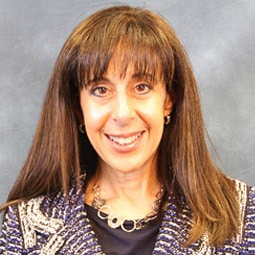
Roberta Rosenthal Kwall is law professor, author and Jewish educator with a focus on American Judaism. Her latest book is “Polarized: Why American Jews are Divided and What to do About It” (forthcoming, Bloomsbury Press).