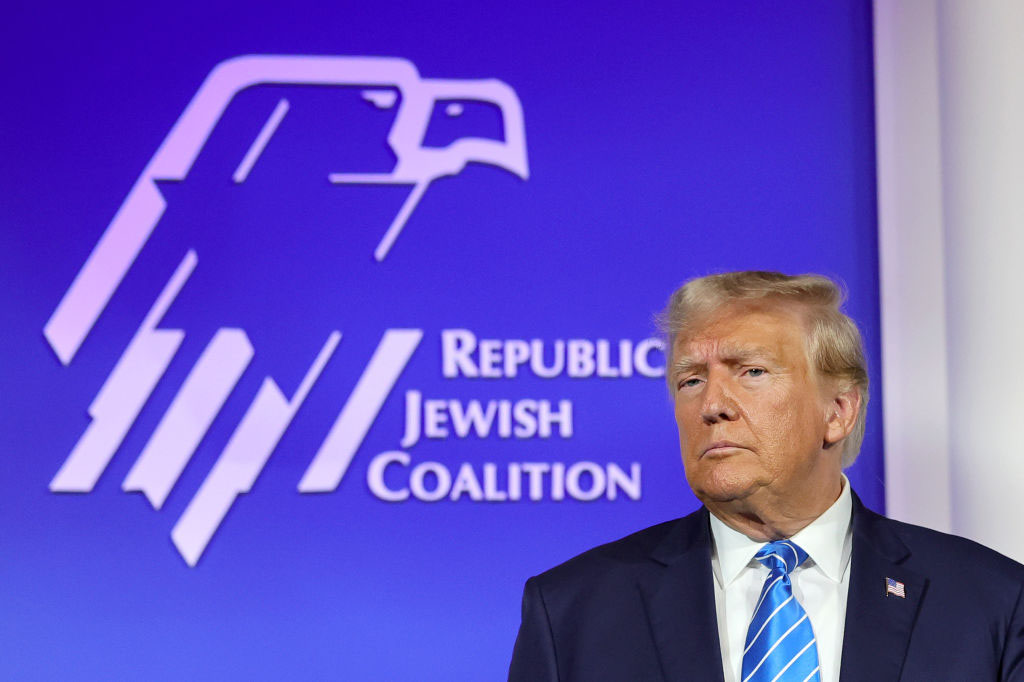
While Donald Trump did achieve some gains among Jewish voters in last year’s election, one of the least surprising statistics in our country’s politics is that the vast majority of American Jews continue to vote Democratic. This is the source of no shortage of frustration among Republican partisans, who point to Trump’s enthusiastic support for Israel in their conflicts with Hamas and Iran, as an argument in favor of greater support for the GOP in the Jewish community. Zohran Mamdani’s stunning victory in last month’s New York City’s mayoral primary campaign should have further strengthened the conservative Zionist argument, given the progressive insurgent’s past statements regarding Israel and the Middle East.
Trump’s supporters recently gained an additional talking point that they believe will assist them in attracting Jewish votes, when the president signed a budget agreement that provided sizable tax incentives for those who donate to private or parochial schools. Because this provision will make it much more affordable for parents to afford private school tuition, the bill’s legislative sponsors believe that large numbers of American Jews will take advantage of the opportunity to provide religious-based schooling to their children.
Conservative strategists continue to wonder why these events have not persuaded more Jewish voters to abandon their traditional political affiliation to back candidates from a party that is so willing to meet some of their most important international and domestic policy priorities. But a quick look at other topical news items should provide a stark reminder of how much work Republicans still need to do if they want to claim a larger share of the Jewish vote – and the obstacles that they continue to put in their own path.
As the controversy surrounding the disgraced sexual predator Jeffrey Epstein has dominated national political discussion over the last few weeks, one particularly odious aspect of the sordid drama has been fanned by ultra-conservative antisemitic voices who have argued that Epstein was working in concert with the Israeli intelligence agency Mossad. Led by right-wing provocateur Tucker Carlson, these hatemongers have argued that Epstein had coordinated with Mossad to blackmail Israel’s opponents by luring them into sexual relationships with the underage women whom he had been accused of trafficking.
Given Trump’s past friendship with Epstein, and the anger among the president’s supporters toward what they believe has been the Justice Department’s mishandling of Epstein’s files, these vile accusations from the far right suggest an effort to shift the focus of the story from Trump in other equally salacious directions. While there has been no shortage of equally abhorrent accusations against Israel from extreme anti-Zionist progressives, these particular charges evoke other age-old tropes against Jews. Let’s agree that introducing a 21st-century audience to ancient and discredited blood libel slurs is a less than ideal way to increase Jewish support for conservative candidates.
But even on far less outlandish matters, Republicans continue to erect hurdles that block the path of their outreach efforts. This past spring, the GOP-dominated Texas state legislature passed a bill allowing public schools to offer a daily period for prayer and religious study, including Bible reading. This has raised concerns among some Jewish community members and others who see it as potentially promoting Christianity in schools. While the law allows for voluntary participation and requires parental consent, some critics worry about the impact on students who may feel pressured to participate or who may not feel represented by the religious focus.
For the sake of argument, let’s concede that the overwhelming majority of the legislation’s backers harbor no animus whatsoever toward the Jewish religion, that they intend no coercion whatsoever to force Jewish or other non-Christian students to participate against their will and that their intentions contain no malice, prejudice or discrimination of any kind. But the new law displays an unacceptable – even if unintentional – level of cultural insensitivity and lack of awareness for the needs of a multi-faith community.
The result is a newly-constructed barrier between Republicans and the Jewish community with whom they hope to establish a stronger relationship. And a difficult task just became that much harder.
Dan Schnur is the U.S. Politics Editor for the Jewish Journal. He teaches courses in politics, communications, and leadership at UC Berkeley, USC and Pepperdine. He hosts the monthly webinar “The Dan Schnur Political Report” for the Los Angeles World Affairs Council & Town Hall. Follow Dan’s work at www.danschnurpolitics.com.