If and when Israel and Hamas are able to achieve a temporary ceasefire and hostage release agreement, the international conversation will then turn to a long-term peace. Which means the pressure on Israel to accept a two-state solution is about to dramatically increase.
The coercion is already becoming more intense. The nations of Norway, Ireland and Spain formally recognized a Palestinian state this week, joining 140 other United Nations member states who have already done so. This follows last month’s otherwise-unanimous vote by the U.N. Security Council to support Palestinian membership (except for the United States veto, the vote was 12-0 with one abstention) and the more recent order from the International Court of Justice for Israel to cease its military operation in Rafah.
The vise is tightening and will only get tighter. Even stalwart allies like the U.S. and Great Britain have made it clear they want a two-state solution too, although they correctly note that it should be the product of negotiations between Israel and the Palestinians. While Benjamin Netanyahu regularly proclaims his willingness to stand alone in the fight against Hamas, the long-term likelihood of a Palestinian state is undoubtedly growing.
But right now, the pressure is focused in only one direction. While Israel is expected to risk the safety and security of its people through such a major concession, no comparable ultimatums have been placed on the Palestinians. A two-state solution requires both states to give something of value to them, but what are the Palestinians giving? To this point, the answer is absolutely nothing. Even the 20th century formulation of “land for peace” is no longer part of the conversation.
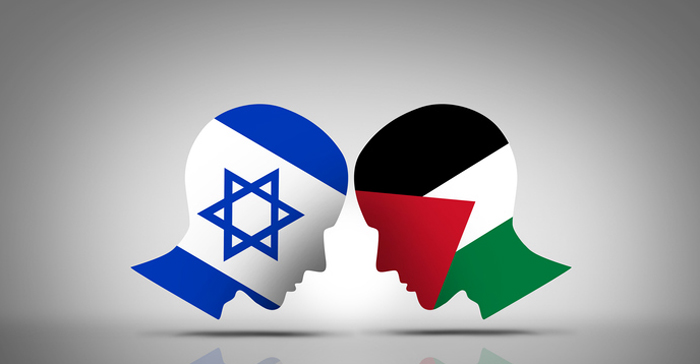
But the solution is not complicated. If Israel is to recognize a Palestinian state, then the Palestinians should be obligated to recognize Israel – as a Jewish state. In the past, the Palestinian Authority has recognized Israel’s existence (but not its right to exist). However, it no longer takes even that step. Hamas has indicated that they might accept Israel on an “interim” basis. Both have made it clear that they will never formally consent to a Jewish state even with pre-1967 borders.
Netanyahu’s critics have accused him in the past of using such a requirement as a way of avoiding serious negotiations. But if Israel is to have any confidence that a Palestinian state would not simply be a launching pad for constant warfare and that there would be even the possibility of peaceful co-existence between two neighboring countries, recognition of a Jewish state seems like a reasonable request to provide that minimal assurance.
In addition to the growing number of sticks, Israel is also being offered one potentially valuable carrot: Saudi Arabia is ready to sign a formal agreement with Israel to establish a regional anti-Iran coalition. But the Saudis require that Israel commit to a pathway toward Palestinian statehood in order to move forward with a formal deal.
It’s important to note that the Saudis are not demanding the immediate establishment of a Palestinian state to sign on, but rather a commitment from Israel’s leaders to work toward that goal. This creates an opportunity for Israel to join such a process only under the condition that it also includes Palestinian recognition of Israel as a Jewish state. It would shift the diplomatic debate from the current singular focus on Israel to one that imposes difficult requirements on the Palestinians as well. At the very least, it would remind the rest of the world that both sides should be held to similarly demanding standards.
To date, the discussion has been only about Israel’s need to sacrifice. Expanding that conversation to set comparable expectations for Palestinian leaders would create a balance that can set the stage for potentially productive negotiations.
To date, the discussion has been only about Israel’s need to sacrifice. Expanding that conversation to set comparable expectations for Palestinian leaders would create a balance that can set the stage for potentially productive negotiations.
There will never be a way to guarantee that a Palestinian state would respect Israel’s borders, its existence and its Jewish identity. But without some type of public assurance, our only guarantee would be of never-ending war, terrorism and bloodshed. So such recognition should be a necessary next step toward a meaningful peace process.
Dan Schnur is the U.S. Politics Editor for the Jewish Journal. He teaches courses in politics, communications, and leadership at UC Berkeley, USC and Pepperdine. He hosts the monthly webinar “The Dan Schnur Political Report” for the Los Angeles World Affairs Council & Town Hall. Follow Dan’s work at www.danschnurpolitics.com.