fbpx

May 29, 2024

Biden Arms Regime That Murders Civilians

President Biden is planning to provide offensive weapons to a Middle Eastern regime that has been massacring innocent civilians, according to news reports. Yet no protest tents have been set up on college campuses, no members of the congressional Squad” are making angry speeches, and no hecklers are calling him Genocide Joe.

How can this be? Arent the protesters who have captured our nations attention motivated by humanitarian principles, which apply no matter who the offender is? Arent they concerned about all human suffering? Dont they want America to hold back weapons from every regime that might kill civilians?

Apparently not.

According to news media reports, the Biden administration plans to resume providing offensive weapons to Saudi Arabia, after a four year-ban that the president imposed because the Saudis had used American munitions in airstrikes that killed some Yemeni civilians.

While campaigning for the presidency in 2018, Joe Biden vowed he would treat Saudi Arabia as a pariah” because of its many human rights violations, including dismembering one of the regimes prominent critics.

And last year, the Saudis gave the United States additional reason to hold back weapons: human rights groups revealed that Saudi Arabian border guards had slaughtered hundreds, perhaps thousands” of unarmed African civilians.

The African migrants had approached the Saudi border in the hope of finding work or receiving asylum from persecution. The Saudis responded with gunfire, mutilations, and sexual atrocities.

Yet the Biden administration has been looking for ways to improve its relations with Riyadh. As early as the autumn of 2022, American diplomats received grim news that border guards in Saudi Arabia, a close U.S. partner in the Middle East, were using lethal force against African migrants,” the Times revealed—yet throughout the entire year to follow, the Biden administration never criticized the Saudi massacres.

The most any U.S. official said, according to the Times, was an oblique reference” to the issue: the deputy American representative to the United Nations said during a UN briefing in January 2023 that the Biden administration was concerned” by alleged abuses against migrants on the border with Saudi Arabia.” He called on all parties” to permit an outside investigation. That was it.

It gets worse. During the past year, the Saudis have openly strengthened their relations with two of Americas worst enemies—yet the Biden administration has remained silent.

In March 2023, Saudi Arabia renewed diplomatic relations with Iran, after a seven year rift. Ambassadors were exchanged, embassies were re-opened, and then-Iranian president Ebrahim Raisi visited Riyadh.

Iran is not the only anti-American regime that Saudi Arabia is embracing. Last week, the Saudis sent an ambassador to Syria after a twelve year-break in relations with Damascus, and the Syrian embassy had reopened in Riyadh.

Syrian dictator Bashar Assad is a vehement enemy of the United States and Syria is a state sponsor of terrorism, against which the U.S. maintains sanctions. There are 900 American troops in Syria, fighting terrorists and supporting the autonomous Kurds, whom Assad opposes. The Saudis have chosen to side with Assad.

Yet neither Saudi massacres of black Africans nor Saudi friendliness toward Iran and Syria has moved the Biden administration to even verbally challenge Riyadh.

The only time President Biden has publicly criticized Saudi Arabia was in 2022—for cutting oil production. The president was worried that—as the New York Times put it—such cuts might lead to a rise in global oil prices before the midterm elections.” The president even threatened there would be consequences” for oil cuts. Apparently there are no consequences for mass murder, or for embracing anti-American regimes.

And none of this seems to bother those on campus and in Congress who have been so vocal about Gaza. They say they care about the deaths of civilians—but only when Israel can be blamed. They say they want America to refrain from sending weapons to countries that are engaged in Mideast wars—but only when the country is Israel and the war is against Hamas terrorists. And, of course, they say black lives matter”—but not when blacks are being slaughtered by the Saudis.


Dr. Medoff is founding director of The David S. Wyman Institute for Holocaust Studies and author of more than 20 books about Jewish history and the Holocaust. His latest is Whistleblowers: Four Who Fought to Expose the Holocaust to America, a nonfiction graphic novel with artist Dean Motter, published by Dark Horse / Yoe Books.

Biden Arms Regime That Murders Civilians Read More »

Yeshiva University Honors Senator John Fetterman With Its Highest Award

“I’m just a senator with a big mouth that happens to be committed to Israel,” said Senator John Fetterman (D-PA) at Yeshiva University’s 93rd annual commencement ceremony on Wednesday. Fetterman received the private Modern Orthodox Jewish University’s highest honor for global leadership, the Presidential Medallion.

“It is truly humbling to be invited to share in this milestone with the graduates of Yeshiva University,” said Fetterman. “As we gather to celebrate the achievements of the graduating class, we must also acknowledge the profound significance of their journey within the context of the recent surge in antisemitism across the country.”

Fetterman said he was surprised by the invitation to speak at the ceremony, especially after finding out that last year’s commencement speaker was the inventor of Israel’s Iron Dome missile defense system. “I don’t belong in that company, I truly don’t,” Fetterman, 54, told the 1,700 graduates at Louis Armstrong Stadium in Queens.

Since the Israel-Hamas war began nearly eight months ago, Fetterman has been one of the most outspoken supporters of Israel at the U.S. Capitol, wallpapering his office with the pictures of hostages held by Hamas and wearing dog tags to show his support for their release.

He wore the Israeli flag like a cape to a pro-Israel march on the National Mall and waved it from the roof of his home as protesters chanting below accused him of “supporting genocide.” He mocked the “pup tent intifada” on college campuses, urged unconditional support for Israel, and countered calls for an Israeli ceasefire by placing the blame for the humanitarian catastrophe in Gaza squarely on the terror group Hamas.

“There’s a very clear right side on this,” he says, comparing Hamas to the Nazis in World War II. “That kind of evil cannot be allowed to operate. Because if it is, how are we ever going to have peace?”

Fetterman has also criticized other colleges for “capitulating to misbegotten demands” from protesters who have called to boycott Israel.

Photo courtesy Yeshiva University

The senator graduated from Harvard’s Kennedy School of Government in 1999 with a Master of Public Policy. “Personally, I do not fundamentally believe that it’s right for me to wear this today,” the senator said at the commencement ceremony to a standing ovation, as he removed the Harvard hood, identifying him as an alum, from around his neck.

“I have been profoundly disappointed [in] Harvard’s inability to stand up for the Jewish community after October 7,” he added.

“Senator Fetterman is one of the true heroes of our time for his unwavering and courageous commitment to moral clarity, which has fortified our community and been a clarion call for our country,” said Rabbi Dr. Ari Berman, President of Yeshiva University. “At this critical moment in Jewish and American history, our commencement exercises mark not just an enormous accomplishment for our students, but also for the global community.”

“Standing for Israel is a source of great strength for our community and it’s our privilege to honor him,” Berman.

Fetterman’s remarks were very well received, and he was later spotted dancing with students and school leaders to the song “Geshmak to Be a Yid” (“It’s delightful to be Jewish”).

“The Jewish community everywhere deserves our support,” said Fetterman. “And I promise you will always have mine. Just like you, my heart is with all of the hostages and the Israeli soldiers defending their country.”

“The Jewish community everywhere deserves our support,” said Fetterman. “And I promise you will always have mine. Just like you, my heart is with all of the hostages and the Israeli soldiers defending their country.”

“And I will not stop speaking out until every last hostage is brought back home,” he added.


Karen Lehrman Bloch is a Jewish Journal contributor and editor in chief of White Rose Magazine.

Yeshiva University Honors Senator John Fetterman With Its Highest Award Read More »

Images of Death and Devastation in Rafah Rattle Some of Israel’s Most Ardent Defenders

For months, Zoe Buckman, a Brooklyn artist with more than 72,000 followers on Instagram, has posted about the hypocrisy she sees in critics of Israel who downplayed atrocities committed by Hamas on Oct. 7.

On Monday, she again decried hypocrisy. But this time, she aimed her criticism in large part toward fellow supporters of Israel.

“Folks who do not condemn loss of civilian life in Palestine are akin to the many who refuse to condemn 10//7, h@mas and what is being done to the hostages,” she posted in Instagram Stories. “Turning a blind eye the way others do to us, is not our way.”

In the wake of Sunday’s Israeli strike on a displaced persons camp in Rafah that killed dozens, Buckman was one of a number of pro-Israel advocates who said they could not look away. The viral images of devastation — including that of a decapitated child —  triggered an outpouring of horror on social media, including from activists who have previously defended Israel’s military campaign in Gaza. 

Some sought to contextualize the violence, noting that it was Hamas that started the war and could end it by surrendering and freeing the captives. Others suggested that no end was worth the horror of at least 45 civilians killed in a single incident.

Investigating the airstrikes

A range of world leaders have also condemned the attack, which Israel says it is investigating as likely caused by a secondary explosion after it targeted two Hamas leaders, who were killed. But the responses underscored the degree to which support for Israel’s war effort has eroded beyond the halls of government in the nearly eight months since Oct. 7.

“The scenes from Rafah overnight are horrific,” Piers Morgan, the popular British TV host who has made a sport of sparring with critics of Israel on his show, said Monday on X. “I’ve defended Israel’s right to defend itself after Oct. 7, but slaughtering so many innocent people as they cower in a refugee camp is indefensible.”

Addressing Israeli Prime Minister Benjamin Netanyahu, to whom he has previously afforded friendly interviews, Morgan added, “Stop this now @netanyahu.”

Avi Mayer, a longtime pro-Israel activist and former editor of the Jerusalem Post, called for Hamas’s surrender, but his tone was one of exhaustion. “The images from Rafah are terrible,” he said. “This war has gone on for too long. It’s time for it to end.”

Mayer was not the only Israeli who has accrued a massive following for public diplomacy efforts defending their country and its actions to lament the strike and its aftermath.

Hen Mazzig, a writer and a public speaker, posted that it is “undeniable” that Israel has taken measures to protect civilians in Rafah even as Hamas has shot rockets at Israel but wrote, “None of this can ever justify the heartbreaking tragedy of Palestinian civilians losing their lives in the fire caused by the strike.”

He added, “We must always recognize the humanity in Palestinian civilians who are not part of this war. When we fail to see their humanity, we lose our own.”

Israeli officials are defending the IDF campaign in Rafah, which they say is necessary to eliminate the remnants of Hamas’ fighting force. In an address, Netanyahu called the strike a “tragic” mistake but said, “I will not yield or surrender. I will not end the war before achieving all our goals. Our fallen heroes will not have died in vain.”

On Tuesday, Rear Adm. Daniel Hagari, the IDF spokesperson, said in an English-language video that the original aim of the strike, to take out senior leaders of Hamas, was successful. He said the civilian deaths were caused by a fire sparked by the strike that the military did not anticipate.

“Their deaths saved lives,” he said about the Hamas leaders. “Sadly, following the strike, due to unforeseen circumstances, a fire ignited, tragically taking the lives of Gazan civilians nearby. Despite our efforts to minimize civilian casualties during the strike the fire that broke out was unexpected and unintended. This is a devastating incident which we did not expect. We are investigating what caused the fire that resulted in this tragic loss of life.”

Some Israeli right-wing extremists celebrated the incident, referring to it in now-deleted social media posts as “Lag b’Omer in Rafah,” a reference to the minor Jewish holiday that fell on Sunday and is celebrated with bonfires.

Tomer Persico, a scholar at the Shalom Hartman Institute who has decried antisemitism on the left since Oct. 7, posted a screenshot of one such tweet, since deleted, by a right-wing Israeli TV host. “This is joy at the deaths of children,” he said.

Many other voices from Israel pushed back against celebrating the strike. Sarah Tuttle-Singer, an opinion columnist whose social media posts since Oct. 7 have described the anguish of Israelis, also called for an end to the fighting.

“This war has stolen so much from us,” she said on Facebook. “We will not let it ALSO steal our humanity and make us turn away from the suffering of others.”

In one Instagram post that exemplified the degree to which the Rafah strike was creating new bedfellows of people who have not always agreed since Oct. 7, a viral drawing by the Egyptian dissident artist Yassin Mohammed shows a man lifting up a headless baby with a flower emerging from its neck.

Among those to share it was Israeli comedian Noam Schuster-Eliassi, a harsh critic of the war effort since early on. “Who will stop this death machine?” she wrote. “Stop this death machine now.”

Alana Zeitchik, a relative of five released hostages who still has relatives held in Gaza, shared Schuster-Eliassi’s post from New York. And then Buckman, whose content more typically lambastes what she says is antisemitism among those protesting the war, shared it as well.

Images of Death and Devastation in Rafah Rattle Some of Israel’s Most Ardent Defenders Read More »

Glass Containers Filled With Red Paint Thrown at Attendees of Bay Area Jewish Event

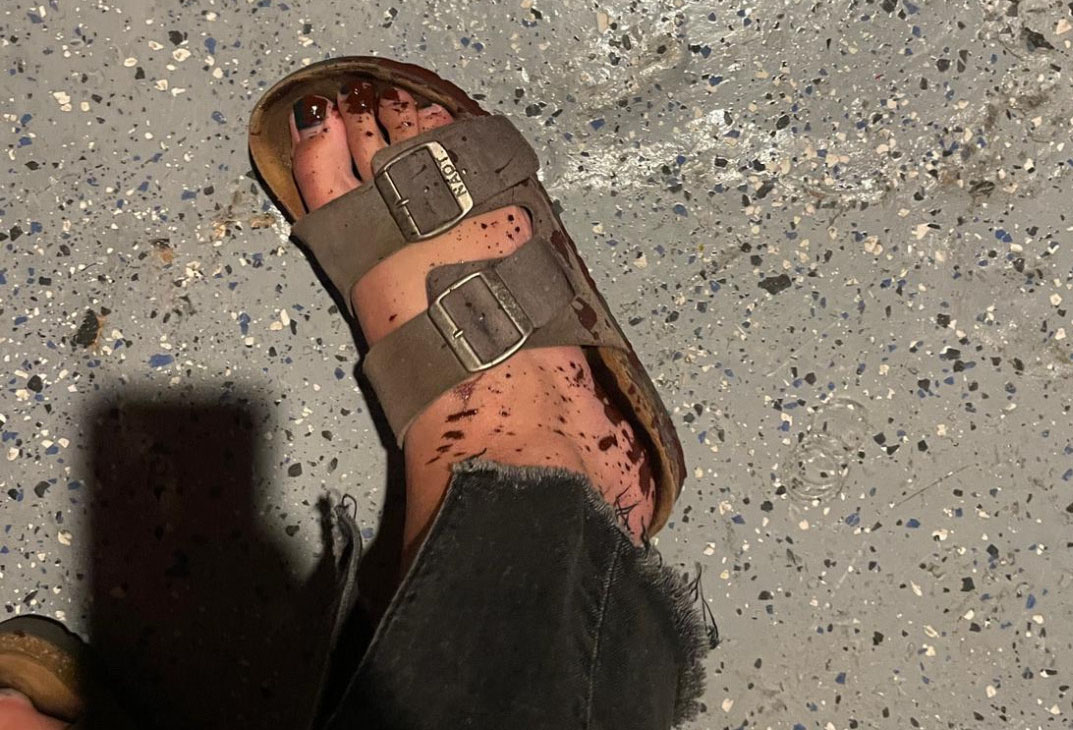
Anti-Israel protesters reportedly threw glass containers containing red paint at those attending a Jewish event in Oakland on May 8.

The event, hosted by Malka Productions (an organization that puts on events for Bay Area Jews in their 20s and 30s) at the Continental Club, featured Jewish Israeli Latina influencer Debbie Lechtman (“@Rootsmetals” on social media) discussing combating antisemitism and maintaining Jewish identity in the digital era. Danielle Chetrit, who co-founded Malka Productions, told The Journal in a phone interview that while most of the protesters “screamed and held signs … one or two protesters who were a little crazy and came with these glass mason jars with red paint and threw them at our attendees.”

Dyanna Loeb, who also co-founded Malka, added that initially there were only 1-2 protesters and then it “accumulated” to around 10-15. Loeb explained that the glass jars hit the ground and “shattered”; a few people were directly hit by the projectiles. there were “no serious injuries but people did get scratches and bruises and scrapes,” added Loeb. “The agitators were yelling epithets like, ‘if you have family in Israel I hope they all die,’ ‘I hope horrible things happen to your family,’ ‘genocidal pigs,’ ‘baby killers,’ ‘I hope you f—ing choke.’ These were the things that they were saying.” San Francisco resident Vince Celli described the protesters as wearing masks and keffiyehs and argued that it was ironic that they were accusing the attendees of white supremacy when at the time Celli was in the crowd speaking to a Black Yemenite Jew.

“All of a sudden I saw some commotion, and something exploded on the ground, and I saw this red substance and glass fly everywhere,” he added. “I saw where it was coming from, and these two guys had run up and hurled these objects at force … right at the crowd of us.” He estimated that there were about 30-50 attendees standing in front of the venue at the time.

Sunnyvale resident Yuliya Eydelnant told The Journal that the protesters, who she believed were college-aged, “were quite aggressive” and claimed the protesters shouted “Dirty Jews,” and “Die Zionists.” She also noticed that the protesters seemed to be “hyping each other up” and was about to say something to security when they started throwing glass into the crowd. “It looked like glass bottles filled with some kind of red paint,” Eydelnant said. “It smelled very chemical-ly … I dodged the first two that they threw, they were throwing them towards our feet.” Celli described it as a “red sticky substance” and thought it might have been paint, but smelled like nail polish.

Eydelnant said that she saw people got hit with paint on their arms and legs; she later realized that she got some paint on her shoes. It wasn’t until the following morning that she discovered she suffered a cut on her leg as a result of the glass breaking; she doesn’t believe it’s anything serious.

Oakland resident Veronica Siegel told the Journal that she was about to go inside the venue when she heard “glass shatter by my foot … then I just hear a bunch of screaming and I look down and my foot is all red.” Siegel then ran into a coat check room to make sure her foot didn’t have any glass in it.

Celli, who got some red paint on his pants, said that the security guard at the event “lunged at them as if they were going to chase them down” and at that point the protesters throwing the glass objects ran away. “We asked the police, why aren’t you pursuing them, that was clearly assault,” he alleged. “And they said, well we’re here to protect you guys and if we leave to go pursue this, it could escalate, and there’s protesters here, so we’re just kind of here to monitor the situation.”

A spokesperson for the Oakland Police Department told The Jewish News of Northern California, “While officers were present at the scene, monitoring a group awaiting an event, several individuals arrived and initiated a demonstration. During the demonstration, two individuals threw objects filled with paint towards the group, resulting in an unknown victim and a building being struck. The two individuals then fled the area on foot. This investigation is ongoing.”

Eydelnant, whose family escaped Soviet-era Ukraine, said that the experience was “retraumatizing”; she claimed that she has been a victim of numerous antisemitic incidents in the past — including assaults — but has “never experienced something of this level.” “It was the early evening, it was still light out, in broad daylight throwing glass at others simply because of their ethnicity and their nationality and their identity,” she said. “It’s very heartbreaking.”

Photo by Vince Celli

Eydelnant added that “the event was just about being Jewish, so if they don’t agree about us being Jewish and existing, it’s [a] very disturbing thing. It very much breaks my heart that people so long have fallen into this belief that hurting others for who they are is okay.” Celli said he was surprised that the protesters were there since it was not a pro-Israel rally. “It just felt like they heard it was a Jewish event and they came to harass us.”

“A lot of us were pretty shaken,” Celli said. “We’re used to there being protesters and counterprotesters at our events our stuff, and I’ve seen a lot of instances on the news of things getting violent, but this is the first time I’ve ever seen it person, and the hate that was clearly there was pretty upsetting, pretty intimidating.”

Malka Productions does not publicly provide the address to their events for security reasons; they only give it to registered attendees after each attendee has been vetted. Loeb and Chetrit aren’t sure how the address for the Lechtman event was leaked to anti-Israel protesters that posted it to social media, as all 243 attendees were all either prior attendees to Malka events or were friends of Loeb and Chetrit’s friends. Loeb and Chetrit posited that a registered attendee may have sent it to a friend they thought they could trust but couldn’t know for sure.

The event still went on as planned despite the protesters, and the end security escorted people to their cars without incident. Eydelnant described Lechtman’s speaking event as being “lovely” and “inspirational.” Celli said he was still able to have a good time during the event, but contended that a lot of people felt “apprehensive” when leaving and that they were advised to leave in groups to get to their cars. “It just felt really pre-Holocaust-y.”

“It really just goes to show resilient the community is, and how we support Debbie and her work,” Chetrit said, adding that there were “non-Jewish allies” who came and asked questions. “We won’t let these protesters intimidate us and we will stand strong.”

Glass Containers Filled With Red Paint Thrown at Attendees of Bay Area Jewish Event Read More »

Campus Watch May 29, 2024

Shots Fired at Toronto Jewish Girls Elementary School

Multiple shots were reportedly fired at Toronto, Canada’s Bais Chaya Mushka Elementary School, an Orthodox Jewish girls school, on the morning of May 25.

The Toronto Star reported that, according to police, suspects fired at the school at around 4:50 a.m. and then fled in a dark vehicle. There were no injuries but there was damage to the school. Police have not yet concluded if it was a hate crime, but Rabbi Yaacov Vidal — the school’s principal — told The Star that he considers “this a hate crime. I don’t see any other reason why this would occur.” Vidal also said that the school will try to beef up security.

A rally was held outside the school on May 27 denouncing the shooting as an act of hate. “It was a deliberate attempt to spread fear across our entire Jewish community — to make us cower and hide who we are,” UJA Federation of Greater Toronto Chief Program Officer Daniel Held told rallygoers, according to the CBC. “But as you can see here today, the attackers completely failed. We are more united than ever. We are more committed than ever to support each other. We are more determined than ever to fight antisemitism wherever it happens.”

“Jew Die” Graffiti Found at Australian Jewish Day School

Graffiti stating “Jew die” was found on a fence at Mount Scopus Memorial College, a Jewish day school in Melbourne, Australia, on May 25.

The school’s principal, Dan Sztrajt, told ABC Radio Melbourne that he hopes that the graffiti was a one-time occurrence since “we have so many students at this school who came here because of antisemitism at non-Jewish schools and I don’t want them to start feeling that it’s no longer safe for them even here in what has to be …  one of the most secure institutions in the country.”

Anti-Defamation Commission Chairman Dr. Dvir Abramovich told Sky News Australia, “This is hatred, pure and simple, and as a former student of Mount Scopus College, I am shattered and sickened by this open call to murder Jews that would make the barbaric terrorists of Hamas very proud … Such despicable words of hate and violence, aimed directly at children, are dangerous, especially during this atmosphere in which antisemitism is at an all-time high is a terrifying reality that has creeped into our daily lives.”

Hundreds of Pro-Palestinian Protesters Walkout During Harvard Commencement Ceremony

Hundreds of students walked out during Harvard University’s commencement ceremony on May 23 as they chanted “Free, Free Palestine,” the Associated Press (AP) reported.

The walkout came after Harvard determined that 13 students involved in the since-removed pro-Palestinian encampment on campus were not eligible to receive their diplomas due to their conduct; some protesters during the walkout chanted, “Let them walk,” per the AP.

A student speaker, Shruthi Kumar, addressed the 13 students in her speech by saying, “I am deeply disappointed by the intolerance for freedom of speech and the right to civil disobedience on campus” to applause, the AP reported.

Harvard Chabad Rabbi Accuses Commencement Speaker of Using Antisemitic Trope During Speech

Harvard Chabad Rabbi Hirschy Zarchi is accusing the university’s featured commencement speaker, journalist Maria Ressa, of promulgating an antisemitic trope during her speech.

The Harvard Crimson reported that Zarchi confronted Ressa, the CEO of the media company Rappler, after she said she had been “called antisemitic by power and money because they want power and money.” Zarchi told the Crimson that he had asked that Ressa provide a public clarification on the matter, and when it was clear she wasn’t going to he left, though he acknowledged he couldn’t hear her response. Ressa posted on X on May 26 that her comment “was about how Big Tech and people in power seek to divide us, often for their own gain (the antecedent is several sentences ahead). Still, if my words caused offense, I apologize.” Ressa also claimed on X that she did provide a clarification to Zarchi but wasn’t sure if he heard it, per the Crimson.

Pro-Palestinian Protesters Call on Drexel, UC Santa Cruz to End Ties with Hillel

Pro-Palestinian protesters at Drexel University in Pennsylvania as well as UC Santa Cruz (UCSC) are calling on their respective universities to end ties with Hillel.

Jewish Telegraphic Agency (JTA) reported that Jews Against White Supremacy UCSC had posted on social media that “Hillel receives millions from organizations financed by the Israeli apartheid state whose existence is reliant on Palestinian death” and the Drexel Palestine Coalition accused Hillel of being “a global zionist campus organization, whose primary purpose, funding and operations are to facilitate birthright trips to Occupied Palestine.”

Hillel International President and CEO Adam Lehman told JTA that it’s “deeply antisemitic” to target Hillel.

Campus Watch May 29, 2024 Read More »

Delicious Donuts for National Donut Day

Who doesn’t love donuts! 

While sufganiyo (aka jelly donuts) are a Hanukkah favorite, donuts are too good to enjoy just once a year. Thank goodness, National Donut Day is the first Friday in June.

“Learning about different Jewish donuts is like taking a virtual trip around the Diaspora.”
– Beth Lee

“Learning about different Jewish donuts is like taking a virtual trip around the Diaspora,” Beth Lee, founder of OMGYummy.com, told the Journal. “Sufganiyot have roots in the Polish Pączki but are super popular in Israel, bimuelos are a Sephardic tradition for Jews from Spain and Greece and sfenj, a Moroccan treat, are often eaten as a Hanukkah treat by Mizrahi Jews from the Maghreb.”

Sfenj is a Moroccan donut made with a very wet, mildly-sweet dough. 

“The dough is firmer than bimuelos dough, so you can form a ring with the dough, rather than just spooning it into the oil,” she said. “Sfenj are sold as street food in Morocco sometimes strung together on palm fronds and are eaten for breakfast or tea time.”

Sfenj
Photo by Beth Lee

Sfenj (Moroccan Donuts)

PREP TIME: 15 mins
COOK TIME: About 4 minutes per batch of donuts
INACTIVE TIME: 3 hours
Makes one dozen donuts

Dough:
2 1/2 cups all-purpose flour
2 1/4 tsp (1 packet) active dry or instant yeast
2 Tbsp granulated sugar
1 tsp grated orange zest
1 teaspoon kosher salt
1/2 cup warm water (105°F to 115°F)
¼ cup orange juice
2 Tbsp vegetable oil, plus more to oil the bowl
1 large egg, beaten
Vegetable oil for frying

Topping:
¼ cup powdered sugar
¼ cup granulated sugar

Mix the dough: In the bowl of a stand mixer fitted with a dough hook, whisk the flour, yeast, granulated sugar, salt, orange zest. (Pro-tip: Mix the orange zest and sugar together first to really help distribute the zest in the dough and avoid any clumping) In a medium bowl or big measuring cup, whisk together the water, orange juice, oil, and beaten egg. Add the wet mixture to the dry ingredients and let the mixer work the dough for about 5 minutes on medium low. 

Rise: Move the dough with a dough scraper to a lightly oiled bowl. Cover the bowl with a towel and set aside to rise until tripled in size, about three hours.

Prepare for frying: Line a platter with a paper towel. Heat 2 to 3 inches of oil in a medium saucepan to 350 – 375°F. 

Prepare the dough rings: Use a dough scraper to move the dough to a lightly floured surface. With extra flour at hand, fold the dough onto itself a few times to get a feel of it and form it into a rough rectangle. If the dough sticks to your hands even with a bit of flour, wet your hands. Using a bench scraper, divide the dough into 12 pieces. Form each piece of dough into a ring by rolling the dough into a ball, then flatten it, poke a hole and then stretch the hole out. No need for perfection, these are meant to be organic-looking, not perfectly round. Place each ring onto a parchment-lined baking sheet.

Deep-fry: Drop each dough ring into the fryer, not crowding the pot. Fry for about 2 minutes on each side until golden brown. Remove the donut with a slotted spoon or tongs to the prepared platter. Repeat with the rest of the dough rings. Serve immediately, sprinkled with the powdered sugar or granulated sugar. 

“There’s nothing like a comforting warm donut from your favorite bakery or straight from your own kitchen,” Pam Stein, of In Pam’s Kitchen, told the Journal. “Donut love is real.” 

Stein’s Rocky Road donuts are perfect for the chocoholic. Plus, they’re baked, not fried.

Delicious!

Rocky Road Donuts

Yields 8 donuts

Donuts:
1 cup all-purpose flour
1/4 cup Dutch processed cocoa powder
1 tsp baking soda
1/4 tsp salt
1/2 cup brown sugar
2 Tbsp vegetable oil
1 large egg
1/2 cup milk
1 tsp vanilla extract
1 1/2 Tbsp slivered almonds 

Ganache:
8 ounces semisweet chocolate chips
1/2 cup heavy whipping cream
1/2 Tbsp rum

Decorating:
Kosher marshmallow spread, kosher mini marshmallows and slivered almonds

Donuts:
Preheat the oven to 350°F. Lightly coat 2 six-cavity donut pans with nonstick cooking spray. Set aside.

In a medium bowl sift together the flour, cocoa powder, baking soda and salt. Stir in the brown sugar, vegetable oil, egg, milk, and vanilla extract. Stir to combine. Mix in the slivered almonds.

Using a scantily filled #16 cookie scoop (or scant 4 tablespoons) fill the cavities of the donut pans, filling each 2/3 way full. With a knife, smooth the batter to make level.

Bake for 16-18 minutes or until a toothpick inserted in a donut comes out clean.

Remove from the oven and cool in the pan for 5 minutes. Transfer to a wire rack to cool completely.

Ganache:
In a small saucepan, warm chocolate and whipping cream, whisking often until chocolate is melted. Remove from heat and whisk in rum.

Place a dollop of marshmallow spread in the center of each donut. Top donut with mini marshmallows and sprinkle with slivered almonds.

Using a spoon or squeeze bottle, drizzle chocolate ganache over the donuts.

Store donuts in an airtight container for up to 5 days.

Notes:
For a gluten free option, use a measure-for-measure gluten-free flour. Recipe was tested with King Arthur Measure for Measure Gluten Free Flour.

If using a mini-donut maker, follow the manufacturer’s directions for baking time and amount of batter to use.

Delicious Donuts for National Donut Day Read More »

Rosner’s Domain | Whataboutism Disobedience

And once again Israel is caught up in a discussion about mutiny. This is a dangerous discussion. It was dangerous a year ago, when it was held during the turmoil of the legal reform, and it is dangerous today, when it is held in the shadow of war. It’s an indication of disintegration of a society. It’s an indication of fear, and lack of trust, and a sense of helplessness. This is what a country looks like at a breaking point.

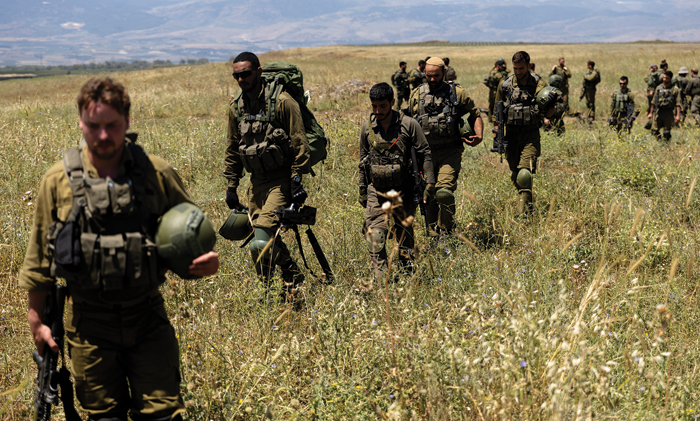
The issue was raised again with a viral video by an IDF reservist who called for mutiny. “We reservist soldiers do not intend to hand the keys [to Gaza] over to any Palestinian authority,” the masked, armed, uniformed soldier said. If such orders will be forthcoming, the soldiers will not accept them. Ah, and Defense Minister Gallant must resign. The video was shared in right-wing circles. It was shared by the PM’s son. The soldier was identified, questioned and dismissed from future reserve duty. 

But an uproar ensued. One that merits discussion. The tendency of the media and the public was to debate the issue by asking who was first to make mutiny an acceptable political tool. The right says “you did it first” during the legal reform upheaval. The center-left says “the two cases aren’t the same.” 

Of course, the more important question is not who is to blame, but how the fissure can be repaired. There are those who think that this can be done with a general, binding condemnation of any hint of possible disobedience. They are wrong: Disobedience is a tool that cannot be canceled in a democratic society. We can denounce it, we can punish it, we can make it socially illegitimate, but we can’t eliminate it.

Why does it seem that in today’s Israel there is an expanding discourse of disobedience? The reason is simple: Citizens do not trust their leadership.

Why does it seem that in today’s Israel there is an expanding discourse of disobedience? The reason is simple: Citizens do not trust their leadership. So much so that they are ready to break the rules. And of course, here we must be precise: there is a difference between disagreement — every government faces an opposition — and lack of trust — a situation in which disagreement is translated into the assumption that the government is acting in an illegitimate manner. A citizen can think that the government is making a wrong decision. This is one situation. In a calm country, such a citizen obeys even a wrong decision. A citizen can also think that the government is making an illegitimate decision. That’s a different situation. In a country where many of the citizens believe that the government is illegitimate, the circles of those who threaten to disobey, or disobey, will expand.

Those who threatened not to show up for reserve duty during the legal reform period did not think that the government was wrong. They thought that the government was working to destroy the foundations of democracy. Those who are now hinting at the possibility of mutiny do not think that IDF commanders are basing their decisions of the wrong tactics. They think that they are working to undermine Israel’s chances of winning. In both cases, trust is low. In both cases, the allegation is serious. In both cases, decision makers are not portrayed as stupid, but rather as malicious. In both cases, the threats are motivated by fear — the fear of losing democracy, the fear of losing the war. In both cases, the citizens have a sense of helplessness. They are facing forces stronger than them, and feel they have no other choice but to break the sacred rules.

The comparison between the two cases, that of the reform and that of the war, is far from perfect. There are cases of disobedience that have more justification and cases that have less. Whoever says “any case of mutiny is legitimate” or “no case of mutiny is legitimate” is making life too easy for themselves. Hence, the correct question is never whether “the other side” also used the same tool — the correct question in each case is “does the current situation justify mutiny.”  And consistency does not mean that whoever says about one case that “it is not justified” must also say the same about the other case. Consistency means offering a convincing reasoning — that is not tainted by the political bias — why both cases are justified, or not justified, or one is and the other is not.

And after reasoning, we are still left with the main challenge: restoring trust in Israel’s leadership. As long as there are too many citizens in Israel who believe that their government — current or otherwise — is making malicious moves for improper reasons – and not just wrong moves for deficient reasons – it will be difficult for the government to call on the citizens to accept its decisions even when they disagree with them.

So, the main task becomes clear. The discourse of Whataboutism, the discourse of condemnation, the tweets of childish provocateurs — all these only deepen the cracks, and therefore strengthen the trends that led us to a dangerous place in which mutiny-talk becomes routine. The main task is strengthening the public’s trust in the leadership. And this requires profound change in the conduct of the government, profound change in the composition of the government, profound change in the culture of the government.

Something I wrote in Hebrew

Before the government voted on Haredi military exception, former Chief of the Airforce Eliezer Shkedi submitted a report to Defense minister Yoav Gallant with a detailed plan for the IDF on how to prepare to absorb ultra-Orthodox soldiers (in case they come). Here’s something I wrote about this report:

The report, the main point of which is the acceptance of the ultra-Orthodox claim that the IDF is not prepared to absorb the Haredim, and perhaps does not want them. Hence, it is a reflection on the IDF’s preparedness for the possibility of a mass recruitment of ultra-Orthodox, which will make the “IDF is unprepared and unwilling” argument redundant. Oh, and it makes another unnecessary point: The claim that the IDF has no need for ultra-Orthodox recruits is rejected. There is a place and there is a need.

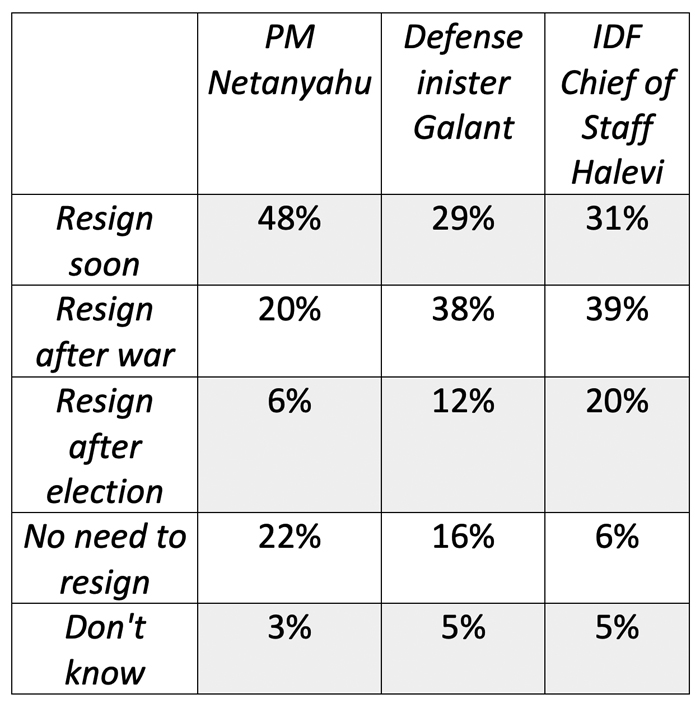
A week’s numbers

What should leaders do? This is from the May JPPI survey of Israelis. 

A reader’s response:

Dafni Allinson asks: “Do you still think Israel can win the war?” Answer: Like most Israelis, my confidence level is down, and yet, I understand he essentiality of winning and hence hope that it can somehow be achieved.


Shmuel Rosner is senior political editor. For more analysis of Israeli and international politics, visit Rosner’s Domain at jewishjournal.com/rosnersdomain.

Rosner’s Domain | Whataboutism Disobedience Read More »

wildpixel/Getty Images

Politically Homeless

There’s no great option. Not for me. Not for my family. If I turn to my left, I see gray-headed flaws. If I turn to my right I see orange ones. And wherever I look, my friends, family and followers seem to assume I’m OBVIOUSLY making the correct decision, and going their way. But, am I? What to do?!

I’m politically homeless. Always have been. But more than ever, I’m feeling it these days. Although we aren’t in sync with every political stance, my wife Adi feels the same way. We’re both feeling stuck in the middle. Although I used to just call myself a moderate, that’s never actually been accurate. It was the easy, lazy way to describe myself, since I don’t fit into the template of any political party. Let’s break a cardinal rule of “how to keep friends,” and be brutally honest with my politics.

I’m extremely socially liberal. I’m a product of my British parents, and especially influenced by my mother, who spoke about these things passionately. So I grew up with a bleeding heart, and to this day have not changed most of those attitudes:

• Abortion? Let the mother choose. Other than late-term, I’m about as pro-choice as it gets. A teenager made a dumb choice, and wants to end the pregnancy? I don’t have a problem with that.

• Vaccines? Wait, when did this become a political issue? Oh right, COVID. Well yeah, I’ve kind of gone on the record about this — if the scientific and/or medical community sign off on something, I’m all for it. I take the meds, the tests, the vaccines, the screenings. If it’s good enough for my own doctors to recommend, it’s good enough for me. Same goes with anything “science” based, so just add climate change and evolution to this mix. There are always exceptions and outliers to cherry-pick from, but if the consensus is one direction, I’m happy to oblige. And for the record, I have the luxury of working in a hospital, so when I do have questions, I have experts to ask in person, and have done so for years.

• Gay marriage? Do you KNOW how many friends we have from every letter on the LGBTQ+ acronym? I want everyone to be able to marry whom they choose, and enjoy every legal benefit that I’m afforded as a straight person. Look at our wedding party and you’ll already know this was rhetorical; there were several men and women who represent the letters of that acronym. Yes, we have several — yes several — near and dear trans friends. So we’re fiercely protective of the rights and feelings of our loved ones and their communities.

• Capital punishment? Nope, I would sooner allow the family to get revenge “Dirty Harry” style than have the system execute people. By the time we get around to the executions, these people are on average 23 years older, some have likely repented; and even if not, I don’t believe in a system that enforces the mob frothing at the mouth for “justice.” There is no justice for the victim of rape or murder. The person who committed those heinous acts absolutely deserves to die. And if they could have been killed to prevent it, I 100% find that to be common sense. Judaism backs it up certainly. But once that person has been captured, separated from society, and gone through the red tape, I just don’t feel right about us strapping them down for execution. I would rather them be separated from society for the rest of their life, and let the morality of what they did be sorted in whatever afterlife there may or may not be, depending on your spiritual beliefs. And although Judaism “believes” in capital punishment, there are famously so many guardrails to prevent it from actually happening, that its, umm, execution, is as rare as a Giant Panda on the streets of Beverly Hills.

• Gun control? I’ve seen how much less murder and accidental death occurs in England. No I can’t give you the stats, but it’s not even close. Sure there are stabbings, robbery and murder. But it is so much easier, both physically and mentally, to pull a trigger, than kill someone another way — intentionally or not. And seeing countries where only a small percentage of police carry guns (batons and pepper spray do the trick), so almost nobody else in the country does either — that’s always been my unrealistic dream for our gun-loving society, where it’s built into our very constitution. Or so I hear on repeat.

Those are the “big” social issues that come to mind. I have never had any formed attitudes or opinions about inflation, taxes, or pretty much anything fiscal. And I’m all for capitalism rather than socialism or communism. 

So why am I not an outright Democrat? What makes me politically homeless? The other half of me will always be a proud Zionist. Shouldn’t matter, but sadly that doesn’t fit today’s liberal paradigm. Let’s look at my conservative side:

• Diversity, Equity & Inclusion (DEI)? Maybe this was well-intentioned, I can’t know that answer, but the execution of it is simply anti-intellectual. We are taught to see the world with a critical eye, and things should be gray — not black & white. Yet DEI lumps everyone into either one of two worlds — oppressor or oppressed. This is how people are taught to see others. Long gone are the days where we were asked to stop stereotyping and categorizing others. Now you look at a color palette or Kinsey Scale to see one’s skin tone and sexuality, and we judge you as oppressor or oppressed. And Jews have, as usual, come up on the wrong end of the barometer. We are all white apparently. Let’s just ignore the inconvenient truth that more than half of Israel is nonwhite. Forget the fact that Jews are proportionally the top hate crime victims in America by a landslide — we fit into the category of oppressor. Ironically, the very same groups who are first to defend the rights and labels of the non-binary, see the world in this totally binary way.

• Iran? Have you ever noticed that the vast majority of Iranians/Persians who you’ll meet are fans of Israel? Obviously the Jewish ones, but also Christian and Muslim Iranians. They escaped for a reason, and pine for their country to return to what it was once upon a time. People often don’t get that our enemy is the Iranian government, and we are on the side of the Iranian citizenry. When I have patients who are Muslim, I will sometimes sense some hesitance, as they see my kippah. When I have Muslim patients from Iran, they often see my kippah and exclaim, “WE LOVE JEWISH PEOPLE, WE LOVE ISRAEL, SALAM ALEIKUM!” 

The biggest global threat to Israel is consistently Iran. As mentioned, not the citizenry, but their government since the 1979 revolution. As a result, I was out there on the front lines protesting the Iran deal during the Obama era, with Adi and our friend Mike. And one of the guest speakers was Reza Farahan from “Shahs of Sunset,” a non-Jewish Iranian gay man, who said if he was still there, he would be hanging from a rope just for his sexuality. Why is Iran the BIGGEST global threat to Israel? Because most terrorist groups you see attacking it are Iranian proxies. 

• Egypt and Jordan? Many people forget this fact. Until the Abraham Accords, the only countries to have a “peace treaty” with Israel were these two, which was ironically a direct result of their attacking Israel, and subsequent defeat. Yes, war with Israel led to its most successful peace treaties since 1948. Both countries are still hateful in their rhetoric towards Israel. They never miss a chance to snipe at the Jewish state in all the ways these university encampments are doing, but they are still maintaining the peace. And that’s crucial. This leads us to …

• Israel? I love it. The way I love America. Flawed. Some governments worse than others. What would we Jews have done without its independence, three years after the horrors of the Holocaust? As I tell people who bother asking, do I like every administration there? No. Is it a true democracy? Yes it is. For some reason when people are mad at America, they target their wrath on that administration, and don’t start saying the country itself should be destroyed. But Israel is treated uniquely. When people don’t like what the government does, it’s suddenly a Nazi state, and should be dismantled. Long gone are the goals by peace-lovers around the world for a two-state solution. Now it’s Intifada, and “From the river to the sea.” Peace for many means goodbye Jews, and a government that would act more like Iran than America. Which brings me back to the purpose of my essay.

In case it’s not obvious, I’ll spell it out for you like a sports matchup. I worry about my friends and family in Israel (winner: Republican), and I worry about the rights of my daughter to one day have the right to choose what happens to her if she becomes pregnant (winner: Democrat). I worry about Iran being given billions to build nukes at a slower pace (winner: Republican), and I worry about the atmosphere and world created for LGBTQ+ friends (winner: Democrat). I worry about the binary nature of DEI shoving Jews into the white oppressor camp (winner: Republican), and I worry about the world literally falling apart from climate change (winner: Democrat).

We were taught to strive to be intellectually curious, but instead are now radicalized in our ignorance. As such, the political parties that I never fully could get behind, have become even more polarizing.

You could read that and disagree with some or all. And you can find examples of Democrats who are extremely pro-Israel, and you can find Republicans who are extremely pro-climate change prevention. But the two-party system is undeniably gravitating toward its extremes. The bases of both camps have historically been moderate. But recent years, and due in part to the emergence of social media as a news source, have altered the next generations of society. We were taught to strive to be intellectually curious, but instead are now radicalized in our ignorance. As such, the political parties that I never fully could get behind, have become even more polarizing. They try to appeal to the moderates, but also to the extremes. Good luck with that task.

If people who identify more as socialist than Democrat protest against Israel, they will be coddled by many Democrats, even if they burn American flags and vandalize property in the process. Oh sure, the heads of the schools will say that they shouldn’t be crossing the lines into illegal activity, but they will also say that their points are well taken. If people scream that the election was rigged, or that vaccines cause more harm than good, they will be coddled by many Republicans, even if they are vandalizing, and comparing doctors and scientists to Nazis. They will say their points are well taken. 

Does every group with a loud enough opinion merit such coddling and validation? I know Republicans have no problem saying these anti-Israel protesters are horribly antisemitic and even anti-American, but why can’t Democrats? I know Democrats have no problem saying that election-deniers are dangerous conspiracy theorists, but why can’t Republicans?

I still think Biden has done far, far more good than harm for Israel. But he’s also done some pretty terrible things, such as allowing the U.N. resolution to pass (a page out of Obama’s handbook on his way out of office); refusing to send previously agreed upon weapons (have a disagreement in private with your allies, don’t embolden your mutual enemies); and for every incident and speech that brings up antisemitism, always needing to throw in Islamophobia, which is its own form of “all lives mattering” about us Jews. 

I also still think that what Trump did with the Abraham Accords was monumental, creating a “normalization” peace with a whopping four countries (United Arab Emirates, Bahrain, Sudan, and Morocco), something that stalled as soon as he left office. But he’s also done some pretty terrible things, reinforcing a complete lack of sensitivity to people who are not only LGBTQ+, but really just anyone who disagrees with him. On more than one occasion, he basically questioned the loyalty of any Jew who doesn’t vote for him. You shouldn’t have to feel bullied into voting for someone, you should just want to do so. An incredibly nonpresidential quality.

So thus, my wife and I remain politically homeless. Well aware that we will cast our votes this Nov. 5, and as usual, it will be less about who we like, and more about which octogenarian pisses us off less.


Boaz Hepner works as a Registered Nurse in Saint John’s Health Center. He moonlights as a columnist, where his focuses are on health and Israel, including his Chosen Links section of the Journal.


Politically Homeless Read More »

Former L.A. Business Leader and Jewish Philanthropist Honored in Florida

Longtime Los Angeles resident and entrepreneur George Schaeffer has been named “Business Leader of the Year” by Florida Atlantic University, which celebrated Schaeffer and his family at a ceremony at its Boca Raton campus this week.

Schaeffer is the latest recipient in the three-decade history of the award, which FAU’s College of Business has awarded annually since 1991 to “celebrate the legacies of outstanding business leaders in the Southeast region of Florida and the state,” according to a university press release.

“[George] is an incredible entrepreneur and outstanding role model for our business students here at Florida Atlantic University,” said Daniel Gropper, dean of FAU’s College of Business, in the same release. “His story is inspirational, and he is a great community and business leader.”

Schaeffer is the co-founder and CEO of People’s Trust Insurance, which provides affordable home insurance coverage for Florida property owners. People’s Trust offers policies tailored around the unique needs presented by owning property in Florida, where natural disasters like hurricanes can place significant pressure on insurance premiums and availability.

Schaeffer moved full-time to People’s Trust after selling the nail polish brand, OPI Products. Under Schaeffer’s leadership, OPI grew into one of the world’s largest providers of nail polish and tools; its products are now found in beauty parlors around the world.

Tuesday’s ceremony at FAU honored more than just Schaeffer’s business acumen. It also highlighted his impact as a philanthropist.

Schaeffer and his wife, Irina, founded the George & Irina Schaeffer Foundation in 2009 to support scholarship and student financial aid programs, medical research and humanitarian projects. The Foundation has raised millions of dollars for charitable causes around the world, including the American Heart Association, the Leukemia Research Foundation and the National Lung Association.

Much of this philanthropy has been directed to Jewish causes. Schaeffer is chairman of the board at the Bnai Zion Foundation, which established the George W. Schaeffer Music Conservatory in 2013 to offer music education in the town of Ma’ale Adumim, Israel.

While Schaeffer was honored for his contributions to the Florida business community—at a business school in Florida—much of his legacy as an entrepreneur and philanthropist runs through the city of angels.

Schaeffer moved to Los Angeles in 1981 to take over OPI Products. It wasn’t the first time—or the last, with his move to Florida more than a decade ago—that he would fly thousands of miles in pursuit of new opportunities.

Rabbi Pini Dunner of Beverly Hills flew to Boca Raton and spoke at the breakfast, telling the gathering about his many years of close friendship with George Schaeffer, whom he described as much more than a mere “Businessman of the Year.”

“To be a great businessman, it’s all about the bottom line. But to George, the bottom line is not enough. He worries about every one of his employees, and even his customers, taking a personal interest in their wellbeing, in their success and in their welfare.”

Born in Hungary to two Holocaust survivors, Schaeffer and his family fled the turmoil of the 1956 Hungarian Revolution to land in New York City, where he would spend much of his adolescence and early career years before coming to Los Angeles.

That move, said close friend and fellow L.A. philanthropist Elliott Broidy, who moved to Florida several years ago, was fortuitous.

“George was—and still is—a pillar of the Los Angeles Jewish community and one of our city’s finest business leaders,” said Broidy. “He’s committed to stewarding the same impact in his new home, and I’m glad to see that Florida Atlantic University is recognizing his pivotal work.”

Former L.A. Business Leader and Jewish Philanthropist Honored in Florida Read More »

Inbal Baum: Delicious Israel, Food Joy and Coconut Cream Malabi

What do you do when you visit family in Israel?

“You eat,” Inbal Baum told the Journal. “You go from one meal to the next.”

Baum grew up in America to Israeli parents, so they would always go to Israel on vacation.

“All of a sudden I have this family that I don’t have most of the year,” Baum said. “That to me was Israel; it was the joy … and the sharing of food together.”

Baum is now in the  business of sharing that joy with others. After working as an attorney in Manhattan, and becoming a yoga instructor, Baum moved to Israel where she founded Delicious Israel, the country’s leading culinary tourism business.

“This is our bar mitzvah year, our 13th year,” she said. “Thirteen years ago, people were not talking about Israeli food the way that they are today.”

They didn’t have the familiarity with things, like shakshuka and Israeli spices. Now a love of Israeli food is everywhere.

Baum and her family moved from Tel Aviv to Park City Utah during the pandemic (her brother lives there and her Israeli husband loves to ski), she expanded her offerings with Delicious Experiences, virtual corporate events. (Baum claims they are still visiting, three ski seasons later; Israel is still home.) She launched Delicious Cities, a global network of immersive food tours, after October 7.

When asked why people love Israeli food so much, Baum said it has a lot to do with the way they eat.

“People don’t want and don’t have the bandwidth to sit at French restaurants with white tablecloths and three course meals that take hours and hours and hours,” she said. “They want [to eat] healthy [and] relatively quick.”

Baum believes people are willing to put time into an experience, but it shouldn’t feel like it’s never-ending.

“Even when you sit in a restaurant in Israel or you’re eating Israeli food, you don’t have to say, ‘Bring whatever comes first,’ that’s just how you eat,” Baum said. “It’s family style, it’s togetherness around the table.”

They also want diverse and delicious food.

“If you look at an Israeli restaurant menu, it’s just so many things,” she said. “You’ve got vegan, gluten-free, healthy and indulgent; you’ve got the full range.”

When she does food tours, Baum finds joy in seeing families create those food memories, similar to those she had as a kid.

“When children get exposed to [new tastes] in this different way and in this different environment with this different openness … it’s a beautiful thing to see.” she said.

One of Baum’s favorite treats is malabi, a milk pudding that is Turkish in origin and Middle Eastern in flavor. Recipe is below.

According to Baum you can find malabi at every level of eating in Israel.

“You can go to a street corner and get a … not-so-good quality version of it or you can go to places called, a malabia [and] that’s the only thing they sell,” she said. “And then there’s the high-end restaurants that are now doing really exquisite, fine plating, deconstructed versions.”

Baum loves the recipe, because it’s flexible.

“You can make it creamier, you can make it thicker,” she said. “If it’s seasonal, you can do apricot dressing [or] mango dressing on it for the sauce on top.

“The bottom is like a blancmange in France, it’s like a blank page. You can really put whatever you want on top to make it shine.”

Learn more at DeliciousIsrael.com, DeliciousCities.com and DeliciousExperiences.com. Follow @DeliciousIsrael, @DeliciousCities and @DeliciousExperiences on Instagram.

For the full conversation, listen to the podcast:

Coconut Cream Malabi

Photo by Delicious Israel

This delightful sweet dish can be enjoyed any time of day, and is perfect in the hot Israeli summers. We love to sip Turkish coffee flavored with cardamom alongside this sweet dish.

Our vegan and parve friendly Coconut Cream Malabi is surprisingly simple to make. Feel free to play around and mix in your favorite toppings and syrups! The recipe below serves four, but this can be easily doubled or even tripled for larger crowds.

Ingredients

1 can coconut cream (fat content should be greater than 14% for the best results)
3 tbsp. sugar
3 tbsp. cornstarch
1/3 cup of water
1 teaspoon of vanilla extract OR rose or orange blossom water (the floral waters can be added at various points in the process, depending on your preference)
Crushed (or chopped) nuts, to taste
Desiccated coconut
Pomegranate molasses and/or silan

Optional toppings: chopped seasonal fruit (strawberries, apricots, mango)

Instructions

In a small saucepan combine the coconut milk and sugar. Bring to a boil.

Meanwhile, in a small bowl mix the cornstarch and water until well combined. Slowly add the cornstarch to the saucepan, continuously stirring.

Over medium heat, continue stirring until the pudding thickens – this may take 3 to 5 minutes. If needed to thicken, add additional cornstarch in small amounts until the mixture begins to thicken.

Mix in the vanilla extract, orange blossom or rose water, then pour or ladle into four small bowls.

Allow to cool before serving (approximately one hour, but can be less).

When ready to serve, top with a layer of pomegranate molasses or silan (date honey), desiccated coconut and ground nuts.


Debra Eckerling is a writer for the Jewish Journal and the host of “Taste Buds with Deb.Subscribe on YouTube or your favorite podcast platform. Email Debra: tastebuds@jewishjournal.com.

Inbal Baum: Delicious Israel, Food Joy and Coconut Cream Malabi Read More »