
A century ago, during the dark days of the Spanish flu, a time when it was not politically incorrect to associate an epidemic with its place of origin, Americans had a much tougher time sheltering at home.
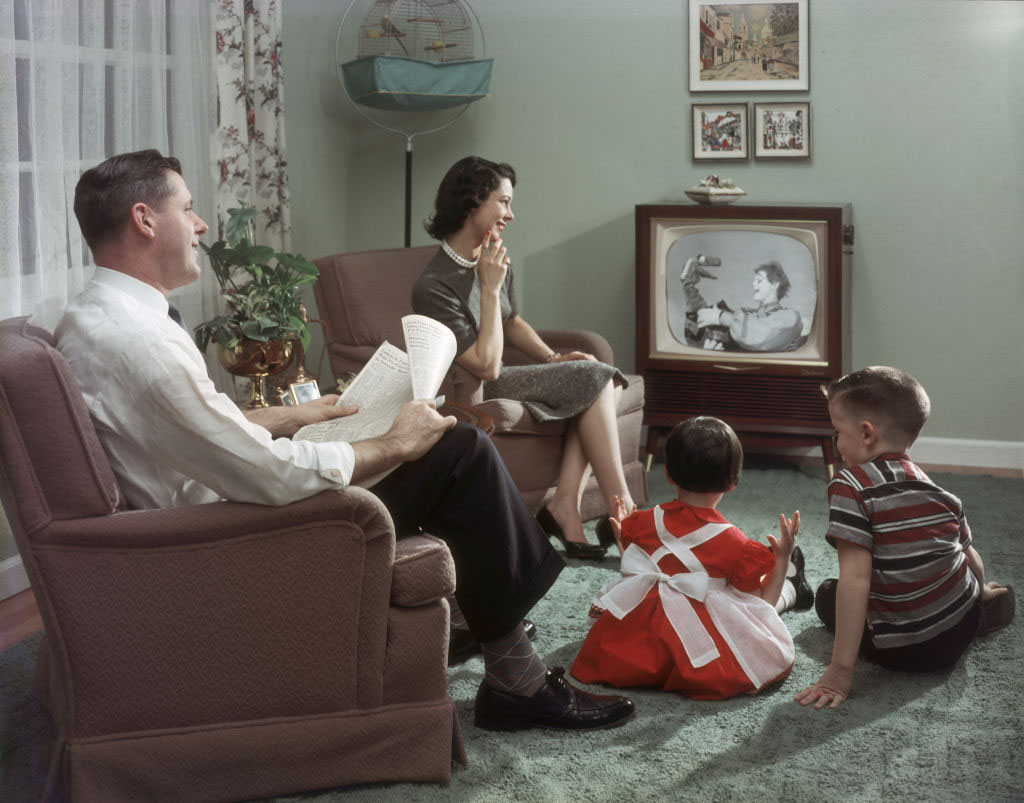
For starters, there was no Internet, social media, Netflix, Peloton, TiVo, cable or even basic TV. Even radio was a nascent, novel industry. Binging on books, newspapers and magazines was all there was to occupy the mind.
You decide which quarantined people were worse off.
There was also no anticipated vaccine for the virus. The only thing that arrived at warped speed was death. The United States in those days had a population of 103 million and a death toll from the Spanish flu of 675,000. Today, the United States has a population of 330 million, with the coronavirus claiming 547,000 American lives.
Again, draw your own conclusions.
Not surprisingly, back in 1918, social distancing was not widely viewed as a remedy to stem the rate of infections. And even if the Anthony Fauci of that era had urged Americans to stay away from one another, it would have been useless—at least in dense urban population centers. After all, Fauci’s own grandparents immigrated to New York in the late 19th century and likely settled in Manhattan’s Little Italy, sandwiched between the Jewish delicatessens on Orchard Street, the tongs of Chinatown and the remnants of the Irish in Five Points. (African-Americans built their own world, uptown, in Harlem.)
Amid the teeming dead were also millions who survived the virus but now had to survive each other. Cramped tenements of immigrant life somehow co-existed right beside one another—a short radius in distance, and yet, culturally, miles apart. The dividing lines were written in chalk and were often confused with hopscotch. Privacy was impossible with everyone airing their laundry, hopefully clean, on fire escapes. So many speaking their own native tongues sat beside one another in sweatshops, easily misunderstood. Others pushed carts and competed for customers.
There were street gangs and turf wars, of course. But most people understood that being an American meant getting along with others in the neighborhood. Sure, the Sharks and the Jets occasionally rumbled, but Maria and Tony had a much better chance of making it in America than Romeo and Juliet fared in Verona. Isn’t that why so many decamped from Europe and Russia for a more promising land? Mutual respect was a necessity, made possible by immersion, which softened tensions.
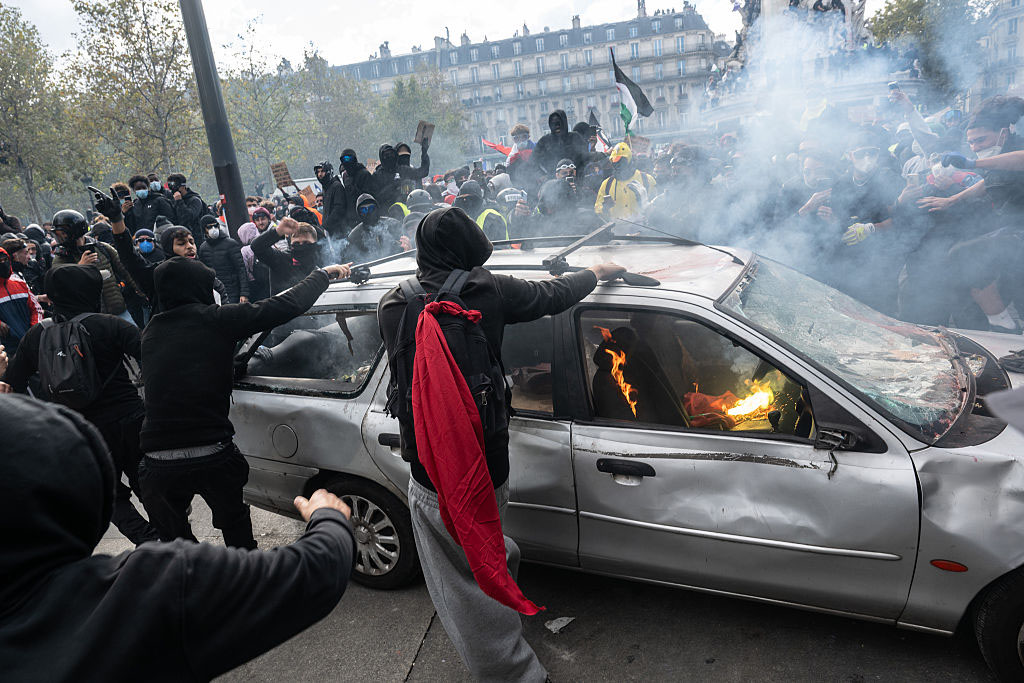
Today, we are guided by an entirely different impulse, the woke warfare of tribal feuds, shouting slogans in anti-American solidarity.
The American melting pot accomplished many things, but primarily, it worked wonders with antagonisms. Immigration sagas came to a halt at Ellis Island and demanded some buy-in into the American experiment. Sometimes it was begrudging. Many lost their surnames, revamped by interpreters who didn’t have much of an ear for languages. But with each generation, these disparate peoples went from a common poverty to a celebration of successes, born from common struggles. It required a belief that what they shared as Americans was stronger than their grievances.
As a teenager, Supreme Court Justice Sonia Sotomayor worked in a kosher bakery in the Bronx. Her customers all believed her to be Jewish. Frank Sinatra, Mayor Fiorello La Guardia and even Colin Powell, as young men, all spoke Yiddish.
Enough said.
These were the decades before the politics of identity laid waste to assimilation, giving it a bad name akin to ethnic, gender and racial appeasement. Melting within the mainstream was suddenly considered the patriotism of surrender—making the erasure of identity complete.
A century ago, they walked away from a deadly virus and a world war determined to bond together as Americans even more resolutely. Today, we are guided by an entirely different impulse, the woke warfare of tribal feuds, shouting slogans in anti-American solidarity. Liberal culture has collapsed, and Critical Race Kool-Aid has replaced the convivial pints of St. Patrick’s Day cheer, which always managed to bring out the Celtic in Italians, Jews, Poles, Russians, Armenians, Asians and African-Americans.
Imagine what Martin Luther King Jr. would say to all this tarnishing of his teachings?
Nowadays, skin color determines who you can toast, and who you must curse. What has melted away is our tolerance for one another. We are being encouraged to keep to our own kind, respect and glorify our differences and, for heaven’s sake, not appropriate another’s culture—whether it be ethnic food recipes or Halloween costumes. Segregation was once un-American. Today “separate but equal” is making a comeback. How else to explain colleges hosting customized graduation ceremonies?
Imagine what Martin Luther King Jr. would say to all this tarnishing of his teachings? The man who once dreamed that his children might “one day be judged not by the color of their skin but by the content of their character” would have nightmares from all this talk of racial privileging and racist accusation—where color is the overriding measure of moral rectitude. Intersectional protocols have become a national pathology. The dissections of our identities have turned us all into strangers. White children are being taught to believe that they are natural-born oppressors because of the color of their skin. Evil is a white person’s prerogative.
A liberal arts education now means either four years of righteous anger or self-flagellated atonement—depending on your skin color.
A liberal arts education now means either four years of righteous anger or self-flagellated atonement—depending on your skin color. This is equity, diversity and racial justice by fiat, a woke spin on Patrick Henry’s old battle cry: “Give me diversity or give me death!”
Yes, much of American history shows how the better angels of our nature were often absent—all that homophobia, misogyny, racism, and the Original Sin of slavery that serve as a shameful stain on our past. But it is absurd to ignore the significant progress that has occurred over the past 50 years, or declare that the United States has no national purpose other than to perpetuate white privilege over people of color. Or that freedom, opportunity, and merit are racist concepts. Or that democracy is not a great leveler but rather a lever for oppression.
Even with its many moral blots and blind spots, America is not a nation without virtue. Has anyone, actually, looked at a map lately—nations led by autocrats, theocrats, terrorists and tyrants dressed up as statesmen? If American Exceptionalism is an undeserved ethos, then where are the nations with better passing grades, and why do so many risk their lives to cross our borders?
We are the world’s oldest democracy for a reason. Before so casually dispensing with the melting pot, we might reflect on how American assimilation transformed tens of millions of lives for the better, through epidemics and other hardships, and yet without the cultural amnesia so many now fear.
Thane Rosenbaum is a novelist, essayist, law professor and Distinguished University Professor at Touro College, where he directs the Forum on Life, Culture & Society. He is the legal analyst for CBS News Radio. His most recent book is titled “Saving Free Speech … From Itself.”