
I will be attending the Women’s March, Los Angeles on Jan. 19 and here’s why:
In a forum convened by the American Jewish Committee, Emiliana Guereca, executive director of Women’s March LA, explained why she founded Women’s March LA. She said, “I knew as a Jewish, Latina woman, if I didn’t mobilize my communities, both the Jewish and Latina voices would be missed, left out of a national conversation to fight for women’s rights.” What she thought would be a mere walk in the streets of downtown Los Angeles transformed into a movement of diverse voices sharing a fight for “humanity and equity for all.”
But now Women’s March LA (WMLA), an independent 501(c)(3), is incorrectly and dangerously conflated with the Women’s March in Washington, D.C. WMLA states, “We are aware of the recent concern about the Women’s March Inc.’s leadership team and their perceived support of [Nation of Islam leader] Louis Farrakhan, whose statement about Jewish, queer and transpeople are not aligned with the Women’s March Unity Principles. Women’s March LA (WMLA) strongly denounces these statements and recognizes the pain they have caused for the Jewish and LGBTQIA+ communities …We believe our diversity makes us stronger and do not tolerate anti-Semitism, hate speech, bigotry, homophobia, Islamophobia, transphobia or any other form of hatred.”
Many Jewish women struggle with the decision to attend this year’s Women’s March LA. Although it is clear Women’s March LA is a different organization than Women’s March Inc., the questions remain: “Won’t our presence be perceived as support for the movement in Washington?” “Just showing up will look like we support anti-Semitism and bigotry.” And yet, as the founders of Women’s March LA, Jewish women work tirelessly to ensure women of all races and creeds have the ability to be heard and seen, I dread the answer to the question, “What happens if we don’t show up?”
Because if we don’t show up, the Jewish voice is a muted in a way it has never been silenced before. We silence ourselves. Our very essence as a people is changed when we choose to let someone else’s perception cloud our ability to use our voices as agents of change — voices that change the lives of minorities, voices that change the lives of women unable to speak for themselves. Will we let others speak for us or will we choose to follow in the steps of Bella Abzug, Louis Brandeis, Abraham Joshua Heschel and Golda Meir, Jewish activists who prayed with their feet? In response to Pharaoh’s question to Moses as to whom will leave to journey to the Promised Land, Moses responds, “With our young and our old, with our sons and our daughters, we will go.” Moses knew that a nation that includes a woman’s perspective is not just richer, but a necessity. I refuse to silence myself when silenced women are depending on my voice.
If Jewish women choose to excuse themselves from the conversation, I am not sure the nation will even notice the absence of Jewish voices.
Perhaps, even more, frightening: If Jewish women choose to excuse themselves from the conversation, I am not sure the nation will even notice the absence of Jewish voices. We can’t be so naïve and self-absorbed to think that on Jan. 19, women and men alike will think to notice, “Oh, the Jews decided to stay home.” Quite the contrary. I doubt anyone would bat an eye. Instead, we will shackle ourselves into a bondage of inconsequentiality and unimportance.
To the Jewish women of Los Angeles, I call out to you: Alongside my mother, sister and daughter, on Jan. 19 I will proudly stand at the Women’s March LA. Women’s March LA gives me the gift to use my voice: as a rabbi, as a woman, as a Jew. This March holds up the highest of ideals, throwing hatred to the ground and reminding the world that we are given small chances and few opportunities to reach the Promised Land — a Promised Land in which women are cherished, protected, embraced and pushed forward. This is our chance. How dare we waste it.
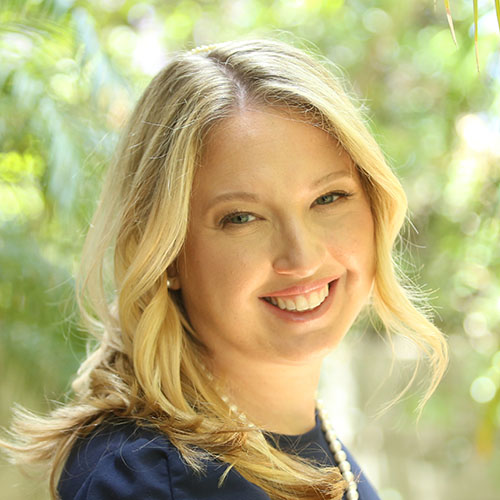
Rabbi Nicole Guzik is a rabbi at Sinai Temple.