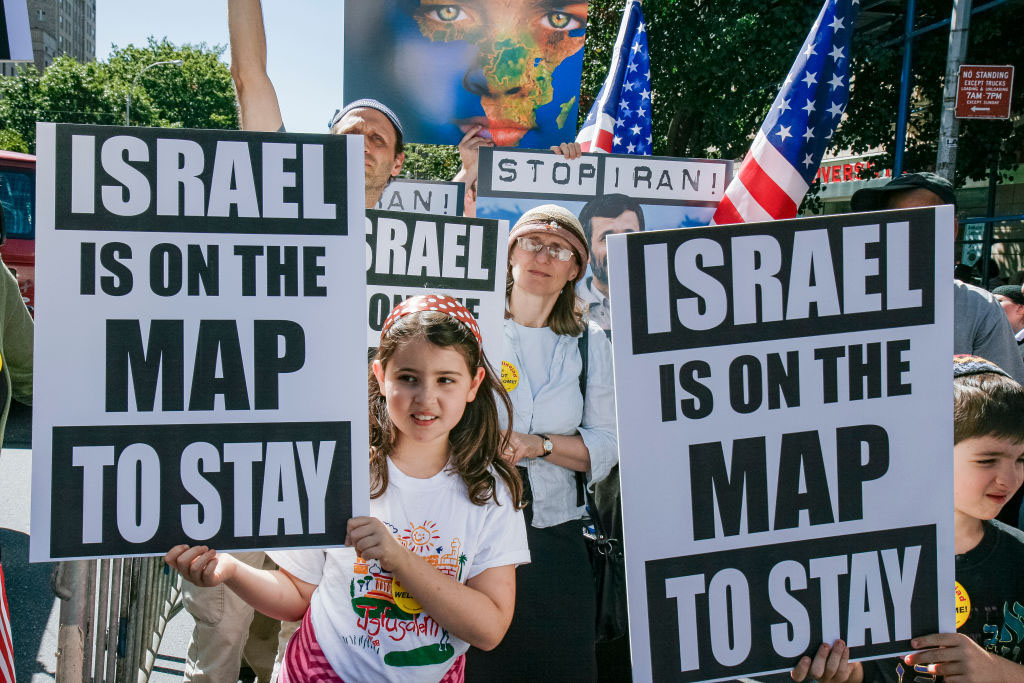
For countless American Jews, Jewish identity is shaped by the model of living as a minority immigrant group struggling to protect its heritage against assimilation. Contemporary research affirms this, tending to frame questions in terms of traditional Jewish behavior — lighting Shabbat candles, attending synagogue, fasting on Yom Kippur, affiliating institutionally and supporting Israel.
Yet the reality for many today is that they do not relate to this inherited model. Economically and socially successful insiders, Jews are part of a pluralist society in which the primary factor determining ethnic and religious identity is individual choice. We need a new, more helpful descriptive model that recognizes the vital role that personal decisions play in Jewish American identity construction. I suggest a model based on the following four claims about contemporary Jewish identity:
First, Jewish identity is made up of choices. We pick, consciously or otherwise, from a sort of identity menu that offers us options for behaviors that we understand as “Jewish” because we see them as “Jewish things to do” or as “done in a Jewish way.” At the cutting edge of cultural change, the menu expands, increasingly listing behaviors that once were seen as belonging to other, non-Jewish menus, such as donating to universities, museums and symphonies.
Second, identifying ourselves as Jewish does not necessarily say anything about how we express that identity. From a purely descriptive standpoint, it is essentially the choice of self-identifying that makes us Jewish, even when it isn’t exactly clear how that identity is experienced or conveyed.
Third, Jewish identity has become increasingly fluid and linked to personally important life contexts. For example, many Jewish parents find that their interest in Jewish life increases when their children reach school age. Or some, in late middle age, find that Jewish spirituality animates them. For those who have chosen more traditional Jewish identity behaviors — keeping kosher, going to synagogue, donating funds — this “shape shifting” may seem inauthentic, but for the vast majority of American Jews, being open to important lifecycle changes is more highly valued than faithfulness to traditional practice.
Fourth, most contemporary American Jews are suspicious of “experts” and rarely consult institutional authorities in choosing how to be Jewish. We resist any “pressure” to affiliate with Jewish institutions. If and when we choose to affiliate, it generally is not because we feel duty bound but because doing so meets our needs.
The model that I propose offers new approaches for supporting and enhancing American Jewish identity, given the realities of today. Whatever our particular ideas about how we would like to see Jewish identity develop, we will be better off if we accept the social and cultural realities of Jewish American identity formation.
-
Spend less time creating standards for the options we offer and more time broadening the number of communally acceptable choices. However unusual new views or practices may seem, we should expand the range of communally acceptable options in Jewish politics, religion, music, etc. We have to stop devaluing others for making identity choices that differ from our own.
-
Add new menu options for what counts as Jewish. For example, can we imagine creating communal institutions that treat general philanthropy as a Jewish activity? We need to remember that in a culture of choice, people will remain committed to the Jewish world only if it is big enough to embrace their most important values.
-
Proactively connect Jewish identity construction with other significant life events. For example, getting a driver’s license, taking a first legal drink and other turning points in life could be transformed into Jewish activities. Or why not move beyond the more conventional sense of “Jewish activities” and look at what it might mean in the most profound sense to work — invest, practice law or medicine — Jewishly?
-
Begin teaching Jews how to be skillful at consciously constructing and maintaining their own Jewish identity across the life cycle. This might mean that on occasion we put less emphasis on motivating young people to adopt the particular ways of being Jewish that earlier generations practiced. In a culture of choice, young people create their own Jewish identities and, whatever our own proclivities, it is important that they do so thoughtfully.
These guidelines already are employed in many parts of the country. This suggests that this model is only making explicit what Jewish professionals and lay leaders intuitively know — we need a paradigm change in the area of Jewish identity formation. As Jews try to create new Jewish identities that are exciting and interesting enough to invite their allegiance, we now need to create a model that expands our sense of what being Jewish can mean. We must construct a model that understands and encourages the many ways that today’s Jews form their unique Jewish identities. This will not only help revitalize Jewish life but will help reinvigorate Jewish communities for the decades ahead.
This essay originally appeared in The New York Jewish Week.
Rabbi Tsvi Blanchard is the director of organizational development at CLAL–The National Jewish Center for Learning and Leadership. He is the 2003 recipient of the Bernard Reisman Journal of Jewish Communal Service Article of the Year Award for “How to Think About Being Jewish in the 21st Century: A New Model of Jewish Identity Construction” (fall 2002), on which this piece is based.