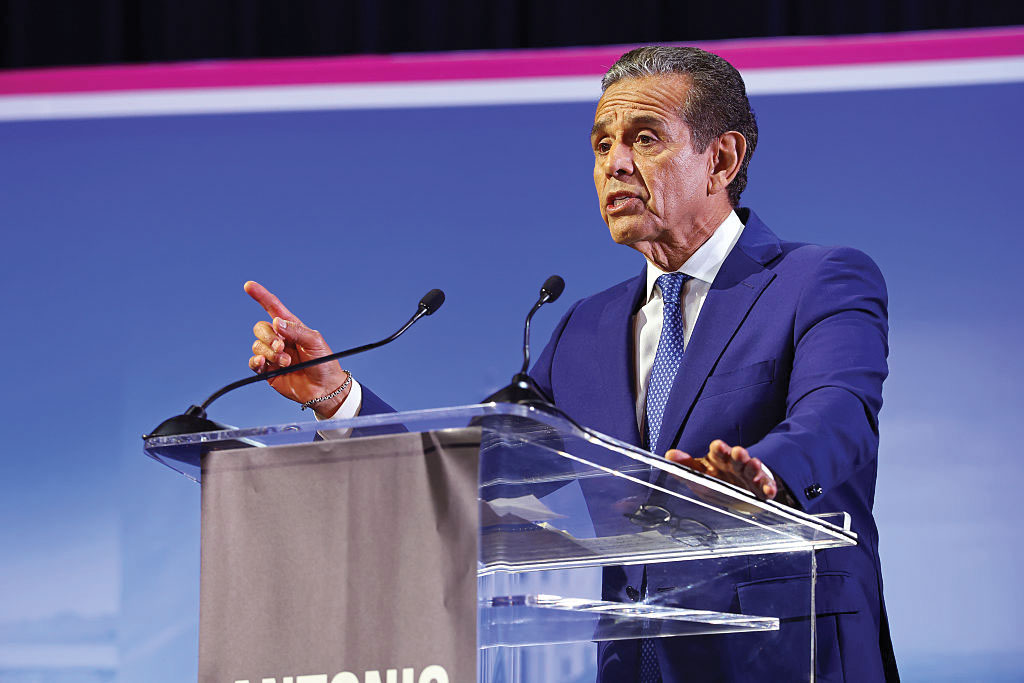
Former Los Angeles Mayor Antonio Villaraigosa’s relationship with the Jewish community began long before his two terms as mayor of Los Angeles from 2005 to 2013.
Villaraigosa traces that connection to his childhood in Boyle Heights, where he grew up among Jews, Mexican Americans, Japanese Americans and Black Angelenos. Now, more than a decade after leaving office, Villaraigosa is running for governor by arguing that California needs the lessons he says he learned there: dignity for working families, better schools, public safety, second chances, coalition building and transparent government that works.
“Boyle Heights was one of the few places that didn’t have covenants with the land that barred Jews and Blacks and Mexicans and Chinese and Japanese from home,” Villaraigosa told the Journal. “At an early age, my mother taught me about the Holocaust, about Jim Crow, and about what we did to the Japanese Americans.”
His father left when Villaraigosa was five, after years of alcoholism and domestic violence. His mother raised the children on her own in a 600-square-foot apartment. Villaraigosa tried to earn cash by selling newspapers and shining shoes downtown. Buying clothes through layaway at Jewish-owned stores made an impression that stuck with him.
“[The Jews] were always so nice to us,” Villaraigosa said. “I never felt any racial animus or anything like that. They were always so nice and respectful to us. And to my mom, every week she’d go to Deardens and pay what she owed.”
That became one of the lessons Villaraigosa said he took from Boyle Heights: poor families remember who treated them with dignity.
“What I always remember is in our interaction with Jews, maybe because of their own suffering, they were always very kind to us,” Villaraigosa said.
As a teenager, Villaraigosa said he was angry, fighting, around drugs and headed toward a different life. He often came home with wounds and blood on his clothes—one time after he had been stabbed in the back with a screwdriver. He still has “Born to Raise Hell” tattooed on his right bicep.
Villaraigosa said his teenage years could have led him to prison or death. His life story is full of moments where people could have written him off. With the looming gubernatorial primary election on June 2, the odds are once again pushing back against him. An Emerson College poll released on May 13 ranks Villaraigosa seventh in the running after Democratic candidates Xavier Becerra, Tom Steyer, Katie Porter and Matt Mahan, and Republican candidates Steve Hilton and Chad Bianco.
Villaraigosa did not focus on the odds of winning in the interview. He was more focused on making the point that California is “losing the middle.”
“We’re losing working middle-class families who can’t afford gas, rent, utilities, and see dirty streets filled with homelessness,” Villaraigosa said.
Villaraigosa’s most lively moments in the interview came when he shared the story of the Jewish high school counselor who encouraged him when he was at his lowest. Villaraigosa met Herman Katz at Roosevelt High School after being expelled from a college prep school. At Roosevelt, Villaraigosa had been placed in basic reading, basic math and upholstery. Katz challenged him, helped move him out of basic reading and pushed him to take the SAT and apply to college. His face tensed when he mentioned another school counselor who looked at him and just saw bad grades and fights and dismissed him.
“I tell people back then, the only white people that treated me, that saw me as a human being —saw my talent and my potential —were Jews,” Villaraigosa said.
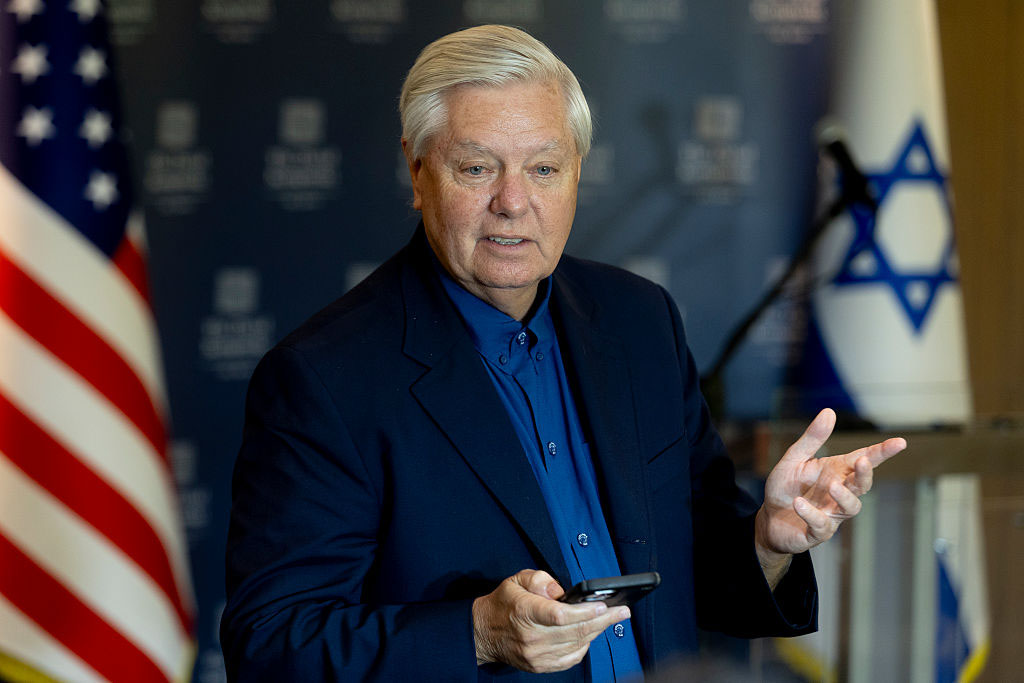
Villaraigosa has visited Israel six times. The first time he went as mayor of Los Angeles, in 2008, he and his team had to seek shelter from rocket fire while in Sderot.
“I’m opposed to BDS, I’ve been someone that believed from the very beginning in Israel’s right to exist. I’ve been picketed over those issues,” Villaraigosa said. “I’ve been demonized as someone who’s a supporter of genocide, and it’s actually the opposite.” When asked about violence against Jews in California and beyond, Villaraigosa said defunding the police is “nonsense.”
“Every country has a police department. Every country, every city in the world has a police department. Should they respect the rule of law? Of course,” Villaraigosa said. “Should we hold police officers who break the law accountable? Absolutely. But the notion of defund the police and have no police? It’s ridiculous.”
When asked how he will be just another Democrat in Sacramento, he pointed to coalition building and transparency.
“I’ve always been accountable. I’ve always accepted responsibility, and I think we need leaders like that,” Villaraigosa said. “Leaders that are uniters, leaders that want to work with everyone, leaders that are humble enough to know they don’t have all the answers.”
Villaraigosa also said leadership means taking heat from allies.
“I’m somebody who wasn’t perfect, I made my share of mistakes, but [as mayor]I left L.A. better than I found it,” Villaraigosa said. “I was straight with people. I tell people, courage is not taking on your opponents or your enemies. Courage is taking on your friends.”
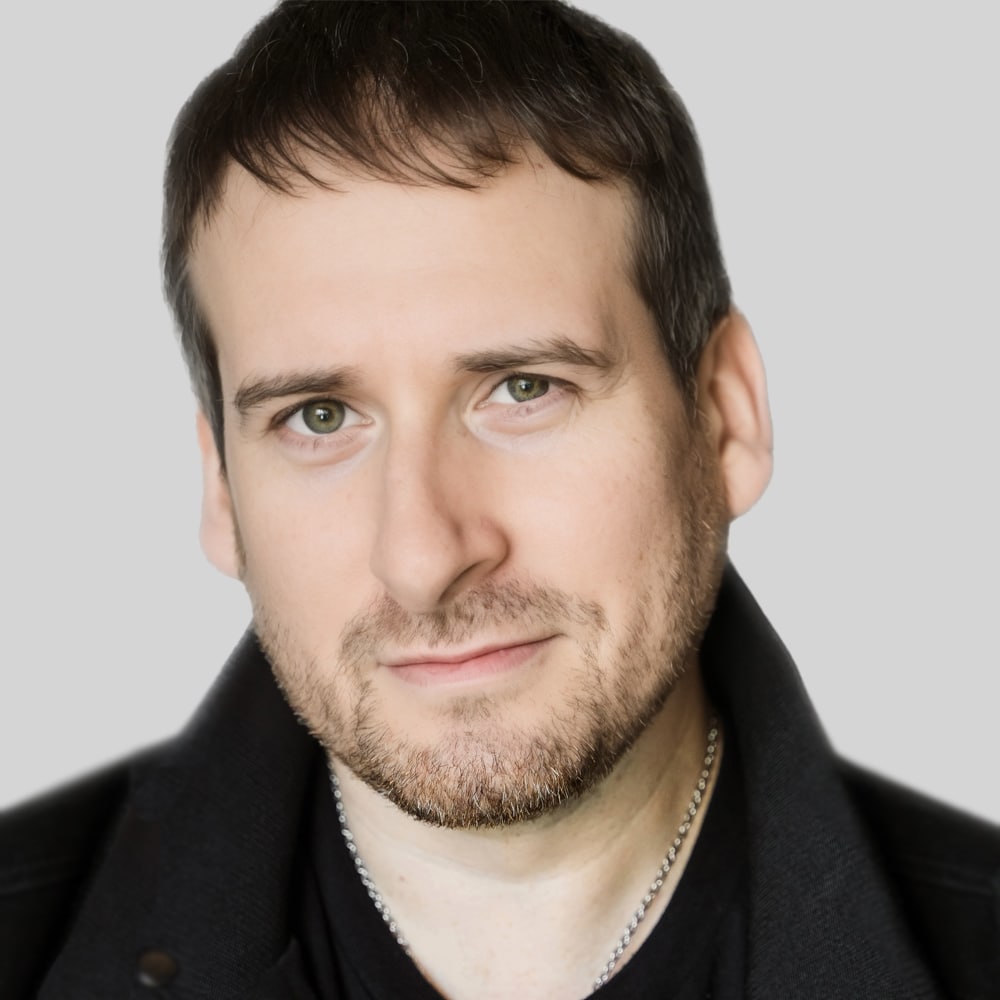
Still, California residents continue to relocate for places like Nashville, Las Vegas, Phoenix and all over Texas. When Villaraigosa was asked who one of his best Republican friends, he immediately pointed to Argent LNG Chairman and CEO Jonathan Bass, formerly of Beverly Hills.
“Antonio and I have been very close friends for over 30 years, and what makes that relationship meaningful is that it’s been tested—and strengthened—by honest, often intense debate,” Bass told the Journal. This is the first year that Bass will be voting in an election outside of California. He recently relocated to Houston, Texas. “We come from different political perspectives, and I’ve been very open about my Republican views, including my strong support for Donald Trump. We’ve had real disagreements, including moments where I’ve challenged what I see as dishonesty or overreach from the Democratic side.”
Bass said Villaraigosa does not avoid those conversations.
“What stands out about Antonio is that he doesn’t shy away from those conversations—he leans into them,” Bass said. “He listens carefully, engages thoughtfully, and when presented with a compelling argument, he’s willing to reconsider his position. That’s rare in politics today.”
Bass said the two have found common ground on legal immigration, energy development, liquified natural gas, tolerance and the belief that individuals can still drive change.
“At the core, our friendship reflects something I think is increasingly important: the ability to disagree without disconnecting, and to build trust across differences in pursuit of something larger,” Bass said. He said that the single-party dominance in California has been “devastating” for decades, and on the path to irreparable damage.
Villaraigosa said that single-party rule “hasn’t worked” for California.
“I represent, I think, a large group of Californians that want the government to work, want safe neighborhoods, good schools, healthcare that they can afford and people to spend their money wisely and live within our means,” Villaraigosa said.
Villaraigosa said California has lost its way, and that the state needs common sense and competence.
“The reason why I came back after leaving office 13 years ago was because I felt like we lost our way,” Villaraigosa said. “We need more common sense, competence.”