What does a pro-Israel organization do when pro-Israel voters disappear?
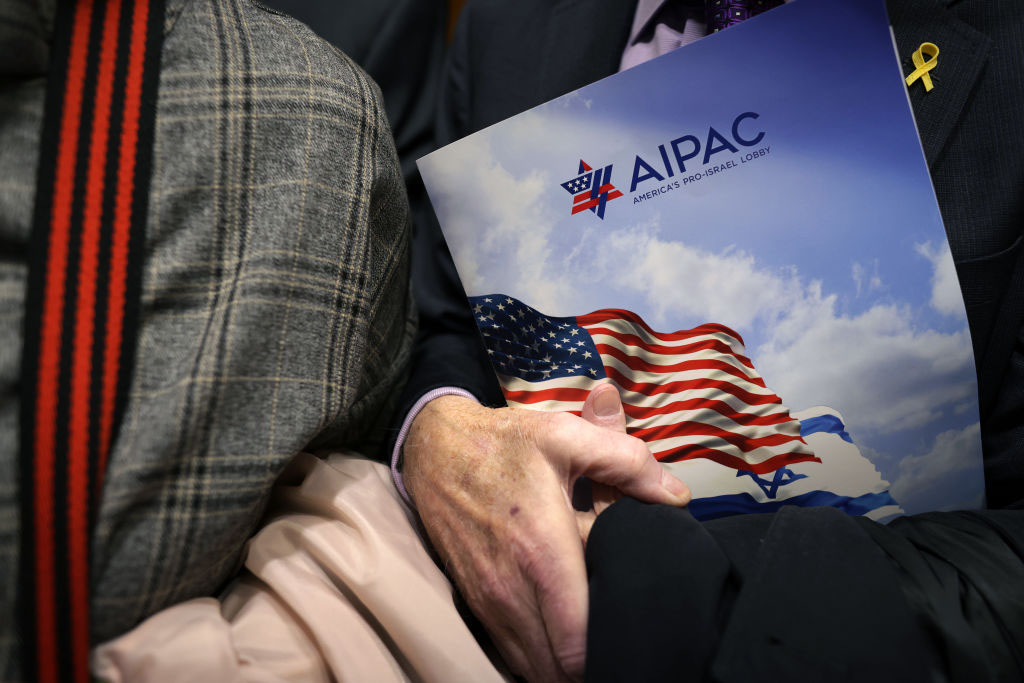
Fortunately, that is an exaggerated version of the challenge that the American Israel Public Affairs Committee (AIPAC) is currently facing. But there is a growing question as to whether there are still enough Israel supporters to win an election in many competitive U.S. elections. Alarming numbers of young people in both parties prioritize the Palestinian cause over the Jewish state. A worrisome trend of ultra-conservative isolationist voices are opposing the Iran war in blatantly anti-Israel language. But of even greater concern are recent Democratic congressional primaries in New Jersey and Illinois that point to the daunting obstacles Israel’s backers now face on the political left.
AIPAC was harshly and rightly criticized for its strategic errors in last month’s special election for an open Garden State congressional seat, when their political action committee launched an ill-advised series of attacks against former Representative Tom Malinowski. AIPAC preferred a more reliable Israel ally for the seat and went after Malinowski, who has tempered his long-time support for Israel by attaching conditions to future U.S. military funding. But in a classic case of letting the perfect be the enemy of the good, the advertising offensive against Malinowski opened the door for progressive activist Analilia Mejia, an avowed antizionist who won the primary by a slim margin over Malinowski (AIPAC’s candidate finished a distant third.)
Mejia will almost certainly win the runoff in this heavily Democratic district and will quickly join Ilhan Omar (D-Minn.), Rashida Tlaib (D-Mich.) and the other members of the so-called Squad as the House’s most strident anti-Israel voices. But AIPAC learned their lesson, albeit somewhat belatedly, before last week’s Illinois Democratic primary. The state’s pro-Israel community lost its biggest race, when their preferred candidate Representative Raja Krishnamoorthi was defeated in his bid for the Democratic U.S. Senate nomination. But that campaign involved relatively little conversation about Israel and the Middle East: AIPAC’s primary focus was on a quartet of House primaries, where pro-Israel advocates faced off against progressive opponents who made the wars in Gaza and Iran into centerpieces for their candidacies.
AIPAC split the four races down the middle, winning two of the campaigns and losing the other two. But ironically, a particularly encouraging note may have emerged from one of their defeats. In the state’s 9th congressional district, which includes northern parts of Chicago and some of the tonier northern and western suburbs, a replay of the New Jersey debacle seemed to be emerging. AIPAC’s top choice, State Senator Laura Fine, was castigated by more progressive opponents, both for her support of Israel but more specifically for her relationship with AIPAC.
Just like in New Jersey, there was a less ardent Israel supporter in the race, Evanston Mayor Daniel Biss. Just like in New Jersey, there was a virulent antizionist activist, social media influencer Kat Abughazaleh, in the field too. But this time, AIPAC’s allies did not target the less consistent Israel backer but instead trained their attacks on the more strident Israel critic. The result was reversed: Biss won a narrow victory over Abughazaleh. AIPAC didn’t elect its best friend, but seemed to learn the benefits of avoiding its worst enemy.
The road ahead becomes even more difficult, for AIPAC and for all of us who recognize the benefit of pro-Israel allies in elective offices. Similarly competitive House races in California and New York loom later this spring, followed by a critical Michigan Senate primary in August. Israel’s friends face a series of wrenching decisions in the months and years ahead: do we maintain our standards and support only those candidates who are unflinching Israel allies? Or do we compromise to support less reliable sometime-friends as a way to block the path of the most ardent antizionist zealots?
For several decades, we have taken Israel’s strong bipartisan support for granted. But AIPAC’s Jersey stumble and Illinois lesson can help us understand the difference between the world in which we would like to live and the one we now inhabit. Let’s see if we can learn this difficult lesson without further pratfalls.
Dan Schnur is the U.S. Politics Editor for the Jewish Journal. He teaches courses in politics, communications, and leadership at UC Berkeley, USC and Pepperdine. He hosts the monthly webinar “The Dan Schnur Political Report” for the Los Angeles World Affairs Council & Town Hall. Follow Dan’s work at www.danschnurpolitics.com.