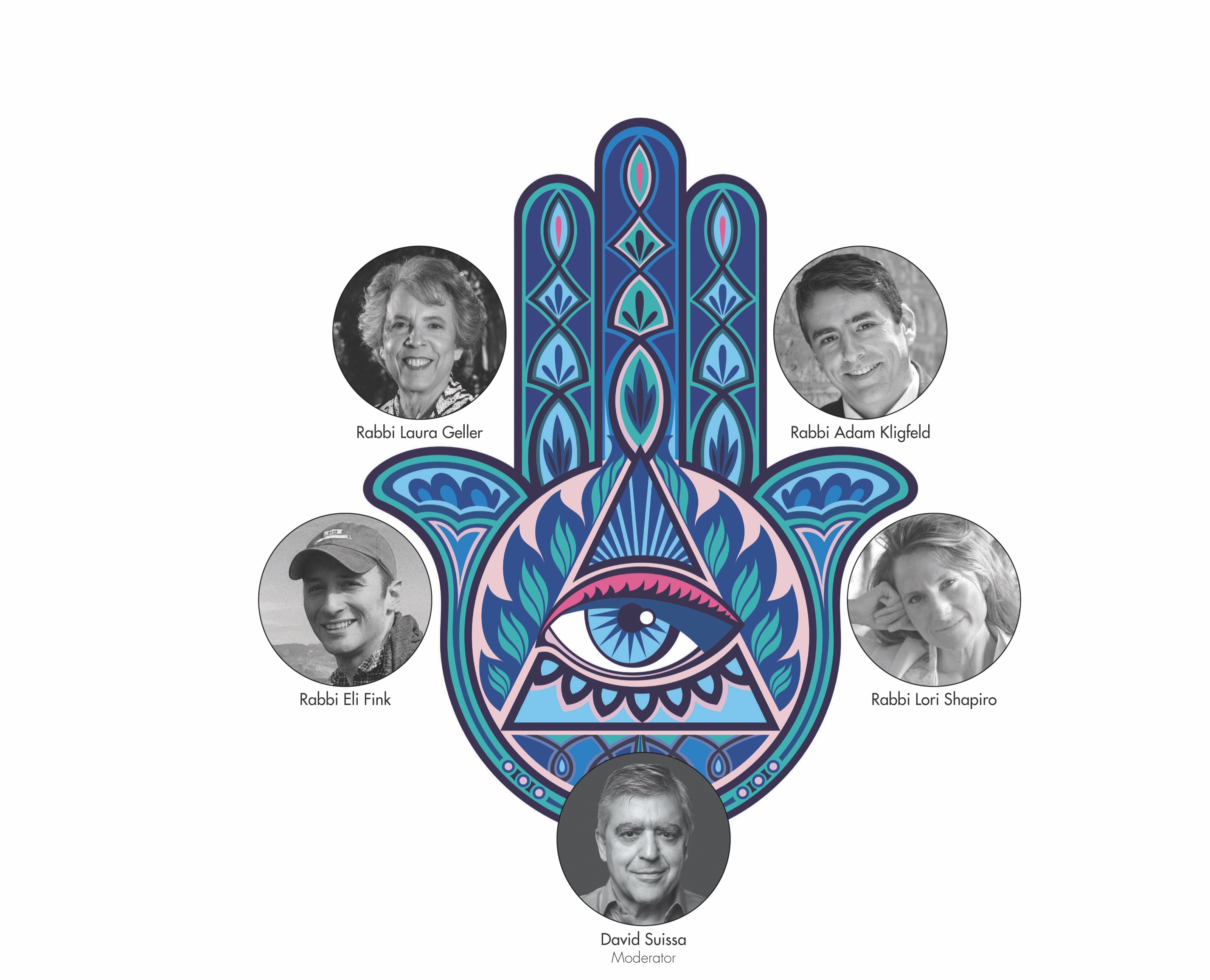
At a pre-Passover live-streamed online video gathering at the Journal’s office on March 25, Temple Emanuel of Beverly Hills Rabbi Emerita Laura Geller, Temple Beth Am Rabbi Adam Kligfeld, Open Temple Rabbi Lori Shapiro and Rabbi Eli Fink of the Journal staff sat down with Publisher and Editor-in-Chief David Suissa to discuss the holiday for “Table for Five — Live.” They touched on the rituals of the seder, the metaphorical concept of slavery, modern twists on biblical themes and anecdotes from their own Passover experiences.
Suissa kicked off the event, co-sponsored by Global Limmud, by asking why Passover seems to resonate with so many people. According to Geller, it’s because it works on four levels at the same time. It reminds Jews of their history, and that they can’t stand idly by when others are oppressed. It’s political, because it reminds Jews that there is a Pharaoh in every generation. It’s psychological, because everyone has his or her own Egypt.
“But the most important thing is, it’s a measuring stick,” Geller said. “We grow up around the Passover table. When we were little, we asked the Four Questions, and then we get a little bigger and our little cousin asks the Four Questions. We sit in the seats where our parents sat, [and] where our grandparents sat. At some point, it moves from older generations to our homes, the family recipes to our kitchens. We change. The story doesn’t.”
“The most important thing [about Passover] is, it’s a measuring stick. … We change. The story doesn’t.” — Rabbi Laura Geller
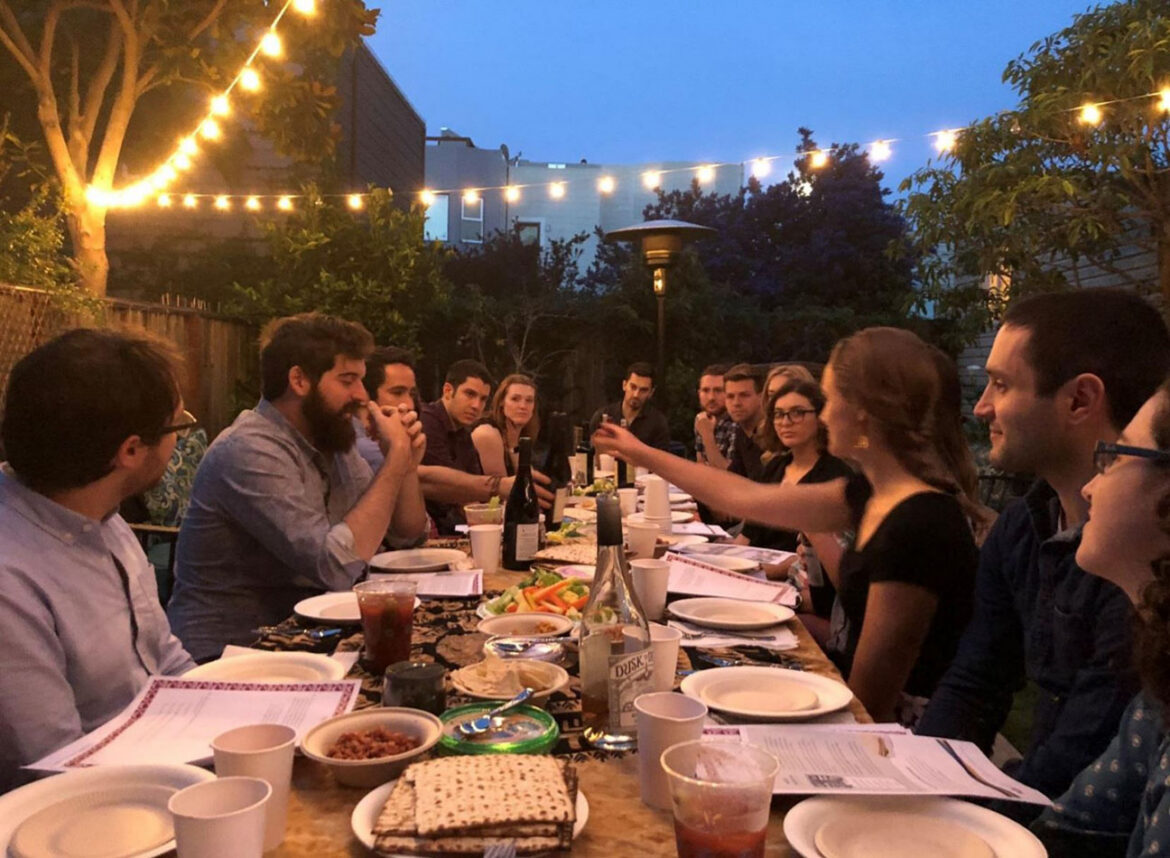
Suissa and the rabbis dived deep into the haggadah, and explained how they bring it to life at the seder table and make it relatable for guests. Kligfeld said that a number of years ago, at his meal, he said to everyone, “Conjure your maror. Conjure a personal bitterness. Imagine it was in the middle of the table. And don’t speak about it, but speak to it.”
Kligfeld’s father, who is still alive, was battling cancer and six months into his chemotherapy treatments. “He named his cancer and spoke to his disease,” Kligfeld said. “He told his disease that although it was a bitter story inside of him, the end of the story is not bitter. The end is salvation.”
Transitioning into a talk about the meaning of “freedom,” Suissa said Passover is about “liberation. It’s about freedom. But yet the word ‘freedom’ is so mysterious and complicated.”
Fink brought up the Talmud, which says that Passover is not about being “freed,” but from moving from one master to another. “They are freed from the Pharaoh, but they don’t get to do whatever they want,” he said. “They’re now servants of this new ruler, God. There’s no such thing as real freedom, the story tells us.”
Fink said true “freedom” is about finding what traps in life you’re comfortable with, and being honest about what you can and can’t do.
On this note, Shapiro brought up that our huge egos make us believe we can be something that is impossible, like becoming the next Rev. Martin Luther King Jr. Instead, she said, “It’s being who we are meant to be. I think that’s what Pesach is asking us to do.”
Shapiro also said that Jews need to find their Mitzrayim (Egypt) and “name it, tame it, [and] find redemption.”
Looking forward, Suissa and the rabbis discussed what Jews do following Passover, and how to keep up the spirit of the holiday year round. Kligfeld said that he often spends a lot of time with engaged couples and tells them they are going to be doing tons of planning and spending money on a wedding that is five hours of their lives.
“What about the next morning?” Kligfeld said. “The most significant aspect of this is not the night you get married. It’s the morning you wake up, the next morning, and the one after that, and the one after that, and the one after that. That’s where kiddushin is found.”
Kligfeld continued, “One of the best things we can do as religious leaders in our community is undervalue the seder night so that [Jews] can start to bring Jewish rituals and concepts of freedom into their Jewish lives all other nights of the year.”