Interfaith marriage between Jews and non-Jews is back in the news.
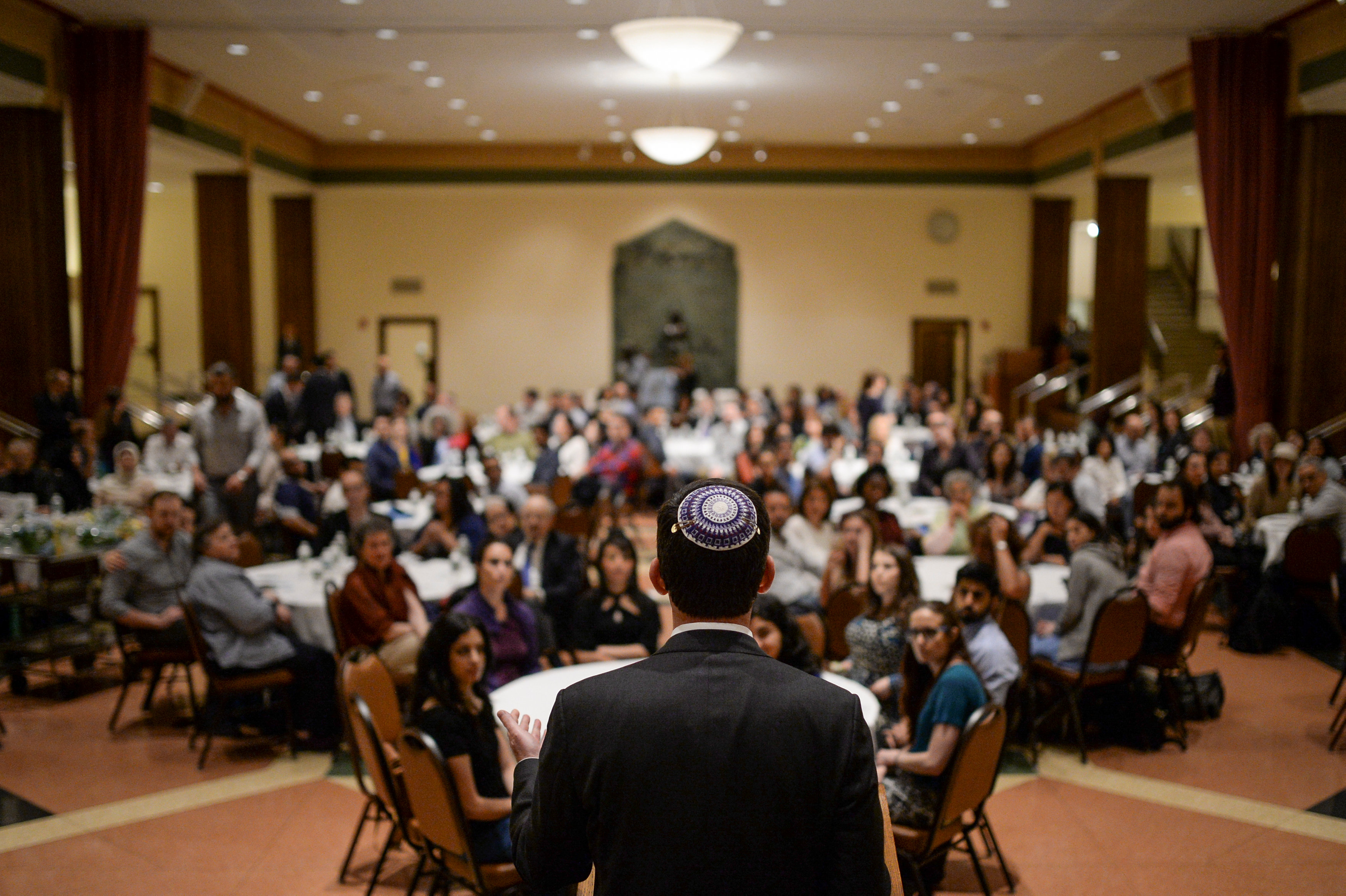
Bnai Jeshurun, an influential synagogue in New York, will officiate such marriages, when the couple in question commits “to creating Jewish homes and raising Jewish children.” Also in intermarriage news: Rabbi Amichai Lau Lavie decided to break with Conservative Judaism because of its prohibition against interfaith weddings. He will now perform such ceremonies.
The argument in favour of rabbis officiating intermarriage ceremonies is well rehearsed – as is the argument against such ceremonies. On the one hand, there is the hope, based on some, evidence, that when a rabbi is involved in the ceremony of an interfaith couple, there is a better chance that the couple will have a Jewish home (what is a Jewish home? That’s a question for another time). On the other hand, there is the fear, based on more evidence, that interfaith marriage leads to eventual assimilation, and that there’s no substitute to encouraging marriages between Jews (a message much harder to communicate when rabbis officiate interfaith weddings).
There are questions of principles involved, and there are questions of practicality. On the one hand, is it acceptable, Jewishly speaking, to give a blessing to an interfaith couple? On the other hand, is it useful (from the Jewish People perspective) to give a blessing to an interfaith couple? We have heard all of these arguments time and again, and the world keeps spinning. That is, Jews keep finding non-Jewish spouses, disregarding the internal Jewish debate.
Regardless of right and wrong, it is easy to say what’s the answer to the question of interfaith marriage.
Jews who have a strong belief that marrying outside the tribe is purely wrong – will make no practical calculations. They will say it is wrong and refuse to accept it, no matter how many other Jews disagree with them. Thus, in the Orthodox world there is not much debate, at least for now. The Orthodox world is struggling with many other contentious topics, and it has its own share of internal wars over important issues (chief among them the role of women in religious life). But the interfaith debate has not yet infiltrated the guarded walls of this world. Not in a major way.
Jews who have a strong believe that telling other Jews whom they should marry is wrong and unacceptable will also have an easy time with this issue of intermarriage. If a Jew wants to have a ceremony officiated by his rabbi, that is a sign of connection to his Jewishness and reason enough for him to be embraced and assisted by the rabbi.
The issue becomes more complicated only when practical considerations enter the discussion– when studies are quoted by the opponents and the proponents of intermarriage; when demography and continuity, rather than ideology and theology, become the key words; and when interfaith marriages are considered from the perspective of Jewish policy.
It becomes more complicated because the signs are mixed and a definitive answer cannot be found. As a pragmatic people, the Jews should know by now that “stopping” intermarriage is a hollow quest. It is not going to happen – at least not as long as the social atmosphere in America doesn’t radically change (and there is no reason to want that). As a pragmatic people, they also know that intermarriage is a challenge for Jewish continuity. Some of them hope that the challenge is manageable. Some even see an interesting opportunity (more people joining in by marrying Jews). Some of them are less optimistic. They see a trend that will eventually reduce the number of Jews and/or dwindle the meaning and intensity of Jewishness.
Thus, the only way forward is to let this trial and error process run its course. Not because this is what the Jews need, but rather because this is what the Jews are going to do. If studies cannot give a definitive answer regarding what we ought to do, and if the Jews themselves are not willing to agree on what we ought to do, then life will be our field of experimentation. Some Jews will marry non-Jews, and some will not. Some rabbis will officiate in interfaith ceremonies, and others will not. Some scholars will argue that intermarriage is about to weaken us – and some will argue that intermarriage can strengthen us. Give it two or three or four generations, and this debate will be decided by reality.