Neshek means ‘gun’ in Hebrew. You should all know this. So you don’t stand out like a classic, SToOPiD tourist…like I did.
I had just arrived in Tel Aviv, as I do nearly every week. I hopped off the sheirut (shared taxi) and headed into the Tachana HaMerkazeet (Central Bus Station) to catch my bus to the chof (beach). Of course, before anyone enters, they pass through a metal detector and their bag is checked – an unfortunate but necessary precaution at places with high concentrations of people. (Truth is, the checking has become so commonplace that I hardly notice it anymore.) But this particular Friday, because I was staying the weekend, I had a huge bag too jam-packed to be searched properly.
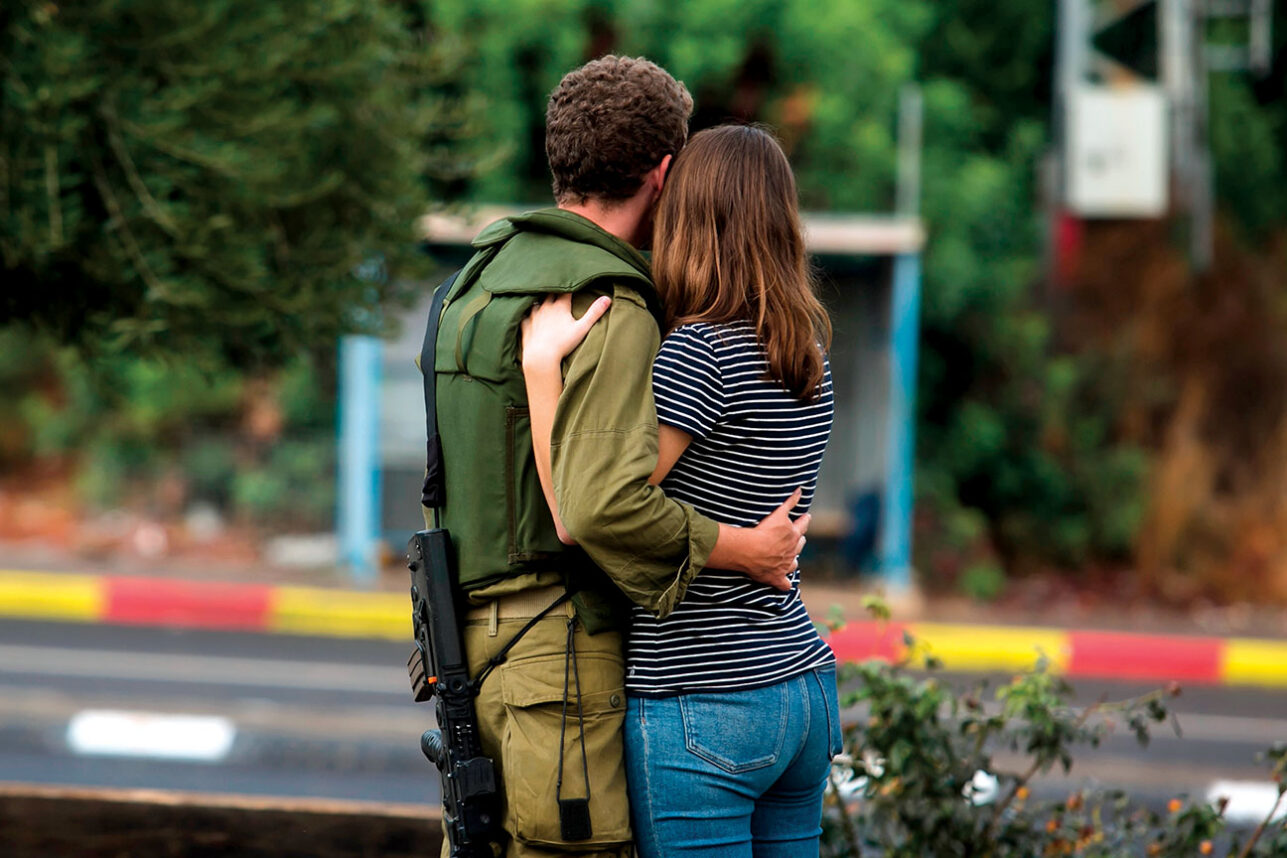
So, the beautiful, Ethiopian, lady soldier simply asked me, “Yesh lach neshek?” (Do you have a gun?)
Now, who knows? Maybe it was because I’d just gotten off the phone, maybe I was still waking up from the nap I’d taken on the drive over, maybe my ears hadn’t yet popped after coming down from the 7 hills of Jerusalem and my brain was clogged – I dunno, but a major, space-cadet moment ensued as I could not, for the life of me, remember what the heck ‘neshek’ meant.
So, I answered, “Ehm, lo yodaat.” (Um, I don’t know.)
“At lo yodaat?” (You don’t know?) She questioned quizzically, looking at me as though I had 3 heads.
“Neshek?” I repeated, cocking my head to one side, like my pup when he’s perplexed.
“Ken! Neshek! Yesh lach neshek?!” she said, slightly exasperated and visibly confounded that idiots like me were allowed to roam the streets freely.
Then somewhere, from the dustiest recesses of my mind, it came to me – ‘neshek’ means GUN!
“Lo! Lo! Betach, lo!” (No! No! Of course not! No!) I suddenly squawked, the context of this incriminating exchange suddenly illuminated.
A moment of silence followed, as we each sussed out the other.
She debated, I suspect – is this panicked chick just playing dumb or is she an honest-to-goodness imbecile? I stood, subtly twitching, trying to play it cool, while inwardly cursing myself for not reviewing my vocabulary words more diligently.
And then, probably against her better judgment, she said, “Ok, teekansi.” (Ok, come in.) At which point, I grabbed my bag far too eagerly and dashed inside with an awkwardly, high pitched, “todah!” (thanks!).
Suffice it to say, and I am not proud of this, I am not yet an Israeli.
It was also made clear the day I walked into the “SuperPharm” through the exit instead of the entrance, and so, had the glass doors open and close on me repeatedly while the does-it-really-need-to-be-that-loud siren sounded. See, whereas in English, I look at a word and can’t help but read it, in Hebrew, I still have to focus and concentrate…neither of which I did…(as demonstrated by completely missing the enormous, red YETZIAH (EXIT) sign) and so, was trapped and mashed between the automatic doors like grapes under Lucy’s feet, too stunned and embarrassed to escape with even a morsel of grace. When I finally entered the store, a woman approached me to see if I needed any help. I couldn’t help but wonder whether she meant in the store or in life in general.
That wouldn’t happen to a real Israeli.
It was then reaffirmed again the day I slipped down the Jerusalem-stone steps on my way home from the shuk (market), breaking my newly-purchased eggs all over the street. This happened because I’m too vain to buy practical shoes with good traction on the soles because I don’t think they’re very pretty. As a result, a dime’s worth of water tripped me and next thing you know, I’ve landed flat on my bum and am looking up to find a very concerned Bubbe hastening toward me with arms outstretched, “At beseder???” (Are you alright?) I nodded and she went into action, flagging down a passerby. “Gever! Ha’meeskena nafla—ta’azor la!” (Mister, the poor thing fell! Help her!) And so the dude came to my rescue, carrying my flying, rolling-cart down the rest of the steps for me. Bubbe dusted me off, helped me clear the street of eggs (as much as was possible), ensured I was ok, made me promise to be careful, and then sent me home to clean myself up.
Worst part is, I still haven’t bought decent shoes. I’m just walking veeeery carefully. Totally not an Israeli yet.
Then there was the time a car stopped to ask me for directions. ‘Perfect opportunity to speak Hebrew!’ I said to myself. As I thought about how to express the directions, I just kept repeating “Yashar, yashar” (straight, straight) because I knew for sure that was the first part. Well, apparently, my thinking took longer than expected because at a certain point, all the people in the car joined in saying “Yashar, yashar” in unison with me. Very funny. They all started cracking up. I think I was supposed to be a good sport and start laughing too, but I’m really trying to learn Hebrew. This is very sensitive for me and it just kinda hurt my feelings. I felt dumb and being a very expressive person, my deflation must have been evident, because as they drove away, one girl stuck her head out the window to yell back to me, “No, no, ze haya beseder, todah!” (No, no, it was ok, thanks!) But I could still hear the others laughing. Oof.
This all happened within about two weeks and I don’t really know how to wrap it up. I guess…mmm…I can’t wait to be an Israeli.