-Advertorial-
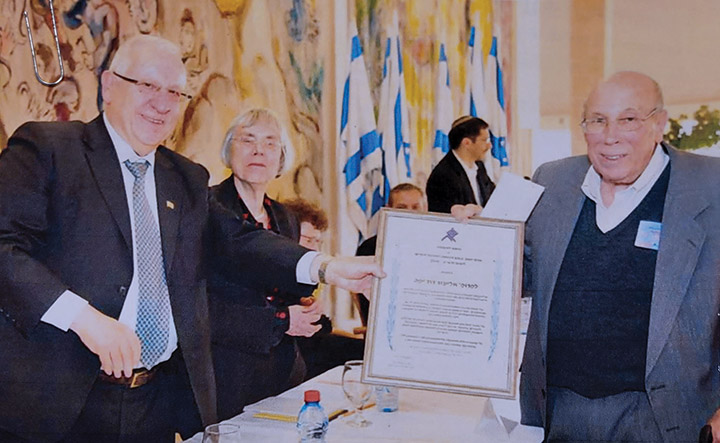
Thirty-five years ago, a single person in a small Jerusalem apartment had a simple but radical idea: that the best way to help people in need was not through charity, but through opportunity. That person was Professor Eliezer Jaffe z”l, who believed that financial independence, not dependency, is the highest form of tzedakah.
In 1990, as new immigrants arrived from the former Soviet Union and Ethiopia, Jaffe saw that what they needed most was a fair chance. With support from early donors abroad, the Israeli Free Loan Association, later to become Ogen, was born.
The early years were modest. Loans were small, the staff tiny, and the ambition enormous: to provide interest-free credit to those shut out of the traditional banking system. What began as one man’s conviction grew into a movement rooted in dignity and self-reliance. From that single initiative, Ogen has evolved into Israel’s leading nonprofit social lender, providing more than 2.5 billion shekels in affordable loans across 83,000 loans to families, small businesses, and nonprofits.
At every major moment in Israel’s recent history, Ogen’s model of recycling philanthropic capital into new loans enabled it to operate as Israel’s Financial First Responder. When waves of immigration transformed the country in the 1990s, Ogen helped thousands of new Israelis plant roots and begin careers. As the Second Intifada shook Israel in the early 2000s, Ogen stood with families in crisis and helped small businesses stay afloat through one of the nation’s most turbulent periods. During the COVID-19 pandemic, it became a lifeline as one of the few financial organizations still operating nationwide, offering zero and low-interest loans to households, small businesses, and nonprofits.
What made Jaffe’s idea unique was the belief that philanthropy could be recycled, not consumed. Instead of one donation helping one family once, each shekel would be recycled again and again with repayments very high. Over time, philanthropic capital blended with other sources of capital (impact investments, credit lines and bonds) forming a sustainable pool of credit that grows instead of depletes. Today this model is the foundation for what will become Israel’s first social bank.
When the events of October 7 shattered lives and livelihoods across the country, Ogen provided fast social loans to families, reservists, evacuees, nonprofits and entrepreneurs facing sudden crisis. Each challenge expanded its mission, building an ecosystem of financial inclusion: mentoring entrepreneurs, guiding families in debt, and channeling private capital toward public good.
But statistics only tell part of the story. The real story is written in the lives of people who, with a little help, found the strength to rebuild. Three stories, demonstrating so much opportunity:
1. Dr. Fadi, a dentist from East Jerusalem, nearly lost everything after investing his savings to expand his clinic, only to face an unexpected funding gap that halted construction. Ogen’s $197,000 low-interest loan enabled him to complete the work, hire staff, and reopen. Today, his clinic serves a predominantly Haredi community, providing accessible care and local jobs, while the repaid capital will support the next entrepreneur in need.
2. In Israel’s north, Natali and Eliyahu began rebuilding their home after rocket fire destroyed it while Eliyahu was on reserve duty and Natali faced evacuation and uncertainty alone. With government assistance slow to arrive, Ogen’s interest-free loan and ongoing guidance helped them restore stability and direction. Their children are back in school, and their home is once again filled with laughter.
3. For Misganaw, a young Israeli-Ethiopian reservist returning from more than 150 days of service, the transition home was fraught with financial and emotional uncertainty. Through Ogen’s Reservists Track, he and his partner received tailored guidance and an interest-free mortgage loan. The support helped them transform months of service into a foundation for long-term stability.
These experiences capture what Ogen has always stood for: the belief that finance can be a tool for healing, resilience, and empowerment, especially in times of crisis. What began as an act of faith in people’s potential has evolved into an engine for inclusive growth, combining credit, mentorship, and financial education.
Over the past decade, Ogen has broadened partnerships, launched impact bonds, and opened specialized divisions for small businesses, families, and individuals. It now blends philanthropic capital with other sources of capital, multiplying every donated shekel into several more. Yet at its core, Ogen still lives by the conviction that guided Professor Jaffe: when we trust people and give them the tools to stand on their own, they rise.
Thirty-five years on, that mission feels more urgent than ever. The men and women who left their jobs, their homes, and their families to defend Israel are now returning to rebuild it. They gave their time and courage to the country, and now it is our turn to give them the stability to move forward, not with charity, but with opportunity, dignity, and belief.
Israel has always been built by its people, those who see beyond the crisis of the moment and choose to invest in tomorrow. As Ogen marks its 35th year, I am proud to be part of this story and am passionate about rebuilding a better future here. One loan, one family, one dream at a time.
Please visit: https://bit.ly/OgenIsraelSupport