I hope that God does not object to this poem’s message, taking offense
to my comparison of divinations He allegedly facilitates in humans via AI, the artificial intelligence
which typical believers in a holy God apply with human divinations, while they’re waiting
for contact with His religious intelligence, a concept they are with AI conflating.
In “Disaster looms, they tell us. Empower experts, raise taxes! Here we go again,” WSJ, 2/4/26, Barton Swaim writes:
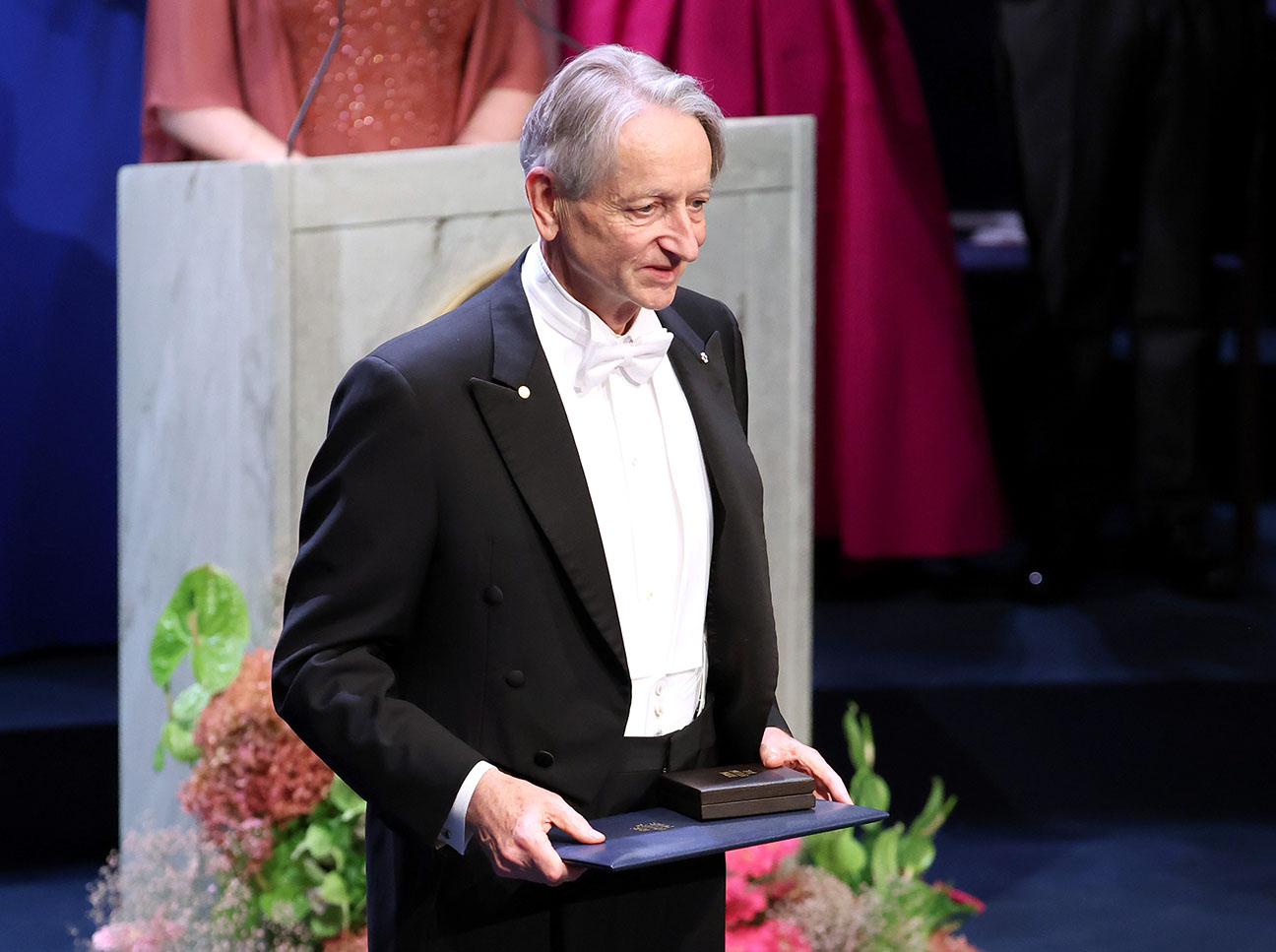
“People should stop training radiologists now. It’s just completely obvious that within five years, deep learning is going to do better than radiologists.” So pronounced the cognitive scientist Geoffrey Hinton, colloquially known as the Godfather of AI, a decade ago. He was awarded the Nobel Prize in Physics in 2024 for his work in artificial intelligence. Mr. Hinton thought AI would make radiologists useless. They have since grown in number, demand and income.
Mr. Hinton’s claim was among the earliest that AI would make a whole class of human practitioners redundant. Others have come at regular intervals since. In 2023 a Goldman Sachs study concluded that “roughly two-thirds” of U.S. jobs are “exposed to some degree of automation by AI” and that most of those “have a significant—but partial—share of their workload (25%-50%) that can be replaced.” Hedged language aside, that sounds like a lot of people on the unemployment rolls…..
The economic cataclysm caused by artificial intelligence may never come. But like Godot, its arrival will remain always imminent, never actual…..
As for Geoffrey Hinton, he barely admits he was wrong about radiologists. “In retrospect,” says a 2025 New York Times report, “he believes he spoke too broadly in 2016. . . . He didn’t make clear that he was speaking purely about image analysis, and was wrong on timing but not the direction.”
A small personal detail about Geoffrey Hinton is that his daughter Charlotte, who became a Head Teacher, was a lively friend of Linda, my wife, studying French at University College London in the early 60’s. Their conversations were apparently mainly about dating.
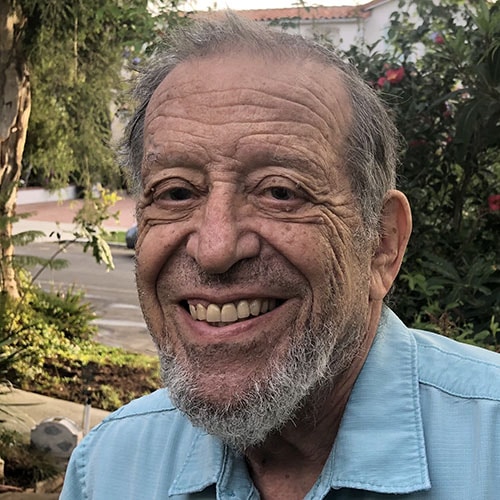
Gershon Hepner is a poet who has written over 25,000 poems on subjects ranging from music to literature, politics to Torah. He grew up in England and moved to Los Angeles in 1976. Using his varied interests and experiences, he has authored dozens of papers in medical and academic journals, and authored “Legal Friction: Law, Narrative, and Identity Politics in Biblical Israel.” He can be reached at gershonhepner@gmail.com.