fbpx

February 12, 2026

Rethinking Rabbinical Education for a New Era

A few months ago, the Atra Center for Rabbinic Innovation released the first ever comprehensive study of the American rabbinate. The study has high points: the rabbinate is more diverse than ever, with impressive numbers from diverse communities, including LGBTQ+ communities. And it reaffirms what most of us already knew: Jewish institutions are struggling to fill rabbinic roles, particularly in congregations.

But why? The Atra study reports that among hundreds of people who seriously considered becoming rabbis but ultimately chose other paths, the most frequently cited barriers were cost, the length of training, the requirement to relocate, and concerns about the practicality of rabbinic life. In other words, many people feel called to the rabbinate, but find that the structure of rabbinic education makes that calling out of reach.

For us at Hebrew Union College, the Atra study was less illuminating than validating. Again and again, we meet second-career adults, people rooted in their communities, individuals living far from our campuses, and those serving in demanding roles, including the military, who possess the passion, talent, and commitment we seek in future rabbis. The question has never been whether these candidates belong in the rabbinate, but whether our educational models are flexible enough to welcome them.

That question led us to think differently and to act.

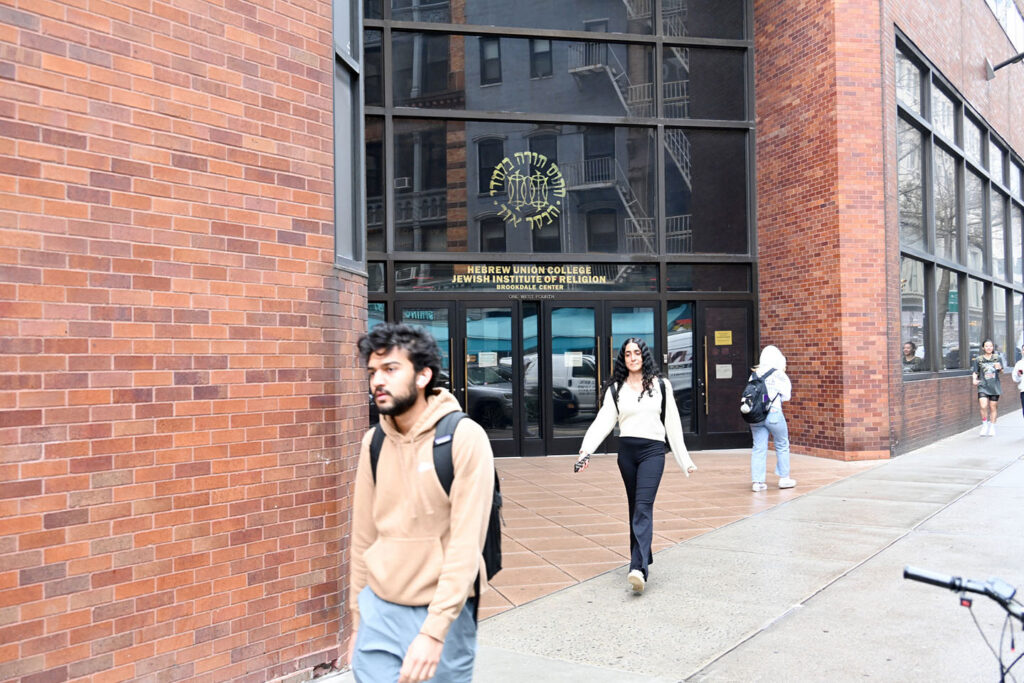
Launched just a year ago, our Virtual Pathway, for second career students, and the twenty-three enrolled students’ stories reflect individuals who never imagined a viable path to the rabbinate. These students come from around the country, and this is a restart as they move to a second career. They have established lives, meaningful professional work, and deep roots in their communities. For many, uprooting themselves to relocate to one of our urban residential campuses was never possible. And yet, through this pathway, they are able to join the powerful network of CCAR rabbis and URJ congregations and to engage fully in rigorous rabbinical study at Hebrew Union College.

The diversity of our students is extraordinary. One student dreamed of becoming a Reform rabbi before the Reform movement was ready to ordain women, a dream deferred for decades. One student serves in the military and balances that demanding responsibility with serious rabbinical study. Another owns a small business back home and cannot close shop, but is able to add being a virtual student to her life. These students bring gifts to the Jewish people that we did not even know we were missing.

This past month, the Virtual Pathway vision came vividly to life in New York City, where our most recent in-person intensive concluded. The intermingling was electric: virtual and campus-based students studying text shoulder to shoulder, lifting their voices together in worship, and forming relationships that transcend modality. It was a lively, sacred gathering that reminded all of us that presence is not defined by geography, but by intention, commitment, and heart.

While my colleagues are in-person with their rabbinical students, my rabbinate is about supporting, nurturing, and bringing forward the best and most passionate individuals who are called to serve as rabbis, but cannot attend classes in person. My work is about helping these extraordinary candidates bring our ancient Jewish wisdom into conversation with the innovative digital and communal environments they will inhabit as rabbis.

At a time when the Jewish world can feel uncertain and strained, investing in new models of rabbinic formation is an act of hope. Virtual pathways do not diminish the sanctity of the rabbinate; they expand it, allowing calling, talent, and leadership to be recognized in forms that may look different from the past but are no less sacred.

What we have built at Hebrew Union College is just one solution. It is one example of how institutions can think creatively to meet the needs of the Jewish community, remove barriers, and make becoming a rabbi more accessible. There is no single answer. We are still exploring new ways to support students who are balancing careers, families, communities, and other responsibilities.

I urge other leaders of rabbinical schools and Jewish institutions to do the same: to think boldly about inclusion, to expand pathways, to lower unnecessary obstacles, and to recognize that the best candidates may not fit the traditional mold. The future of Jewish leadership depends on collective creativity, collaboration, and openness to new models of education and formation.

What a gift to be able to call this my rabbinate and to play a role in nurturing these future rabbis. May we all have opportunities to recognize, cherish, and honor the gifts of our own rabbinates, and may we act boldly to ensure that all those who are called to this sacred work can answer in their own time and place.


Rabbi Dr. Karen Reiss Medwed, Ph.D., is Interim Vice Provost for Academic Affairs and Initiatives at Hebrew Union College, and Teaching Professor Emerita of Northeastern University

Rethinking Rabbinical Education for a New Era Read More »

The Hidden Cost of Campus Antisemitism: Faculty Mental Health

Since Hamas’ October 7 terrorist attack, many Jewish faculty at colleges and universities across the country have been describing their professional lives in language more commonly associated with trauma than academic disagreement. In a nationwide survey of more than 200 Jewish-identifying U.S.-based faculty conducted between April and July of 2025 by the Academic Engagement Network (AEN) and the Anti-Defamation League (ADL), respondents spoke of fear, isolation, and a loss of belonging on their own campuses.

One Jewish faculty member starkly described the experience: “I’m being attacked online…I have been ostracized by faculty in a smear campaign. I have been advised…not to come to campus…this is as bad as it gets.” Another shared, “faculty are not talking to me because they know I’m a Zionist.” And another participant confided, “I am being attacked in all directions, and I no longer feel safe on campus.”

And these aren’t isolated incidents. In the AEN-ADL survey, nearly three-quarters of Jewish and Zionist faculty on U.S. campuses reported experiencing hostility or bias directly from colleagues since October 7. More than 20 percent of the respondents said they had experienced differential treatment during professional evaluations, promotions, or job assignments because they were Jewish or perceived to be pro-Israel. Almost 40 percent reported feeling pressure to hide or downplay their Jewish and/or Zionist views and identities to avoid social or professional retaliation. Perhaps most disturbing, among the 170 faculty who reported having had negative experiences on campus related to being Jewish and/or Zionist, nearly 40 percent said they are considering leaving academia altogether.

Together, these accounts point to a growing crisis in the academic workplace – one that has significant implications for faculty wellbeing, academic freedom, and institutional trust.

These themes surfaced clearly at a recent three-day convening hosted by the Academic Engagement Network in Miami that brought together Jewish and Zionist faculty from nearly 40 colleges and universities throughout the United States. Faculty used the language of trauma to describe how the hostility, social ostracism, and institutional silence that they have faced on their campuses and within their professional academic associations have taken a significant toll on their mental health. They had the opportunity to hear from the award-winning Harvard University clinical psychologist Dr. Miri Bar-Halpern, who articulated and validated their experiences by describing the well-documented psychological effects of exclusion and denial, including anxiety, withdrawal, and a diminished sense of belonging in what was once a professional home. The faculty emphasized the need for spaces that acknowledge harm and support recovery and post-traumatic growth.

While universities have appropriately devoted significant attention and resources to Jewish student wellbeing after October 7, far less focus has been placed on the needs and mental health of faculty and staff. That gap matters. Faculty are employees, and when substantial numbers report feeling unsafe, isolated, or psychologically harmed at work, administrators are confronting not only a campus climate issue, but a potential workplace harassment issue.

Responding effectively requires more than statements condemning antisemitism or affirming institutional values. Universities need clear, enforceable policies that prohibit harassment, discrimination, and exclusion based on Jewish identity or Zionist beliefs. They also need to invest in resources that address faculty wellbeing directly – including through trauma-informed mental health support and inclusive spaces where their lived experiences are validated, and they can speak openly without fear of professional consequences.

The findings of the AEN-ADL survey shine a light on the outsized role that virulently anti-Israel faculty and staff play in creating a hostile climate on college campuses and negatively impacting the mental health of their Jewish and Zionist colleagues. While student activists and outside provocateurs may garner national headlines, it is faculty who are the primary drivers of campus antisemitism and anti-Israel bias, providing the intellectual scaffolding for the actions of impressionable students. When hatred and bigotry originate among faculty – those entrusted with modeling scholarly rigor, civil debate and dialogue, and the upholding of institutional norms – it does considerable harm, as students take their cues from their professors.

The AEN-ADL faculty survey is a wake-up call. It reveals that antisemitism and anti-Zionist bias are not only coming from the margins of campus life, but from within its academic core. Left unaddressed, this hostility risks driving  Jews out of higher education.

In a moment when higher education is already facing a lack of public trust and ongoing political attacks, the prospect of losing Jewish employees because they feel unwelcome on campus should concern every administrator and the academy more broadly. Do Jewish and Zionist faculty still have a place in American higher education, especially in the humanities and ‘softer’ social sciences where vehemently anti-Israel narratives dominate? Will young Jews choose to forgo a career in the academy due to the hostility they will likely face? What are the implications for Jewish and Zionist students, who will lack faculty mentors if this comes to pass? These questions should be top of mind for all university leaders.

University leaders must continue to focus on improving the campus climate for Jewish students, faculty, and staff while appreciating that vehemently anti-Israel faculty activists are often the key instigators of harm. They should take meaningful steps to ensure that all members of the academic community, including Jewish and Zionist faculty, are protected, supported, and able to thrive, and that their mental health concerns are validated and addressed. For institutions committed to open inquiry and inclusion, the path forward should be clear.


Miriam F. Elman is executive director of the Academic Engagement Network. Raeefa Z. Shams is the organization’s director of programming and communications.

The Hidden Cost of Campus Antisemitism: Faculty Mental Health Read More »

Quo Vadis after October 8th: A Pledge for a New Direction in Memory Politics to End Political Homelessness

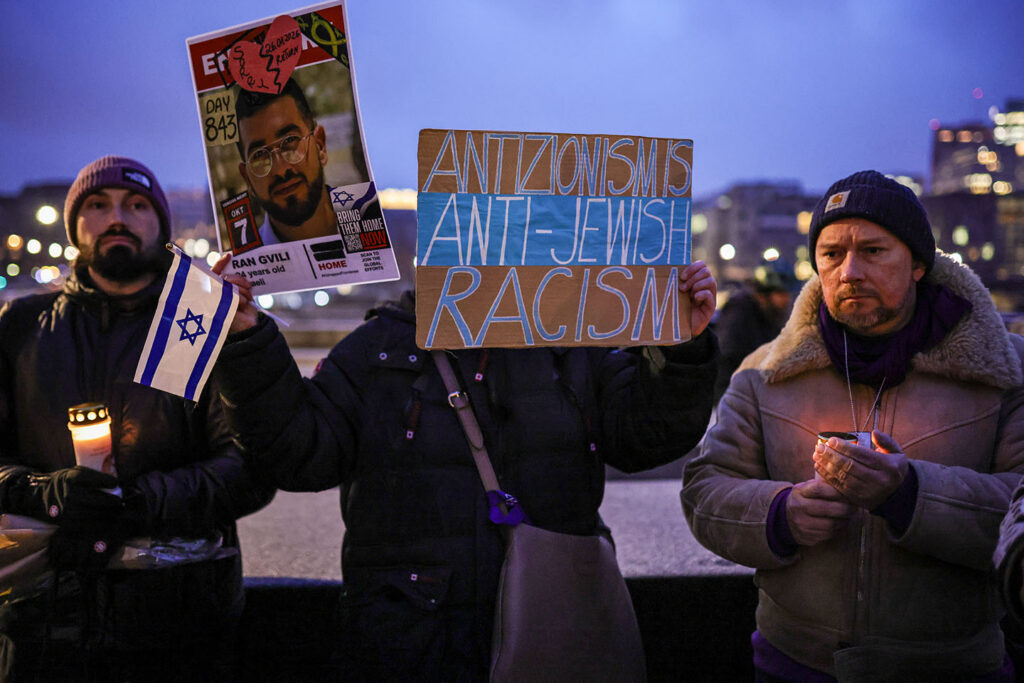
When news broke on Jan. 26, 2026 that Ran Gvili’s body had been recovered, it felt like a rare moment of collective exhale. Occurring just one day before International Holocaust Remembrance Day and 843 days after Oct. 7, 2023, the deadliest pogrom against Jews since the Shoah, the recovery of the last hostage prompted a wave of symbolic closure. Many took to social media to share photos of themselves removing the yellow ribbons, signaling the homecoming of the last hostage. However, I found that my relief was tempered by a sobering realization: Despite the good news, a permanent shift in Holocaust memory culture remains omnipresent in Europe, alongside a surge in marginalizing those who refuse to accept easy, binary answers.

The Need for a Semantic European Shift after Oct. 8th

The events of Oct. 7, 2023 proved once again that antisemitic acts do not occur in hiding; they happen in plain sight, streamed and shared on social media. However, on Oct. 8 of the same year—the day Eva Illouz so pointedly described as the day “collective empathy died”—it was not only empathy that perished. We also saw the precarious lack of a collective European language for discussing the Holocaust, the “rumor about the Jew” (Theodor Adorno), and the urgent need to safeguard Jewish life.

After Oct. 8, I personally witnessed a storm of antisemitic, violent behavior in Scottish academia and public life. This threatening atmosphere led me to promise never to set foot in Scotland again—a country so infested with medieval antisemitism and politically harmful anti-Zionism that life became unbearable for Jewish students on campus and in the cities. People in Scotland, Spain, Germany and France, who would normally insist they would have personally hidden Anne Frank, seemed unable to recognize what was happening before their eyes: the rise of both new and old forms of antisemitism, and with it, a crisis of pan-European multilateral democracy.

Upon returning to Germany in 2025, I realized that “harsh abandonment” might not be the best way to weather this storm. Rather, to remain a functional, multilateral European continent—one that once promised to remember the Shoah and safeguard Jewish life—we must refrain from “void” memory politics that merely ritualize Jan. 27 and Oct. 7. We need to understand each other’s semantics and political imagination when discussing antisemitism and Jewish identity, both imagined and lived, and reflect upon national memory cultures without forming hierarchies. The key is to listen without judging while simultaneously informing one another about the various forms of antisemitism. The time has come to view our shared past through the lens of lived Jewish life to create a memory culture that truly guards against anti-democratic speech.

Combating Political Homelessness: A Call for Reflective Action

Recent data from KOAS demonstrates that a rising number of Jewish Germans and Israelis in Germany feel they have lost their collective political home after Oct. 7, citing a surge in left-wing and centrist antisemitism. They are not alone in this. From German-Iranians taking up the streets demanding a shift in foreign policy to Kurdish and Druze minorities seeking acknowledgment of mass murders in Syria, many groups are advocating for upholding democratic standard while facing rising Islamism and right-wing extremism, as well as the appropriation of their identity. Thus, by ignoring the voices of those upholding the badge of democracy within Europe, Jewish Germans and Israelis will not be the last to lose their political home. This trend threatens the very core of democracy: the principle that every member of society should feel safe and represented.

Over the last two and a half years, the ability to listen has declined within political rhetoric.

Over the last two and a half years, the ability to listen has declined within political rhetoric. Those who refuse to choose sides—recognizing that social and political life is defined by contradictions—continue to highlight the dangers of political Islamism and anti-Western rhetoric from both the far-right and the far-left. These “unholy alliances” have left many feeling detached from their former party affiliations. Those who resist binary pro- or anti- labels in favor of a language of decency and complexity are growing weary.

How can these people be brought back into the political arena?

This remains a challenge without a simple answer. We cannot choose one evil to fight another. Does the answer lie in strengthening alliances within the center? How can those of us who withstand the temptation to spread hate move forward?

It is time to accept that to fight this recent “plague where the madmen lead the blind,” to quote Shakespeare, we must start listening to those who point toward the difficult middle ground. We must champion empathy, lived tolerance, and democratic values—not as signs of weakness, but as courageous defiance against a world drowning in rage. In such times, remaining homeless is not a defeat; it is a commitment to a truth that refuses to be simplified.


Julia Pohlmann, PhD, is a historian from the University of Aberdeen, specializing in Jewish and Intellectual History. Her forthcoming book, “A Multitude of Western Traditions: The Imagined Jew in Europe and the North American Sphere from 1700 to the Present,” will be published later this year.


Quo Vadis after October 8th: A Pledge for a New Direction in Memory Politics to End Political Homelessness Read More »

The Crisis in Jewish Education Is Not About Screens

Jewish school head Adam Eilath’s essential new essay in Mosaic opens with a striking contrast: Jewish students on the island of Djerba in Tunisia murmur sacred texts over well-worn books until the words settle into memory, while students at an American day school read Torah from a projected screen because navigating a physical Bible takes too long. The contrast anchors a sweeping indictment of digital tools—Sefaria above all—and AI-driven models like Alpha Schools. Eilath’s argument is that screens are displacing the slow, difficult, relational work on which Jewish learning depends.

Much of what Eilath describes is real. The cognitive science on screen reading is robust. His invocation of Christine Rosen’s argument about the “extinction of experience” is apt. And his classroom observation—that students who struggle through physical books feel unfinished and want to keep learning, while those who breeze through digital materials feel falsely complete—rings true to anyone who has taught. I have spent almost two decades in the college classroom, and I see it constantly: The students who do the deepest work are the ones who have been asked to sit with difficulty rather than skim past it. Deep engagement requires effort, and effort must be demanded by the people and institutions doing the teaching.

Eilath is also right to worry about the attention economy. We live in an era when the most sophisticated engineering talent on the planet is deployed to capture and monetize human attention. The Jews who murmur texts in Djerba are not just learning differently than American students scrolling through source sheets; they are forming different kinds of minds. Attention is a moral capacity, and the technologies that erode it do not leave the soul untouched.

And there is something deeper still. Jews have been called the People of the Book for a reason. For over two millennia, the physical encounter with sacred texts—the turning of pages, the annotation of margins, the passing of volumes from generation to generation—has been central to Jewish survival. When the Temple fell, the rabbis built a portable homeland out of books. When Jews were expelled from one country after another, they carried their libraries with them. The book was not merely a delivery mechanism for content. It was a technology of continuity. To read from the same Talmud your grandfather studied was to participate in a chain of transmission that stretched back centuries. Even today, I have books from my grandparents with their notes and markings that I use and review often.

Eilath understands this history, and his anxiety about its erosion is not misplaced. But his essay has a conspicuous blind spot. He treats the institutional failures of American Jewish education as if they were primarily technological problems. They are not. They are failures of will, expectation, and communal priority that long predate the smartphone. And if we do not name them honestly, we will lose the very continuity Eilath cherishes.

Consider his own example. Fifth-graders received Hebrew Bibles and never opened them. Teachers cited thin pages, slow navigation, short class periods. Eilath frames this as evidence that screens eroded the habits needed for book-based learning. But read the scene again. The teachers had forty-five minutes a day. The students lacked basic textual navigation skills. The institutional response was not to demand more time or build competencies earlier but to project the text on a wall. The screen did not cause that capitulation. The institution chose it.

This pattern is widespread, and its roots predate the digital age by decades. Long before Sefaria launched in 2011, American Jewish supplementary schools met two or three hours a week and struggled to teach the aleph-bet. Day schools faced relentless pressure to expand STEM offerings at the expense of Judaic studies. Federation budgets funded galas and building campaigns while Jewish education scraped by. School boards cut Hebrew hours to add coding electives. And parents—let us be honest—fought for AP credits and college placement while accepting Jewish illiteracy as a fait accompli. The shallow, coverage-oriented model Eilath rightly criticizes was the norm well before anyone handed a student a tablet.

I see the results of this failure every semester. So many Jewish college students arrive in my classroom knowing little to nothing about their faith, their values, their history. They cannot articulate what being Jewish means beyond a vague attachment to family, festivals and food. They may be strong Zionists and love Israel but have limited vocabulary to explain why Israel matters, no framework to defend Jewish particularity, no textual foundation to draw upon when challenged. When antisemitism surges on campus, they are speechless—not because they lack conviction, but because no one ever gave them the knowledge to convert conviction into argument based in history and knowledge of their faith. Support for Israel among young American Jews has slipped not because they examined the evidence and changed their minds, but because they were never equipped to engage the evidence in the first place and lacked an authentic connection to their religious precepts. They are cultural consumers of Jewishness, not transmitters of it. And that is how a chain of continuity that survived millennia comes to an end; not with persecution, but with shallowness.

They are cultural consumers of Jewishness, not transmitters of it.

The irony is sharpest in progressive Jewish communities, the very spaces that talk most about tikkun olam and social justice. These are often the congregations and schools that have most aggressively hollowed out textual education in favor of contemporary relevance. But relevance unmoored from text is rootless. Students learn to repair the world without ever learning what the world looked like to the prophets who first issued the call. They invoke Jewish values without knowing where those values come from or how to ground them in anything more durable than sentiment. The result is a Judaism of slogans and emptiness—easy to shout at a rally, impossible to defend in a seminar.

What Eilath witnessed in Djerba is not a pre-digital paradise. It is a community that has maintained institutional seriousness about transmission. Students spend hours each day in study. The rabbi teaches directly. Memorization is a daily practice embedded in communal life. That is not a function of avoiding screens. It is a function of a community that decided Jewish literacy is non-negotiable and organized its institutions accordingly.

Eilath is too quick to indict Sefaria as a vector of decline. His sharpest criticism—that the platform’s AI-curated source sheets perform interpretive labor that should belong to the student—is well taken and reasonable. But Sefaria is a tool, and tools are governed by the purposes institutions set for them. A chavruta studying Rashi on Sefaria with intellectual seriousness is doing something more rigorous than a student completing a “mindfulness exercise inspired by Jewish values” with a physical book. The medium matters less than the demand placed on the learner.

The conservative instinct here should be precise. Eilath is at his strongest defending the formative value of difficulty: the idea that struggle is not an obstacle to learning but its essential mechanism. He is right that Jewish education depends on return, on incompletion driving a student back to the text. The attention economy makes that return harder. These are real challenges.

But the honest reckoning requires admitting that most American Jewish institutions were not producing what the Mishnah calls a “plastered cistern that loses not a drop” before the iPhone arrived. The crisis of shallow Jewish learning is institutional: how much we demand, how much time we dedicate, whether we truly believe the material is worth mastering. Blaming Sefaria for Jewish illiteracy is like blaming the GPS for the fact that Americans stopped reading maps. The deeper question is why we stopped expecting the skill at all.

Blaming Sefaria for Jewish illiteracy is like blaming the GPS for the fact that Americans stopped reading maps.

The book sustained Jewish continuity because communities insisted that children sit with it for hours, that mastery of its contents was a prerequisite for communal respect. The book alone did not do that work. The community’s commitment to the book did. If we want to produce Jews who carry Torah in their bones, as the students of Djerba do, we need institutions willing to demand that commitment, and not institutions that blame technology for their own unwillingness to insist on rigor.

That means day schools that protect Judaic studies from curricular erosion. It means supplementary schools that expect real achievement rather than mere attendance. It means federations that fund education like the emergency it is. It means rabbis and educators willing to be unpopular by insisting that mastery requires sacrifice. And it means parents who stop treating Jewish literacy as optional.

A generation that cannot read its own texts cannot transmit what it does not know.

The page does wait, as Eilath beautifully writes. But it will not wait forever. A generation that cannot read its own texts cannot transmit what it does not know. The question is not whether screens are changing Jewish education. The question is whether we still believe Jewish education is worth fighting for and whether our institutions and supporters have the courage to act like it.


Samuel J. Abrams is a professor of politics at Sarah Lawrence College and a senior fellow at the American Enterprise Institute. 

The Crisis in Jewish Education Is Not About Screens Read More »

Theodor Herzl’s Liberal Leap of Hope – and Homage to America

On February 14, 1896, the first 500 copies of Der Judenstaat: Versuch einer modernen Lösung der Judenfrage – The Jewish State: An Attempt at a Modern Solution of the Jewish Question arrived at Theodor Herzl’s home.   “I have the solution to the Jewish question,” this Viennese journalist and playwright exclaimed during seven months of frenzied writing. The Jewish Question was two-dimensional: Jew-haters couldn’t figure out why Jews always stand out – and Jews couldn’t figure out why Jew-haters can’t stand them.  “I know it sounds mad; and at the beginning I shall be called mad more than once—until the truth of what I am saying is recognized in all its shattering force.”

Some books, like Moby Dick The Great Gatsby, and Elie Wiesel’s Night, have long runways – popping after years of neglect. The Jewish State was an instant sensation. Translated into seven languages, it inspired many Jews – and infuriated many others. But 130 years later it’s clear: the People of the Book found their bookish savior.

Herzl’s solution was simple. “The idea which I have developed in this pamphlet is an ancient one,” Herzl wrote: “It is the restoration of the Jewish State.” Judaism was not just a religion. Until the Jewish nation had a state, it would be hard to respect the Jews – and too easy to victimize them.

Herzl defined the Jews elegantly: “We are a people—one people.” Today’s divided America, that should be building to its 250th anniversary together but can’t even celebrate a Super Bowl half-time show without bickering, could benefit from his insight into what makes a nation. “I do not think a nation must speak only one language or show uniform racial characteristics. This quite moderate definition of nationhood is sufficient. We are a historical group of people who clearly belong together and are held together by a common foe.”

Herzl explained that a flag was not just “a stick with a rag on it…. With a flag one can lead men wherever one wants to, even into the Promised Land.” The flag carried a people’s “imponderables,” their “dreams, songs, fantasies,” because “visions alone grip the souls of men.” While respecting individual rights, he believed that individuals cannot help themselves “politically nor economically as effectively as a community can help itself.”

True, especially for Jews, “distress binds us together.” But with Herzl’s Zionist Jew-jitsu, in rallying as a people, “we suddenly discover our strength.” Once they reunited, the Jewish people would be “strong enough to form a state, and a model state at that.”

Herzl’s liberal-democratic nationalism was steeped in such altruism. Concluding this 1896 Zionist manifesto, Herzl articulated that quintessential democratic dynamic: as a people huddle at home together, liberal-nationalism helps them improve the world.  Refusing to be a Reactive Zionist, Herzl tapped liberal nationalism’s constructive potential: “We are to live at last as free people on our own soil and die peacefully in our own homeland…. And whatever we attempt there for our own welfare will spread and redound mightily and blessedly to the good of all humanity.”

With the Austro-Hungarian Empire fragmenting, watching Jew-hatred and xenophobia bewitch Europe, Herzl found nationalist inspiration in America. His faith in technology blurred with his faith in what we could call America’s dreamocracy – a country, like the Jewish state, that is tribal yet aspirational.  “The word ‘impossible’ already seems to have disappeared” there, Herzl gushed, jazzed that modern “contrivances” make it easy to “transform the desert into a garden…. America offers countless example of this.” Looking toward “the young political giant across the sea,” he assumed the “support” of “the freest nation on earth,” would “make the road to Zion easier.” More than practical assistance, he valued the ideological role-modeling.

In that turn-of-the-century era of “magnificent renaissance,”Herzl gave the Jewish people what they needed. After centuries of leaps of faith, trusting God to save them, Zionists took a liberal-democratic leap of hope to save themselves. Hope fosters collective confidence in tomorrow – while imposing a sense of responsibility today: rather than throwing up your hands, you lift up your eyes as you roll up your sleeves.

Today, dejected Americans, from left to right, should absorb the optimism from Herzl that Herzl – and countless others — absorbed from America. America’s political polarization reflects a loss of hope and a lack of trust. We cannot flourish together if we’re divided, with some so romanticizing the past they see nothing America should change, and others so hostile to the present they doubt America’s capacity to change.

The America of possibility Herzl admired would reject this new nihilism wherein progressives don’t believe in progress and conservatives don’t conserve institutions.

Herzl recognized nationalism as a powerful but neutral tool, capable of bringing out the best in us – or the beast in us. He died, in 1904, at 44, four decades before Jews experienced nationalism at its most barbarous through Nazism and at its most liberating through Zionism and Israel’s establishment in 1948, three years after Germany’s defeat. Herzl appreciated that the “world belongs to the hungry,” to those graduates of “the good American school of the struggle of life,” ready with big dreams and hard work to break “away from miserable circumstances.”

On this 130th anniversary of Der Judenstat, and building to July 4, 2026, Americans should replicate Herzl’s leap of hope. Every day, when ten million Israelis awake in their beds, at home in their homeland, most know that every construction site they see, every start-up that starts, and every new investment from afar, helps explain why they are safer, freer, and more prosperous than their great-grandparents would have dared imagine. Similarly, Americans should look around at home, appreciating that most of us are far better off than our ancestors were, thanks to America’s liberal-democratic nationalism, which never promised perfection, only the freedom to keep dreaming and trying, together.


Professor Gil Troy is an American presidential historian, the editor of the three-volume set, Theodor Herzl: Zionist Writings, and, most recently, “To Resist the Academic Intifada: Letters to My Students on Defending the Zionist Dream.”

Theodor Herzl’s Liberal Leap of Hope – and Homage to America Read More »

Nation of Laws – A poem for Parsha Mishpatim

Mishpatim — laws (Exodus 21:1–24:18)

I live in a nation of laws
but the laws seem to change
with the flick of a tweet.

It may soon be illegal to
write poems in tercets.
I’m ready to turn myself in.

The ancient text, the ideals
of which lived in the hearts of
the authors of my nation of laws

say not to harass the foreigner.
Can you imagine the ancient
auditing these ordinances.

You’re not doing it right
they’d say and probably add in
an observation about how

there seems to be a lot of
people eating meat with dairy.
This is where my vegetarianism

comes in handy. I wonder how
they’d feel when they learned
some of the mistreated aren’t

foreigners at all. There are no
illegals on stolen land they
shouted from the big stage.

Do any of you vet these things
they’d shout from the past
and most of us would cheer yeah

but then another tweet would come
and the ancient would be arrested.
This is what it’s like in my

nation of laws today. I pray
the pen is mightier than the tweet.
I pray for the ancient to be proud.


Rick Lupert, a poet, songleader and graphic designer, is the author of 29 books including “God Wrestler: A Poem for Every Torah Portion.” Visit him at www.JewishPoetry.net

Nation of Laws – A poem for Parsha Mishpatim Read More »

Borrowed Spotlight Art Exhibit Pairs Holocaust Survivors with Celebrities

It has been 81 years since the last of the Nazi concentration camps were liberated. Today, there are an estimated 200,000 Holocaust survivors left in the world. It’s a novel sight in 2026 to see Holocaust survivors gathering in a loud, packed art gallery opening featuring a DJ, actors, models, influencers, agents and music producers.

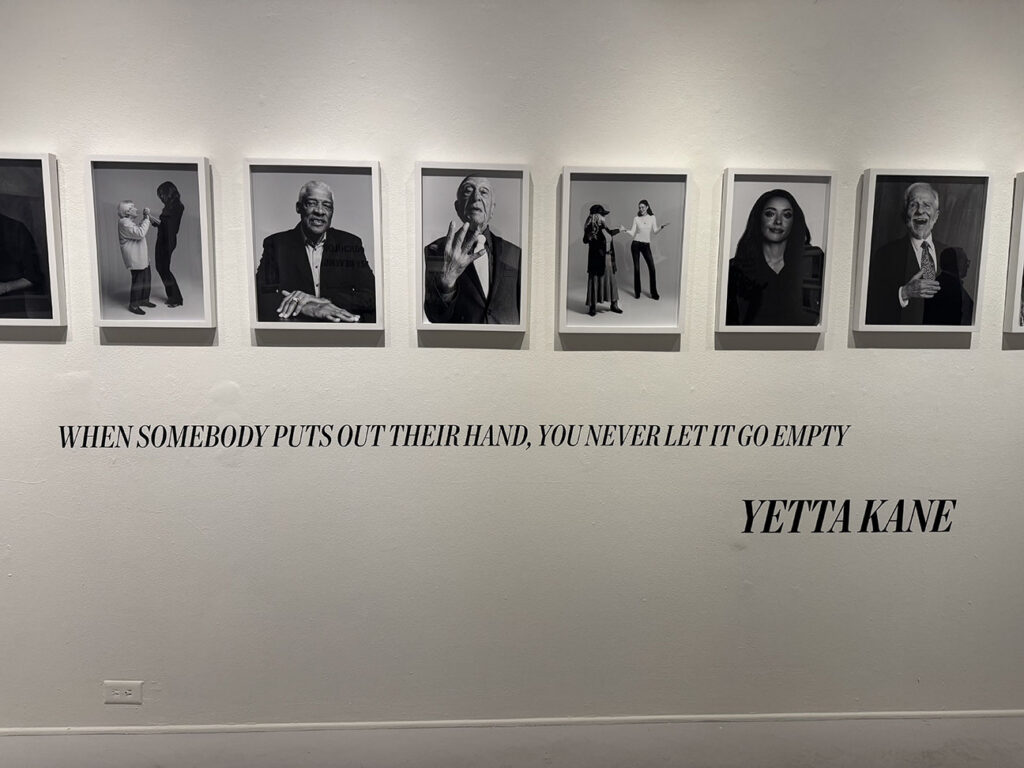
But on the walls were photos of those Holocaust survivors, each paired with one of the several of the most notable celebrities in the building. On Feb. 3, an estimated 250 to 300 people filled a gallery on La Brea Avenue in Hancock Park for the opening night of the “Borrowed Spotlight” exhibit.

The show includes photos of 18 Holocaust survivors, ranging in age from 81 to well over 100 years old, posed with celebrities such as Cindy Crawford, Wolf Blitzer, Josh Peck, Julius “Dr. J” Erving, Kat Graham, Billy Porter, Chelsea Handler, George Stephanopoulos, Sheryl Sandberg, and Barbara Corcoran.

Television producer Daniella Greenbaum’s opening remarks were nearly drowned out by the noise of the crowd, but they went silent when Greenbaum revealed that 108-year-old Holocaust survivor Risa Igelfeld was in the gallery.

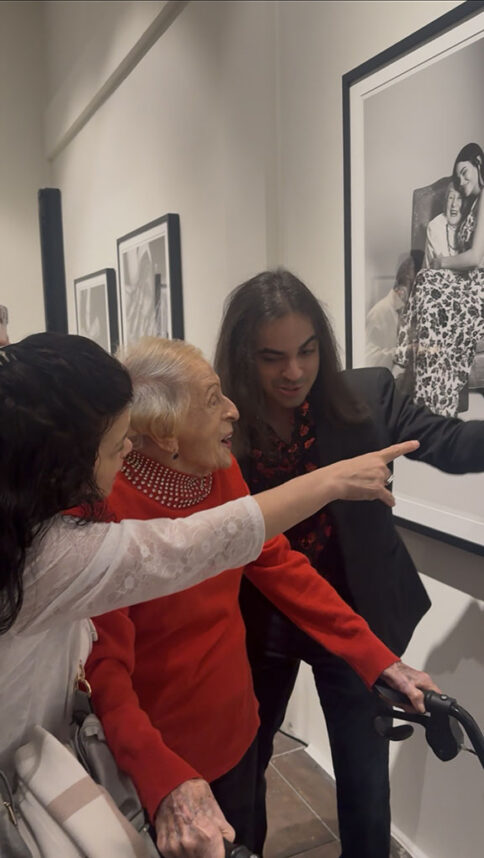
108 year old Holocaust survivor Risa Igelfeld (photo by Brian Fishbach)

An hour earlier, Igelfeld arrived at the exhibit with her daughter and grandson. She was wearing a bright red sweater that stood out against the gallery’s white walls. With her family members, she steadily moved towards the large black-and-white photo of her with actress Jenna Dewan on the wall. She’s seated on a plush chair with Dewan, in a flower print dress, on her lap. When Igelfeld saw her portrait for the first time, she broke into a wide smile, looked at her daughter and grandson then back to the photograph yet again.

Following the introductory remarks and a brief auction, guests approached Igelfeld one-by-one. Igelfeld gave a firm squeeze of every handshake offered to her. She didn’t say much besides “thank you” but she posed for at least two-dozen photographs. Several remarked that Igelfeld was the oldest person they ever met.

Dewan (Bailey Nune ABC’s “The Rookie” ), the celebrity whose spotlight was “borrowed” to bring awareness to Igelfeld’s story, teared up as she spoke directly to Igelfeld.

“When I met you, Risa, my soul recognized you and we danced,” Dewan said. “I was at Risa’s [108th] birthday party and we danced for the first five minutes. I was blown away. In my heart of hearts, I know what unimaginable darkness you have been through and that you have survived … And yet you offer light to the world. It’s real light, it’s earned light and it’s beautiful light. It changed me. I’m a changed person after this.”

In my heart of hearts, I know what unimaginable darkness you have been through and that you have survived … And yet you offer light to the world. It’s real light, it’s earned light and it’s beautiful light. It changed me. I’m a changed person after this.” – Jenna Dewan

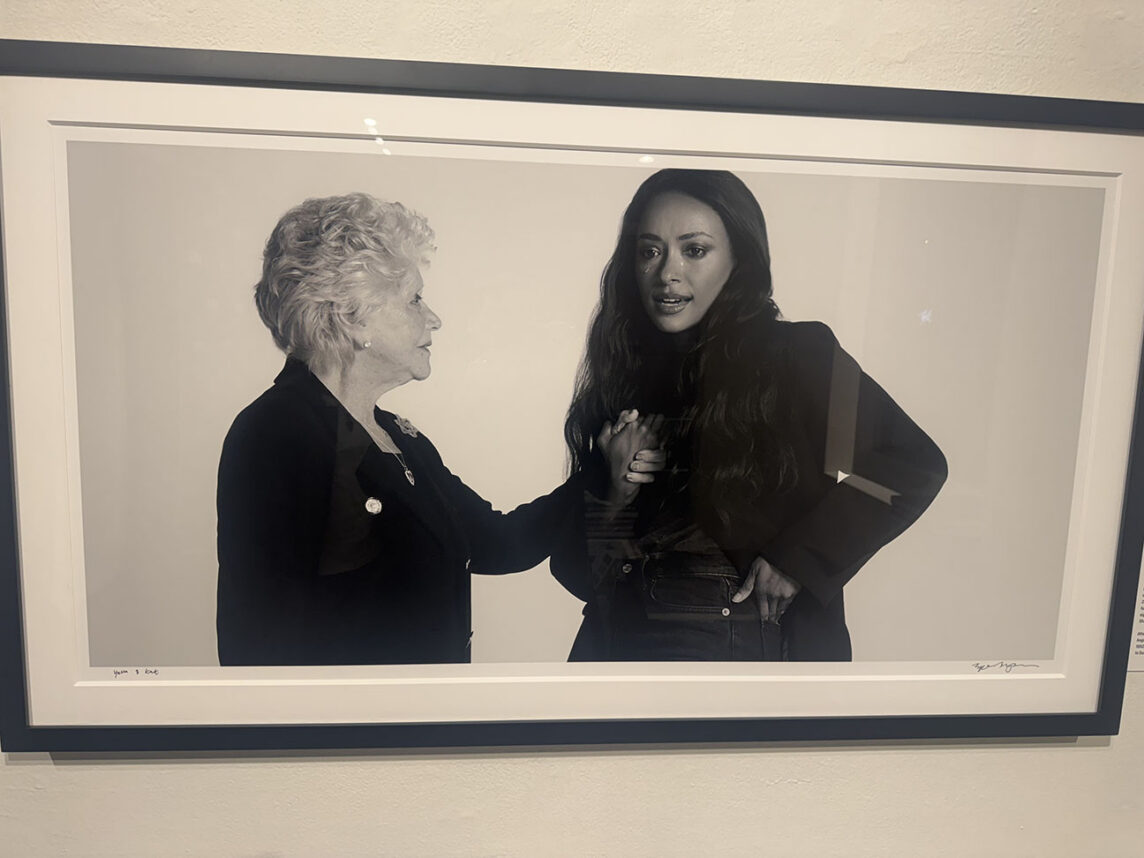
Yetta Kane, 93, who was photographed with actress and singer Kat Graham holding her hand, received one of the most rousing responses of the night.

“Each and every one of us is God’s soldiers,” Kane said. “We promote love, compassion, unity and people all over the world, especially today.” Wearing a blue sweater that matched the blue of the Israeli flag, she concluded her remarks by shouting, “Am Yisrael Chai.” Kane was only eight years old when the Nazis reached her hometown in what is now Belarus. After her father refused to attend a Nazi-ordered “meeting,” he hid his family and dozens of others in nearby forests. They joined the partisan resistance, moving constantly with little food or shelter. Because of her blond hair and blue eyes, Kane was sent between groups as a courier while German patrols searched the area.

Holocaust survior Yetta Kane with actress and singer Kat Graham at the “Borrowed Spotlight” photography exhibit

“Borrowed Spotlight” is a project by photographer Bryce Thompson. He is quick to point out that he is not Jewish (his brother and sister are Jewish, after their mother converted in her second marriage). Thompson said he was living at home with his family in Connecticut when the idea for the project began in 2022.

“When there was a rise in antisemitism, I really felt like it was weird for me to consider that someone like my sister could be walking home from work and be attacked just because of her religion,” Thompson told The Journal. He began reaching out to Jewish friends who were vocal on social media to ask what he could do. Survivors were later brought into the project and sourced by the New York team. Early on, Thompson said the concept involved pairing two people together for a few photographs. Still, he said “it felt unnatural” until they had the survivors just tell their story.

The most important thing, he said, was “to capture was firsthand accounts of these stories — a photograph wouldn’t be enough without the voice.”.

He recorded audio and video with every photo shoot. A film is in the works, and a three-minute video plays in a small side room at the gallery, depicting moments between survivors and the celebrities who sat with them, listening to their stories.

During the four years he has been creating “Borrowed Spotlight,” Thompson said there were “countless” unplanned moments that stand out. One he shared with The Journal involved music executive Scooter Braun with (now 103 year-old) survivor Joseph Alexander of Los Angeles.

“While listening to Joe, Scooter sat down on the floor and explained, ‘I’m sorry, that’s how I sit with my grandfather when he speaks.’ So Scooter lowered himself below Joe to show respect, and sat down on the floor. Braun later encouraged Thompson to make a coffee table book component to “Borrowed Spotlight.”

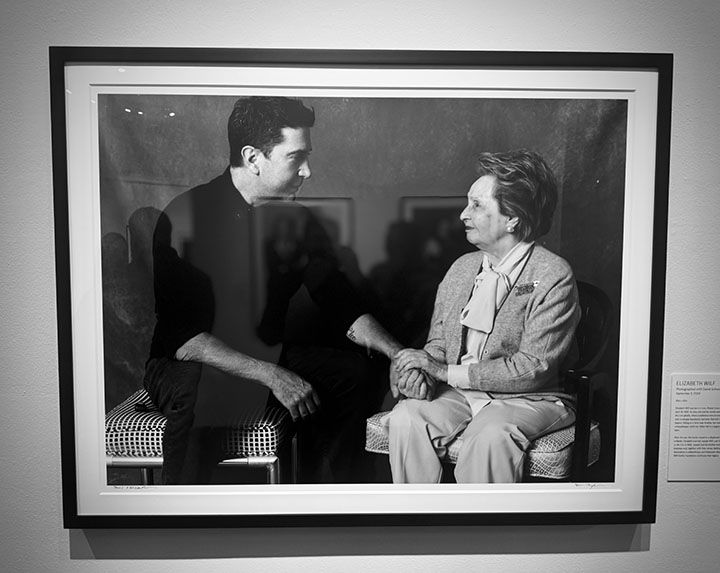
One of the survivor stories that jarred Thompson most was one told by Elizabeth Wilf, 92, to actor David Schwimmer at their shoot in Brooklyn.

Actor David Schwimmer with Holocaust survivor Elizabeth Wilf in “Borrowed Spotlight” photography exhibit

Wilf described a family hiding in an attic with a crying baby that they could not quiet. Thompson said the mother left the child behind to save the others.

“That story really shook me, especially as a new parent,” Thompson said.

The last pair to be photographed were actress Selma Blair and Auschwitz survivor Michael Bornstein. Bornstein was only four when he was deported from Poland. In their July 2025 meeting, Bornstein told Blair how his mother “nearly took her own life by touching the electrical fence at Auschwitz, but her fierce determination to survive for her remaining children ultimately overpowered her grief.”

Although there was a photograph of Bornstein arm-in-arm with Blair at the gallery, they do not appear in Thompson’s book of photographs and stories. Blair and Bornstein will be featured in a second planned book. Thompson said sales of the $360 book go to funding future shoots and Holocaust education.

“We have survivors, we have stories to tell, we have lives to put on paper,” Thompson said.

In the exhibit, quotes from survivors are printed between the photos. One, attributed to Kane, reads: “When somebody puts out their hand, you never let it go empty.” But the quote that attracted the most attention was from Wilf, emblazoned in the back corner of the gallery: “My grandchildren are my revenge.”

But the quote that best reflected “Borrowed Spotlight’s” aim was from the

Los Angeles-based 95-year-old sculptor Gabriella Karin: “If you don’t tell your story, people won’t know.”

The “Borrowed Spotlight” exhibition is open Wednesdays through Sundays at 170 S. La Brea Avenue  from 11:00 am – 6:00 pm through March 1. For more information, visit https://www.borrowed-spotlight.com/home.  

Borrowed Spotlight Art Exhibit Pairs Holocaust Survivors with Celebrities Read More »

A Bisl Torah — Holy Selfishness

There are mitzvot between human beings and God. There are mitzvot between human beings and each other. Both categories help refine and develop our character. But there is a third, often overlooked category of mitzvot: mitzvot between a person and themselves.

What does this category look like?

The category addresses the ways we think about ourselves and how we perceive our self-worth. When you think or speak about your place in the world, do you denigrate yourself or elevate your purpose? This category involves self-respect, carefully and meticulously shaping a life that protects one’s soul.

Commenting on guarding one’s soul, the Orchot Tzadikim, mussar (ethical teachings) from the Middle Ages, explains that “high fences are needed in order that one should not forget the Torah.” Meaning, when Torah is put at the center of your life, your soul flourishes. But when we let Torah fall, when ethical, moral living is no longer safeguarded, our souls diminish in this process. The goal is to create a Torah-filled existence that upholds our individual needs and dignity. We must put up fences to protect the lives we know we are meant to live. These fences and boundaries are not selfish; they’re holy.

Honoring oneself does not mean ignoring God or the community. Honoring oneself, creating sacred boundaries, and cultivating self-worth allows a human being to better engage with the world.

When we protect our own soul, there is a better chance we will understand when someone else protects their own.

Shabbat Shalom


Rabbi Nicole Guzik is senior rabbi at Sinai Temple. She can be reached at her Facebook page at Rabbi Nicole Guzik or on Instagram @rabbiguzik. For more writings, visit Rabbi Guzik’s blog section from Sinai Temple’s website.

A Bisl Torah — Holy Selfishness Read More »

A Moment in Time: “Choosing our Move”

Dear all,

We’ve been teaching the kids to play chess. One lesson I remember learning long ago is that you don’t play the move in front of you — you play the position it creates. Good players think two or three moves ahead. They pay attention, read intention, and understand that every choice reshapes the board.

Life asks something similar of us. We are called to live fully in the present — and yet we are also responsible for the future our present is quietly building.

So the essential question becomes:

What kind of tomorrow is this choice creating?

Sometimes what feels safe now plants the seeds of vulnerability later. And sometimes what feels difficult or costly today becomes the foundation of strength, integrity, and blessing.

The Talmud teaches: “On the path a person wishes to walk, they are led” (Yoma 38b).

The future is not accidental. It grows in the direction of our decisions.

Every moment, then, is more than a moment in time.

It is a trajectory.

It is a becoming.

And so we try to live as thoughtful players on the board of life — aware, intentional, and courageous enough to choose not only what serves us now, but what shapes who we will be.

With love and Shalom,

Rabbi Zachary R. Shapiro

PS – The kids have successfully gotten me in checkmate multiple times!

A Moment in Time: “Choosing our Move” Read More »

Waiting for Religious Intelligence as for AI and Godot

I hope that God does not object to this poem’s message, taking offense

to my comparison of divinations He allegedly facilitates in humans via AI, the artificial intelligence

which typical believers in a holy God apply with human divinations, while they’re waiting

for contact with His religious intelligence, a concept they are with AI conflating.


In “Disaster looms, they tell us. Empower experts, raise taxes! Here we go again,” WSJ, 2/4/26, Barton Swaim writes:

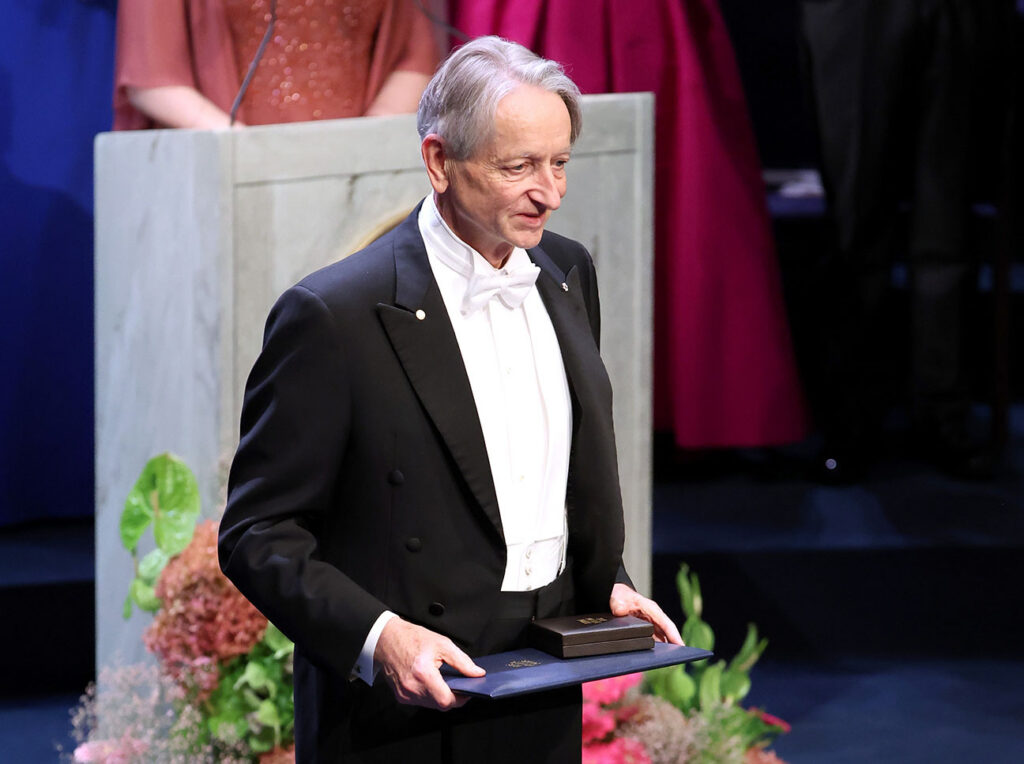
“People should stop training radiologists now. It’s just completely obvious that within five years, deep learning is going to do better than radiologists.” So pronounced the cognitive scientist Geoffrey Hinton, colloquially known as the Godfather of AI, a decade ago. He was awarded the Nobel Prize in Physics in 2024 for his work in artificial intelligence. Mr. Hinton thought AI would make radiologists useless. They have since grown in number, demand and income.

Mr. Hinton’s claim was among the earliest that AI would make a whole class of human practitioners redundant. Others have come at regular intervals since. In 2023 a Goldman Sachs study concluded that “roughly two-thirds” of U.S. jobs are “exposed to some degree of automation by AI” and that most of those “have a significant—but partial—share of their workload (25%-50%) that can be replaced.” Hedged language aside, that sounds like a lot of people on the unemployment rolls…..

The economic cataclysm caused by artificial intelligence may never come. But like Godot, its arrival will remain always imminent, never actual…..

As for Geoffrey Hinton, he barely admits he was wrong about radiologists. “In retrospect,” says a 2025 New York Times report, “he believes he spoke too broadly in 2016. . . . He didn’t make clear that he was speaking purely about image analysis, and was wrong on timing but not the direction.”

A small personal detail about Geoffrey Hinton is that his daughter Charlotte, who became a Head Teacher, was a lively friend of Linda, my wife, studying French at University College London in the early 60’s. Their conversations were apparently mainly about dating.


Gershon Hepner is a poet who has written over 25,000 poems on subjects ranging from music to literature, politics to Torah. He grew up in England and moved to Los Angeles in 1976. Using his varied interests and experiences, he has authored dozens of papers in medical and academic journals, and authored “Legal Friction: Law, Narrative, and Identity Politics in Biblical Israel.” He can be reached at gershonhepner@gmail.com.

Waiting for Religious Intelligence as for AI and Godot Read More »