One day during his junior year abroad in Vienna in 1978, Jon Marans told a professor of his intention to visit the concentration camp Dachau. Her response stunned him. "She said, ‘Why do you want to go there for? It’s just a bunch of dead Jews,’" recalled the Pulitzer-nominated playwright, whose "Jumping for Joy" opens Sept. 7 at Laguna Playhouse.
Previously, Marans, now 45, hadn’t thought of himself as Jewish or non-Jewish. He had simply considered himself an American from a Maryland suburb where "we were all just one big, bland, homogenous group."
"But the anti-Semitism I encountered in Vienna was so blatant it was transforming," he said. "I began to realize that until we embrace our heritage and all of who we are, it’s difficult to write about things that matter."
Since then, Marans has made a career of writing about characters who profoundly connect to or disconnect from their roots, families or work. He’s one of the newer members of a cadre of playwrights in their 40s — including Donald Margulies and Richard Greenberg — who have won Pulitzer Prize nods for work exploring issues of Jewish identity and assimilation.
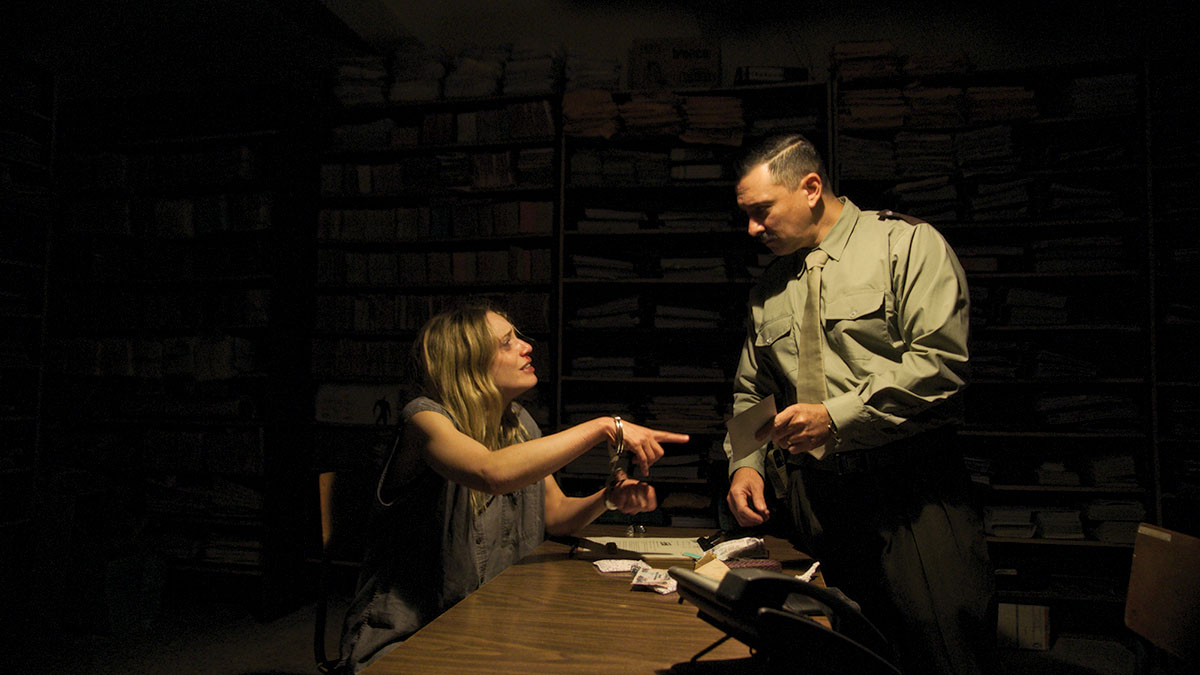
Marans’ newest play, "Jumping for Joy," tells of an aloof Jewish attorney, estranged from his schizophrenic sister and paranoid father, who returns home during a family crisis. "The character of Michael is the kind of guy who shuts down when you talk about anything remotely personal," Marans said of his offbeat, often wickedly funny new drama. "But his family is the one place where he cannot remain disconnected. They’re so in his face they just drag him into their world Michael both loves it and hates it at the same time."
Michael’s father, Samuel, doesn’t just shut out people — he shuts out the entire world. His daughter wryly reflects that when Samuel dies, "We will always have the map chronicling which countries have been unkind to Israel."
Marans’ his first produced play, "Old Wicked Songs," a finalist for the 1996 Pulitzer, revolves around a self-denying Jew, a burned-out piano prodigy who travels to Vienna to jump-start his creative juices but locks horns with his professor, a Holocaust survivor.
"Old Wicked Songs" came about during a time when the author, like his "Songs" prodigy, was battling creative burnout. After writing the book for a musical that was supposed to go to Broadway but was instead canned in 1990, the distraught author and lyricist retreated to a Vermont writers’ colony.
"Everything seemed to have fallen apart, so I thought, ‘To hell with it. I’m just going to write whatever I want regardless of the chances for commercial success,’" he said. Within three weeks he had a draft of "Songs," which among other seemingly noncommercial devices featured characters singing Schumann’s "Dichterliebe" in German. "I thought, ‘No one in their right mind is going to produce this play," said Marans, who was shocked when the piece opened off-Broadway and went on to more than 100 theaters around the world.
Then came an even bigger surprise: the Pulitzer nomination.
"It became a little daunting," he recalled. "Suddenly, there was pressure to write another piece that mattered. That’s why it took so long for me to [finish] my new play."
"Jumping for Joy" — partly inspired by Maran’s interest in Asperger’s syndrome — is another riff on how people engage and disengage.
"It’s like having this weird disconnect," he said of the condition that is similar to autism. "You see it in people who are incredibly focused but slightly detached from life."
The Playhouse’s Richard Stein, who directed an acclaimed production of "Songs" in 1999, was eager to direct the world premiere of "Joy."
"From the first read I knew it was a brilliant play," he told The Journal. "One of the things that marks Jon as a unique writer is his ability to delve deeply into his characters and to fully explore the relationships between them."
During rehearsals, Marans said he’s emphasized "the general twinkle all three of the characters have when they come together. The initial tendency for actors is to mime the darker side of what’s going on. But it’s important the piece doesn’t come off in a way that negates the joy these people have in being together."