Two Jewish buildings in Sweden were subjected to firebombs over the past couple of days in the aftermath of President Trump recognized Jerusalem as the capital of Israel.
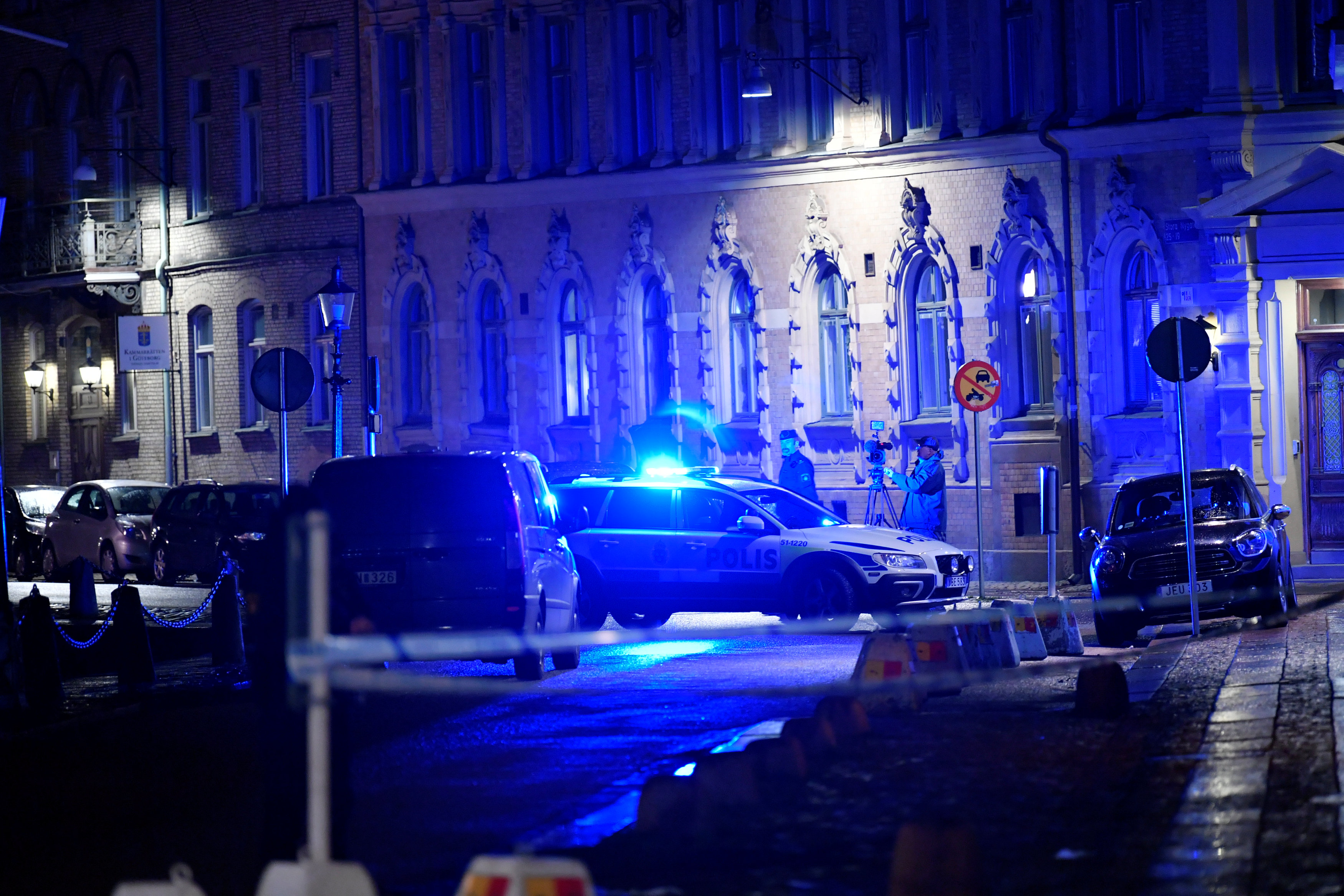
The first building that was firebombed was a synagogue in Gothenberg, where at least 10 masked people threw Molotov cocktails at the building shortly after 10 pm local time on Saturday, where a party for Jewish youths was being held.
The cocktails lit the courtyard on fire, but the fire was extinguished shortly after it was lit due to rainfall. No one was wounded from the fire.
Three men have been arrested for the suspected arson; Swedish authorities are looking for other suspects.
Swedish Prime Minister Stefan Loven issued a statement denouncing the firebombing.
“There is no place for anti-Semitism in our Swedish society,” said Loven. “The perpetrators will answer for their crimes.”
The second firebombed building was a Jewish chapel in Malmo, where a Jewish cemetery is located. Like the synagogue, the chapel was also subjected to Molotov cocktails but didn’t suffer any significant damage. Law enforcement is labeling the incident as suspected arson.
The Jewish assembly of Malmo issued a statement that read, “We strongly emphasize that we can never accept being subjected to threats and attacks.”
Prior to the firebombings, protests engulfed Sweden and other European countries in response to Trump’s Jerusalem, which featured protesters chanting “in Arabic about shooting Jews, an ancient massacre of Jews, and freedom for Palestinian terrorists,” according to Jewish Telegraphic Agency.
Sweden has seen a recent uptick in anti-Semitism, as anti-Semitic hate crimes increased by 38% from 2014 to 2015 as a result of “anti-Israel rhetoric” becoming “violently anti-Semitic, according to the Times of Israel. Swedish journalist Johanna Schreiber, who is Jewish, told the Times of Israel in 2015 that she knew of many Jews in Sweden who were “scared” about making their Judaism known due to the rising climate of anti-Semitism.
“People of all ages are scared of going to synagogue, there are many people who are taking off their Stars of David because they are too scared to wear it,” said Schreiber.